Some links here are affiliate links. If you buy through them, I may earn a small commission at no extra cost to you, and I only point to things I'd buy myself.
Start on the floor with an outdoor rug
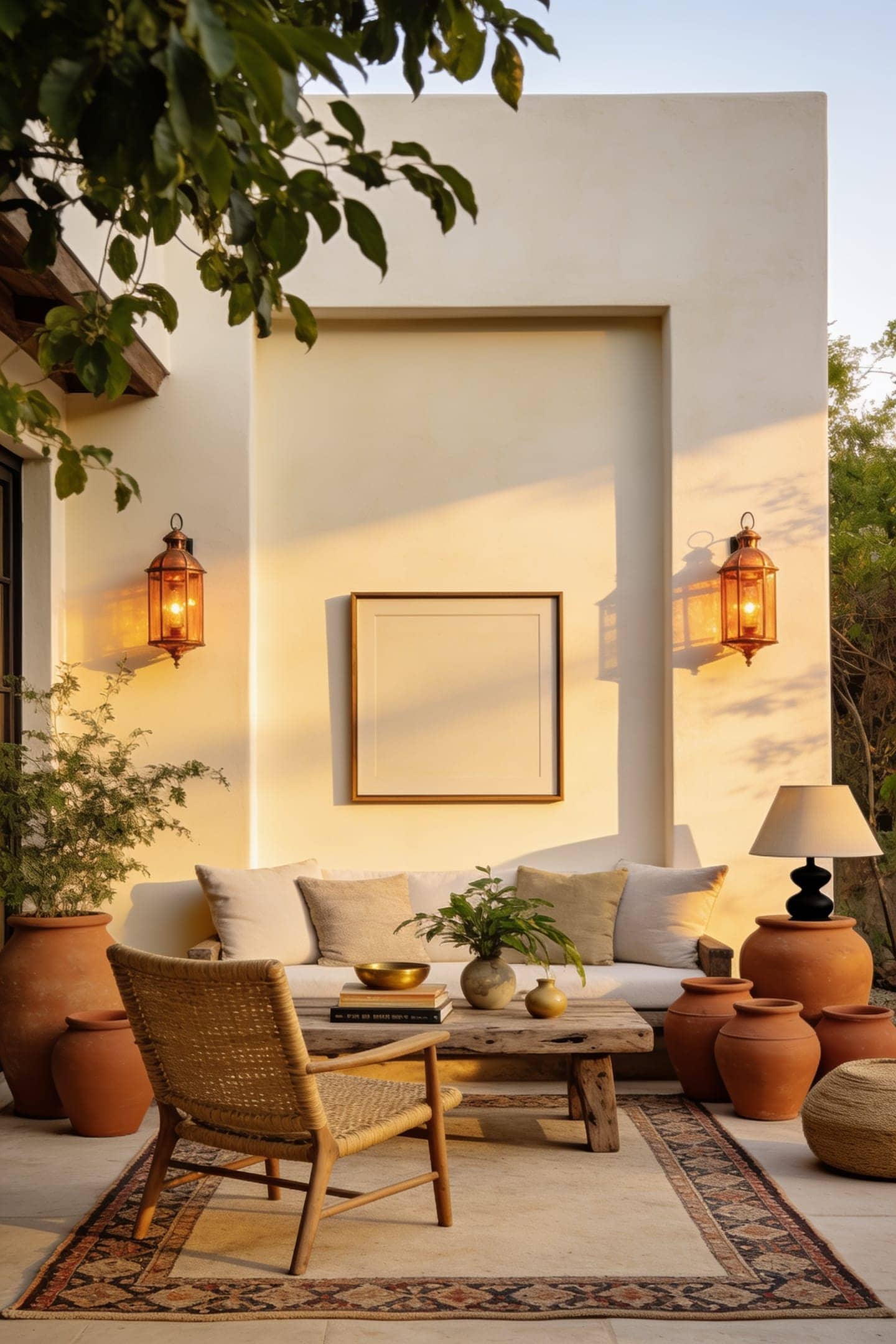
Start with a rug. It pulls a patio together faster than anything else, and almost nobody does it first. It draws a border around your seating, hides tired concrete or weathered decking, and instantly tells your eye the furniture belongs together. Get the floor right first and everything you add after it is easier.
Working with a tiny balcony or a concrete square? Start with my small patio ideas on a budget for the layout, then come back here for the styling.
The ranked roundupSince the rug is where the whole patio starts, I compared the budget outdoor rugs that survive real sun and rain and ranked the ones worth it.
See the roundup: 10 Best Budget Outdoor RugsPick three colors and repeat each one
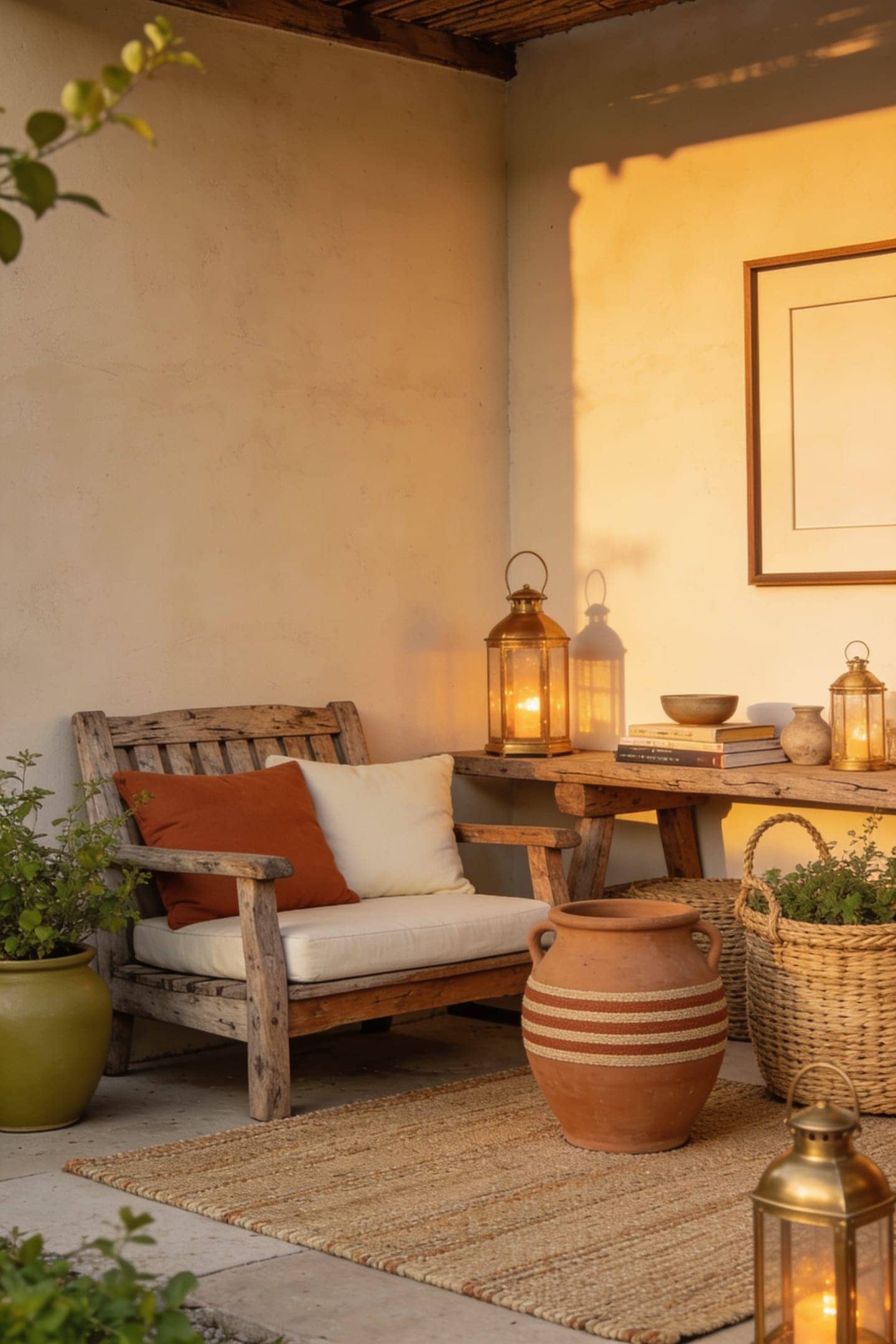
Designed-looking patios almost always run on a tight palette. Here's the rule I use: three colors, one neutral base, one warm or earthy main, one small accent, and each one shows up in at least two places. Terracotta cushions, a terracotta pot, a rust stripe in the rug. The repetition is the whole trick, and it costs nothing to plan before you buy.
Layer at least three textures, not just colors
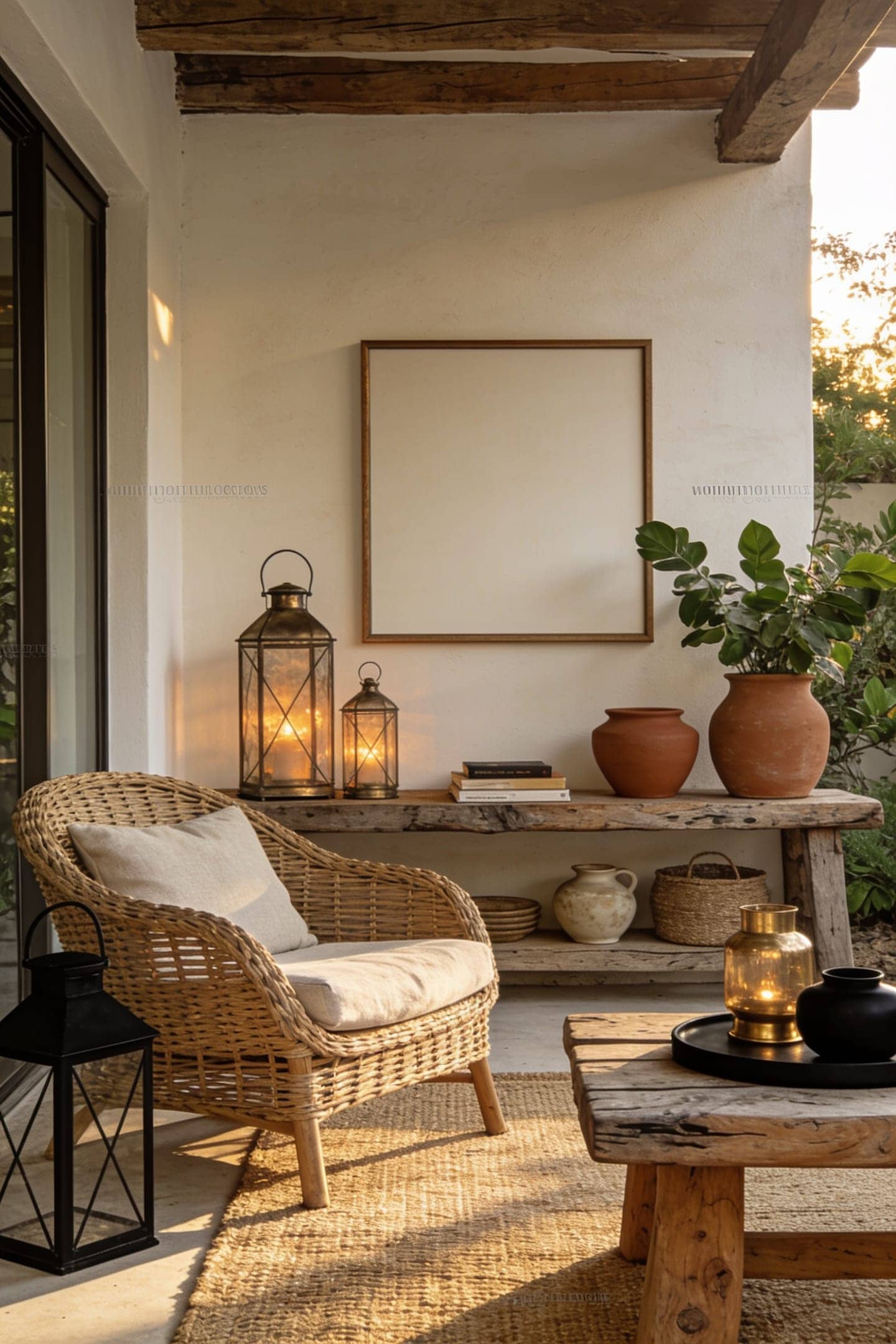
Outdoor furniture leans heavily on plastic and powder-coated metal, which is what makes a cheap set read flat. Bring in woven rattan, a chunky knit or linen-look fabric, raw wood, a jute-look rug, and the same neutral palette suddenly looks rich. Of all the patios I compared, the pricey-looking ones all had texture and the flat ones didn't, so mix it deliberately.
Dress the seating like an indoor sofa
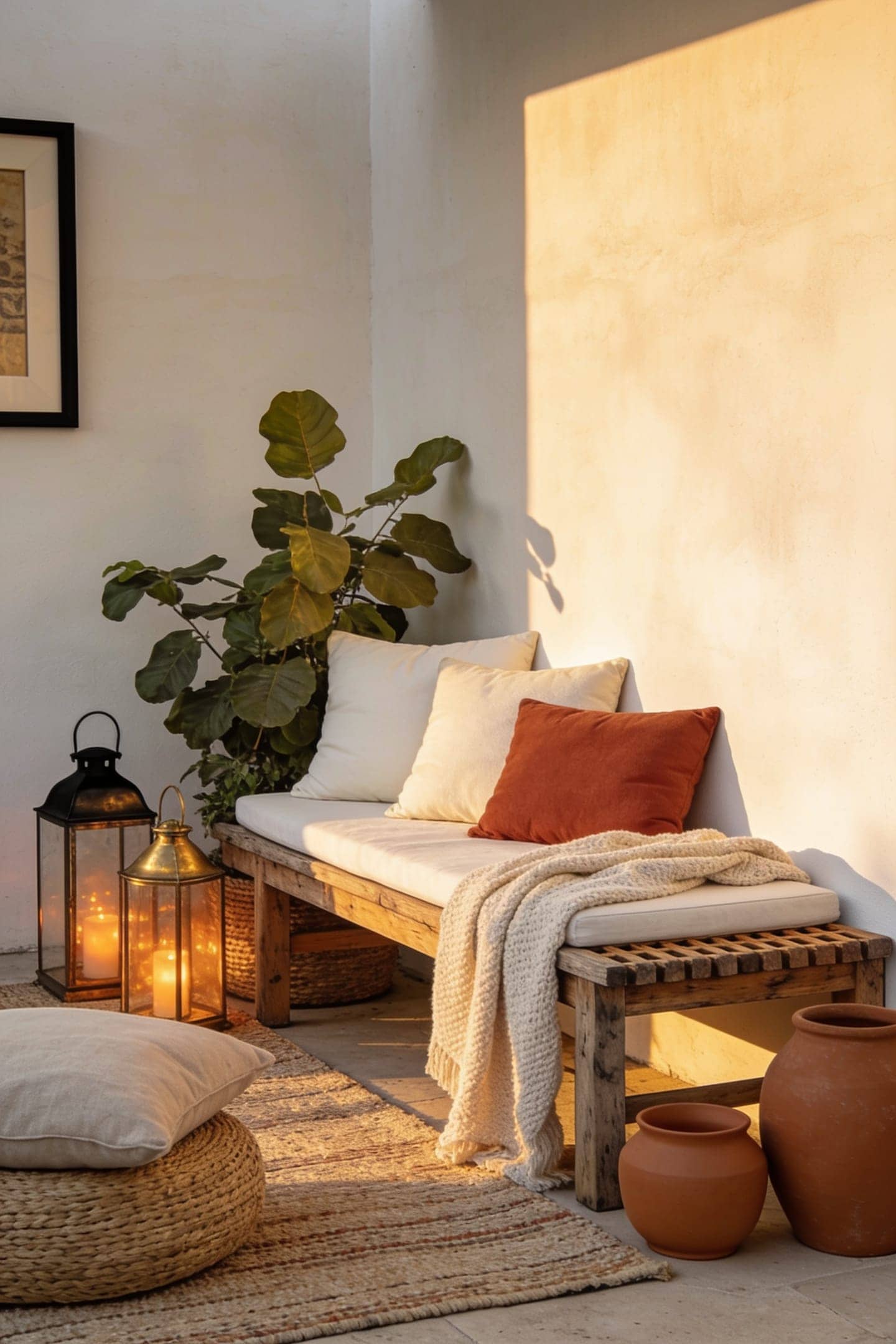
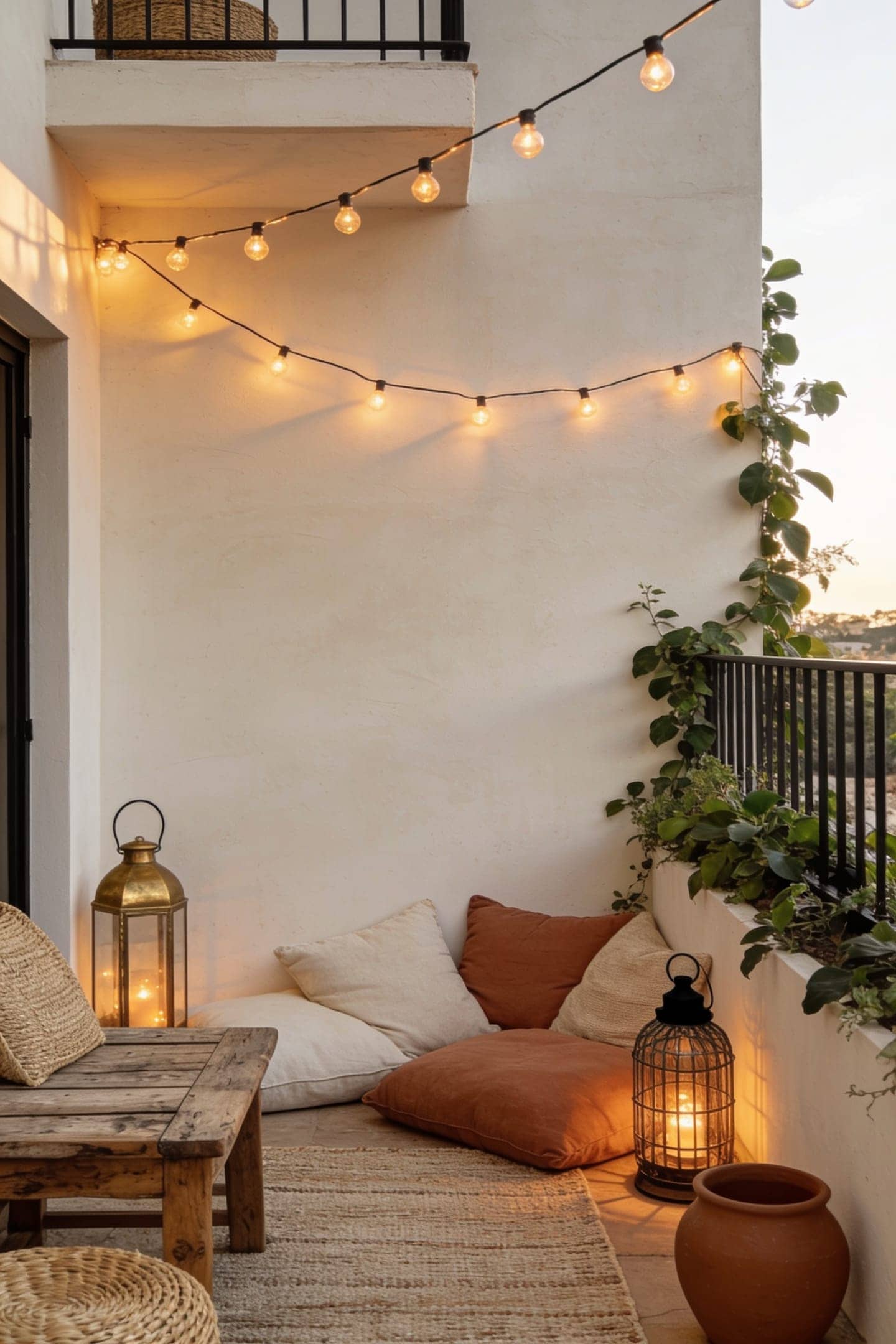
The fastest way to make a hard outdoor bench or chair look inviting is to treat it like a couch. Layer a couple of outdoor pillows in different sizes, then drape one weatherproof throw, never perfectly straight. That little bit of softness and a slight slouch is the difference between furniture you look at and a spot you actually sink into.
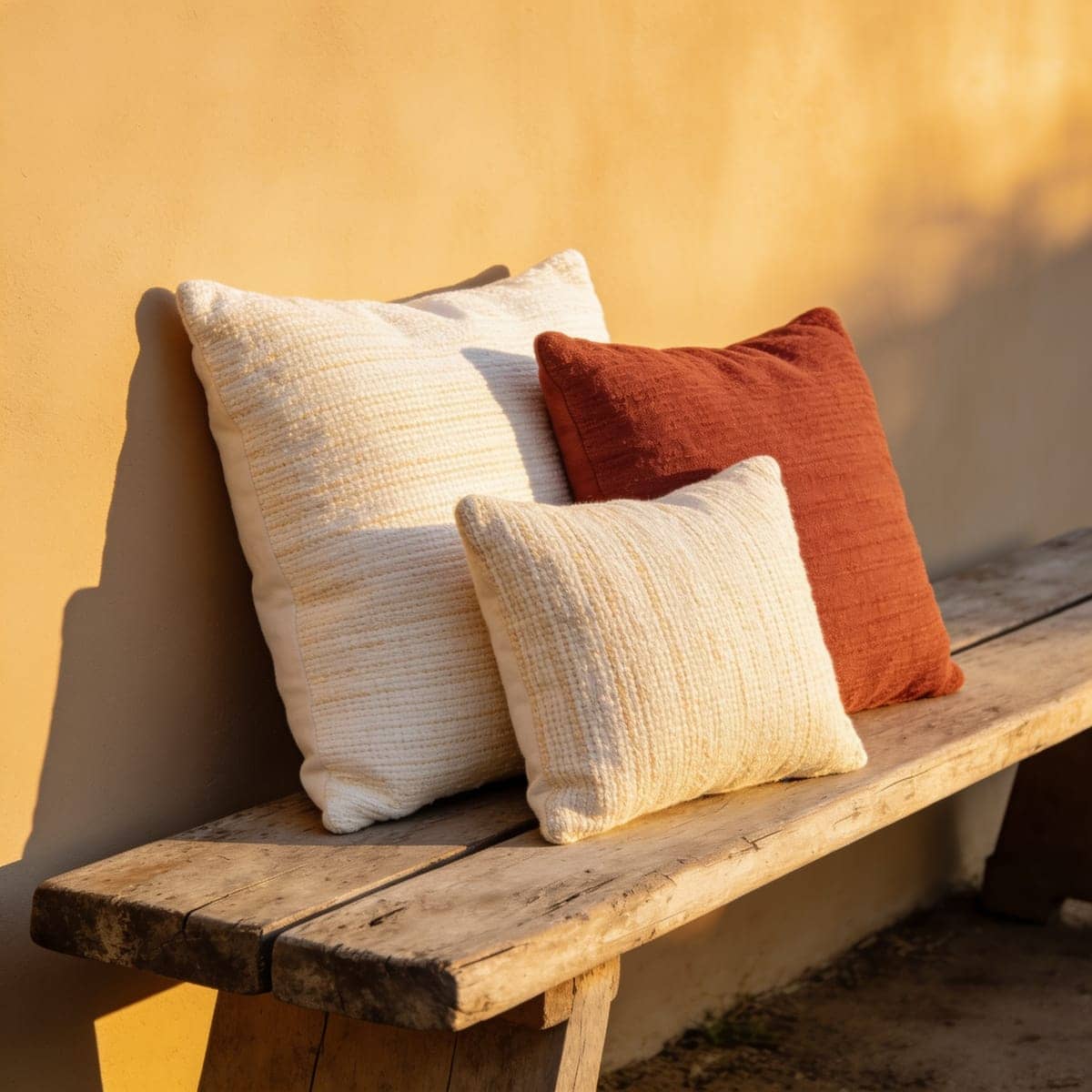
Build one little tabletop vignette
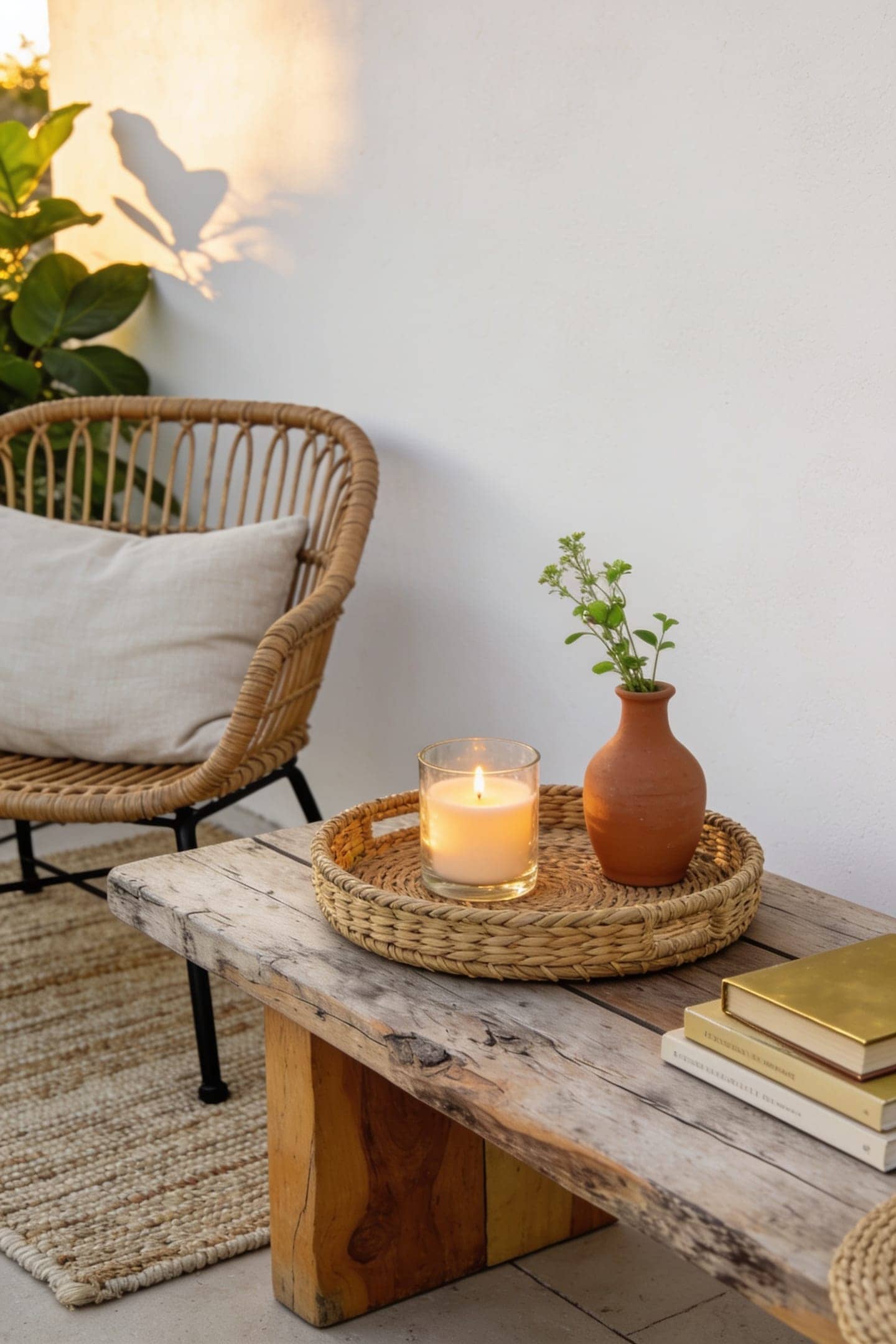
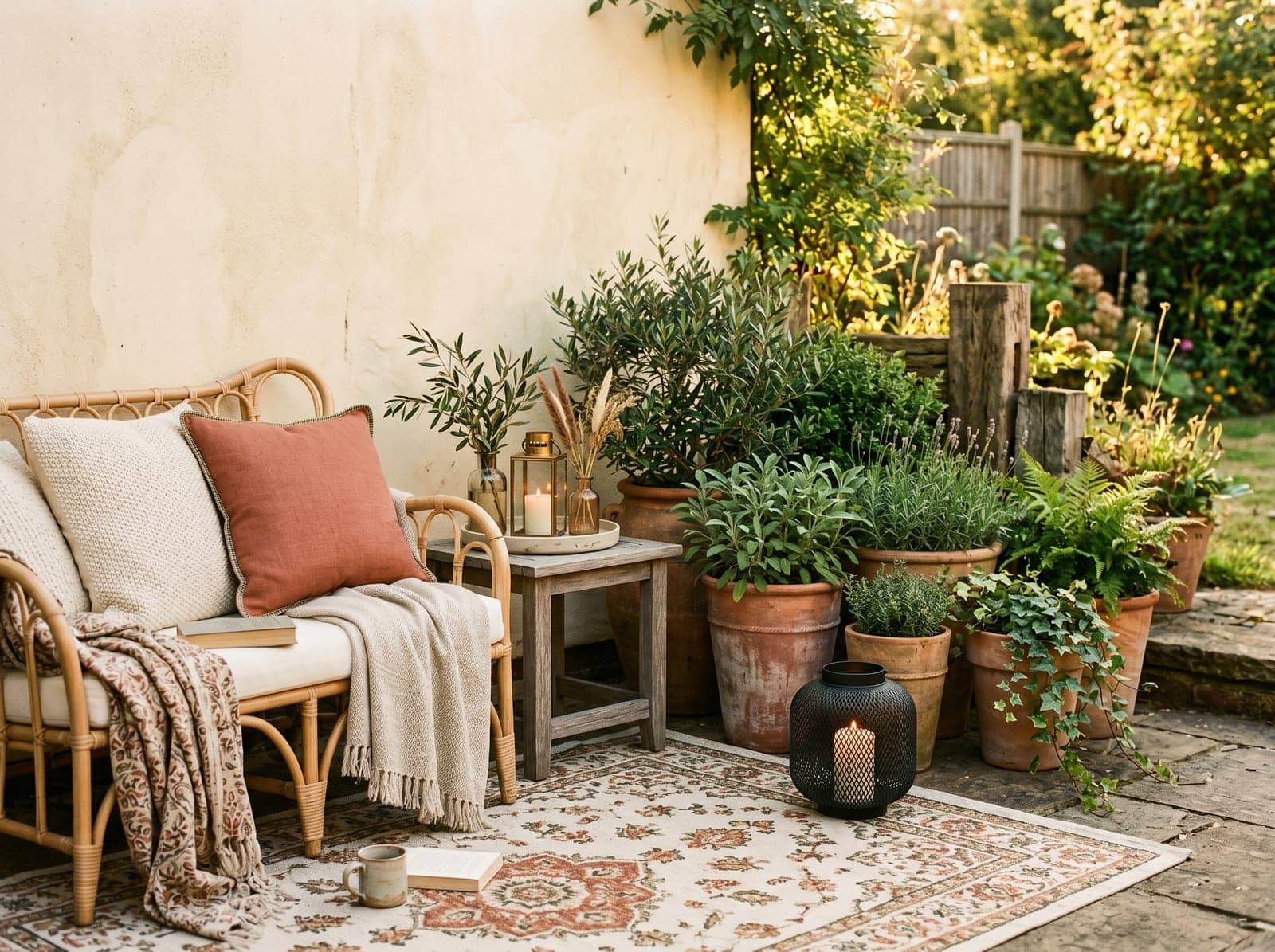
Pick one surface, a side table, a stool, a tray on an ottoman, and style it like you would a coffee table inside. A short stack of something, a candle or a lantern, a tiny vase with a clipping from the yard. One considered little moment makes the whole patio feel decorated, and it takes five minutes with things you already own.
Match your planters into one family
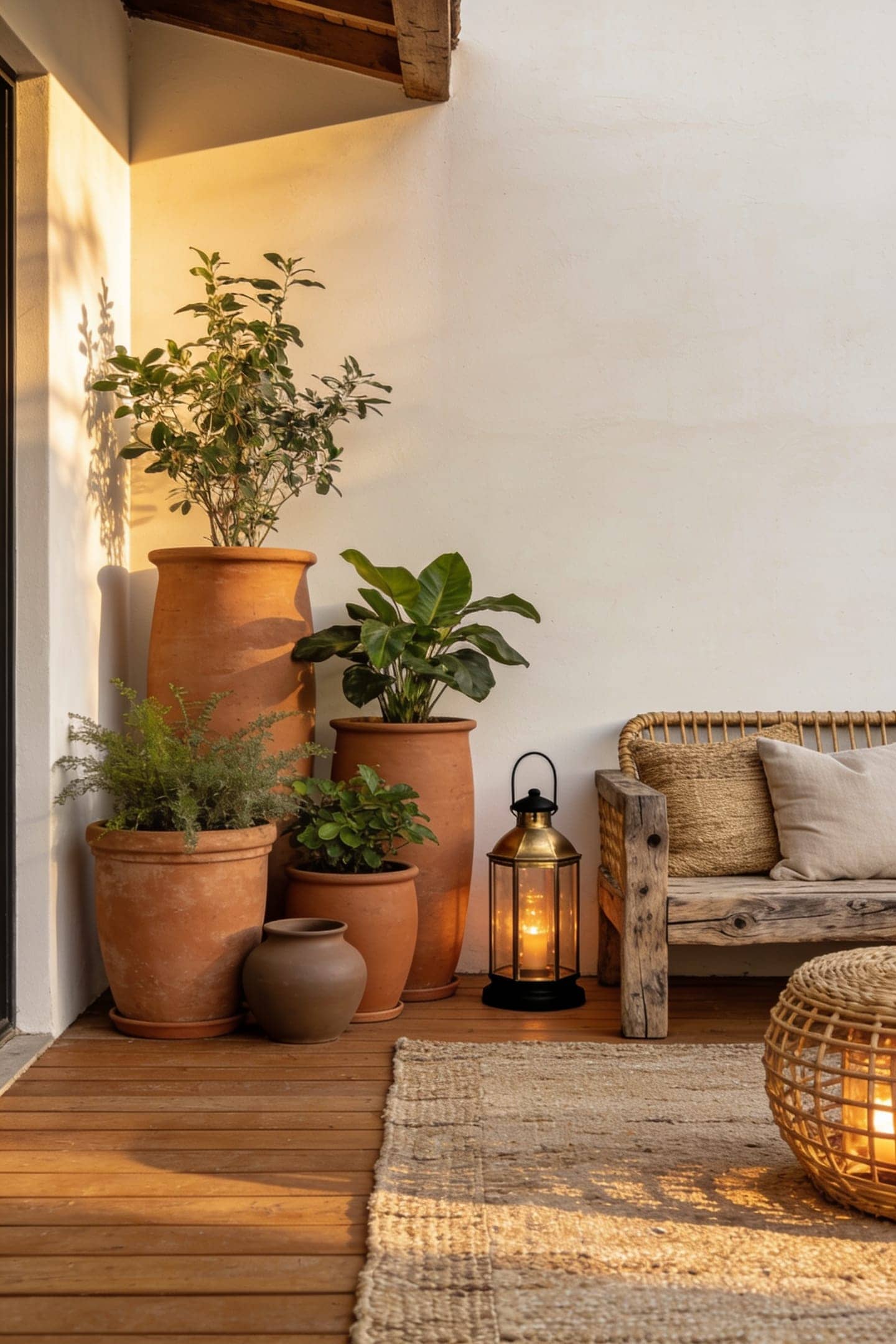
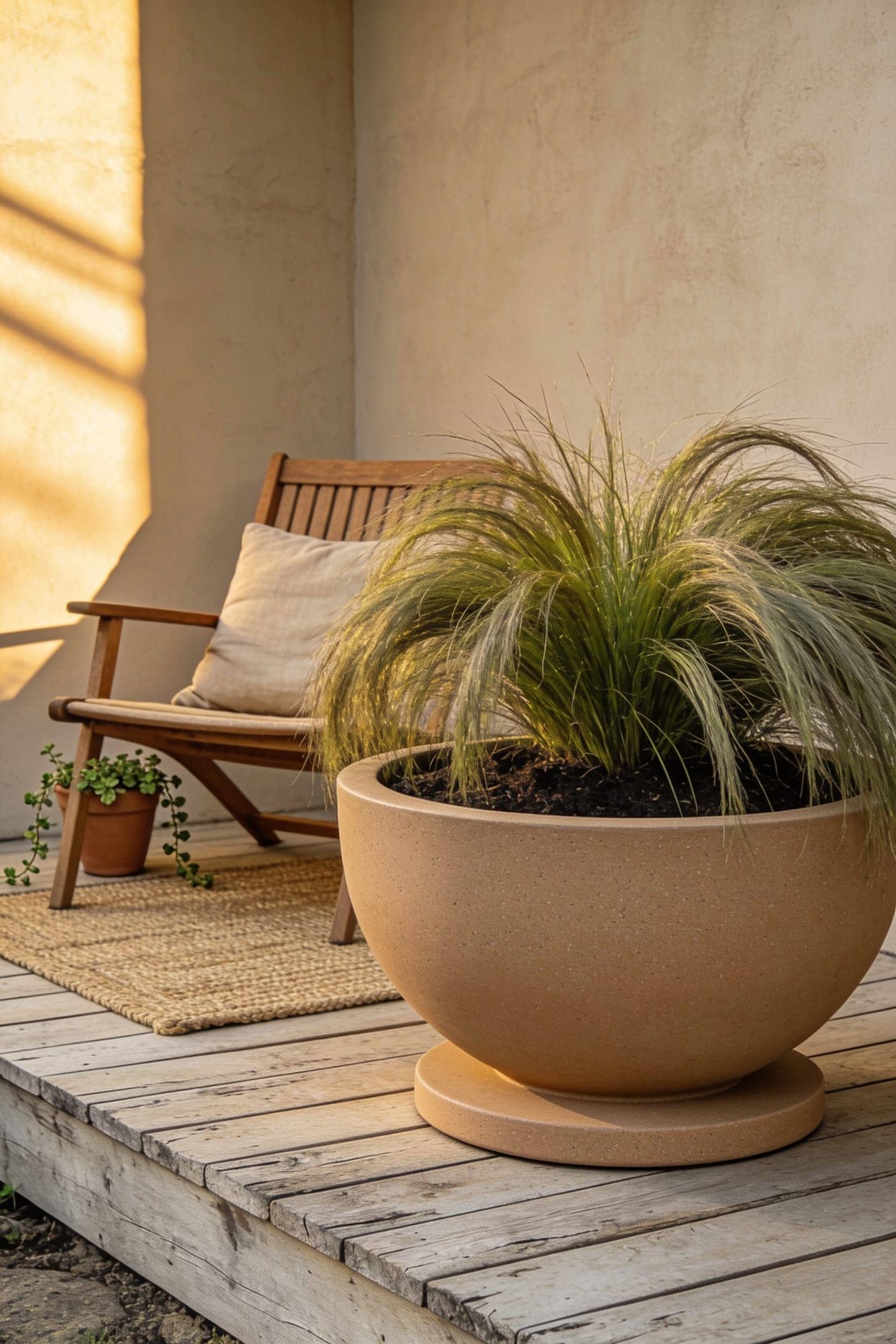
Mismatched pots kill the polish fast: every one a different color, size, and material. I'd commit to one family instead: all terracotta, all matte black, all woven baskets with liners. The plants can be wildly different, the containers shouldn't be. Cheap nursery pots dropped inside a few matching planters look far more expensive than they cost.
Give the bare wall a focal point
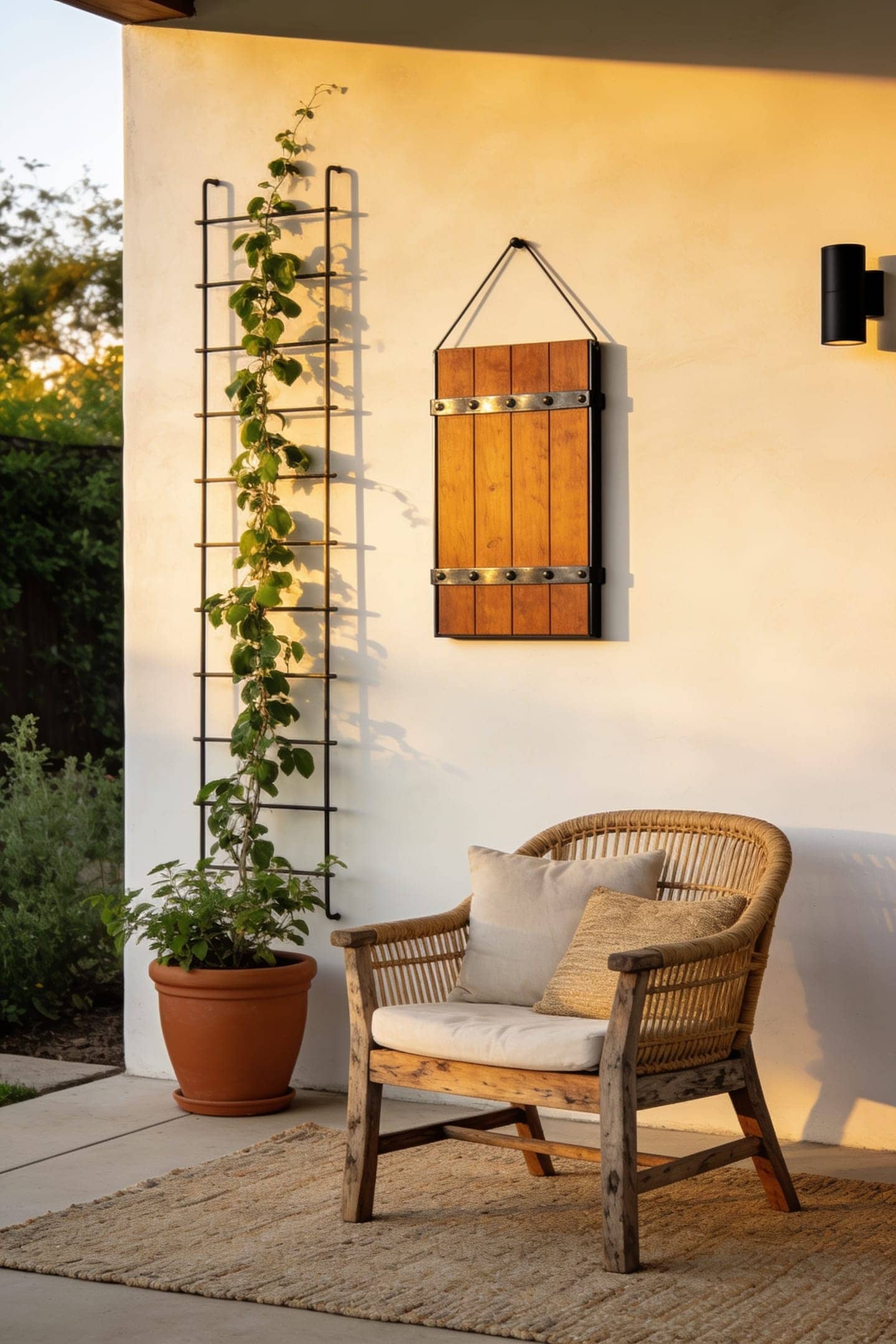
That blank fence or wall behind your chairs is prime space, and it's the most overlooked surface out here. Hang a piece of weatherproof outdoor art, a simple wood or metal hanging, a trellis with a trailing plant, or a row of wall planters. Get the decor up off the floor and the patio looks finished from every angle, not just at ground level.
Light it at three heights, not one
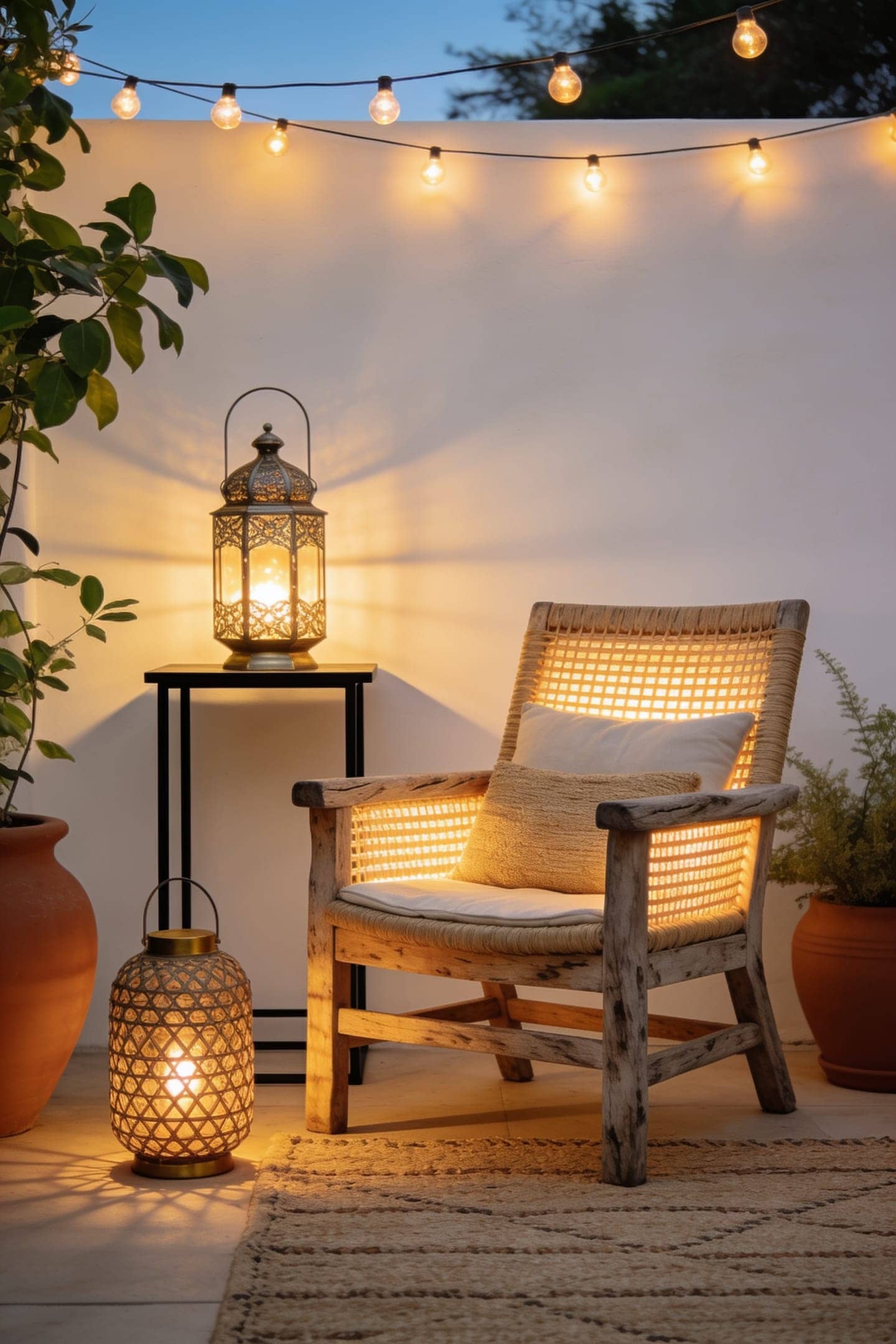
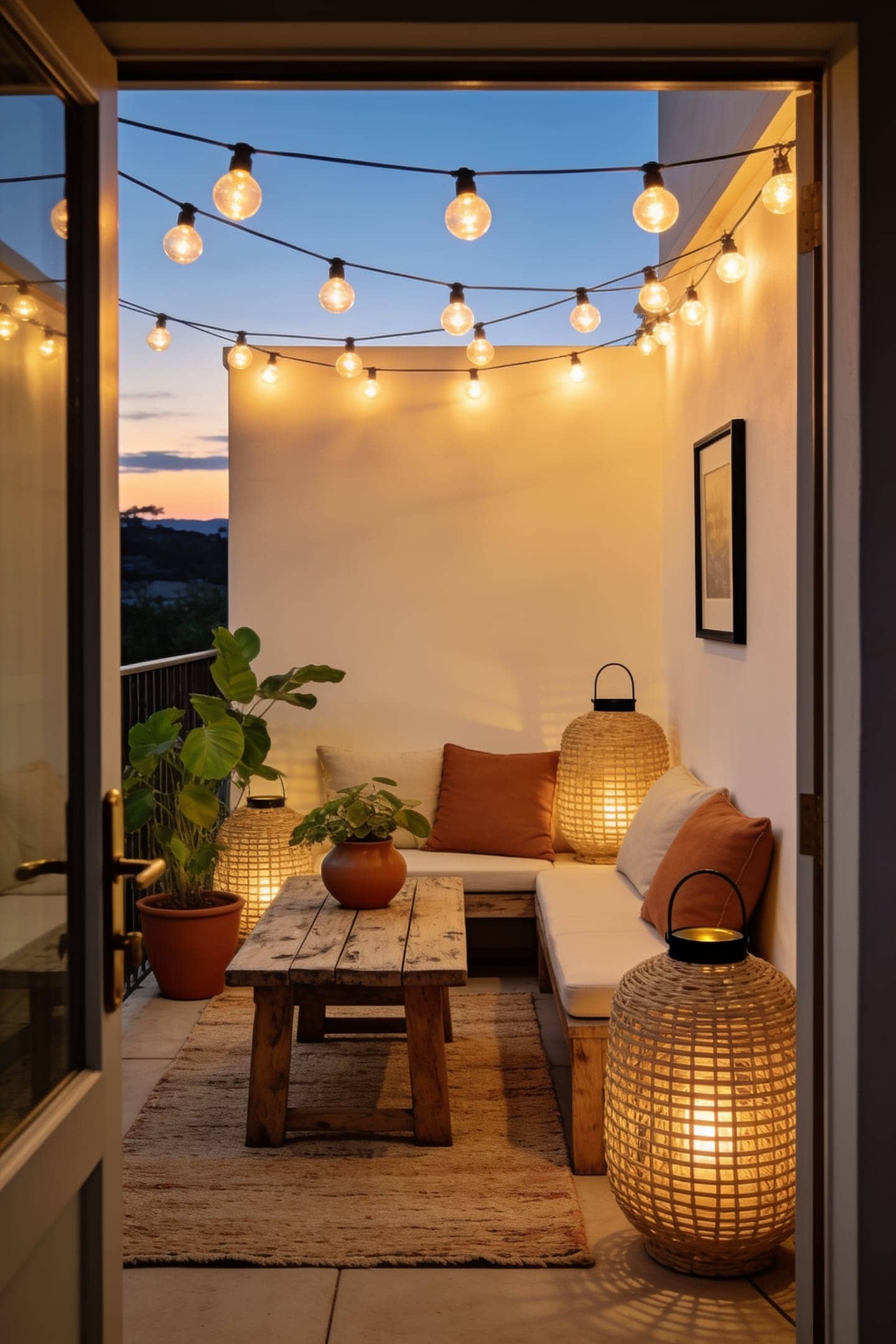
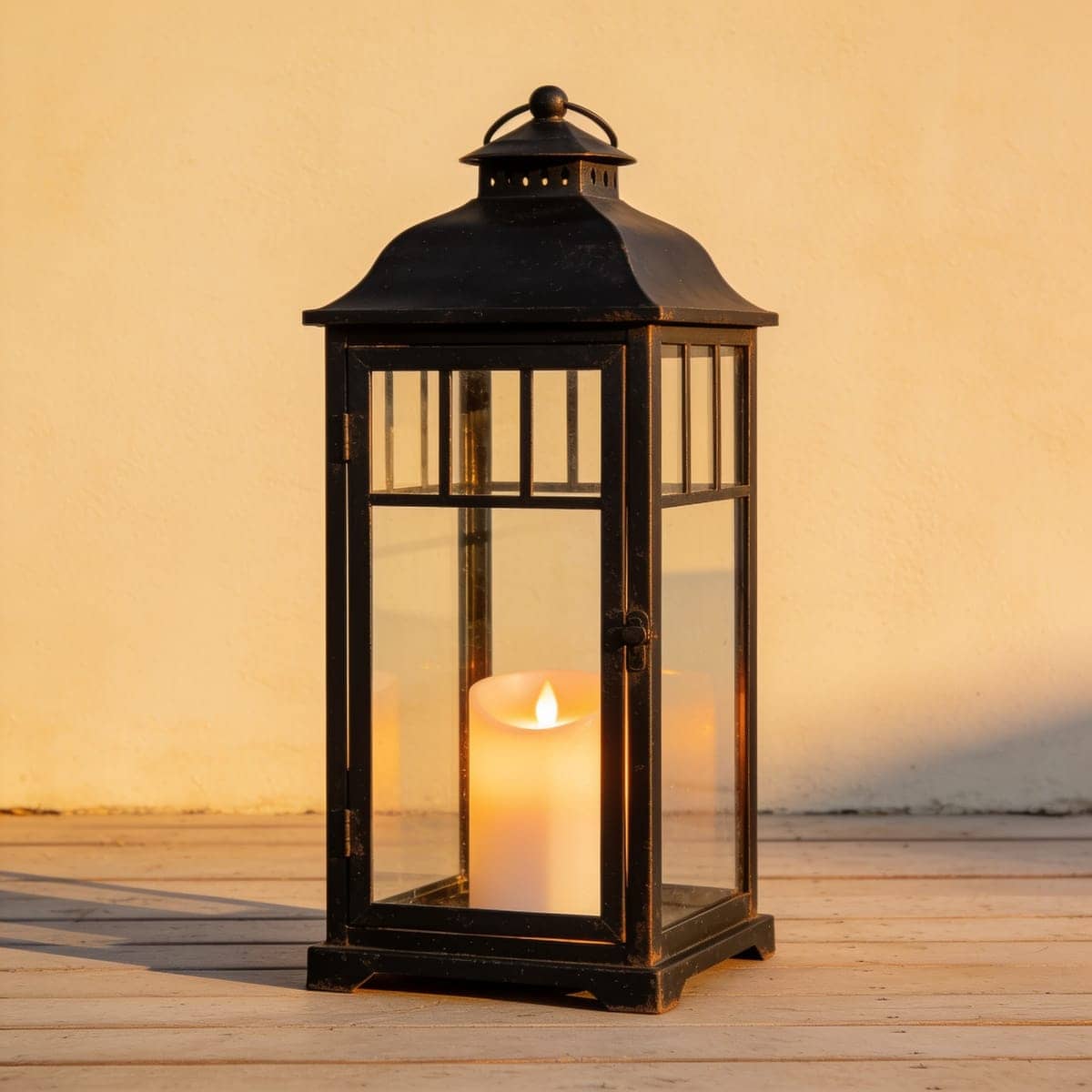
A single overhead string of warm patio string lights is a good start, but layered light looks expensive after dark in a way one string never does. Aim for three heights: something overhead, something at table level, and something low on the floor. A decorative lantern with a flameless candle covers the middle layer and doubles as a styling object by day.
Stack greenery in three heights for a backdrop
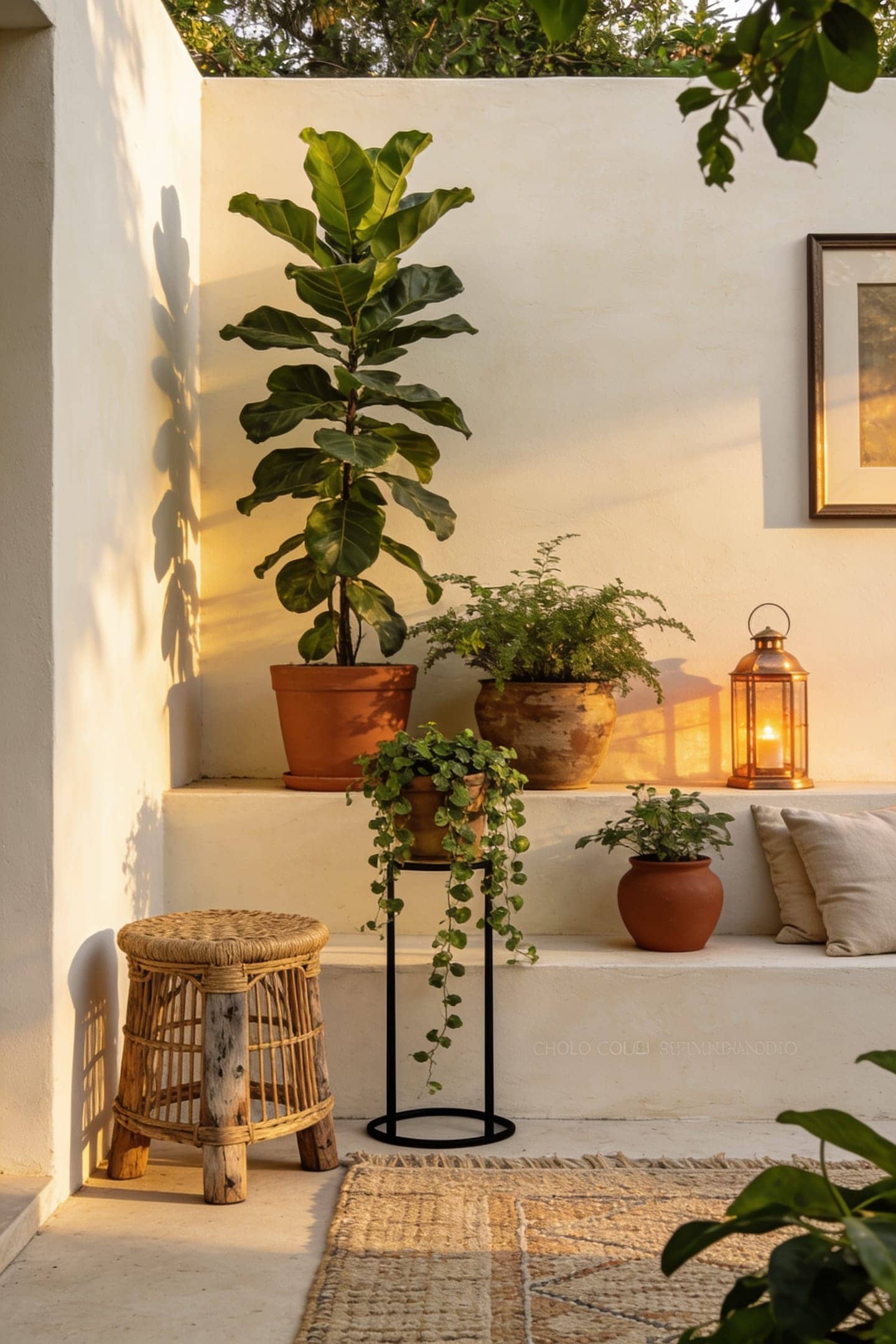
Plants lined up at one level look like a garden-center shelf. Layer them instead: one tall plant or small tree for height, a few mid-size leafy pots, and something trailing off a rail or a stand. Stepped and full beats neat and level. If I had to pick, one big statement plant beats ten small matching ones.
Sneak in one warm wood or metal piece
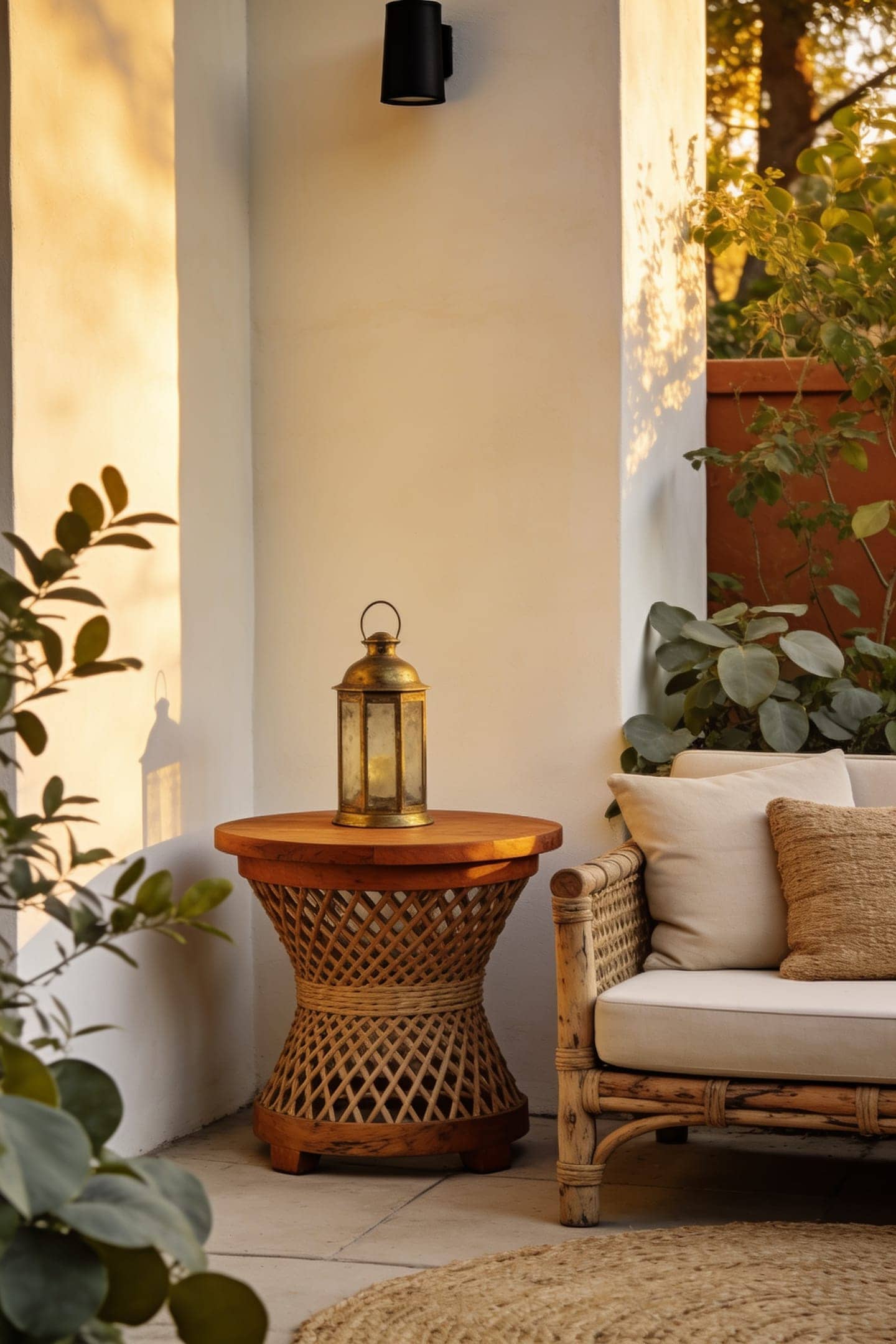
All gray resin and black metal? That can feel cold no matter how you style it. The fix I reach for is one warm note: a teak or acacia stool, a little wood tray, an aged-brass lantern, a rattan side table. That single warm material breaks up the budget look, and suddenly the furniture stops looking like it came in one box.
Echo one shape so it looks collected
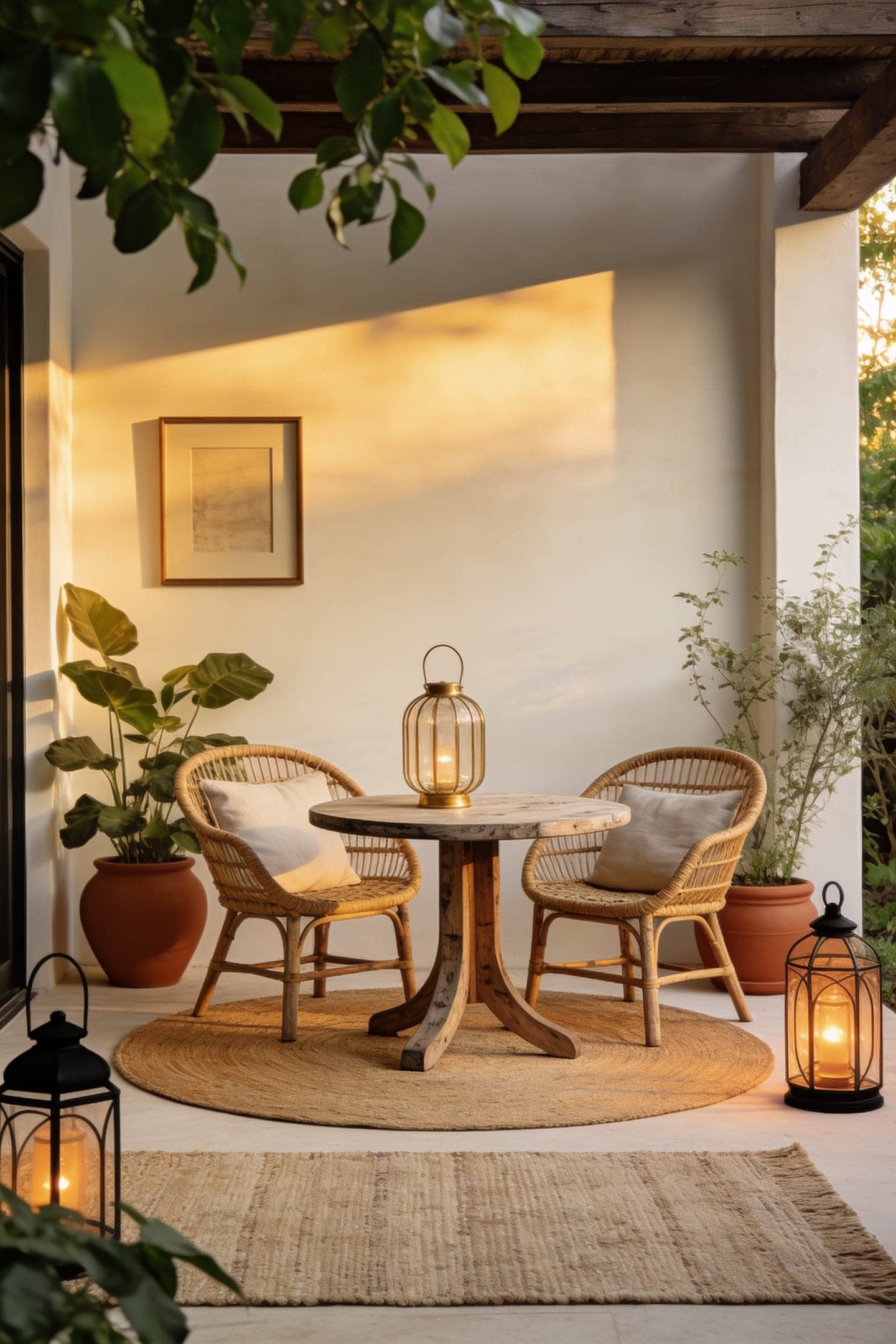
Here's a quieter trick: repeat a shape. Pick one shape, rounded, arched, a particular weave, and let it show up a few times: a round rug under a round table, curved planters, an arched lantern. The eye reads that repetition as "someone planned this."
Leave the lived-in cues in plain view
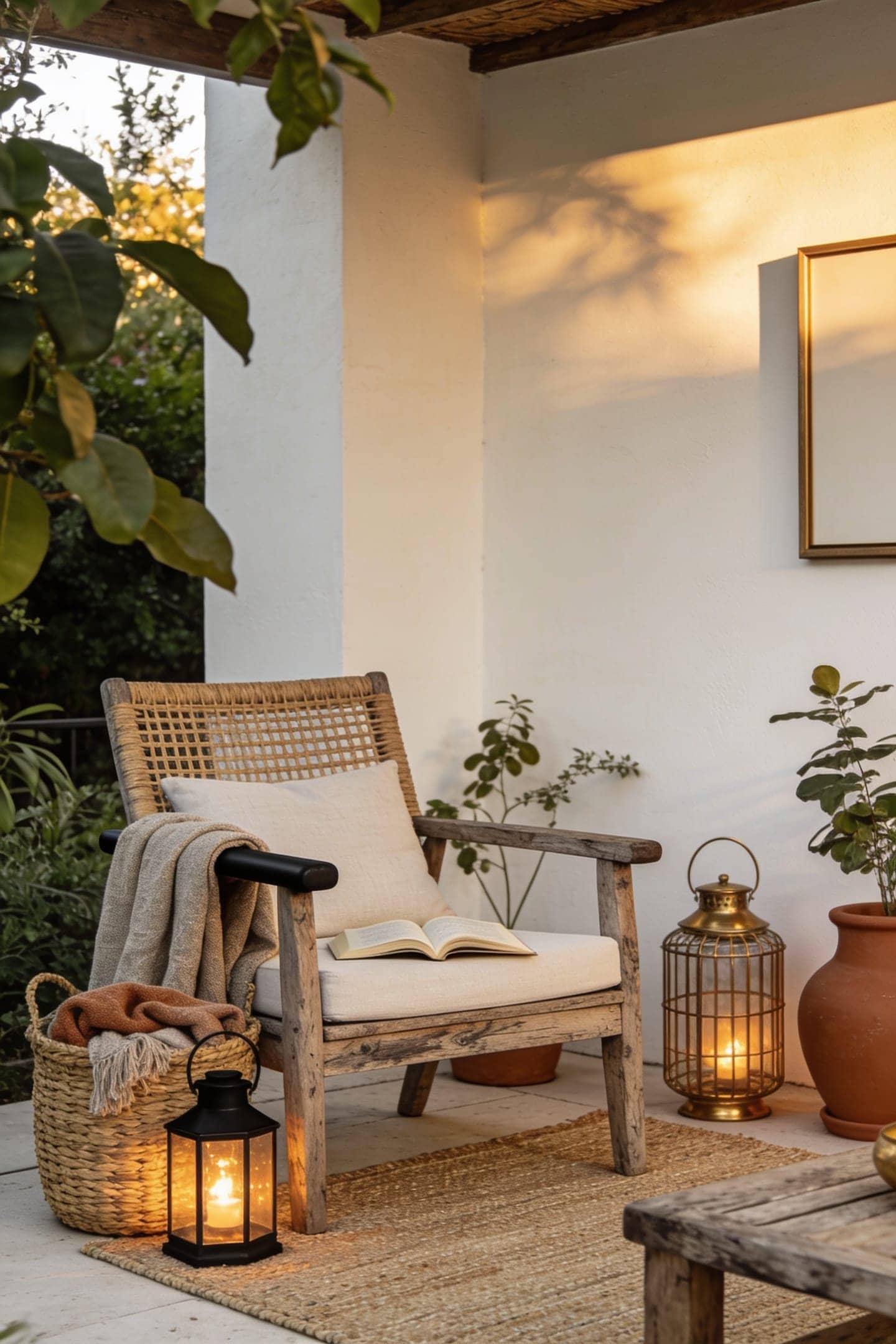
The last 5 percent is what sells it. A folded throw over a chair arm, a basket holding a blanket, a lantern actually lit, a cushion with a real dent in it. Those little signs say someone actually sits out here. Style it, then live in it a little before you decide it's done. If your outdoor space is a balcony or a side yard rather than a patio, the same order works, and my balcony and patio decor ideas start with the rug.
Treat the front porch like a second patio
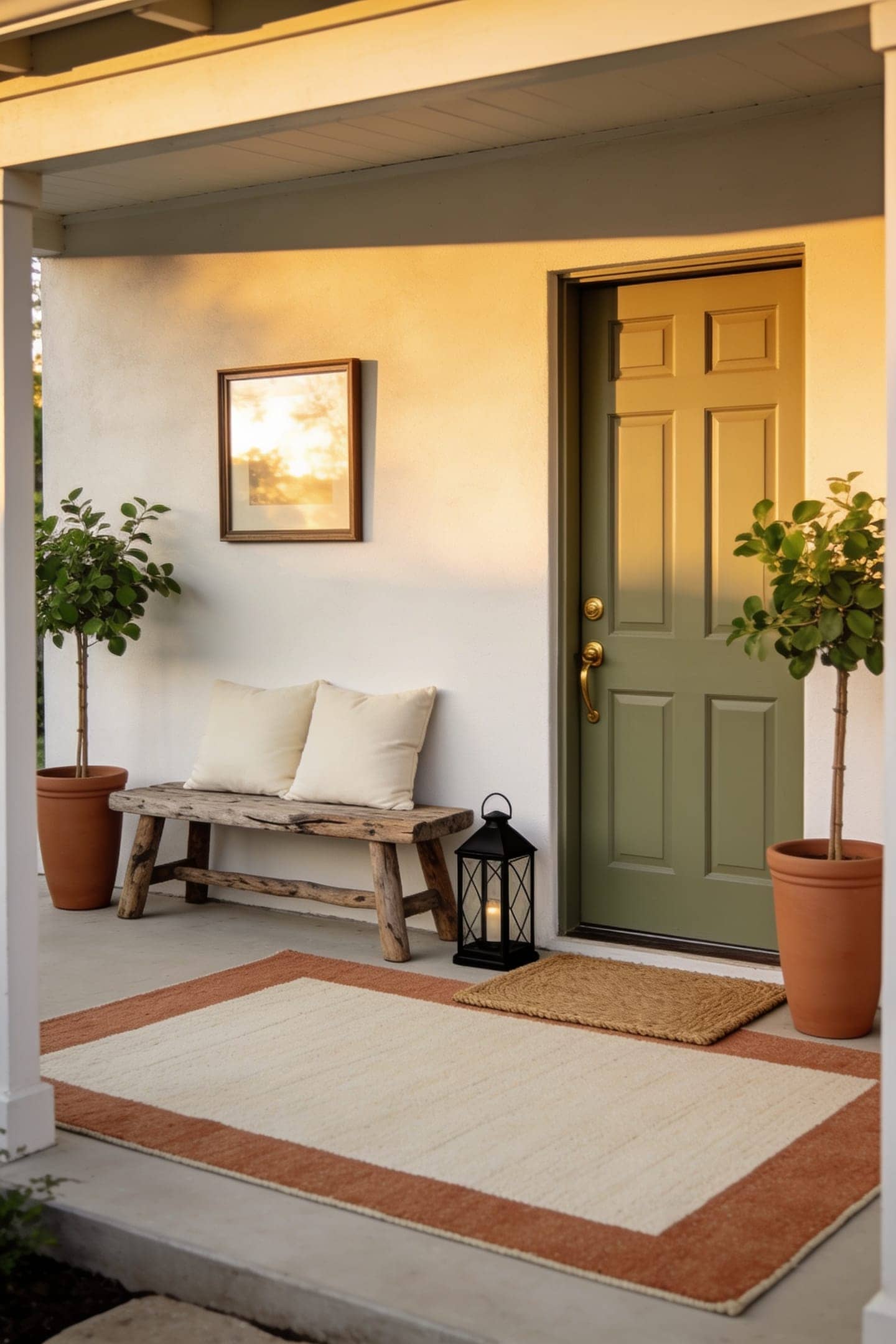
A front porch is a patio everyone walks past, and it usually gets nothing but a doormat. Style it with the same rules and it turns into a second place to sit. Start with one small bench or two chairs. Add a pair of matching planters on either side of the door, since a matched pair reads as finished from the street (these are the extra large outdoor planters under $60 I'd pick), then layer a coir doormat over a bigger outdoor rug. A lantern by the door and one seasonal touch you swap a few times a year, eucalyptus in spring or a couple of pumpkins in fall, finish it. Pull the colors from your front door so the whole thing looks planned. And once there's a real seat out front, you'll use it. Morning coffee on the porch is a different mood from the back patio, and you can pull the whole setup together for around $150 to $200.
Under a covered patio, decorate the ceiling too
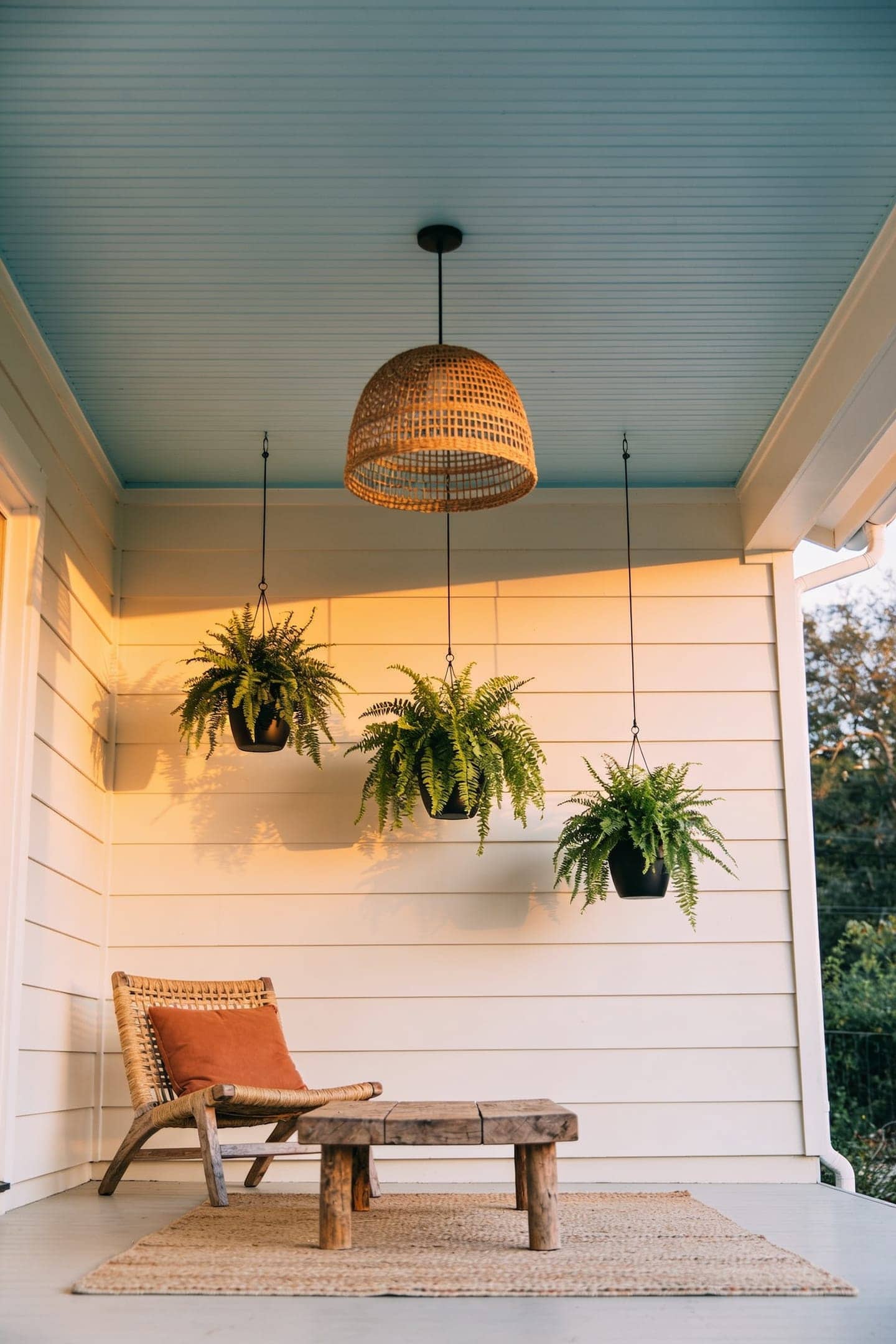
If your patio has a roof, the ceiling is the surface nobody styles, and it's the one you look at every time you lean back. Painting it a soft pale blue is the old Southern porch trick, and a gallon of exterior paint runs about $40 to $60. From there, add something that hangs: a woven pendant rated for damp locations, a strand of lights run along the beams, or two or three hanging planters with ferns, which love the shade under a cover. Hang them at different lengths so they layer instead of lining up in a row. A roof also lets you get away with a few things an open patio can't, like a weatherproof table lamp or a framed print in the most sheltered corner. One indoor-feeling detail and it stops reading as outside.
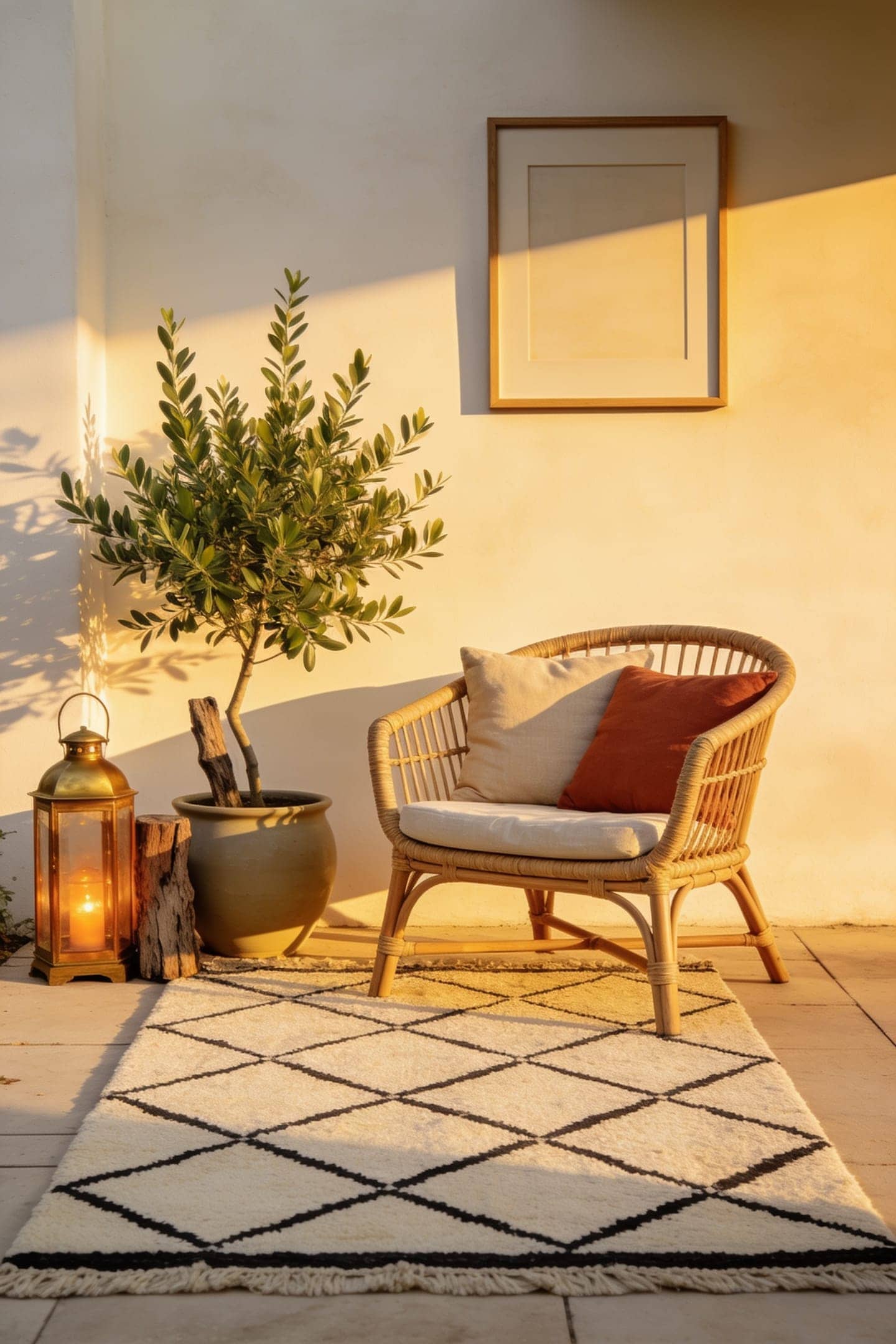
The rug does the most work, so start there.
Grounding the patio on a rug is the move that pulls every other piece together, so I lined up the budget outdoor rugs actually worth buying and ranked the ones that survive real sun and rain.
See my full list: Best Budget Outdoor Rugs