Some links here are affiliate links. If you buy through them, I may earn a small commission at no extra cost to you, and I only point to things I'd buy myself.
Carve out an entry zone where there isn't one
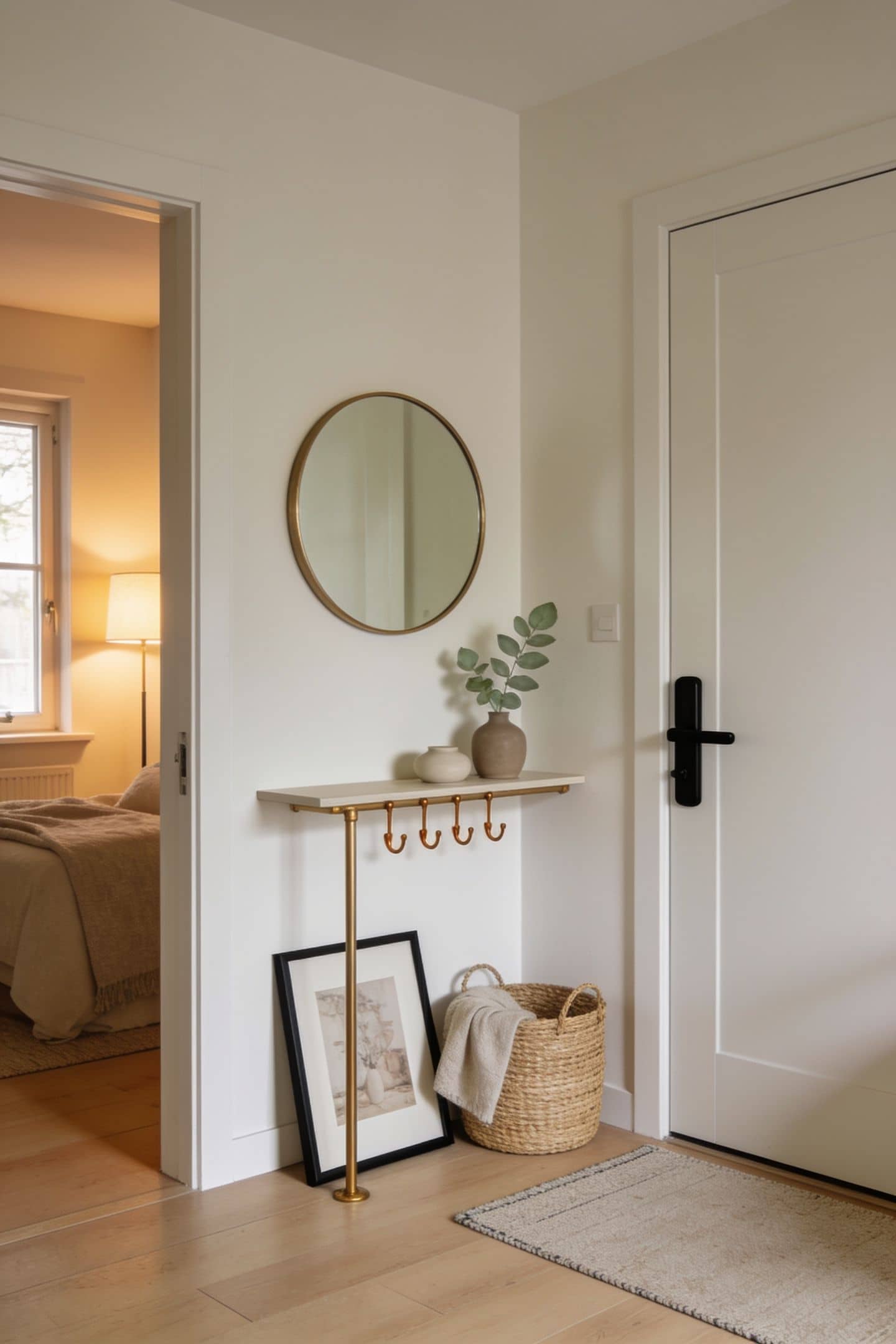
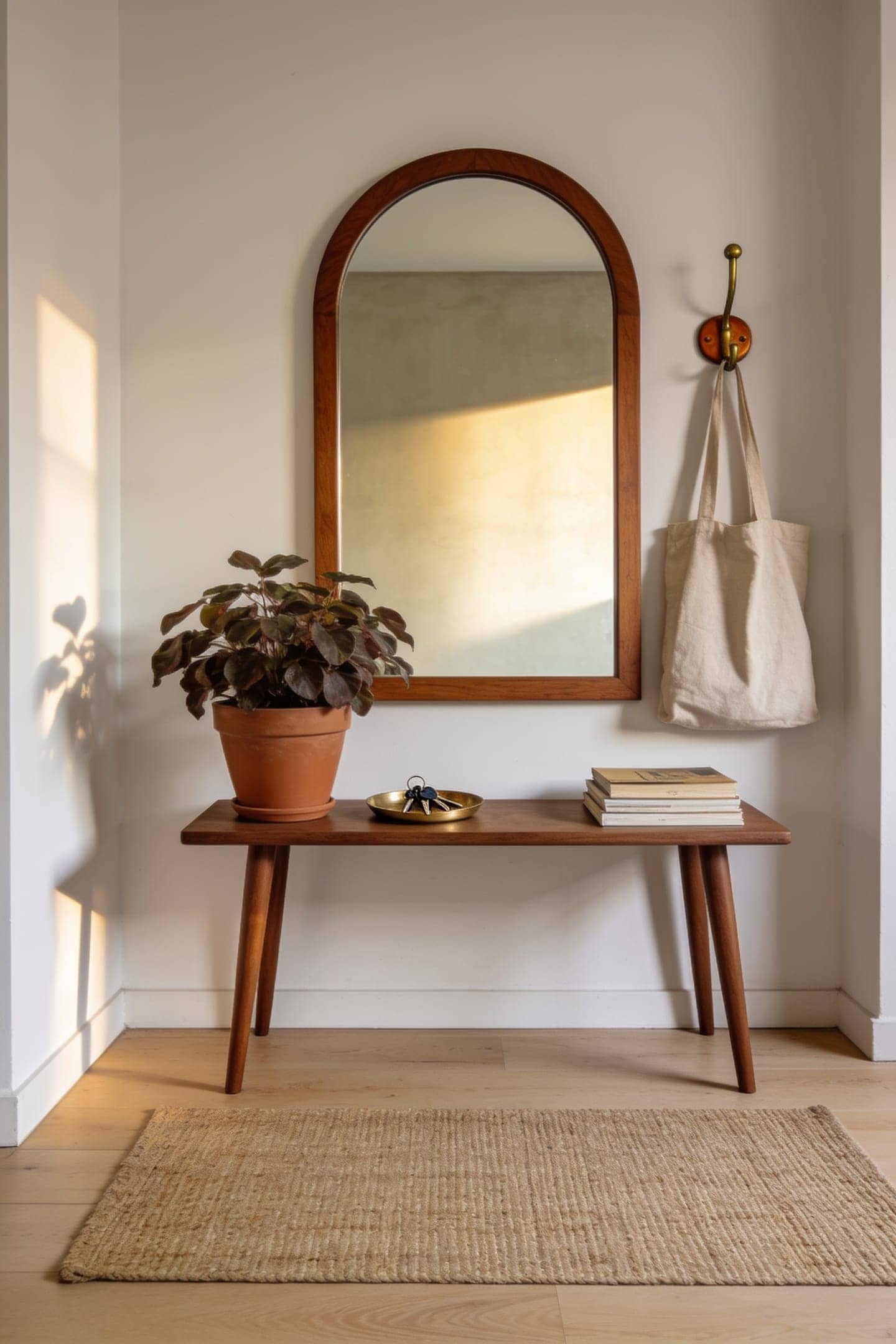
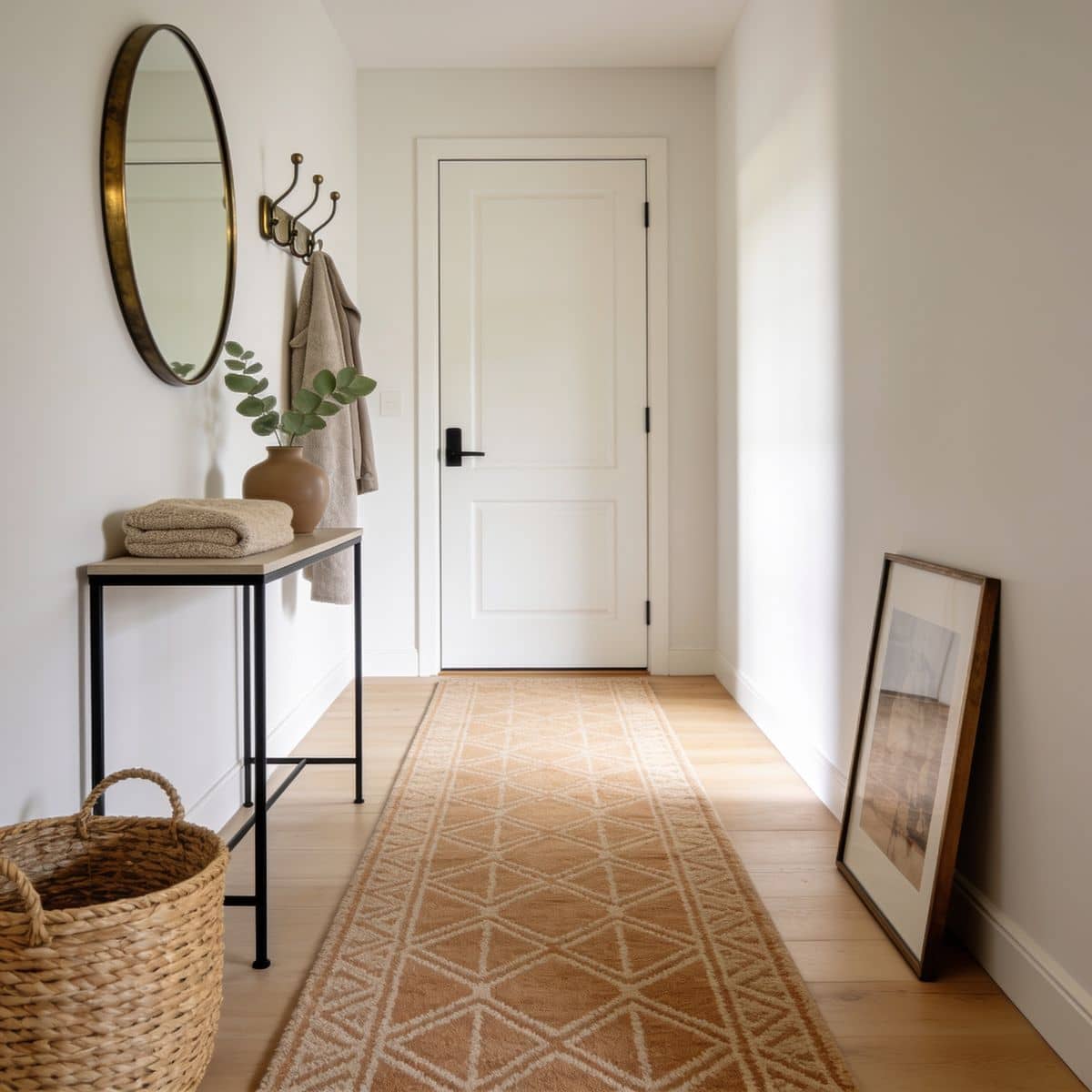
The trick is to define the spot, not build it. A small rug, a narrow console, and a mirror above it, that trio tells your brain "this is the entryway" even if it's just two feet of wall by the door. You're not finding more space, you're giving the space you have a job. Once it reads as a zone, everything else falls into place.
Anchor it with a console that's barely deep
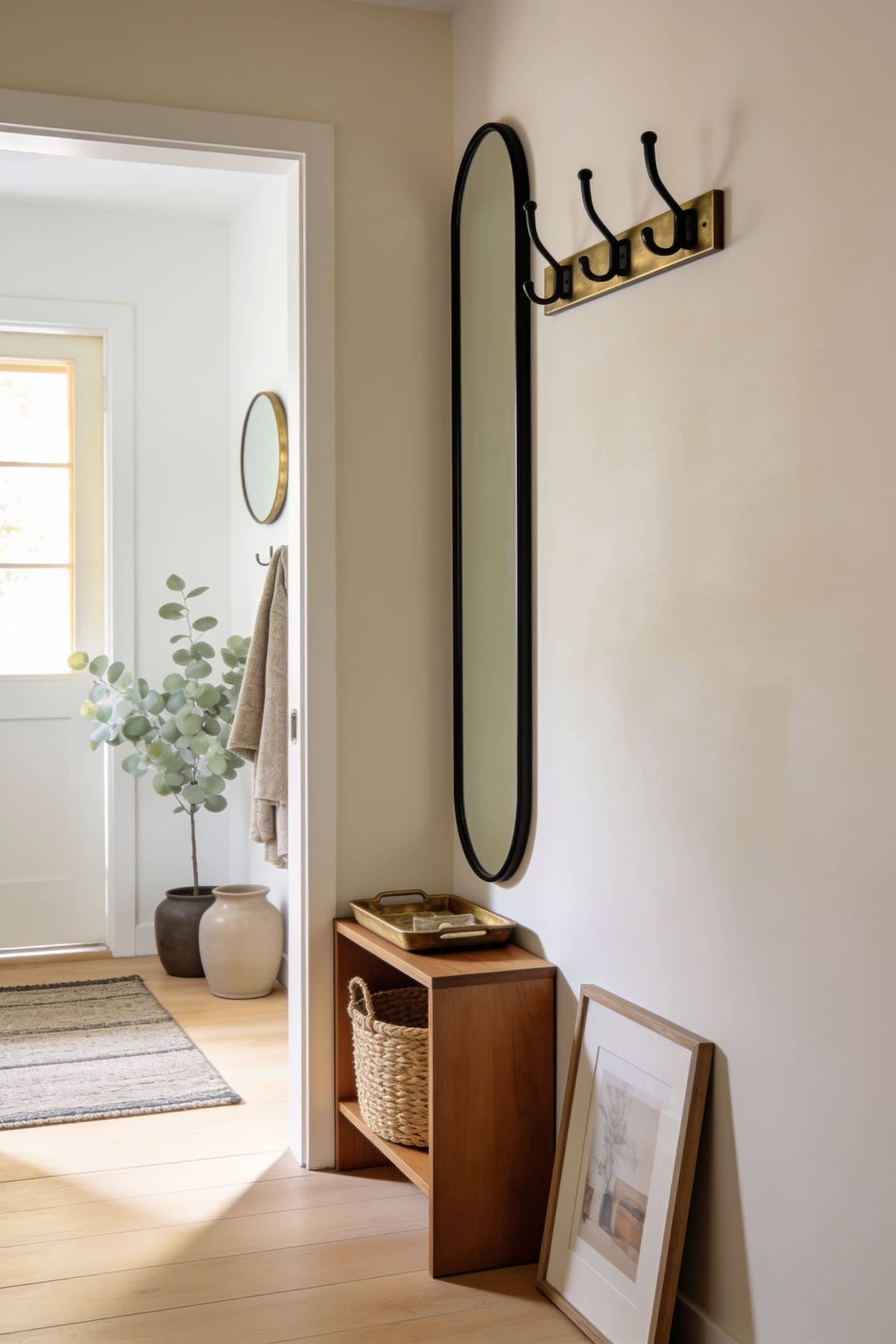
A regular console will eat your walkway. The whole game in an apartment entry is depth: look for something 10 to 12 inches deep so it hugs the wall and you can still get the door open. A narrow console gives you a surface for keys and a shelf for a basket below, which is most of an entryway in one piece.
The ranked roundupThe right console is most of an entryway in one piece, so I lined up the budget ones narrow enough to actually fit a hallway and ranked them.
See the roundup: 10 Best Budget Console TablesHang a mirror for the last look and more light
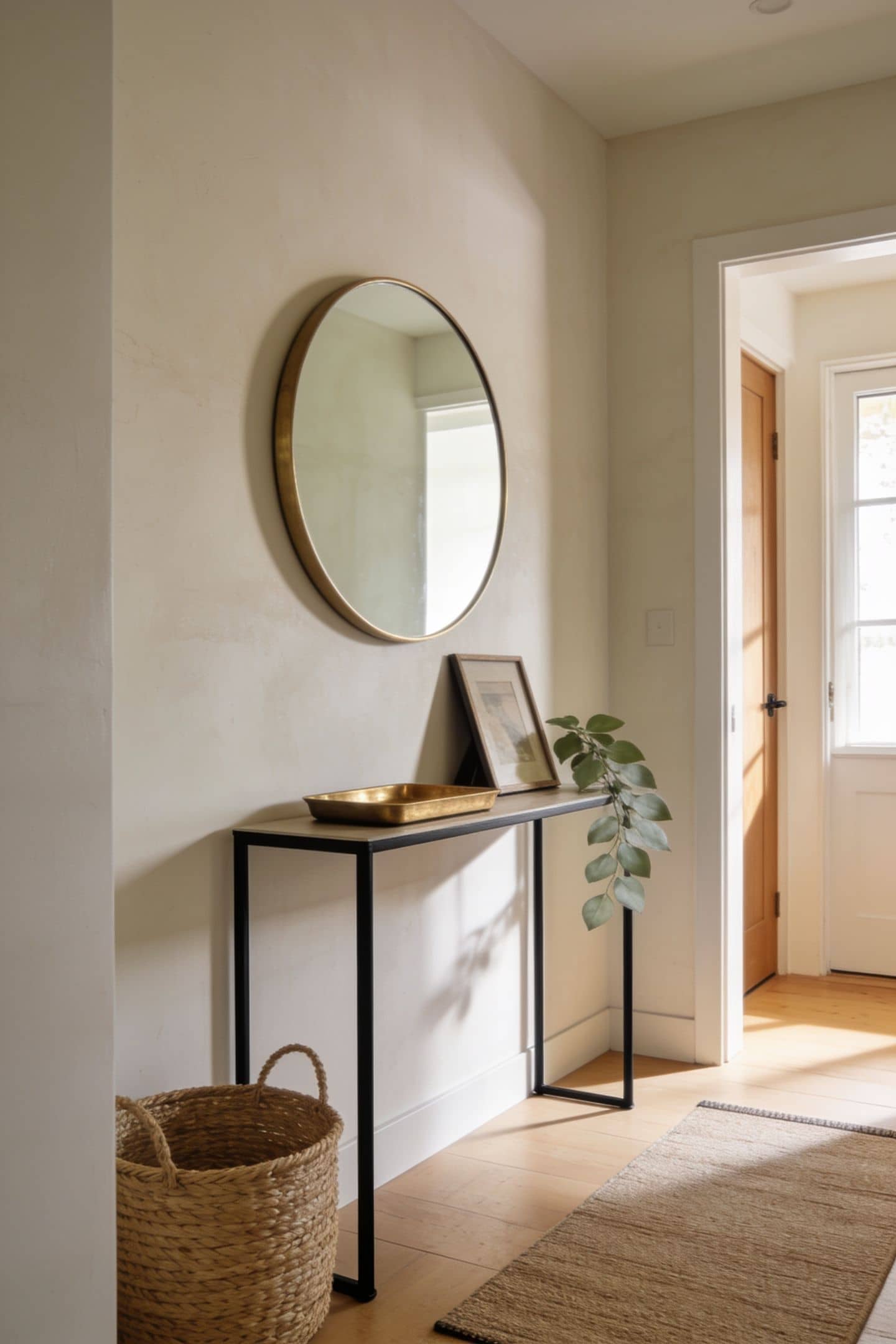
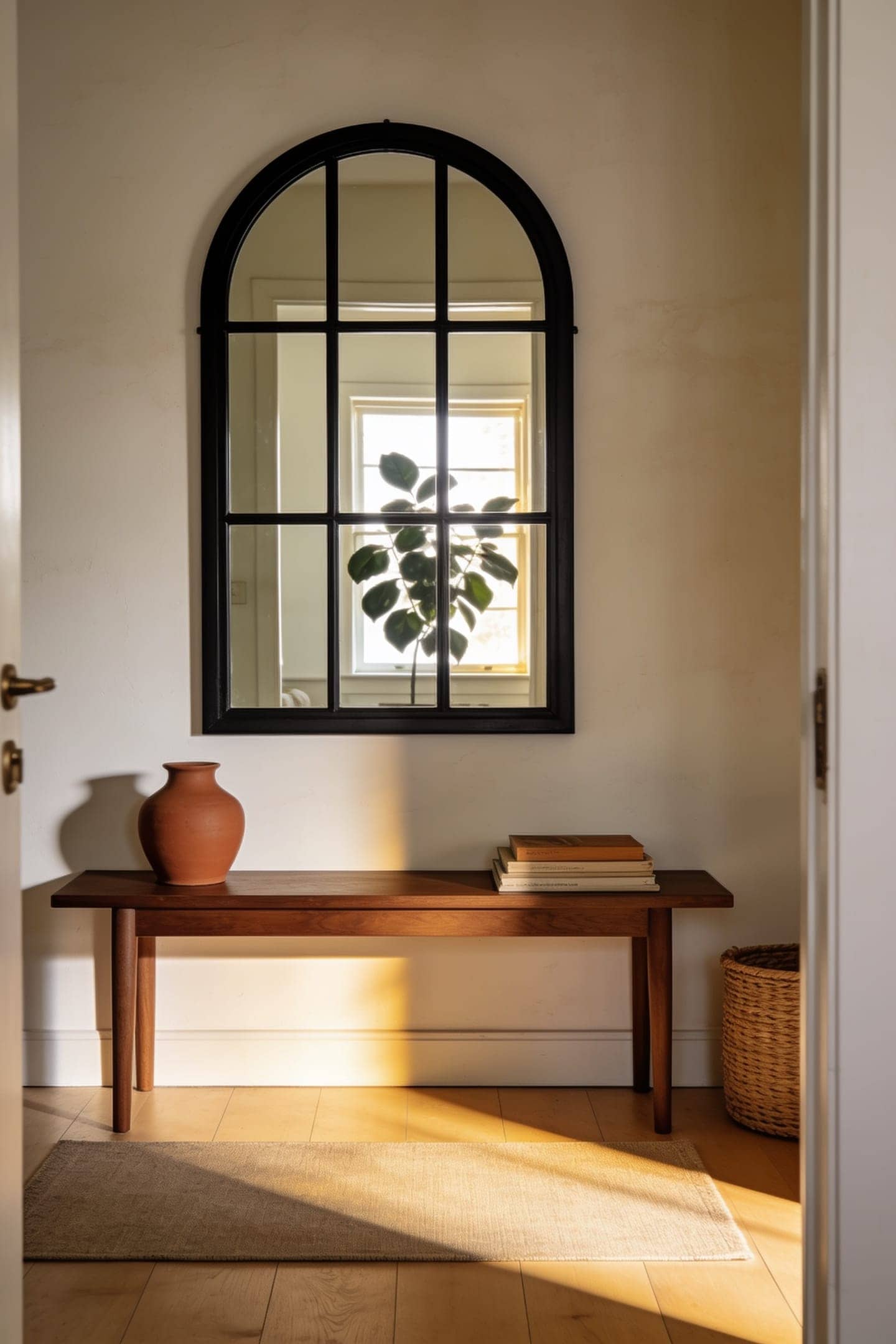
A mirror over the console does two unglamorous jobs really well. It's the last-look spot before you leave, and it bounces what little light you have deeper into a dim entry. Hang it so the center sits around eye level, and if your hallway is dark, angle it to catch a window or a lamp. It makes a cramped entry feel twice as open. More shapes and placements in my small entryway mirror ideas.
Give keys and mail one landing spot
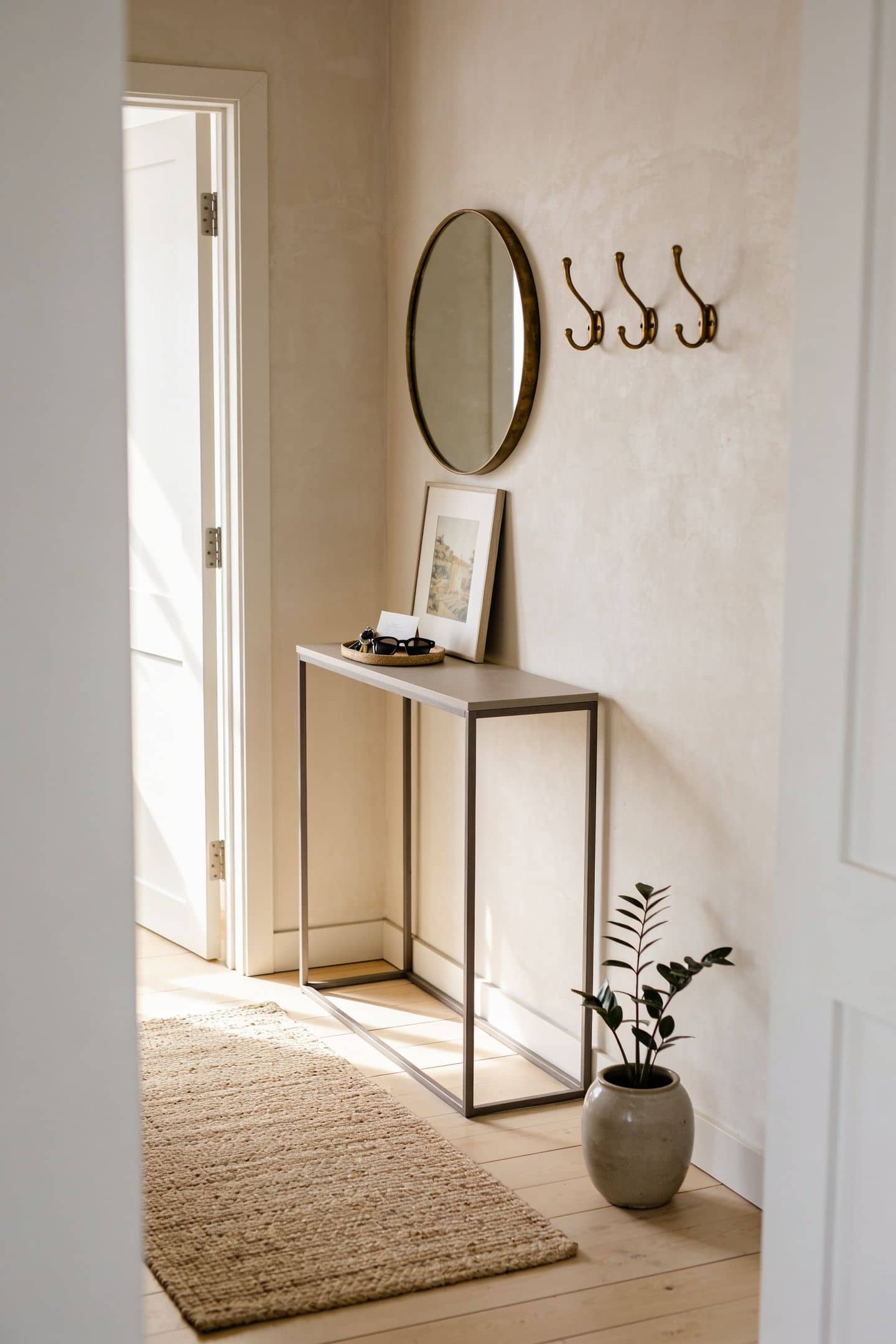
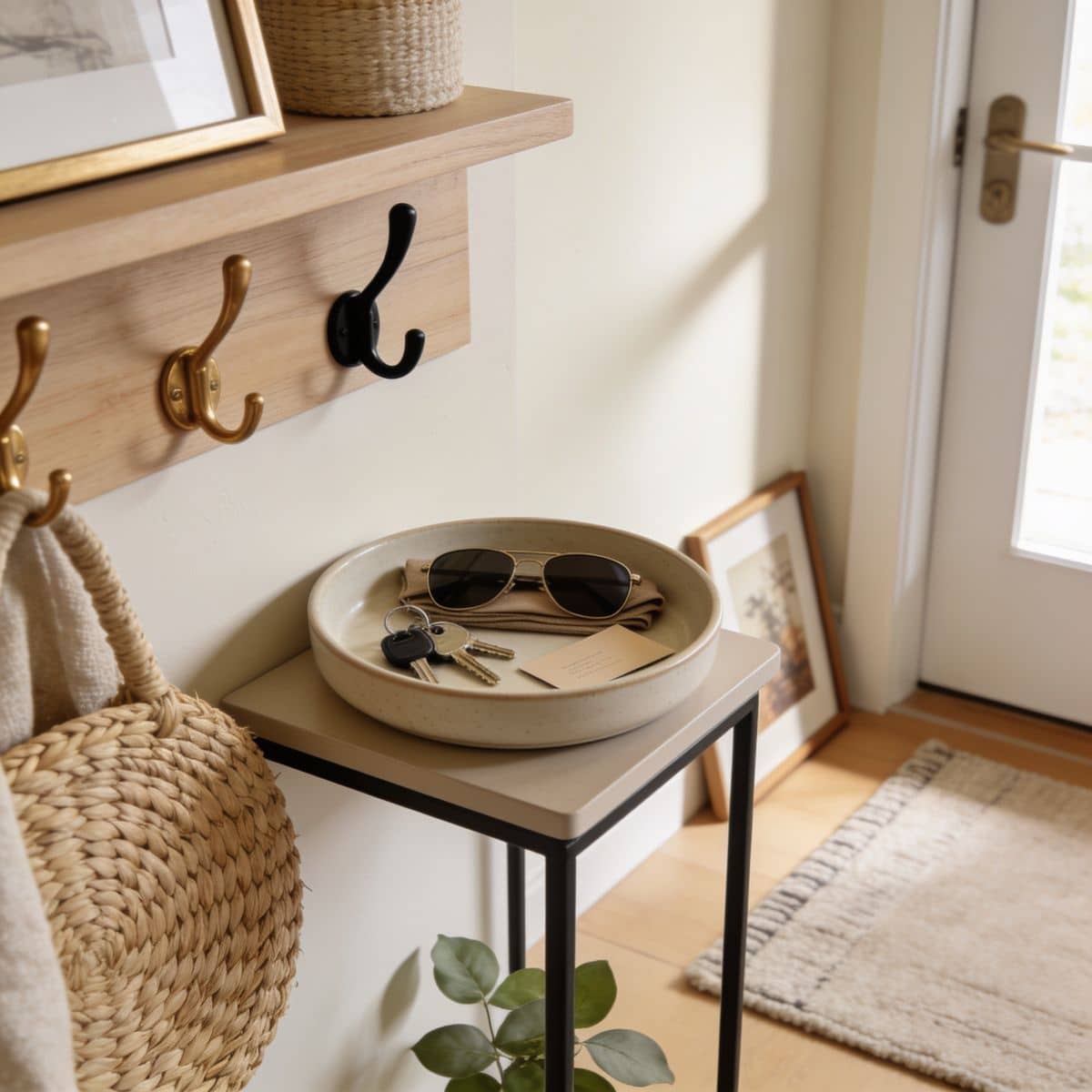
Half the entryway battle is just the keys-and-mail pile, and it migrates to the kitchen the second it has nowhere to live. A little tray on the console fixes that for about ten dollars. Keys, sunglasses, the one card you keep losing, all in one spot you pass on the way out. It looks intentional and it actually saves you the morning scramble.
Put coats on the wall, no closet needed
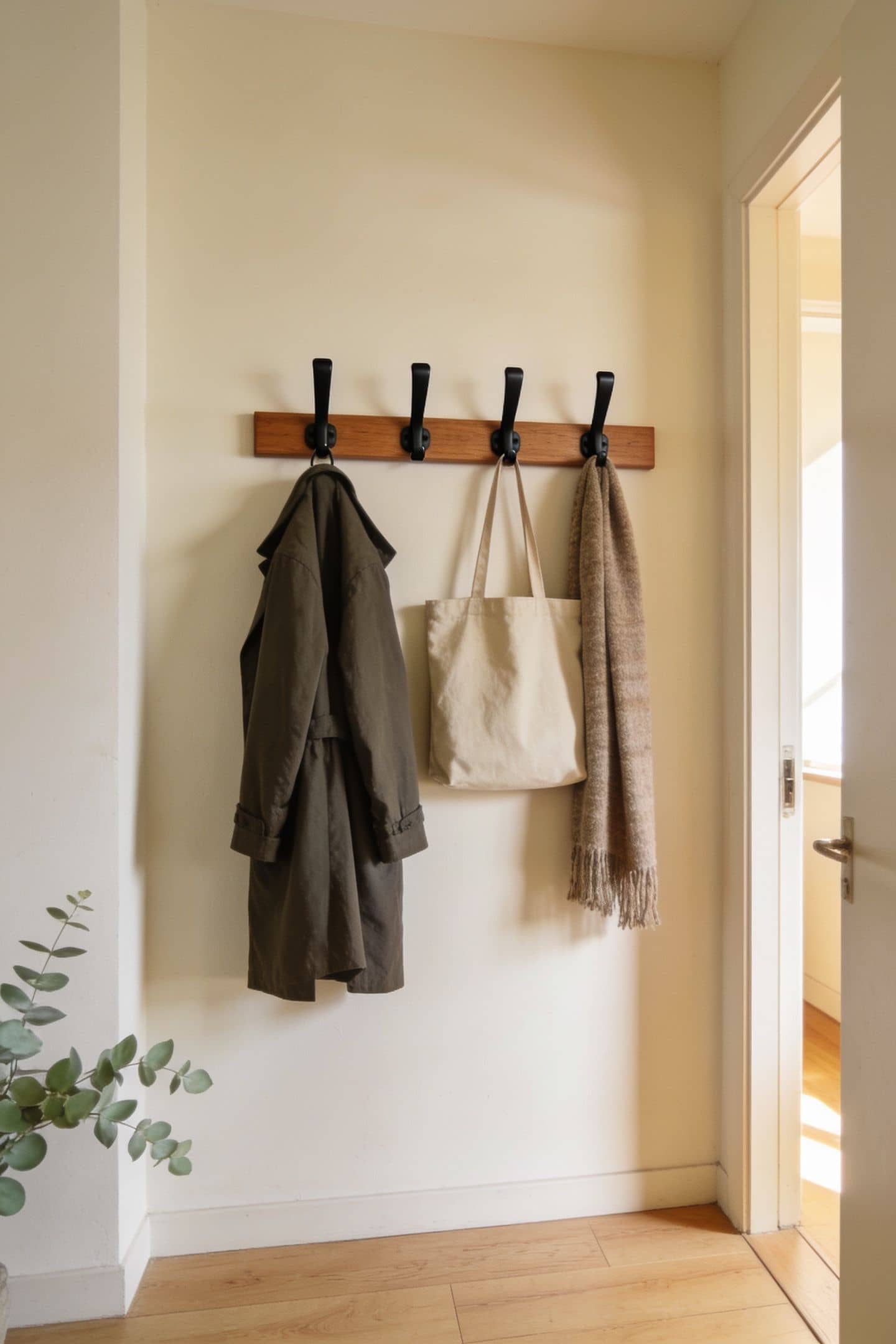
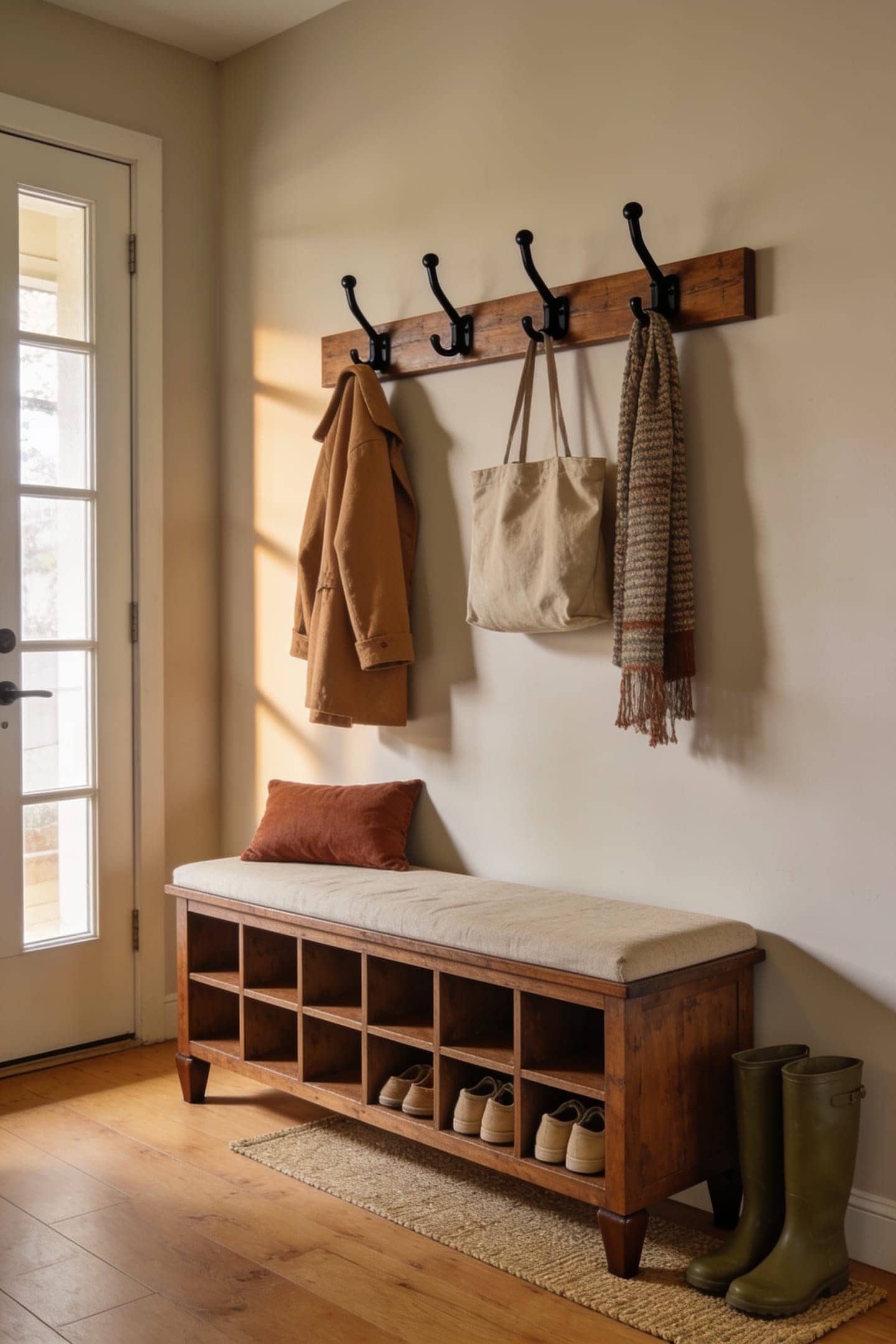
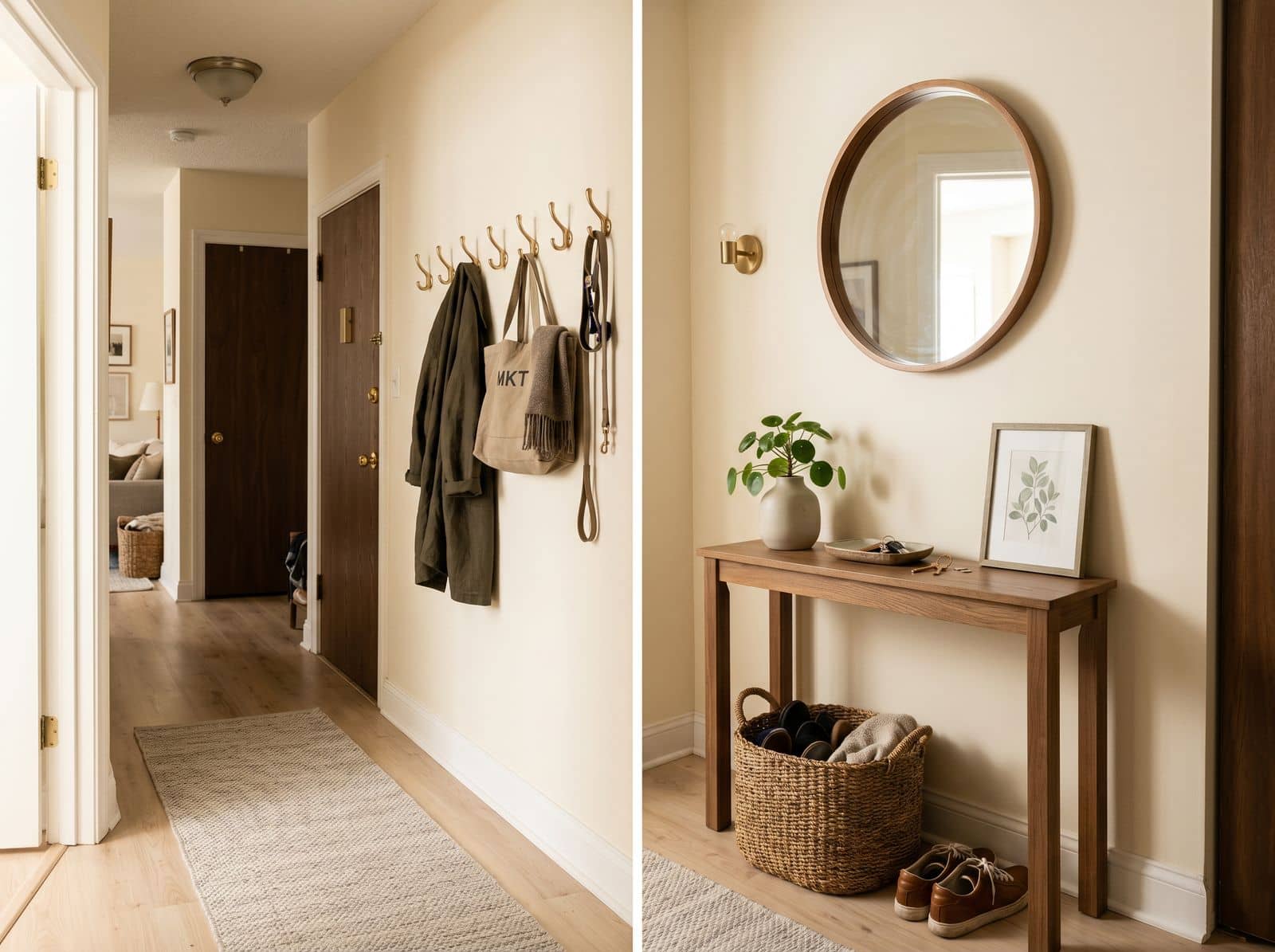
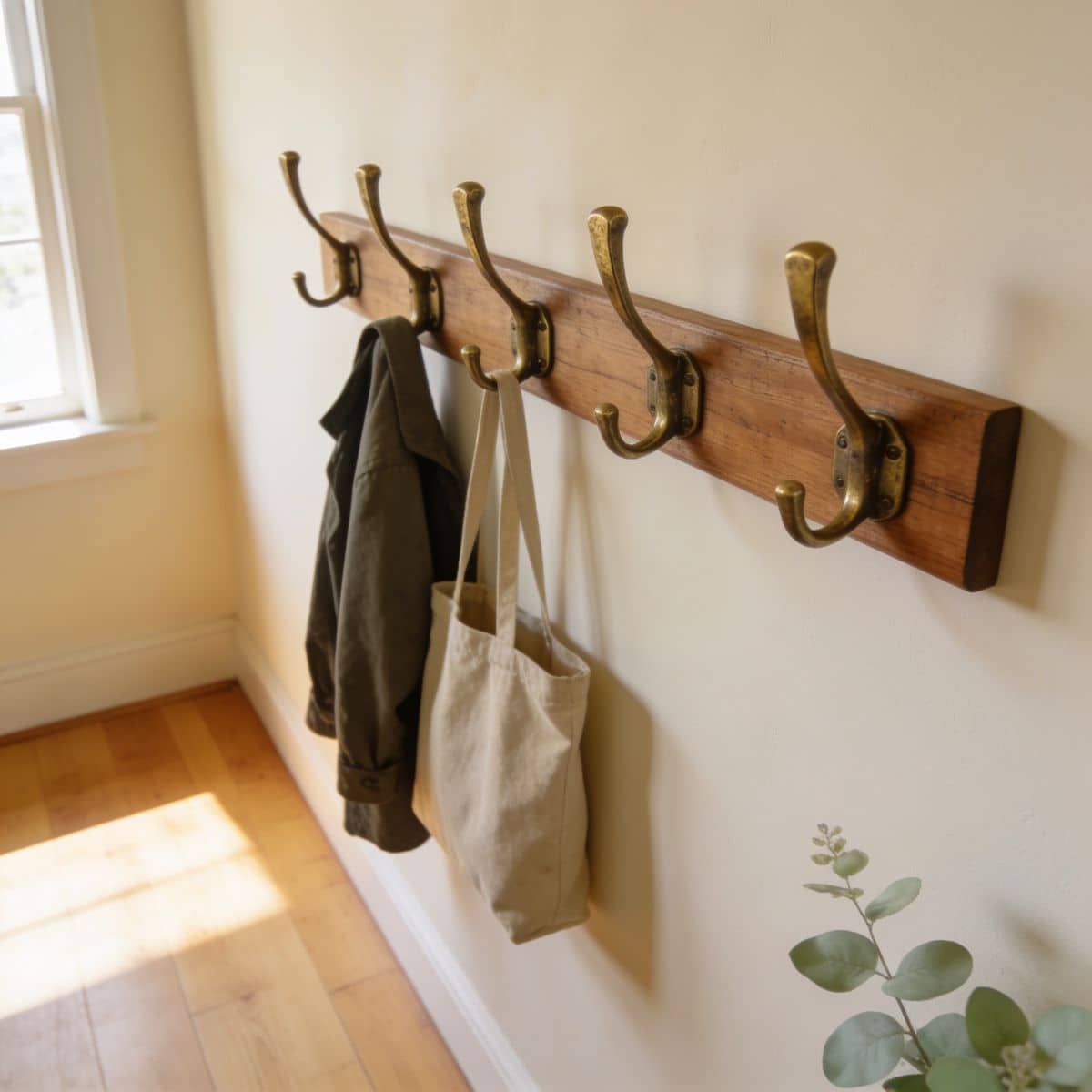
No entry closet? The wall is your closet. A mounted hook rail, or a few sturdy hooks, holds coats, the everyday tote, the dog leash, all at the door where you reach for them. Renters: a rail on heavy command strips or a few well-placed screws does it. Keep them low enough that you actually use them, not so high the coats look hung for show.
Lay a runner to catch grit and mark the path
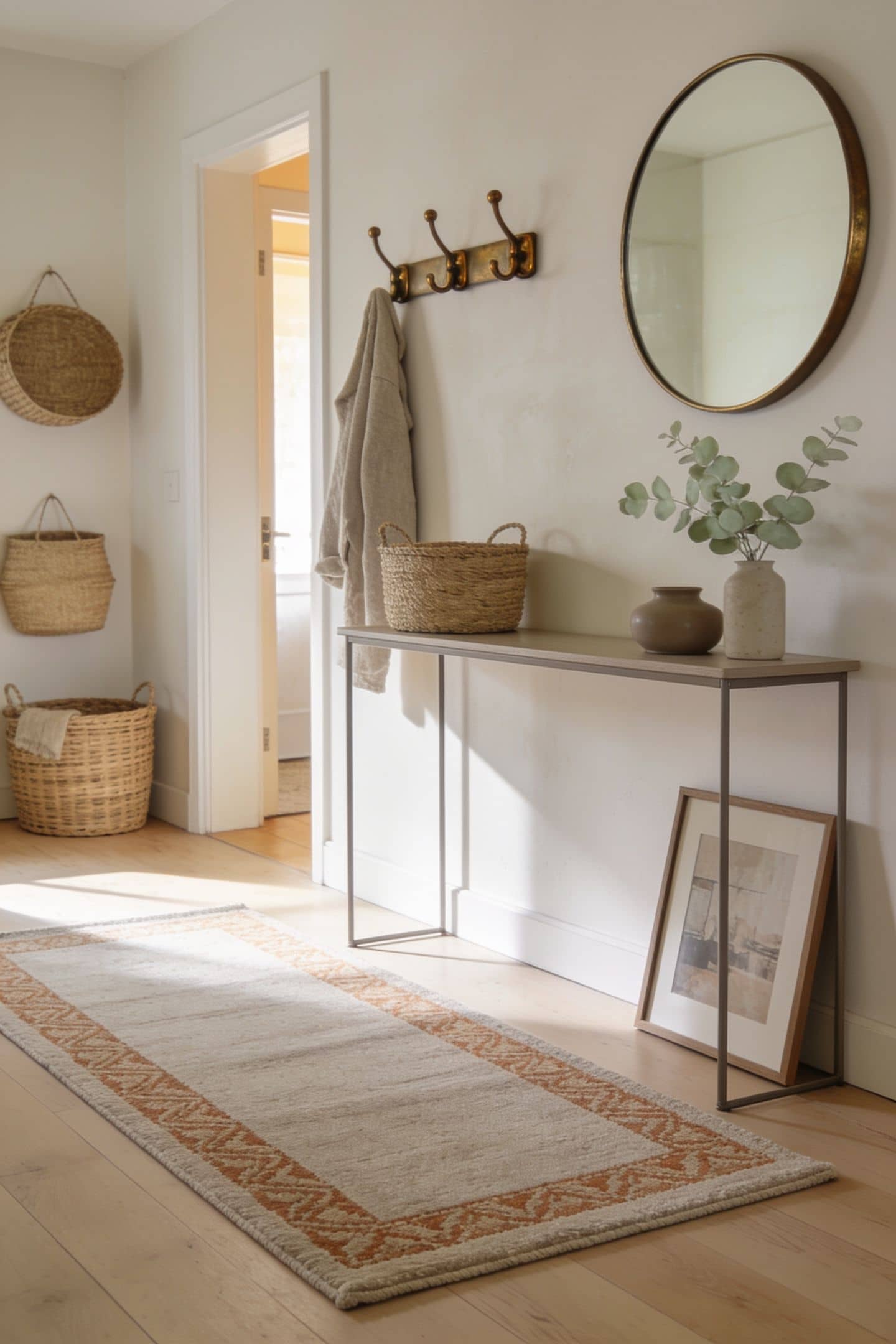
A runner does more than soften the floor. It catches the dirt that walks in, it muffles the hard echo of an entry, and it draws a little path that tells you where the zone ends. Get a washable, low-pile one so you can throw it in the machine when it's had a muddy week. My washable rugs guide has a 2x8 runner for about $25. A runner is the cheapest way to make a bare entry feel finished.
Hide the shoe pile, don't fight it
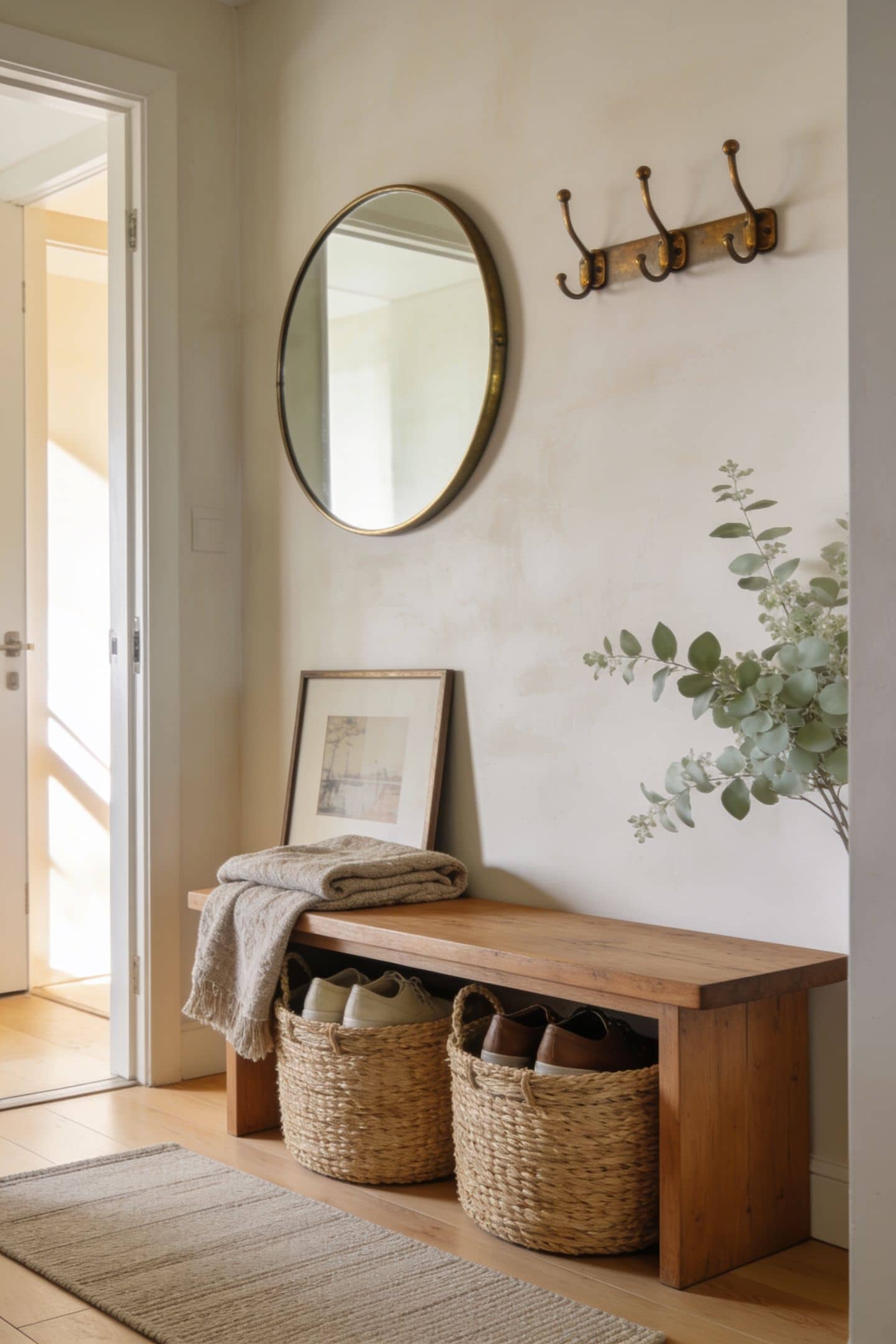
Shoes by the door are not going anywhere, so give them a tidy home instead of nagging yourself about them. A low bench with a couple of cheap storage baskets tucked under it hides the pile and gives you somewhere to sit and pull boots on. If a bench won't fit, two baskets on the floor under the console do the same job for less. I ranked the benches, hooks and boot trays that fit a tight entry in my budget mudroom storage picks.
Steal vertical space with a floating shelf
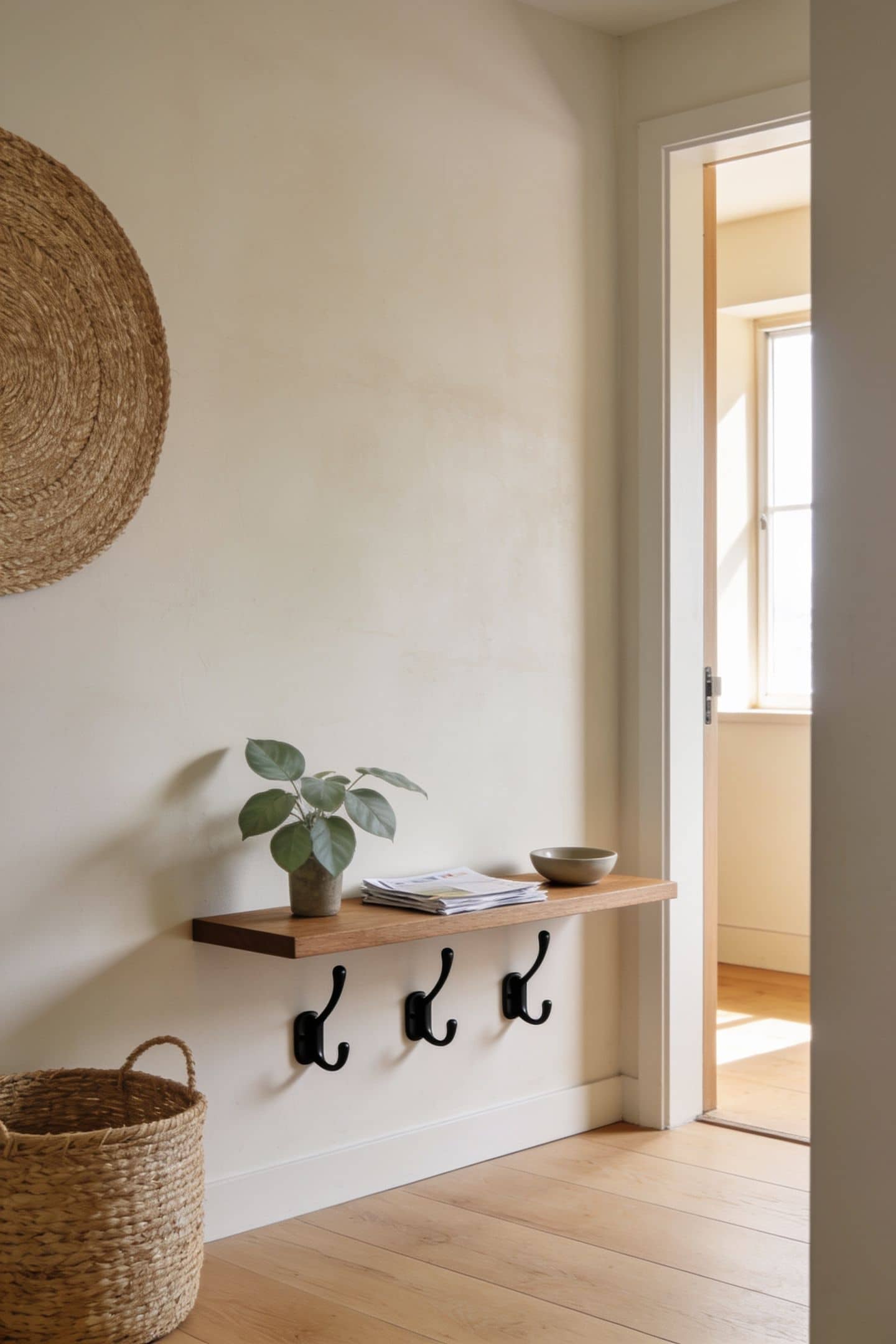
When the floor is full, go up. A single floating shelf above the console gives you a second surface for a plant, a stack of mail, a little dish, without adding one inch of footprint. In a really tight entry, skip the console entirely and let a deep floating shelf be the whole landing spot. Vertical is the space apartments forget they have.
Add warm light so it's not lit like a hallway
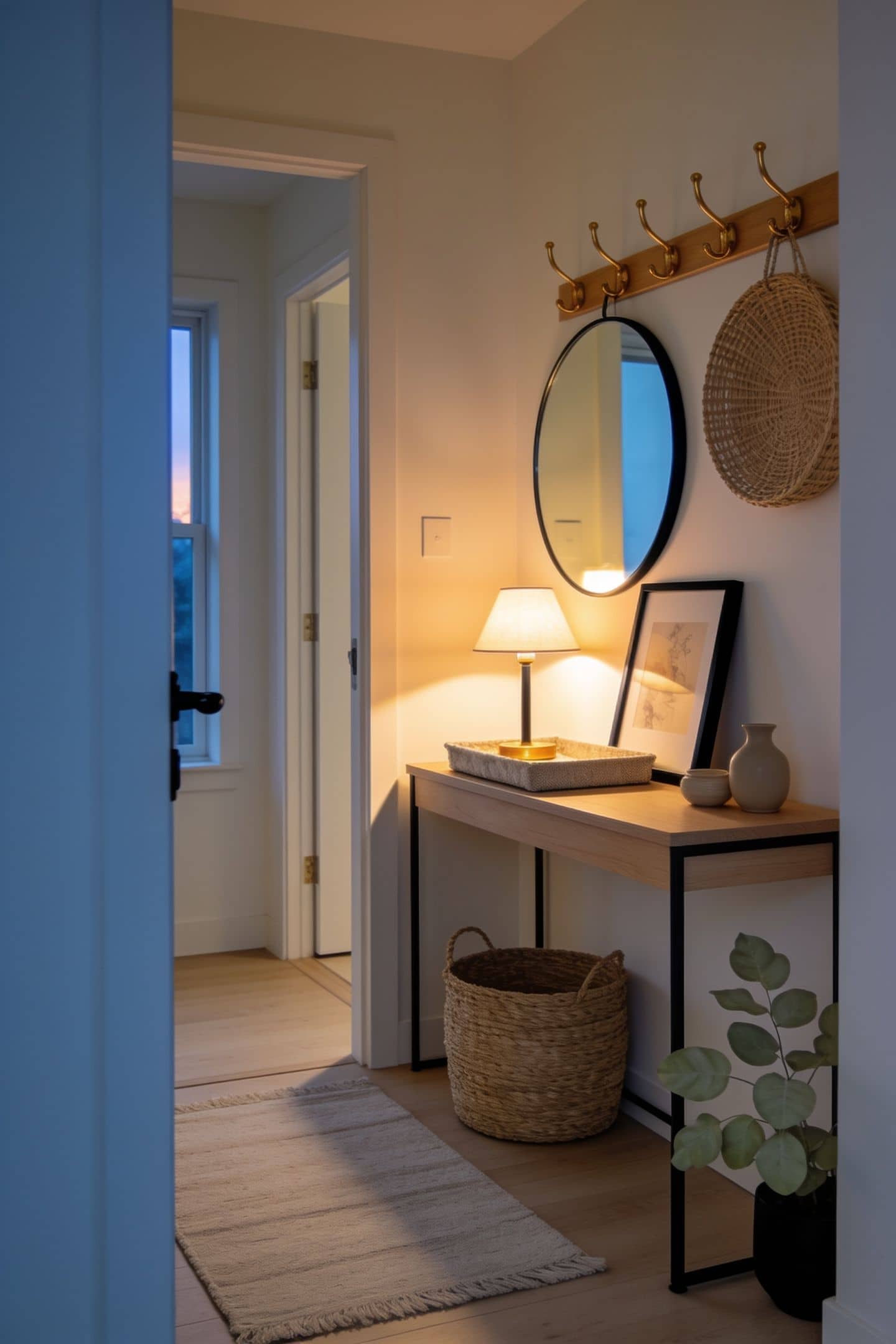
Most apartment entries are lit by one flat overhead, or nothing at all. A small lamp on the console, or a plug-in sconce on the wall, gives you a warm pool of light right where you come in. It's the difference between walking into a corridor and walking into your home. Warm bulb, never the blue-white kind, that's the whole mood.
Style the console as a tight little vignette
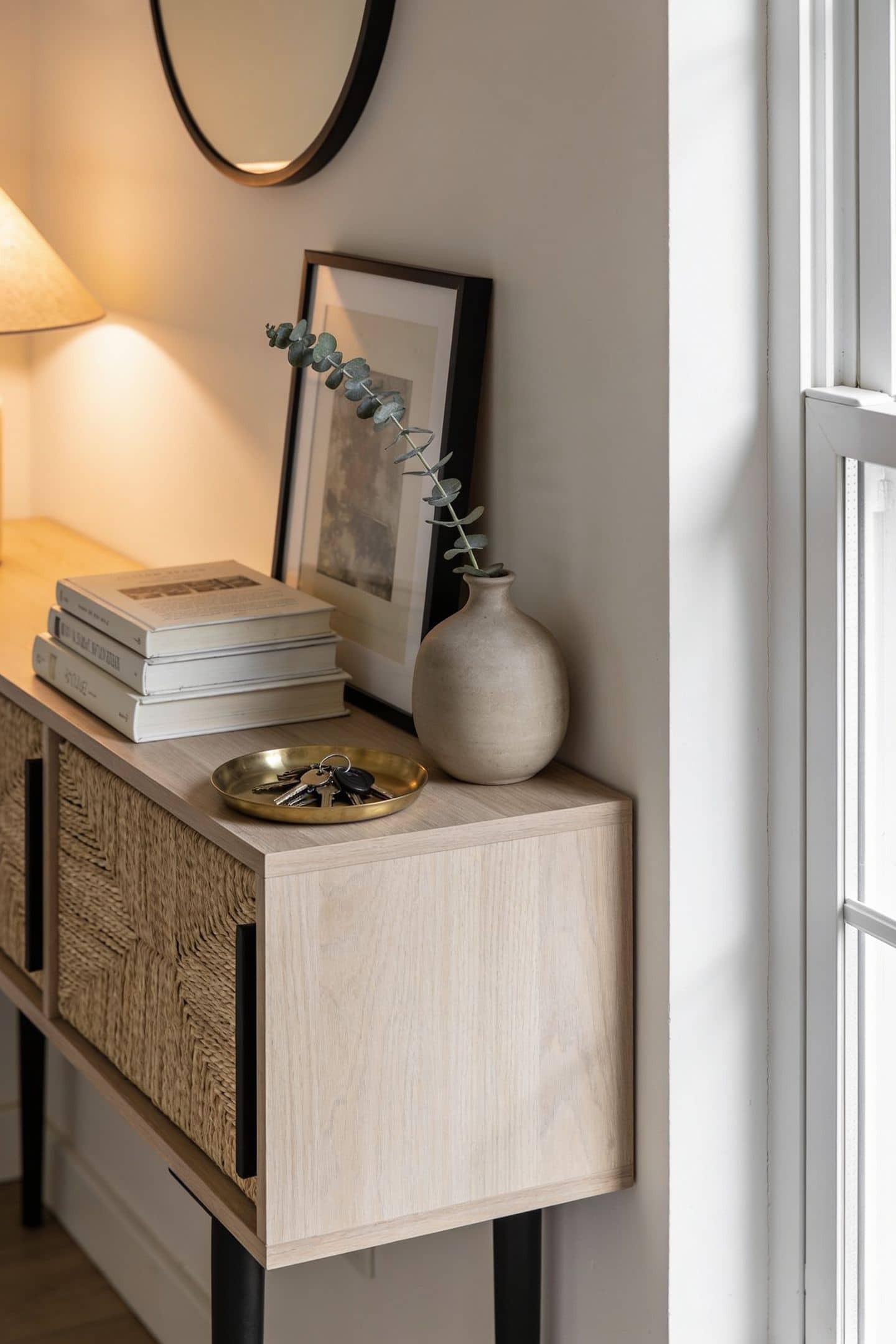
An empty console looks unfinished, an overloaded one looks like a dumping ground. The sweet spot is a small grouping: a frame leaned against the wall, a short stack of books, a vase or a candle, the tray for keys. Three or four things, varied heights, a little breathing room. It reads styled, and there's still space to actually set your stuff down.
Work the back of the door and the trim
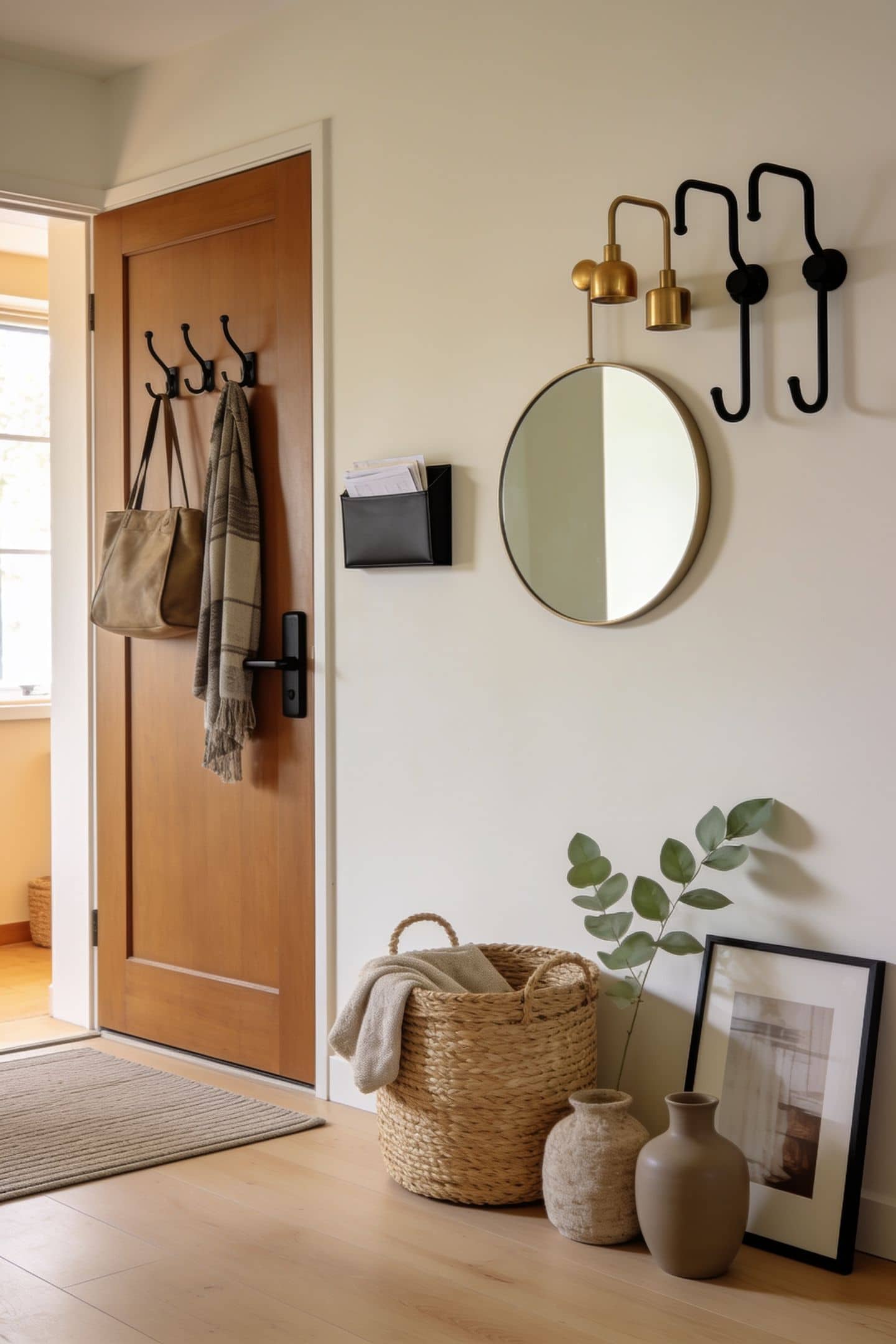
The back of the door is free real estate. Over-the-door hooks hold bags and scarves with zero wall damage, perfect for a rental. A slim wall pocket near the door corrals mail and the takeout menus so they don't drift to the counter. These are the spots that turn a no-storage entry into one that quietly handles the daily stuff.
Bring in one bit of green for life
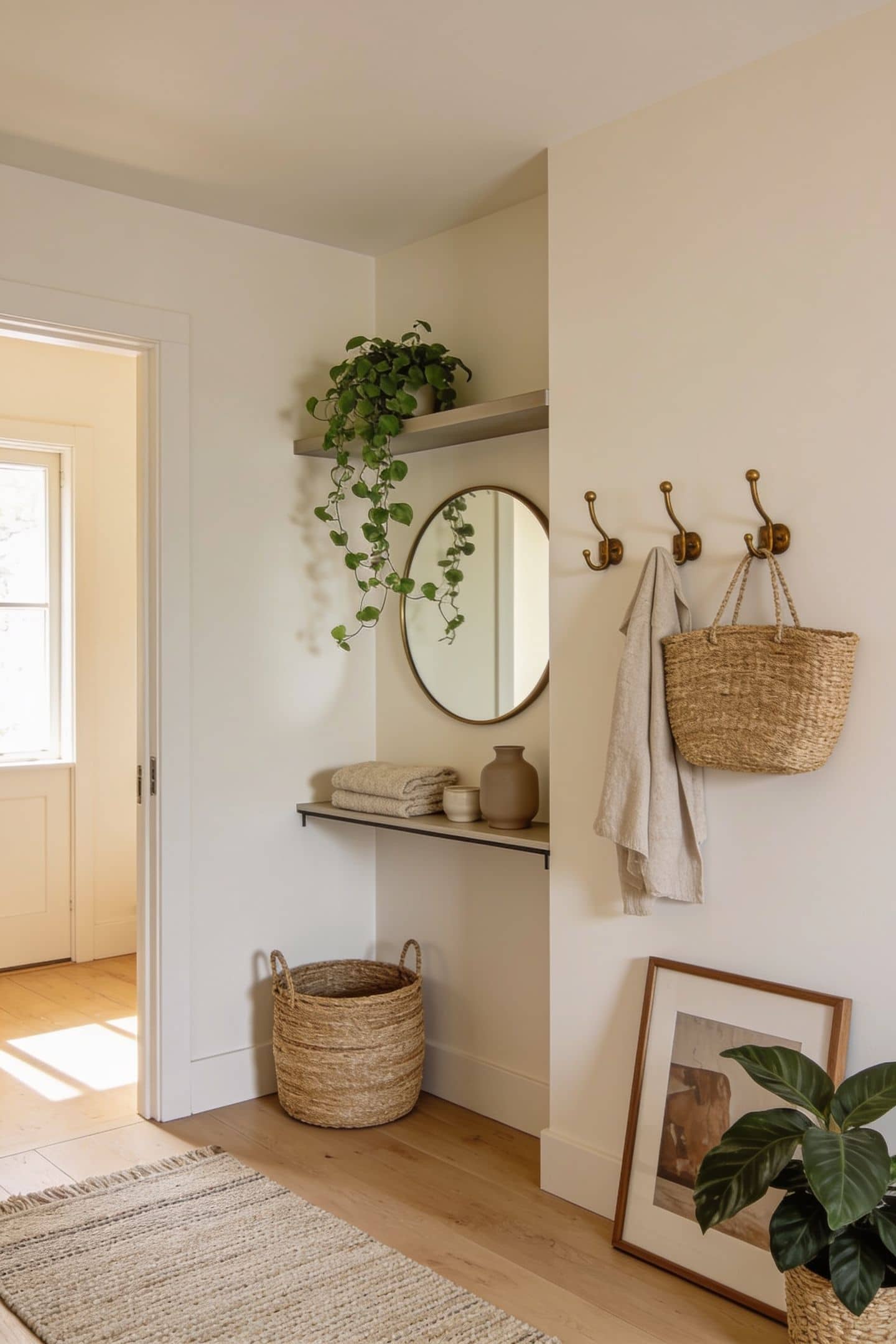
One plant changes the whole feel of an entry. A trailing pothos on the shelf, a little snake plant on the console, even a single eucalyptus stem in a vase. It softens the hard edges of a tight space and makes the first thing you see something living instead of a row of hooks. If your entry is dark, fake greenery is no shame here.
Give everything a home so the surface stays clear
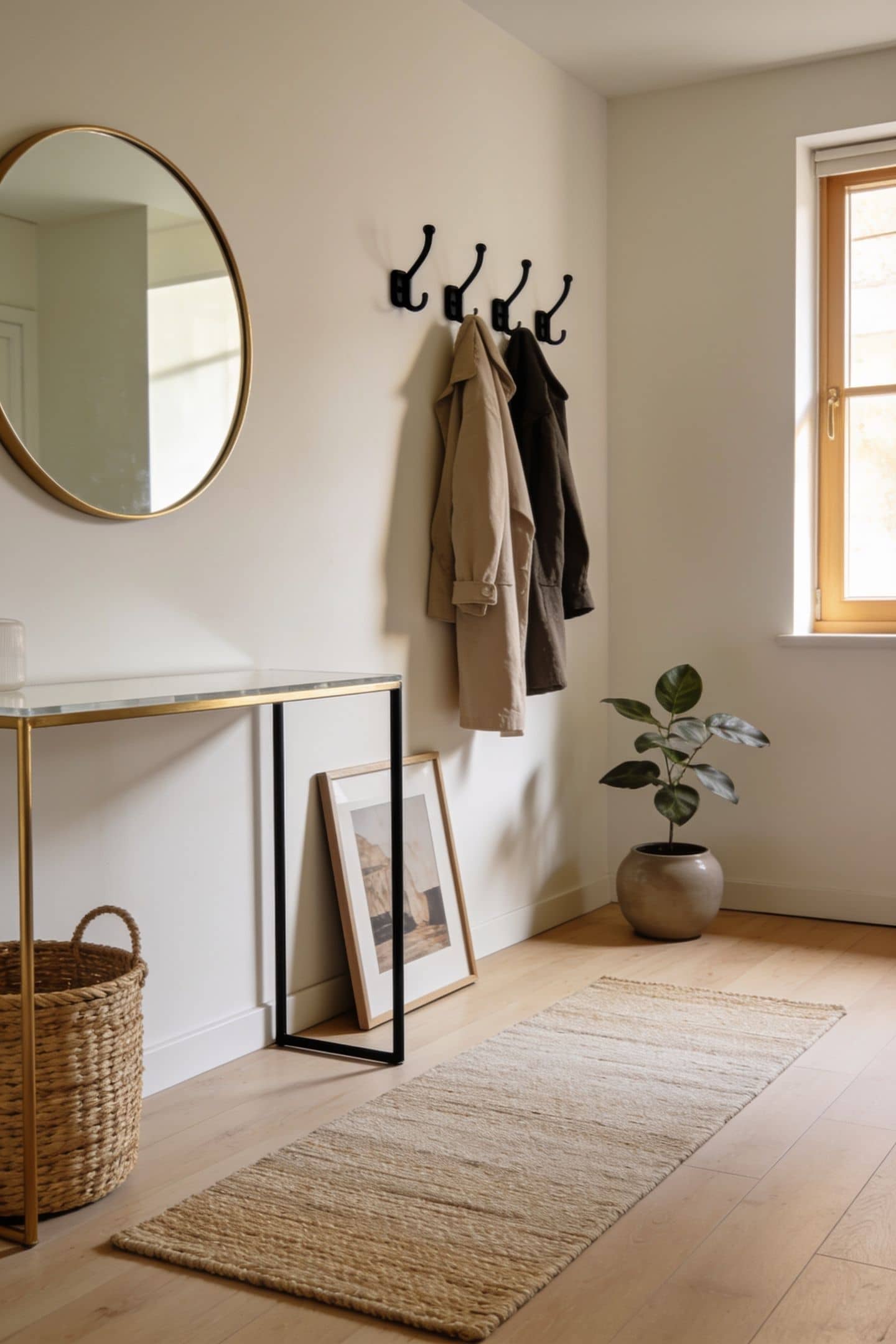
This is what keeps a small entry from sliding back into chaos. Once the keys have a tray, the coats have hooks, the shoes have a basket, the surface can stay mostly clear, and a clear surface is what makes a tiny entry feel calm instead of cramped. Decide where each thing lives, then the entryway pretty much runs itself. That's the win in a small space. For bigger entries and mudrooms too, I keep my small entryway decor ideas together on one page.
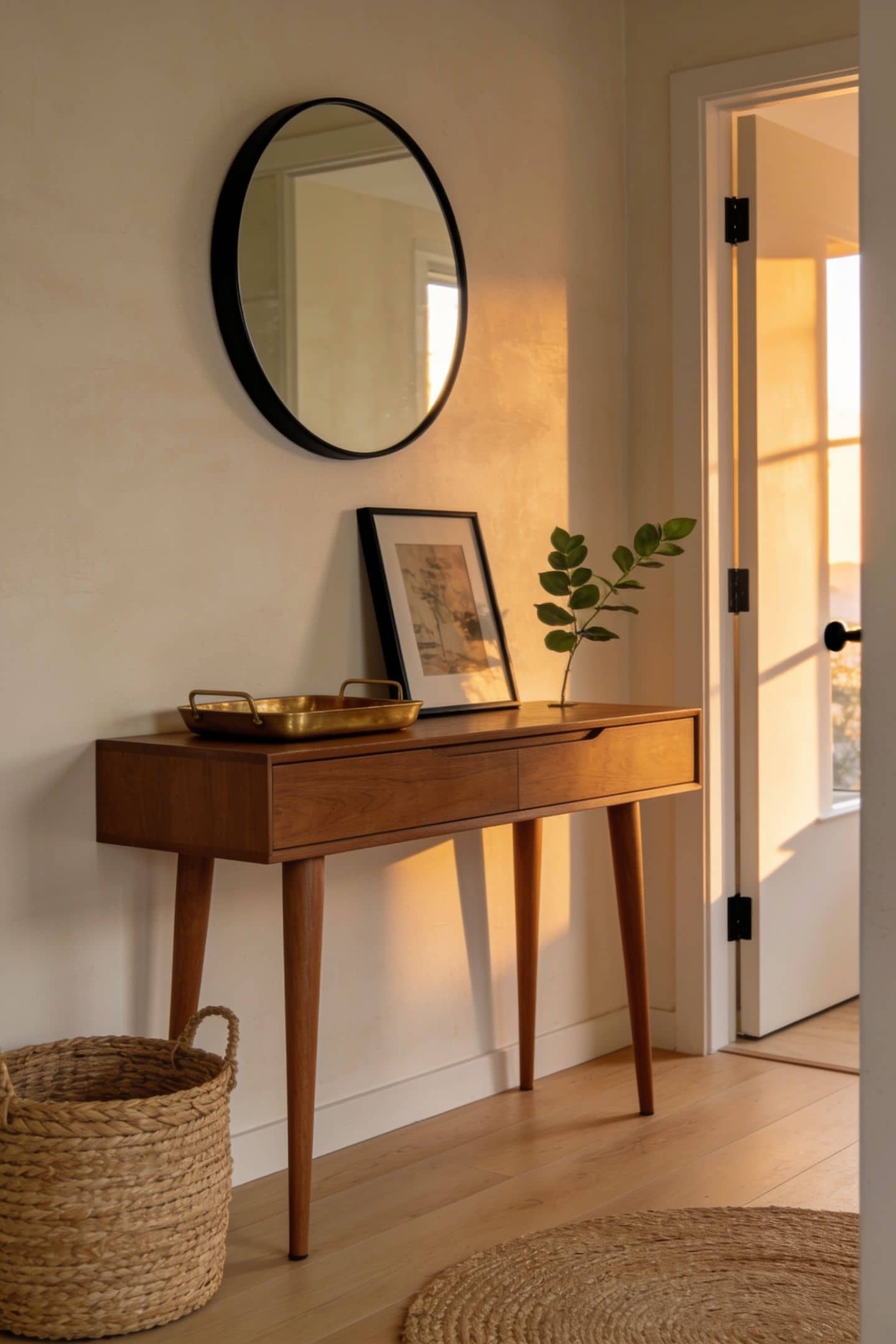
That console does the heavy lifting, so I ranked them.
The console is the one piece a small entryway is built around, so I lined up the budget ones that are actually narrow enough for an apartment and ranked the ones worth buying.
See my full list: Best Budget Entryway Console Tables