Some links here are affiliate links. If you buy through them, I may earn a small commission at no extra cost to you, and I only point to things I'd buy myself.
Go bigger than feels safe
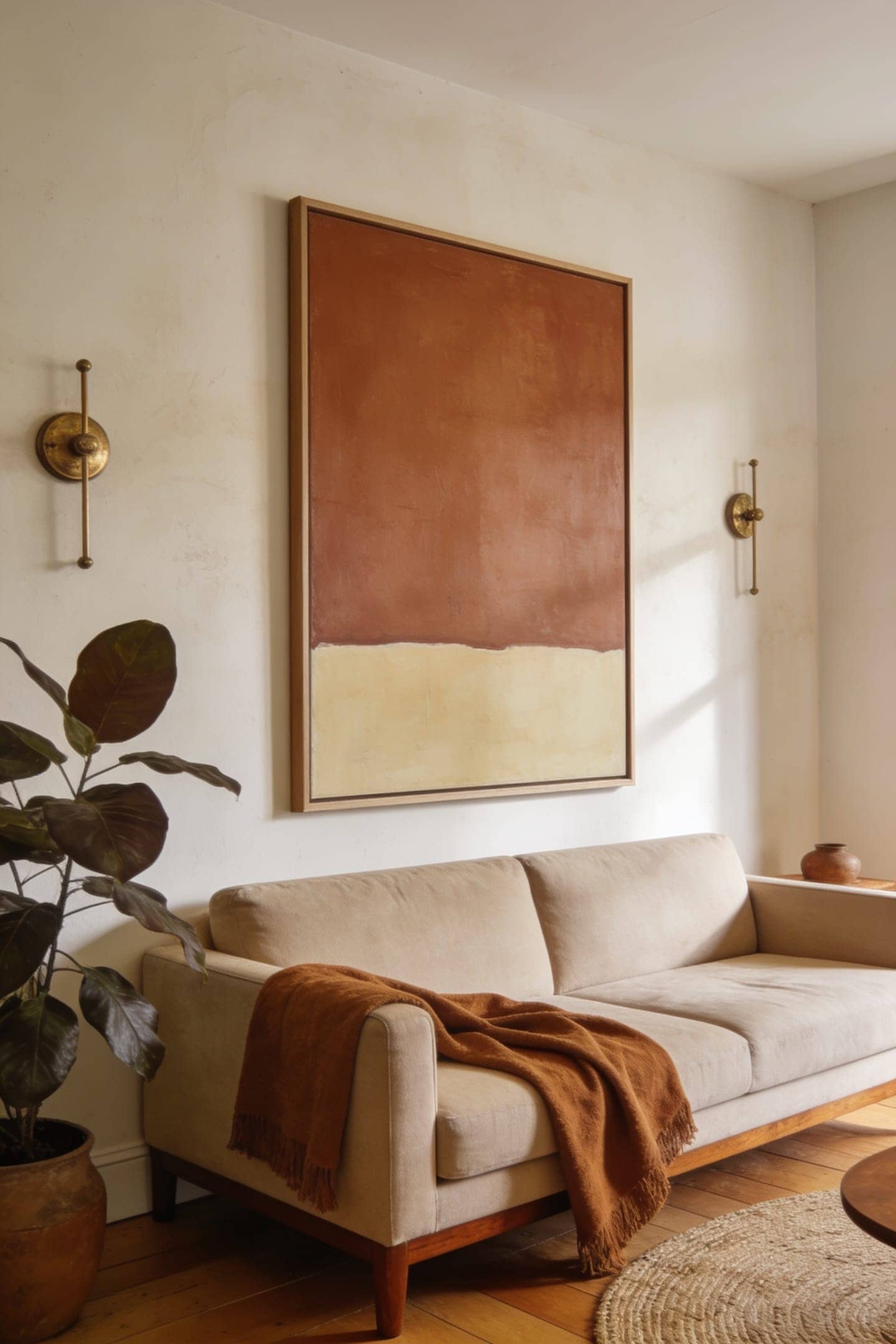
Scale is where most budget walls die. A single 12 by 16 print floats alone on a big wall and makes the whole room feel unfinished, no matter how nice the print is. One oversized piece, or a tight cluster that behaves like one, looks intentional right away. Going big sounds expensive and mostly isn't: an engineer print, a large canvas, even fabric stretched over a frame can cover serious wall for under $60.
Start with the wall behind the sofa
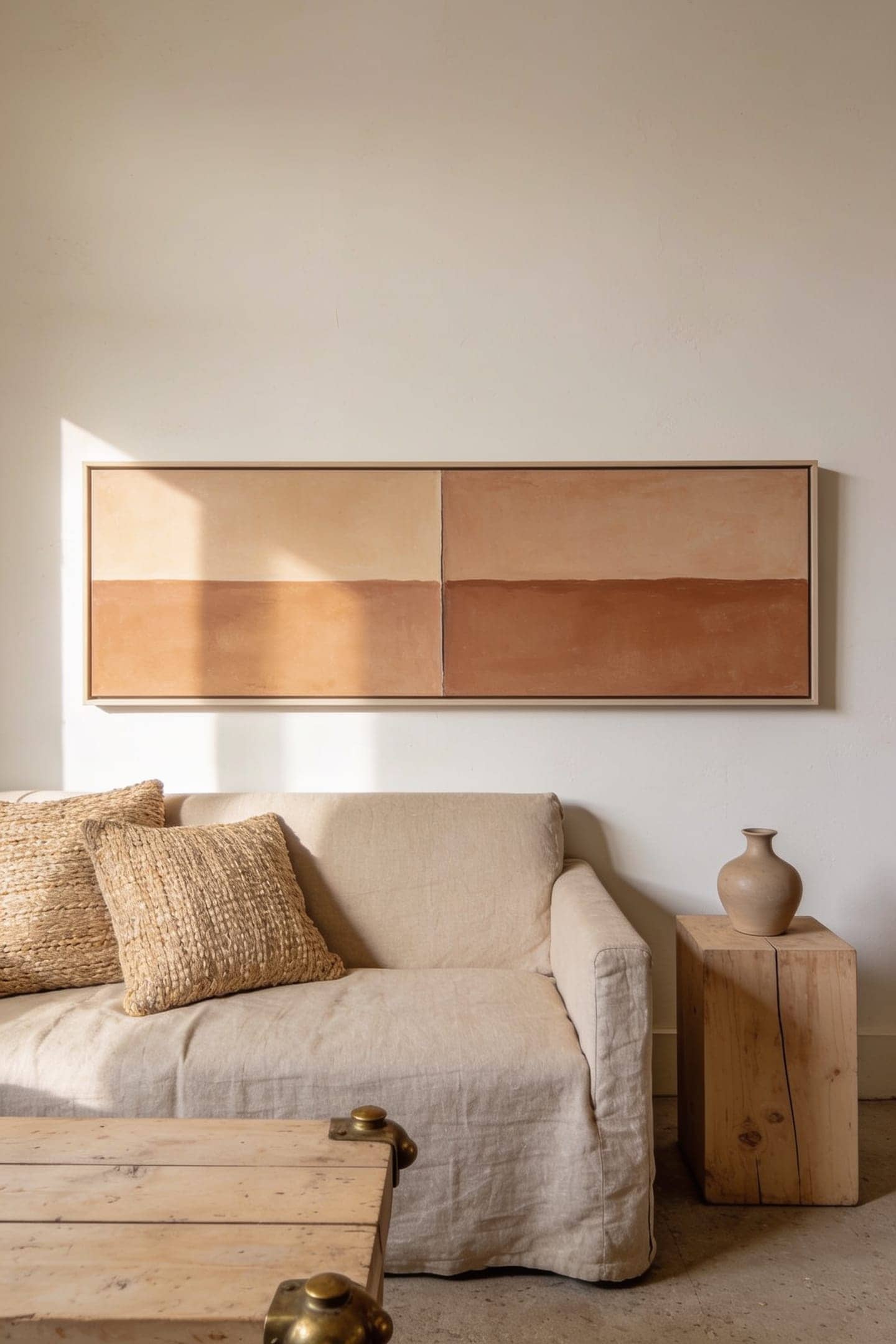
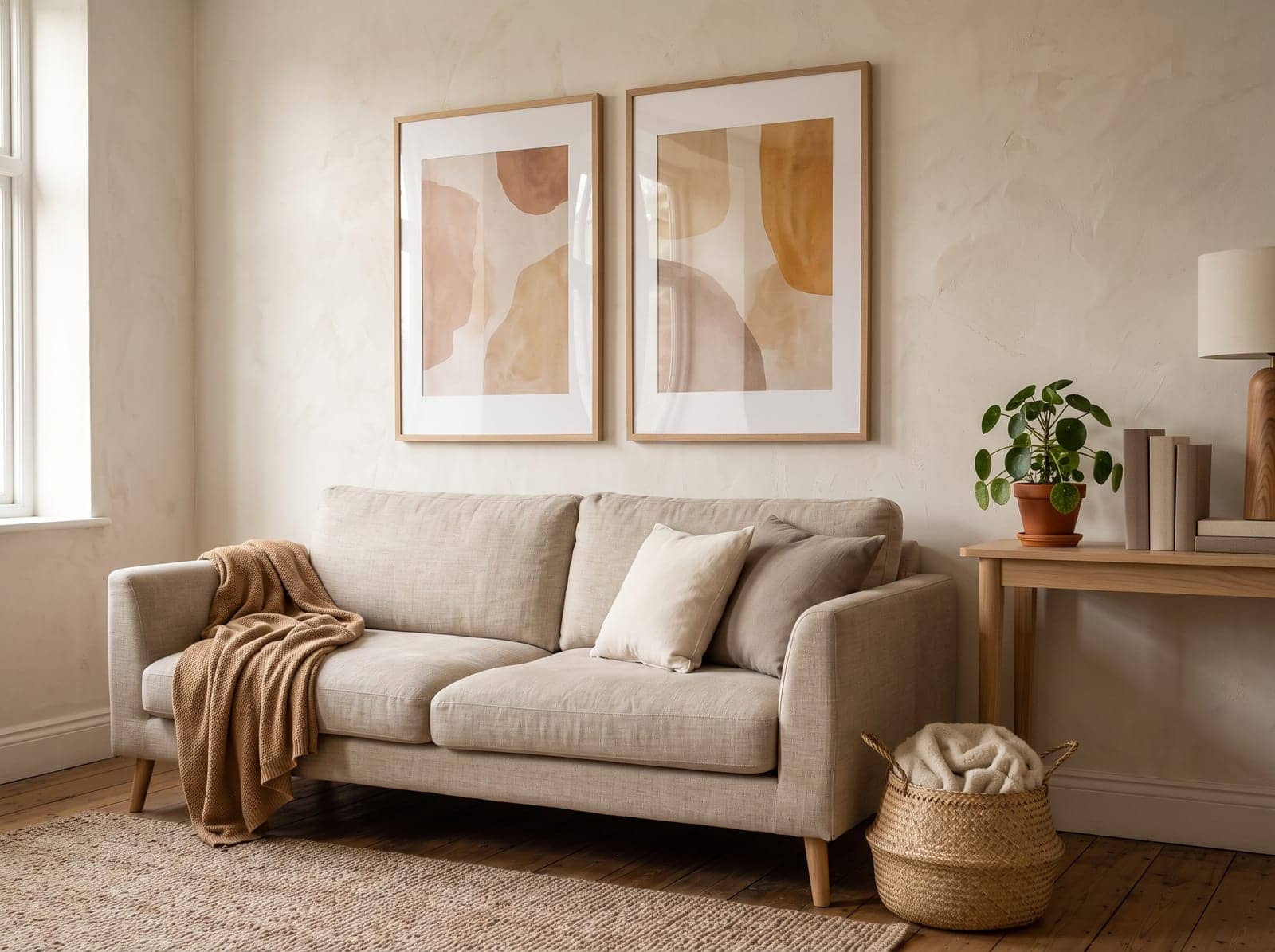
If only one wall gets decorated this year, make it this one. It anchors the whole room and it's the wall everyone photographs. The rule of thumb worth memorizing: the art (or the grouping) should span about two thirds the width of the sofa. Narrower than that and it looks like it wandered there by accident. Get this wall right and the room already feels 80 percent done.
Hang everything lower than you think
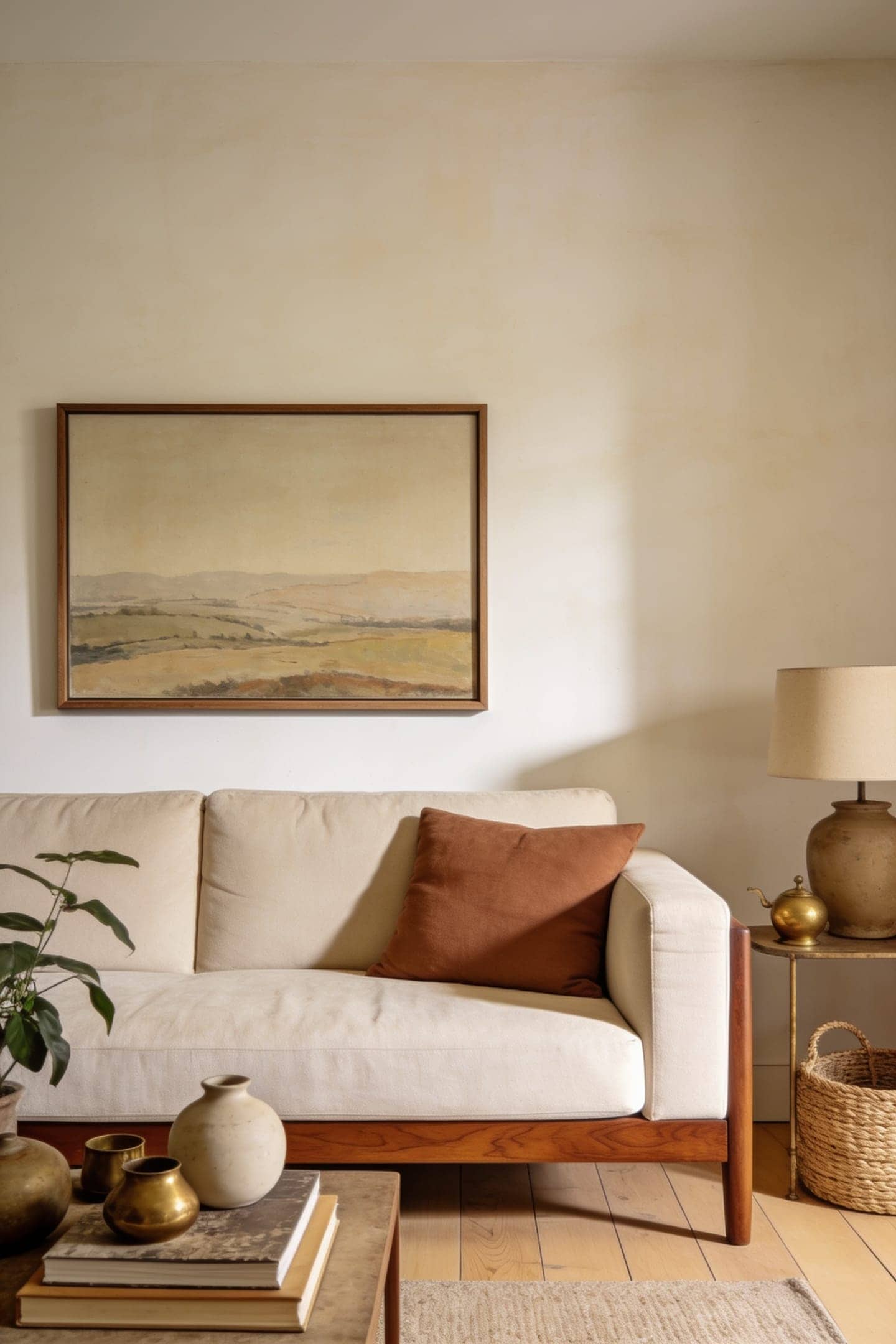
This one's the cheapest upgrade on the list, because it's free. Most wall decor hangs too high. Galleries center art at about 57 inches from the floor, which is average eye level, and above a sofa the bottom edge wants to sit just 6 to 8 inches over the back cushions. Rehang what you already own at those heights and the room instantly looks more considered. It feels wrong on the ladder. Trust the tape measure.
Give the gallery wall one common thread
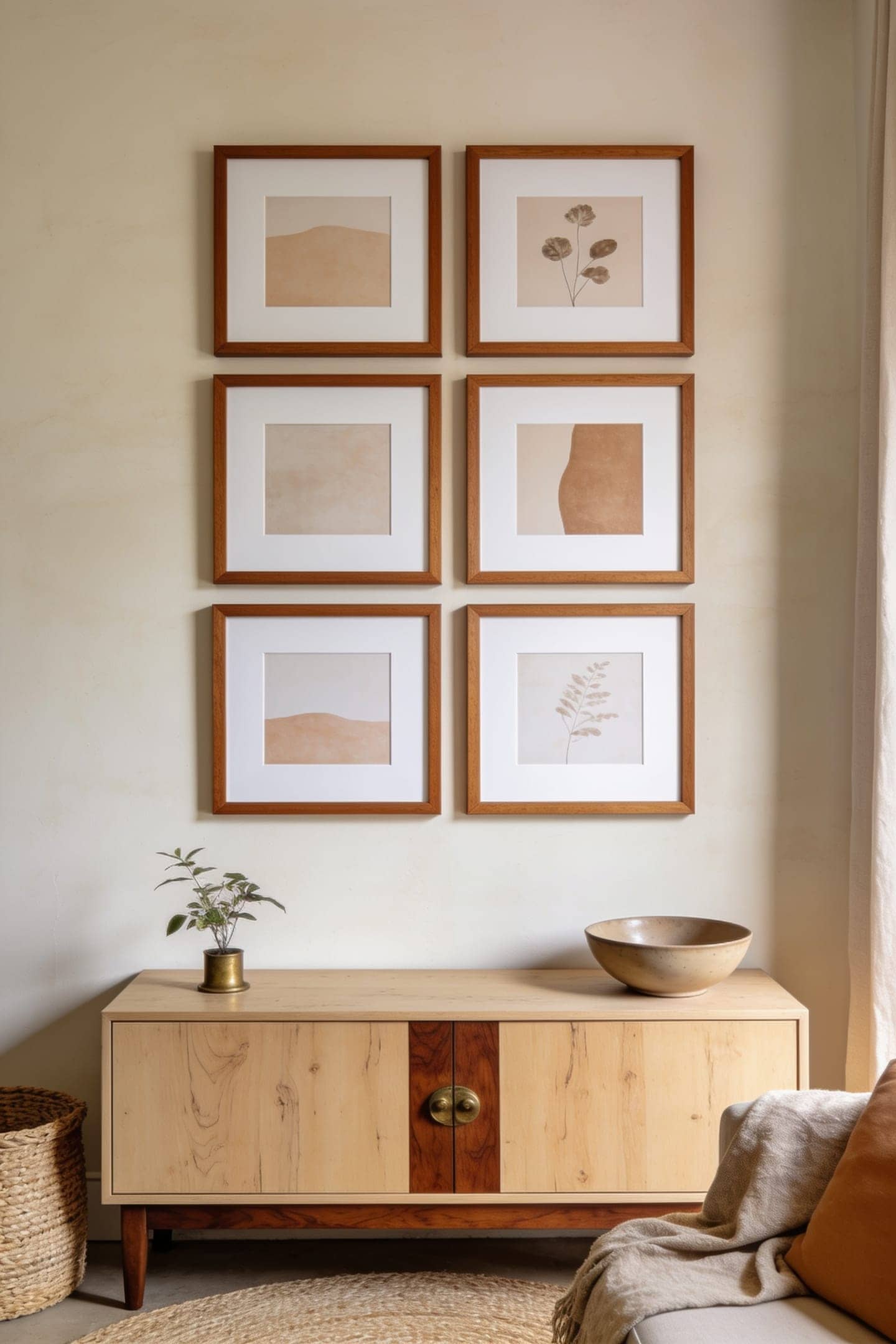
Gallery walls go wrong when everything varies at once: frame, mat, palette, subject. Pick one element that repeats and the mix suddenly looks curated. Matching frames with white mats is the easiest version of that thread, and a boxed set means the sizes are designed to hang together. Lay the layout on the floor first, keep 2 to 3 inches between frames, and build out from the center piece.
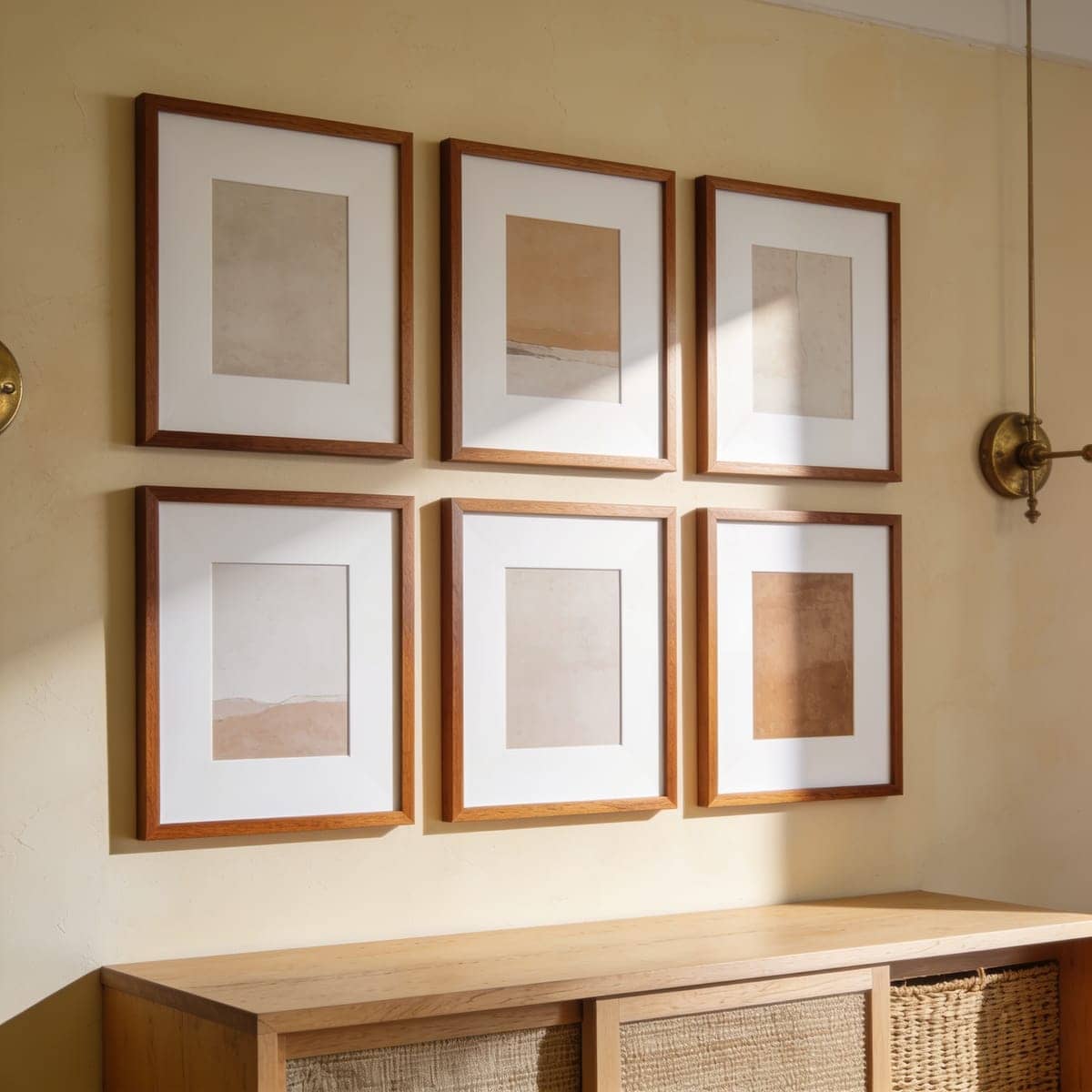
Hang real art without the gallery markup
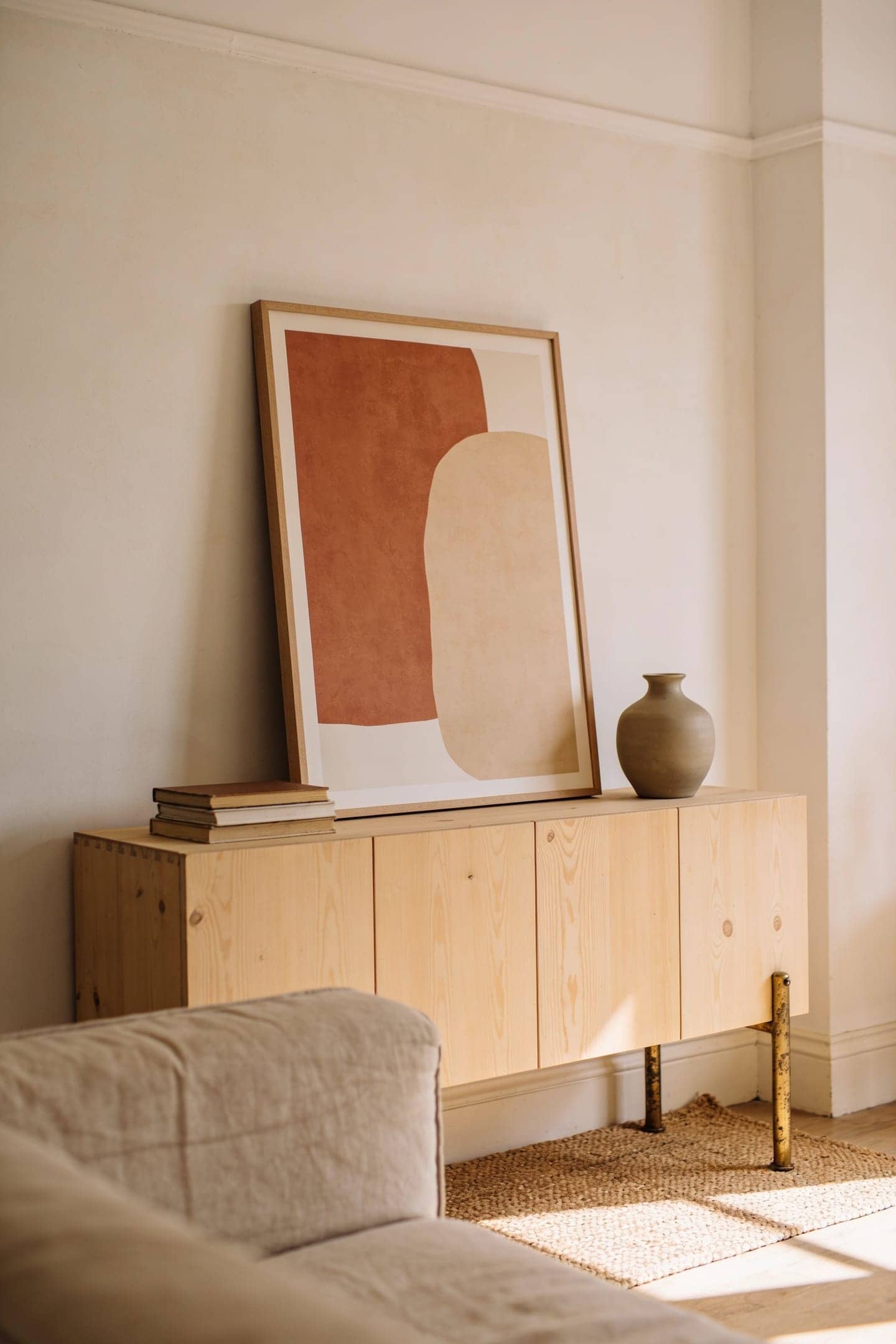
The piece over the sofa doesn't have to be a poster of a city you visited once. Real-looking art, abstracts, vintage-style prints, framed canvas, has gotten genuinely cheap, and the right one is what makes the wall feel like a decision instead of a filler.
The ranked roundupI compared the budget wall art that actually reads like art in a real living room, prints, framed sets and canvas, and ranked the ones worth hanging.
See the roundup: 10 Best Budget Wall Art PicksFrame things that were never sold as art
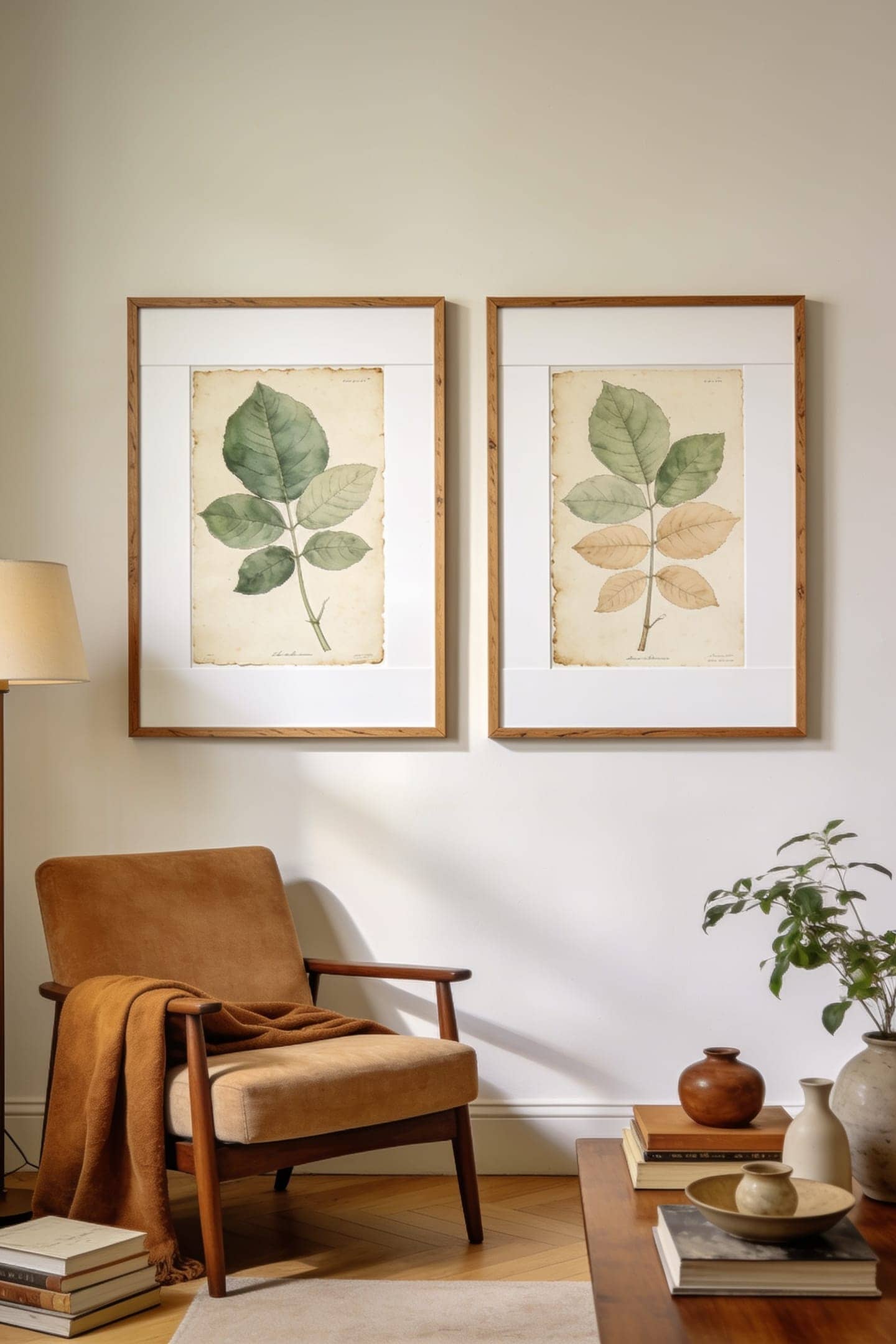
Some of my favorite budget walls are full of things that cost almost nothing. Public-domain paintings printed at the drugstore, pages from a damaged coffee-table book, an old map, a record sleeve, a pretty calendar page. The trick that sells it is the mat. A generous white mat inside a simple frame makes a free printable look like it came from a print shop, not a printer.
Break up the flat prints with one textured piece
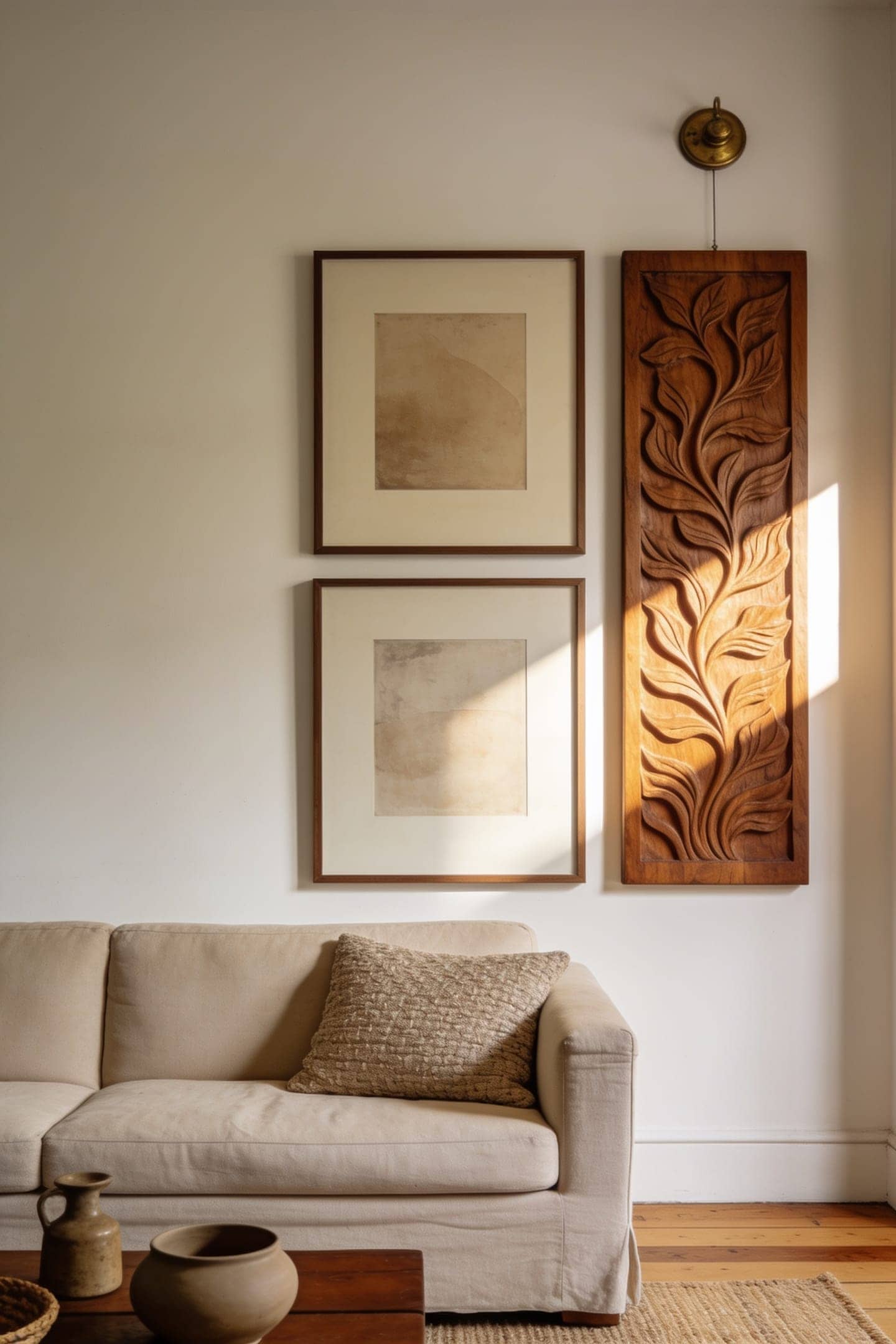
A wall of only glass and paper can read flat even when the art is good. One dimensional piece fixes it: a carved wood panel, a small plaster relief, a ceramic piece, a fiber piece. Texture catches side light in a way prints cannot, and it is usually what makes people ask where the wall came from. One is enough. Two starts competing.
Let baskets warm up a big cold wall
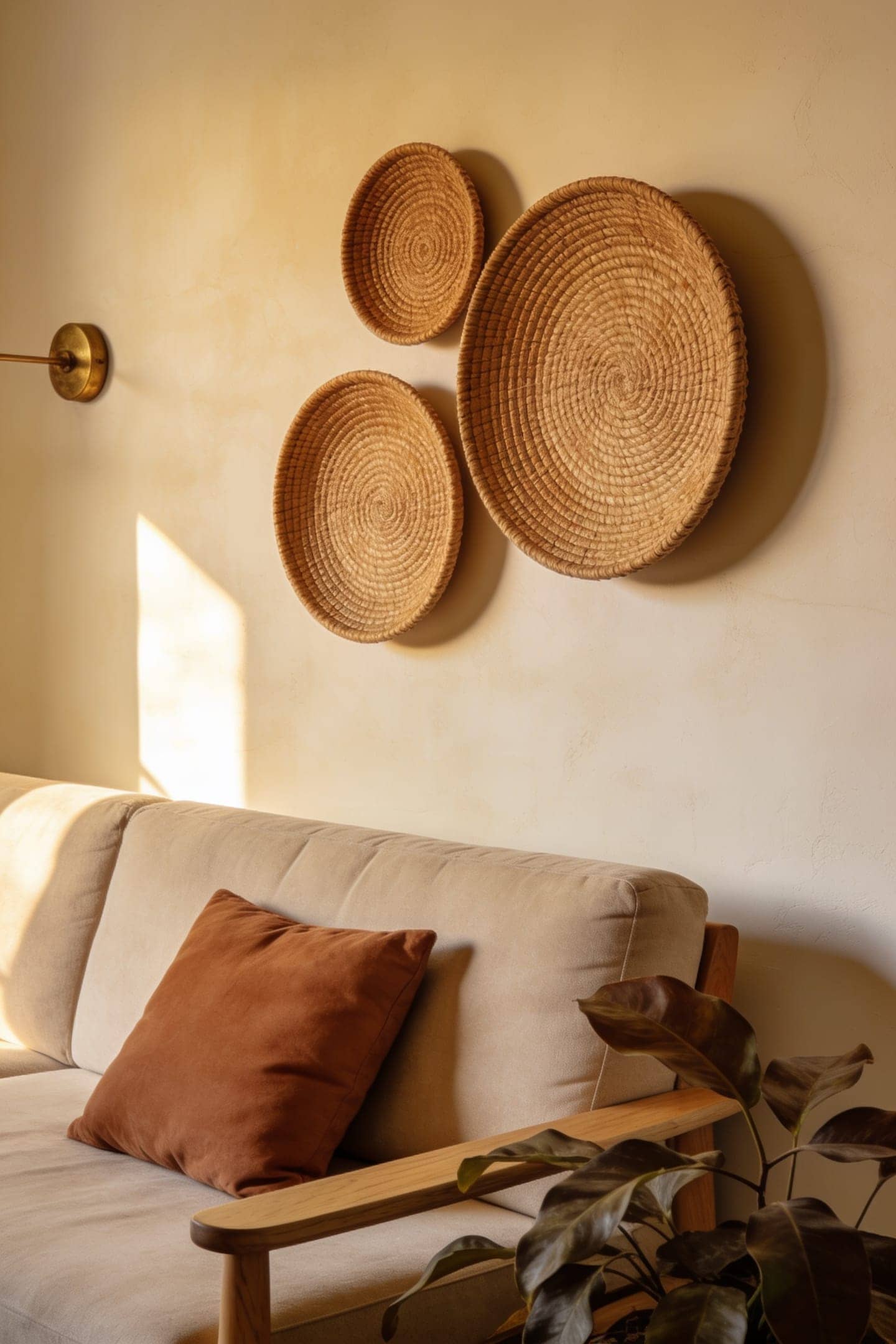
Big empty wall, tight budget, and prints feel too formal for the corner? A group of flat woven baskets covers a lot of square footage for the price of one framed piece, and it brings warmth and shadow instead of more glass. Odd numbers work best, hung close together so they read as one shape. This is also the rare wall decor that survives a hallway or a stair wall without looking forced.
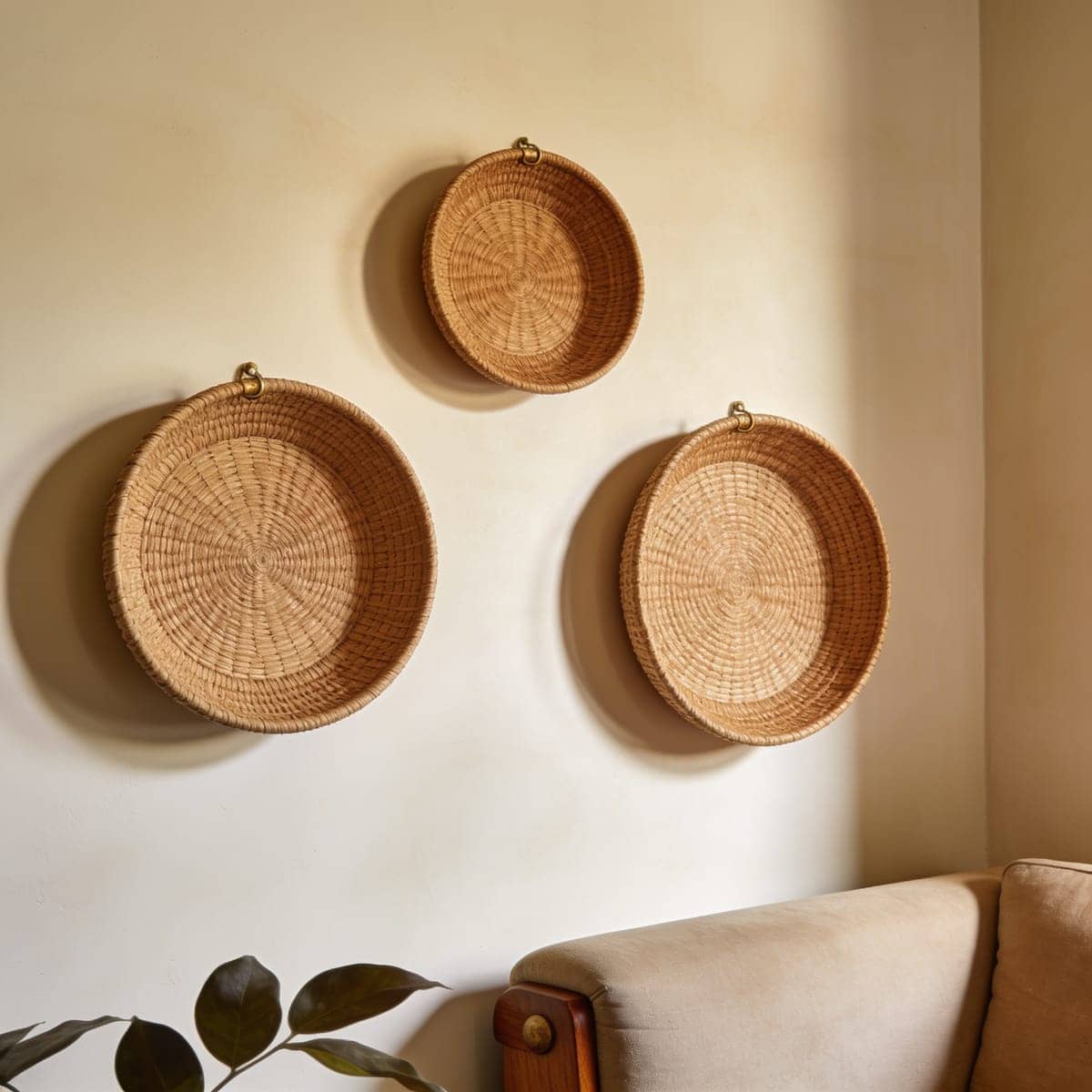
If you'd rather your baskets hold something, the same woven warmth works on a shelf or the floor below the wall group, and I ranked the budget woven storage baskets that hold their shape.
Use a mirror where the room needs light, not art
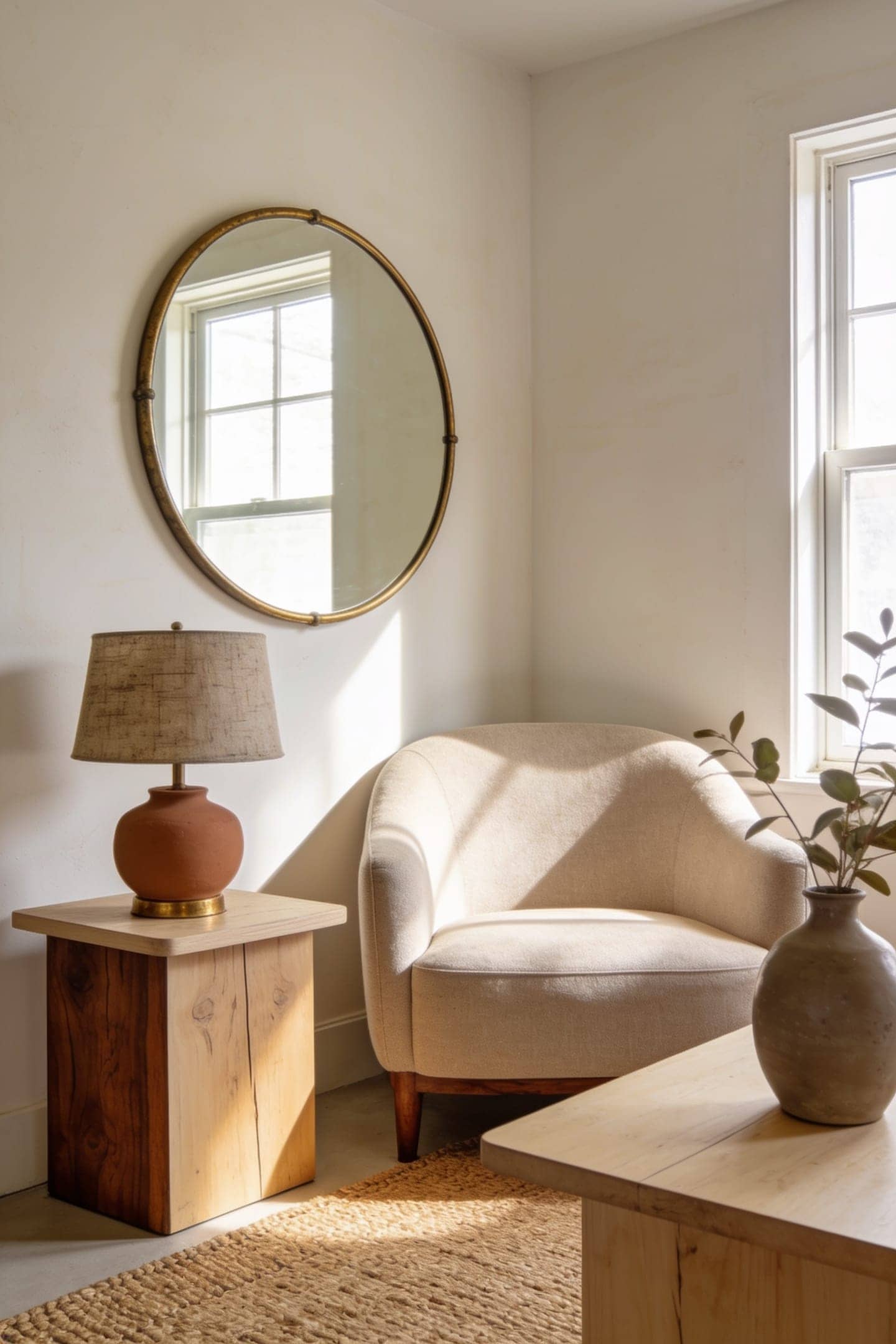
A mirror is wall decor that also does a job. Placed across from or beside a window, it bounces daylight into the dull half of the room and makes a small living room feel less boxed in. Treat it like art when you hang it: same eye-level rule, same scale rule. One good mirror beats three small decorative ones scattered around, which always feel a little dorm.
Round is the classic, but an arched mirror adds height to a wall that feels low, and I compared the budget arched mirrors that don't look flimsy.
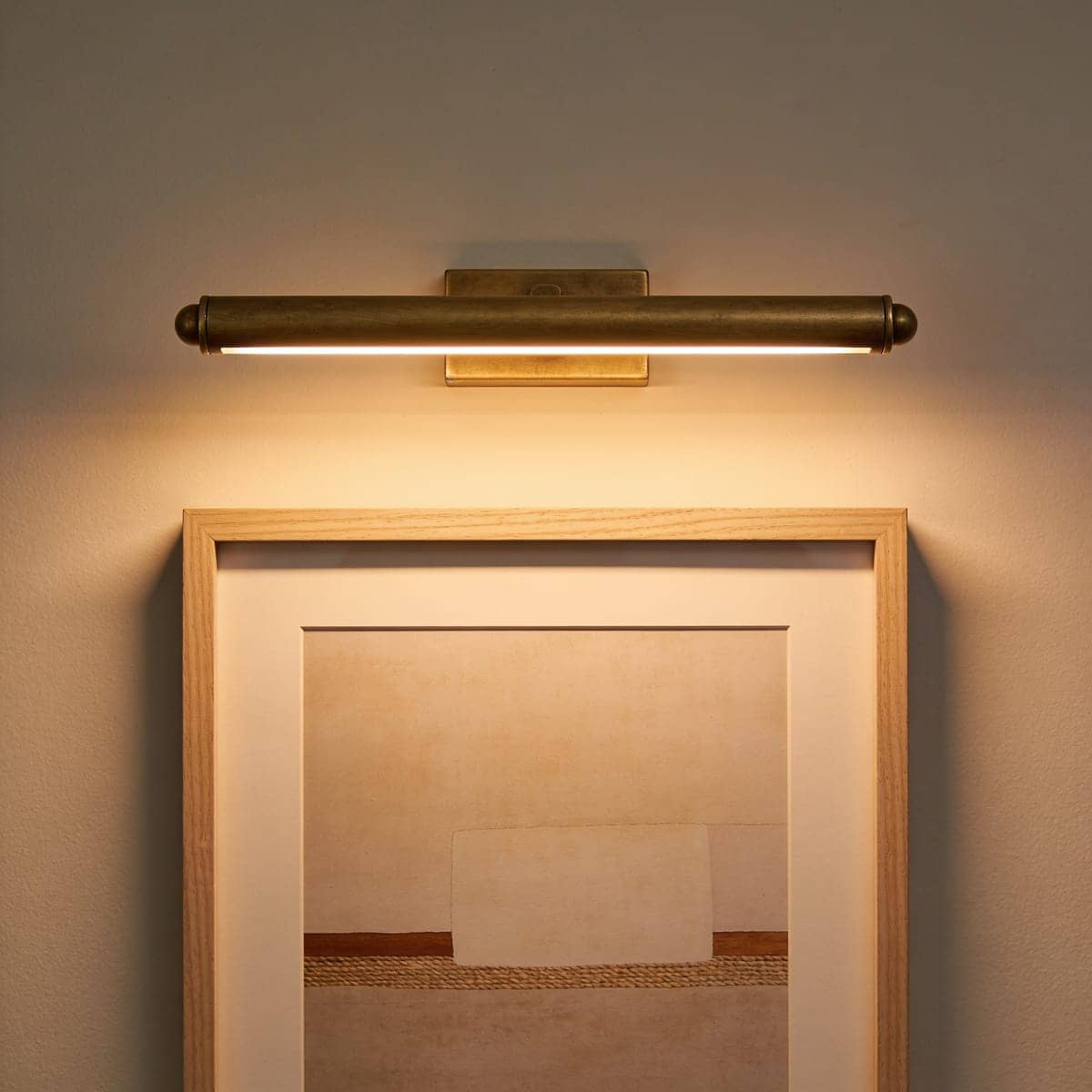
Put a light on the art you already own
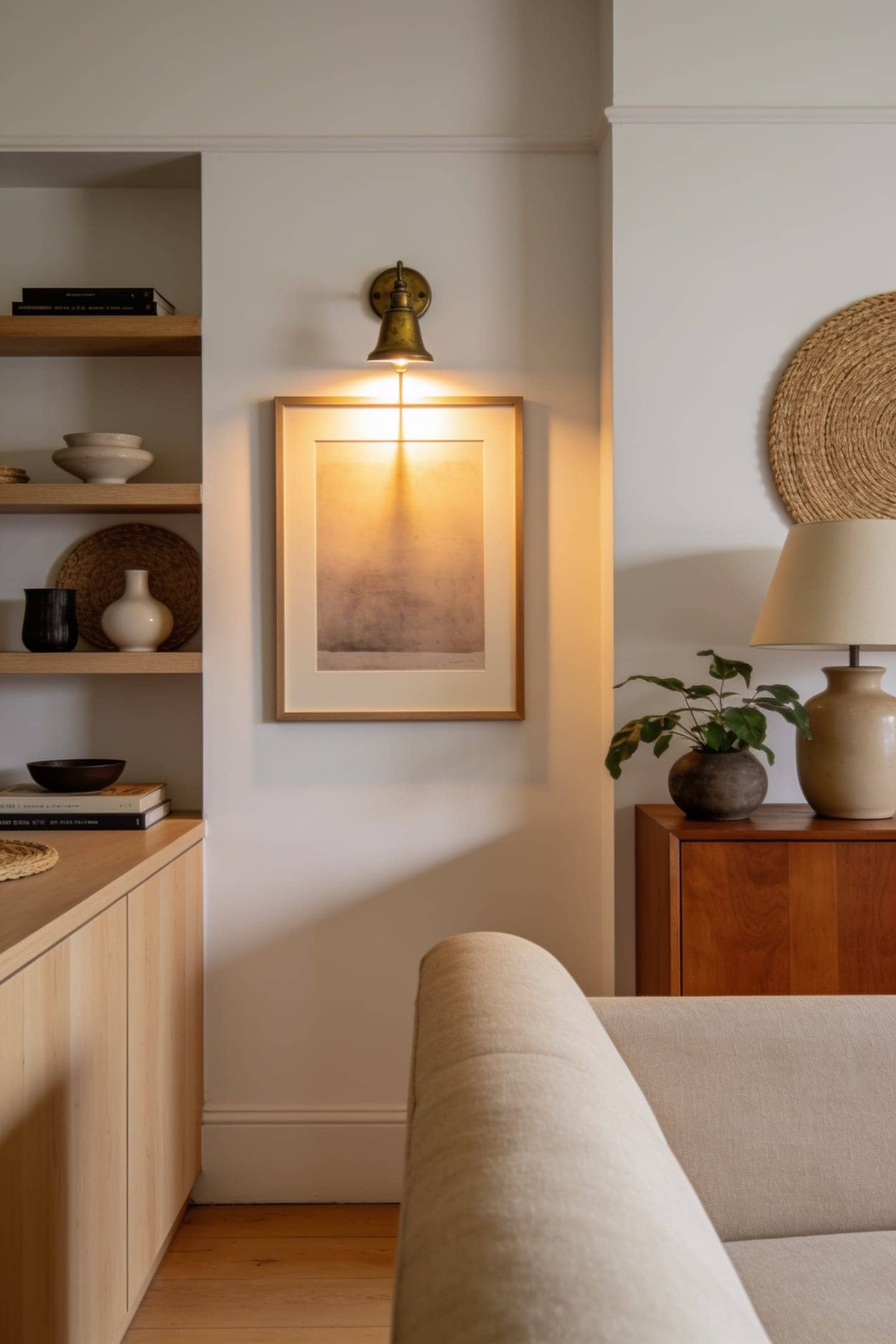
This is the move that makes a $20 print feel like it matters. A little picture light over a frame looks instantly custom, like the piece was worth wiring for. The battery versions need no electrician and no landlord conversation: stick, tap, done. Put one over your biggest piece and turn it on at dusk with the lamps. A few reviewers note the stick-on mounts like a clean wall, so wipe the spot first if you have textured paint.
Peel-and-stick one accent wall
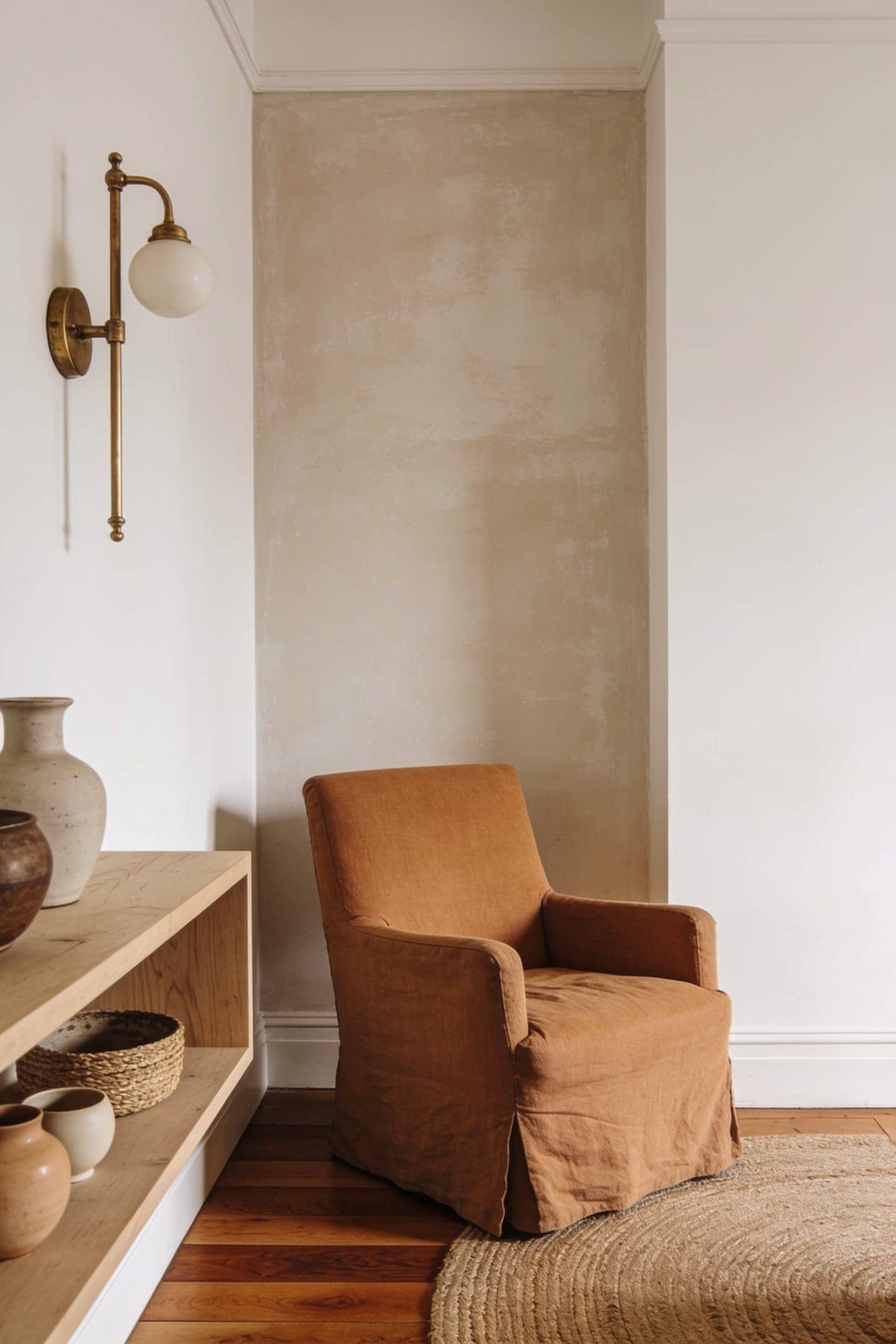
Sometimes the wall itself is the decor. A limewash-look or subtle textured peel-and-stick on the one wall behind the TV or the reading chair gives the room depth that no amount of small frames can, and it comes off when the lease ends. Keep the tone warm and quiet so your art still stars, order one extra roll for pattern matching, and give yourself a free afternoon the first time.
Hang it all without losing your deposit
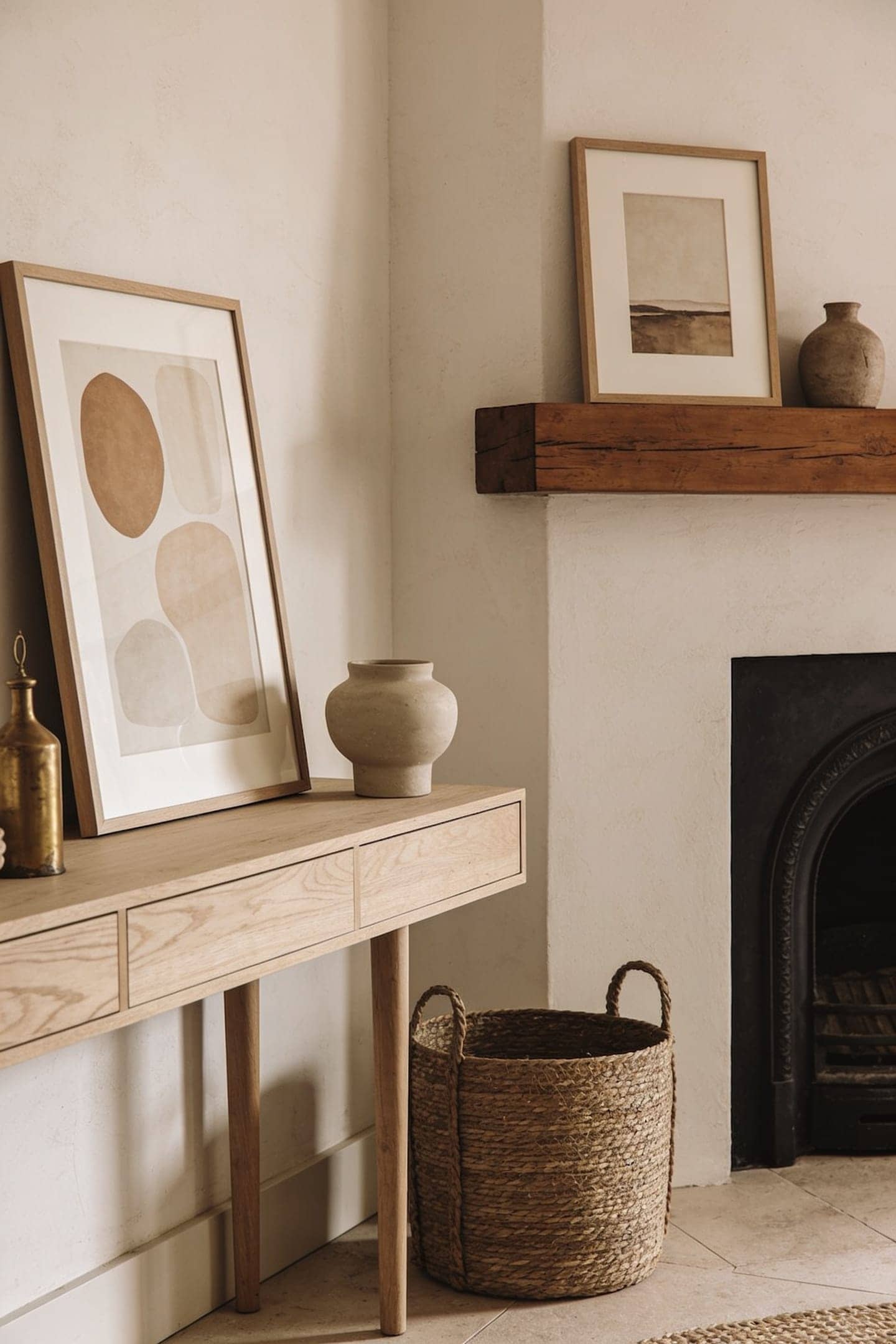
Renters skip wall decor out of fear, and the fear is mostly outdated. Adhesive strips rated for the actual weight of your frame hold shockingly well on smooth walls if you press them the full 30 seconds and let them cure before hanging. For heavier pieces, one small nail hole per wall is cheaper to patch than a year of staring at blank paint. And anything can simply lean: on the mantel, on a console, on the floor against the wall like the design blogs do on purpose.
Stop before the wall is full
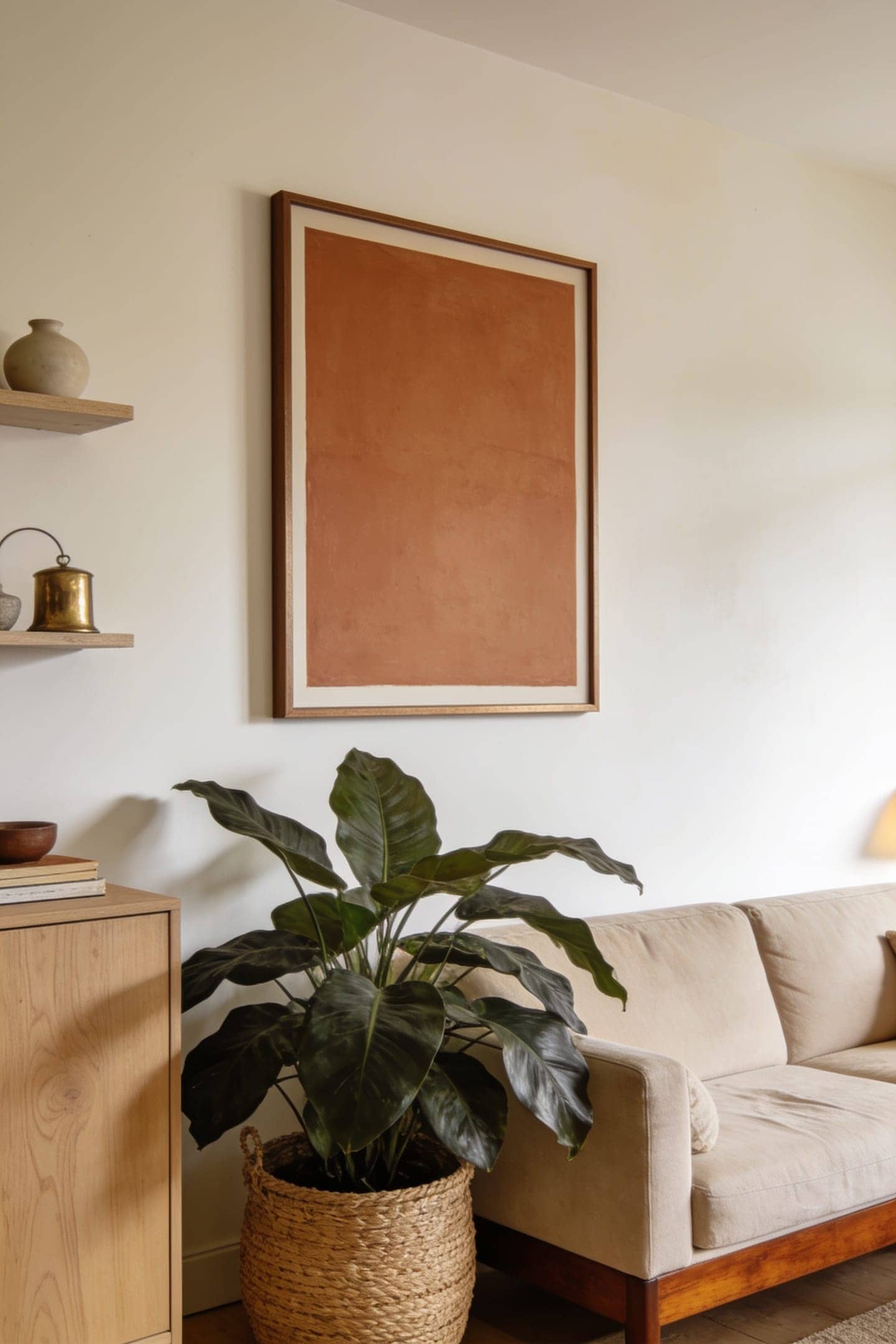
Curated has a quiet ingredient, and it's empty space. Not every wall in the room needs decorating, and the decorated ones need less than you think. Leave real air around your best piece, keep one wall completely bare as a rest for the eye, and take one thing down whenever you add one. A wall that breathes is what separates collected from cluttered, and it costs exactly nothing.
Give the TV wall a job, not just a TV
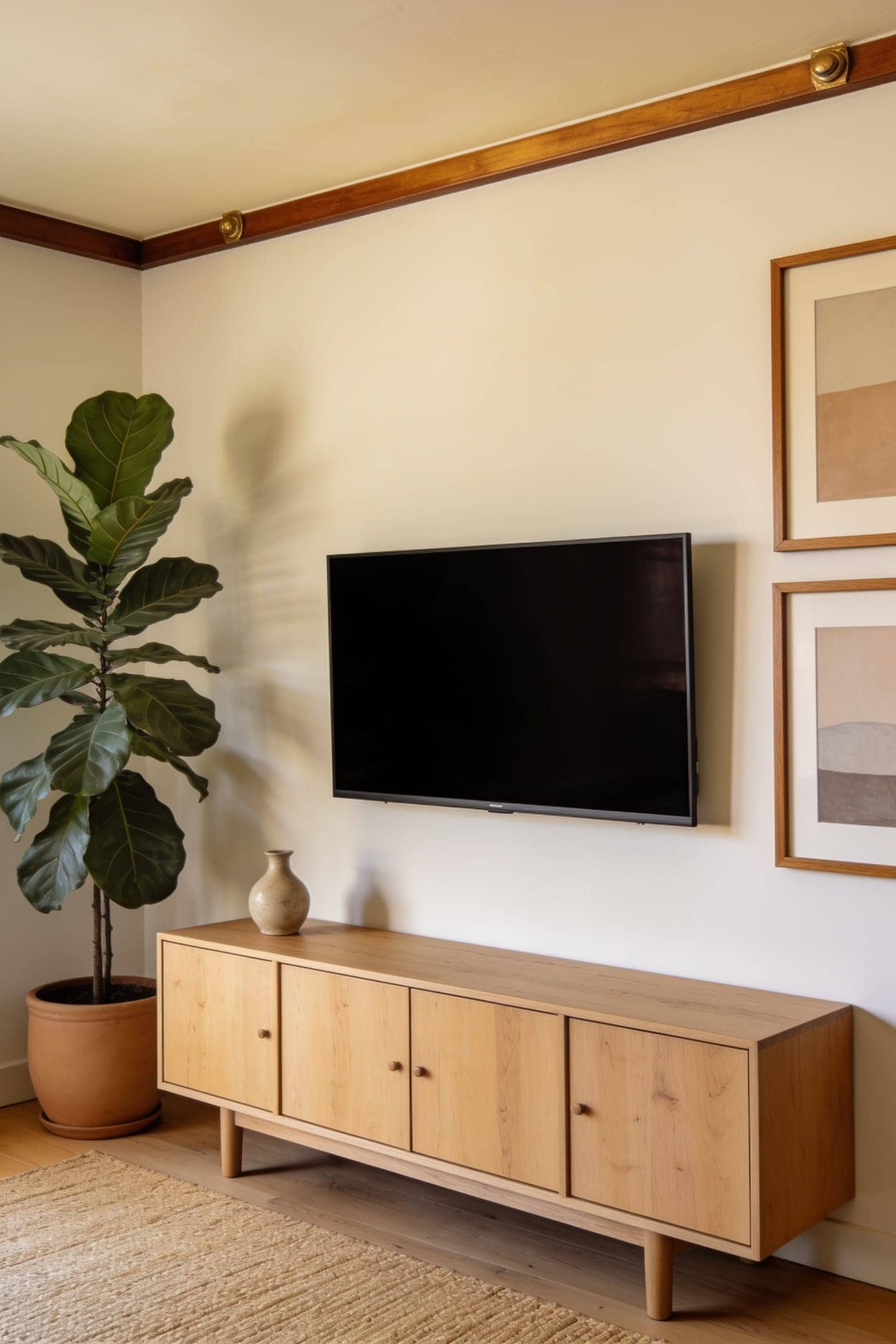
The TV is usually the biggest black rectangle in the room, and leaving it alone on a bare wall only makes it look bigger. The fix is to make it part of a composition. Flank it with something tall on each side, a narrow shelf, a tall plant, a pair of frames stacked vertically, so the eye reads one wide arrangement instead of a screen. Keep the pieces around it quieter than the art over the sofa, since this wall already has a star. Hide the cords, too. A paintable cord cover runs about $15 to $25 and does more for this wall than anything you hang next to it. And mount it lower than you think, with the center of the screen at seated eye level, around 42 inches, so it sits in the wall instead of hovering over it.
Trade one frame cluster for a picture ledge
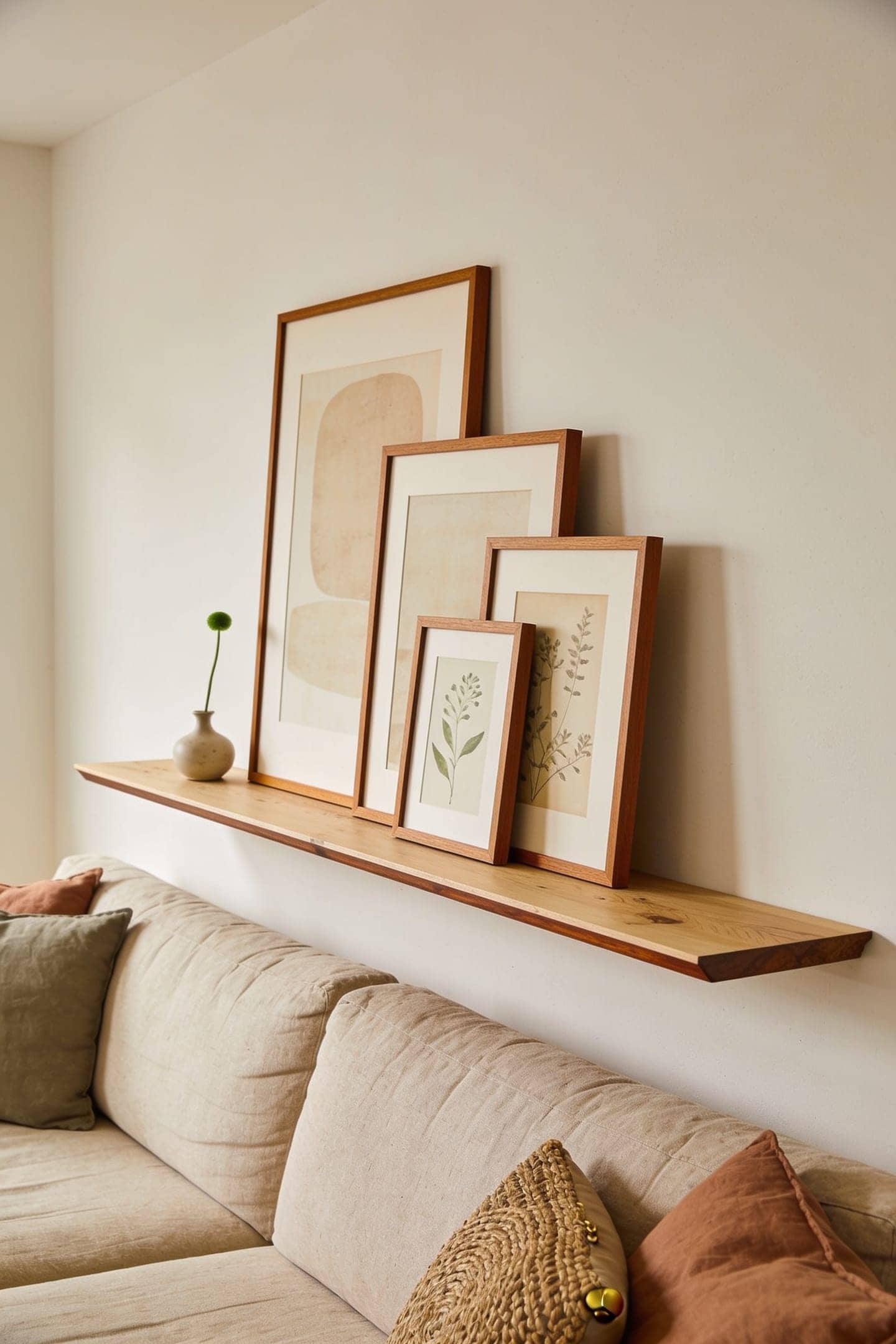
A gallery wall is a commitment: a dozen nail holes and a layout you're stuck with. A picture ledge, basically a narrow shelf with a lip, gets you the same collected look with a couple of screws. Lean a few frames on it, overlap them a little, add one small object like a bud vase, and rearrange the whole thing in thirty seconds whenever you get bored. Go long rather than short. One 4 to 5 foot ledge over a sofa looks far more expensive than two stubby ones. Layer from the back, tallest frame first and smaller ones in front, so it looks like a styled shop shelf. Floating shelves do the same job with a bit more depth, handy if you want a plant or a few books up there too, and I ranked the budget floating shelves under $50 that actually stay level.
Add faux board and batten for texture
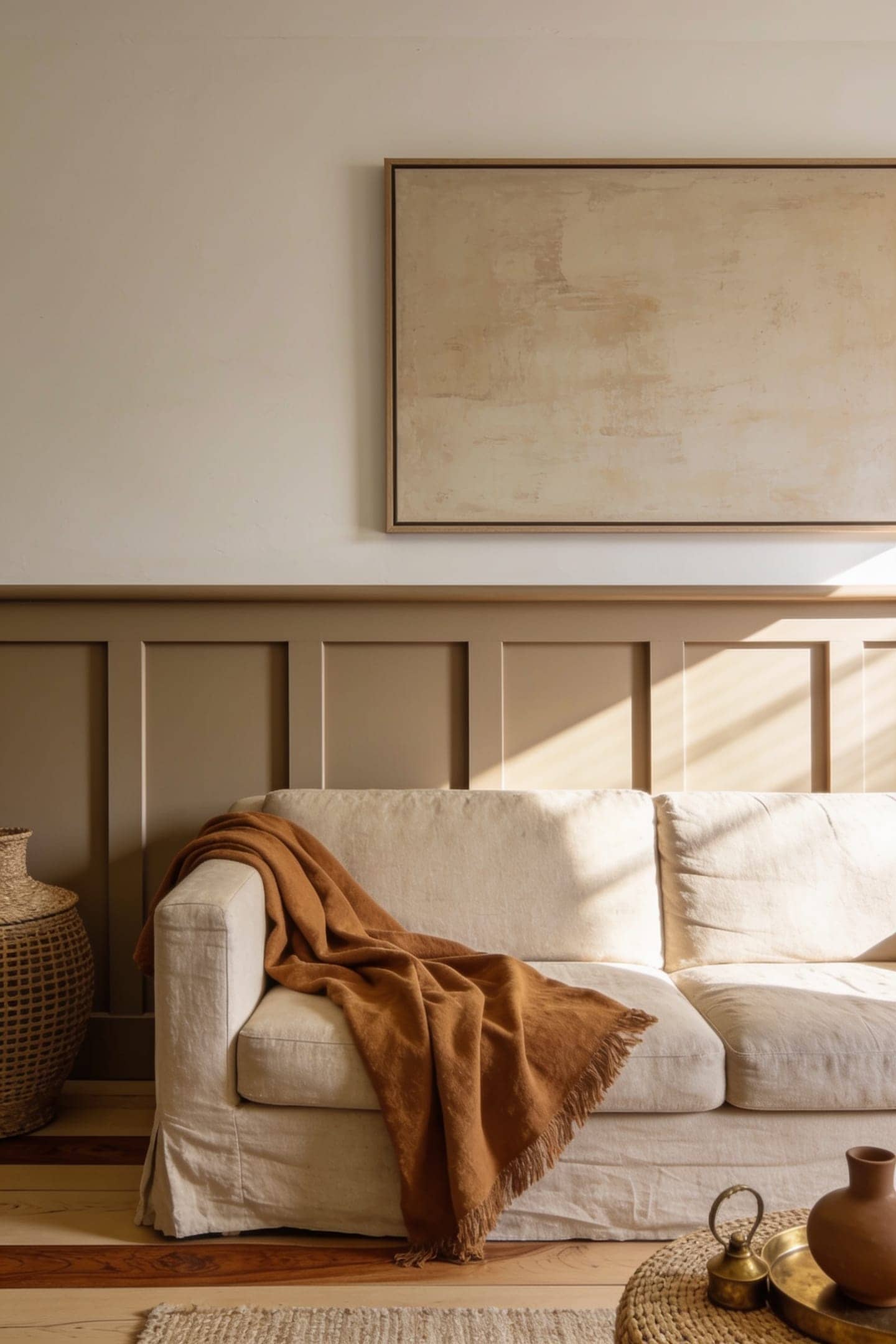
Board and batten looks like a carpenter was involved, and on the budget version nobody was. Thin strips of MDF or primed pine, glued and nailed in a simple grid on the lower part of the wall, then painted either the same color as the wall above or a shade deeper, give you real shadow lines and depth. For one living room wall, the wood, caulk and paint usually land somewhere around $100 to $200, and most hardware stores will cut the strips to length for you. The bonus is that a textured wall needs less art on it, one good piece or even nothing, so it saves you money twice. Renting? Skip this one and go back to the peel-and-stick accent wall above, which comes off clean.
Hang plants at eye level
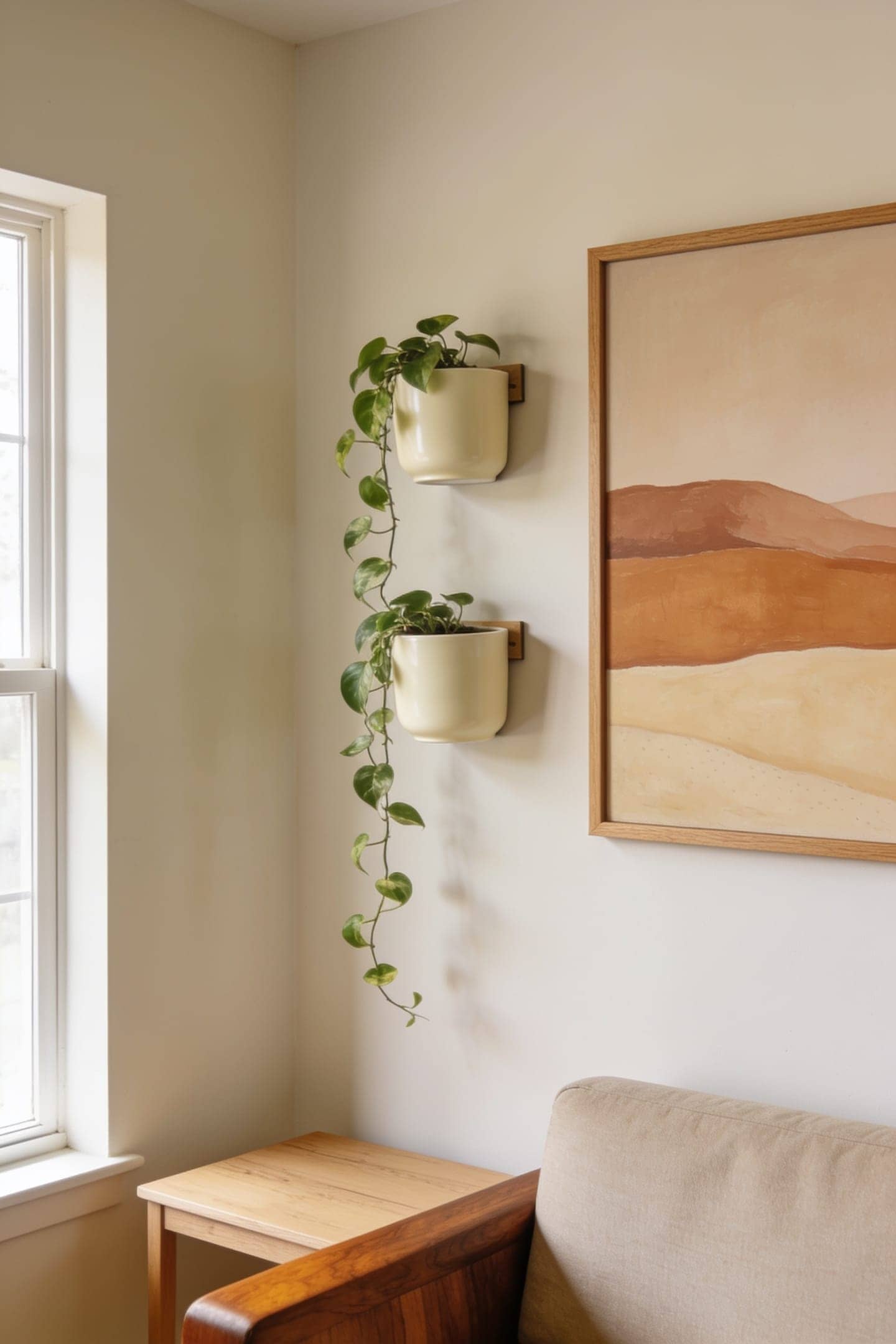
Plants are the one thing on the wall that keeps changing. A couple of wall-mounted planters, or one hanging planter from a ceiling hook, puts green right where your eye already goes and softens all the hard edges of frames and glass. Pothos and heartleaf philodendron are the easy ones: cheap, forgiving, and they trail down beautifully within a few months. A nursery plant runs about $10 to $15, and a simple wall planter about $15 to $25. Hang them near a window rather than on the dark side of the room, since trailing plants without light go thin and leggy fast. If a watering can isn't your thing, a good faux trailing plant works. Just mix one real one in so the wall doesn't give itself away.
FAQ
How do I decorate my living room walls on a budget?
Start with the wall behind the sofa and get two free things right before you buy anything: scale and height. One big piece, or a tight group that reads as one, spanning about two thirds of the sofa, hung with its bottom edge 6 to 8 inches above the cushions. Then add one texture (baskets, a carved piece, a plant) and one light. That alone makes a living room wall look finished for well under $100.
What are some simple wall decor ideas for a living room?
The simplest ones need no layout at all. A single oversized print. A round or arched mirror across from the window. A picture ledge with three frames leaning on it. A row of flat woven baskets. A stick-on picture light over art you already own. Each one is a single decision, which is exactly why they look calm instead of busy.
What is the cheapest way to decorate a wall?
Rehang what you already have at eye level, about 57 inches to the center, which costs nothing. After that, framed printables are the best value on the wall: a free public-domain painting, a cheap print at the drugstore and a thrifted frame with a wide white mat look like real art. Baskets come next, since a group of them covers a lot of wall for about $35.
How do I decorate a small living room wall?
Pick one piece and let it fill the space properly instead of scattering small frames. On a narrow wall, go tall: a vertical print, two frames stacked one above the other, or a trailing plant in a wall planter. A mirror is the best friend of a small living room, because it bounces light and makes the wall feel farther away. And leave the next wall bare so the small one has room to breathe.
What is the best affordable wall art for a living room?
Big, simple and warm. A large abstract or a vintage-style landscape in a plain frame looks expensive at almost any price, while small busy prints look cheap even when they aren't. A large canvas or an engineer print covers serious wall for under $60, and a framed set saves you the framing bill.
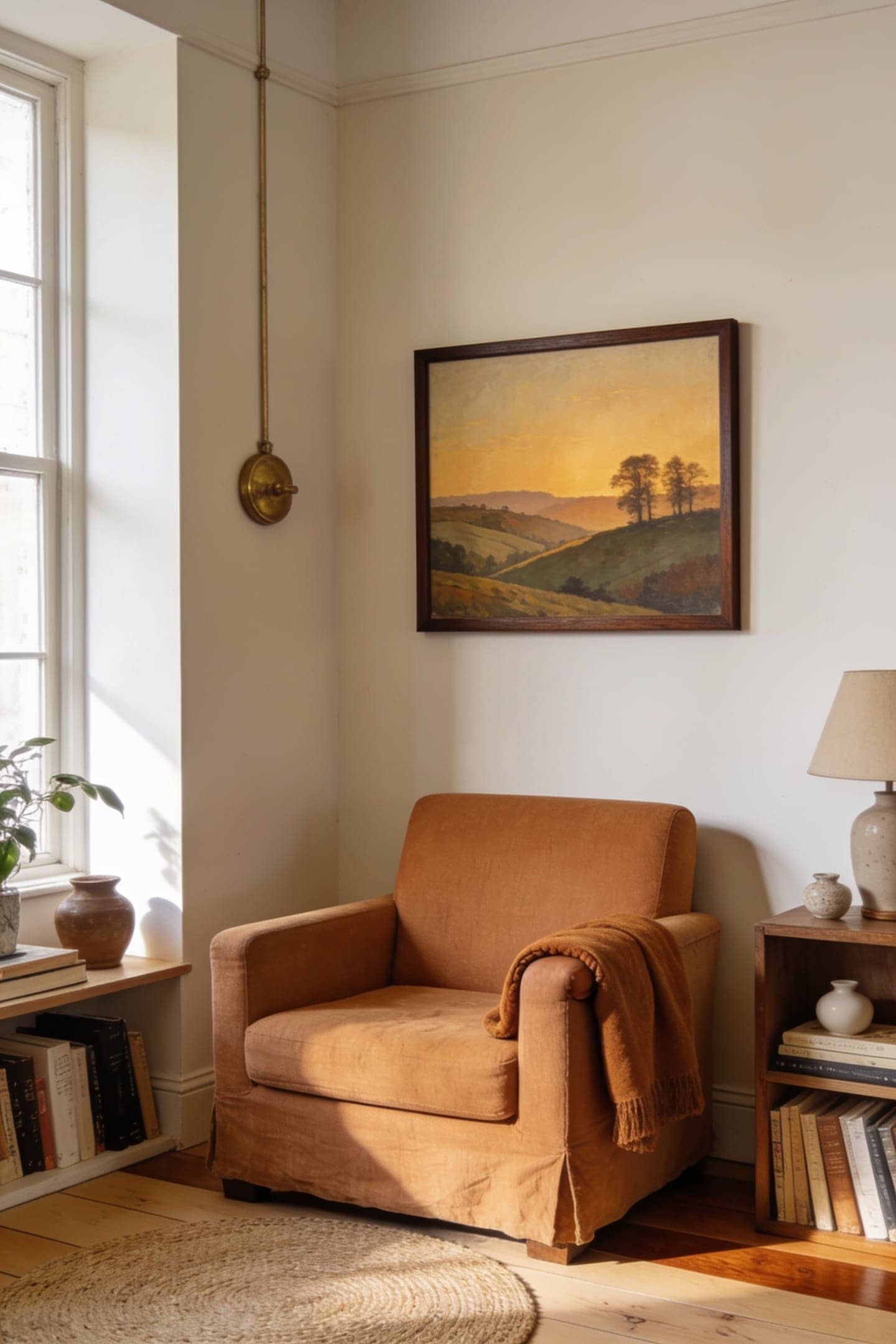
The art itself is where budgets go sideways.
Frames, height and placement are cheap to get right. The art is the part people overpay for or give up on, so I compared the budget wall art that holds up in a real living room and ranked my favorites.
See my full list: Best Budget Wall Art