Some links here are affiliate links. If you buy through them, I may earn a small commission at no extra cost to you, and I only point to things I'd buy myself.
Terracotta is one of the warm colors climbing in US home searches, with its best year yet in 2026, and my 2026 color trends show what else is coming in with it.
Pick the right clay tone before anything else
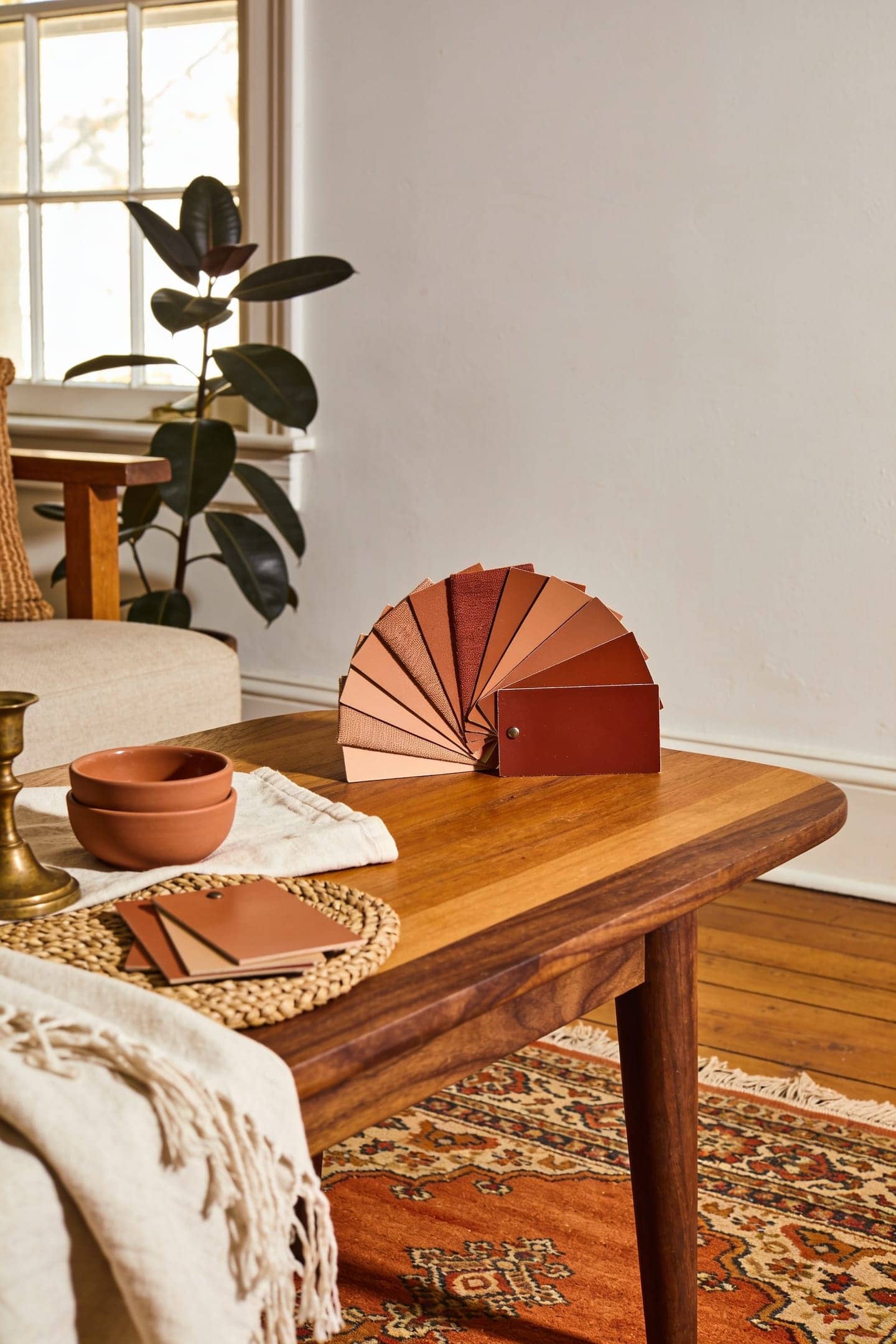
Terracotta is a whole family, not one color. There is the true sun-baked clay, a pinky dusty version, a burnt almost-brown, and the loud pumpkin. Most rooms that look muddy reached for the brown one, and most that look cheap grabbed the pumpkin. Aim for the middle, a warm earthy clay with the pink kept out. Live with a couple of swatches for a day before you commit, the light in your room changes everything.
Bring it in through textiles before you touch the paint
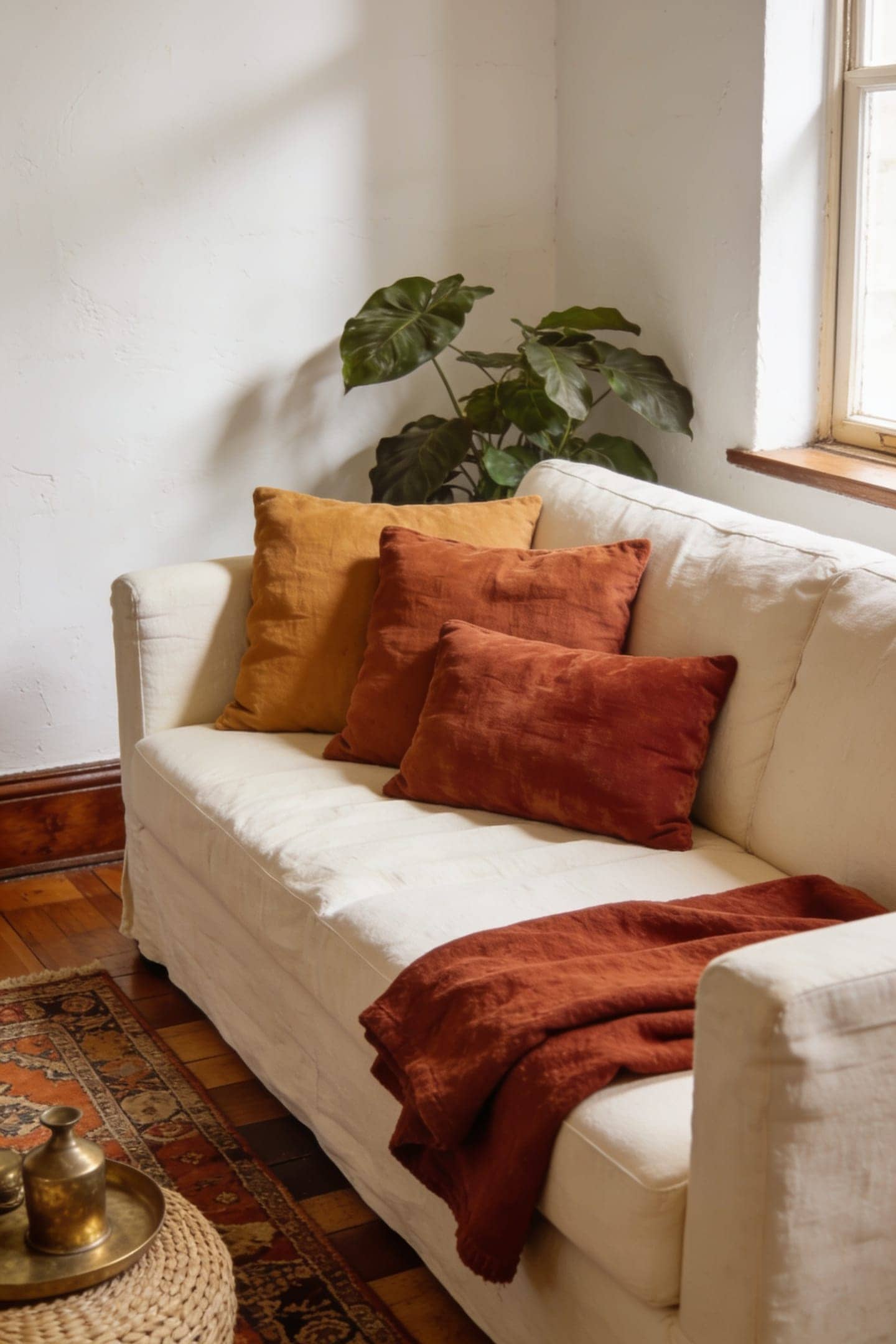
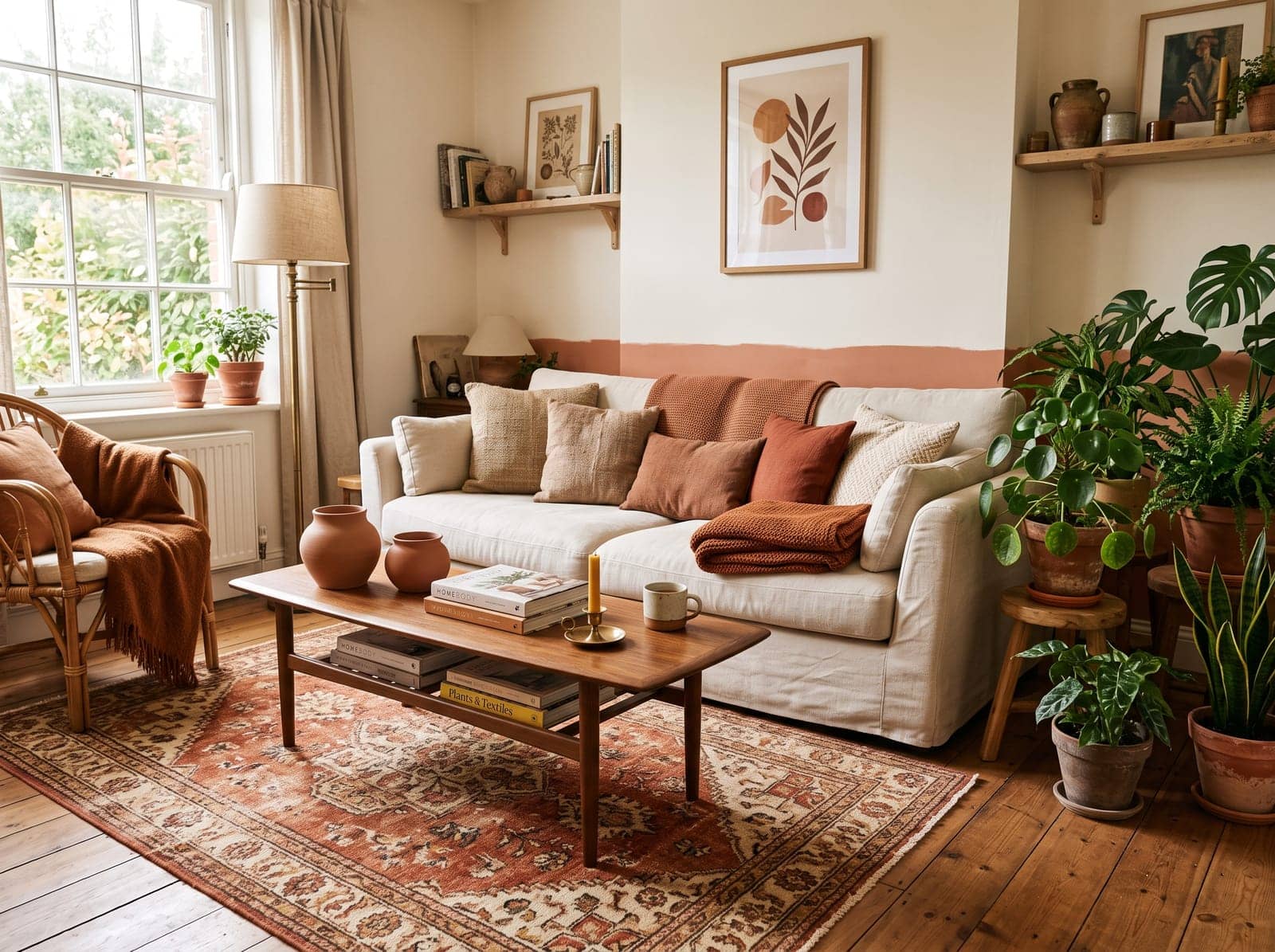
You do not need to paint anything to get a terracotta room. Start with the soft stuff, a couple of clay-toned throw pillows and a rust blanket, and see how the color sits in your light. Textiles are the cheapest way to test the tone, and if you end up hating it you are out about $20, not a whole weekend of painting. This is where I always start.
The ranked roundupPillows are the easiest, cheapest way to add terracotta, so I compared the budget throw pillows worth buying and ranked the covers that actually look like linen, not shiny polyester.
See the roundup: 10 Best Budget Throw PillowsPair it with warm neutrals, keep cool gray out
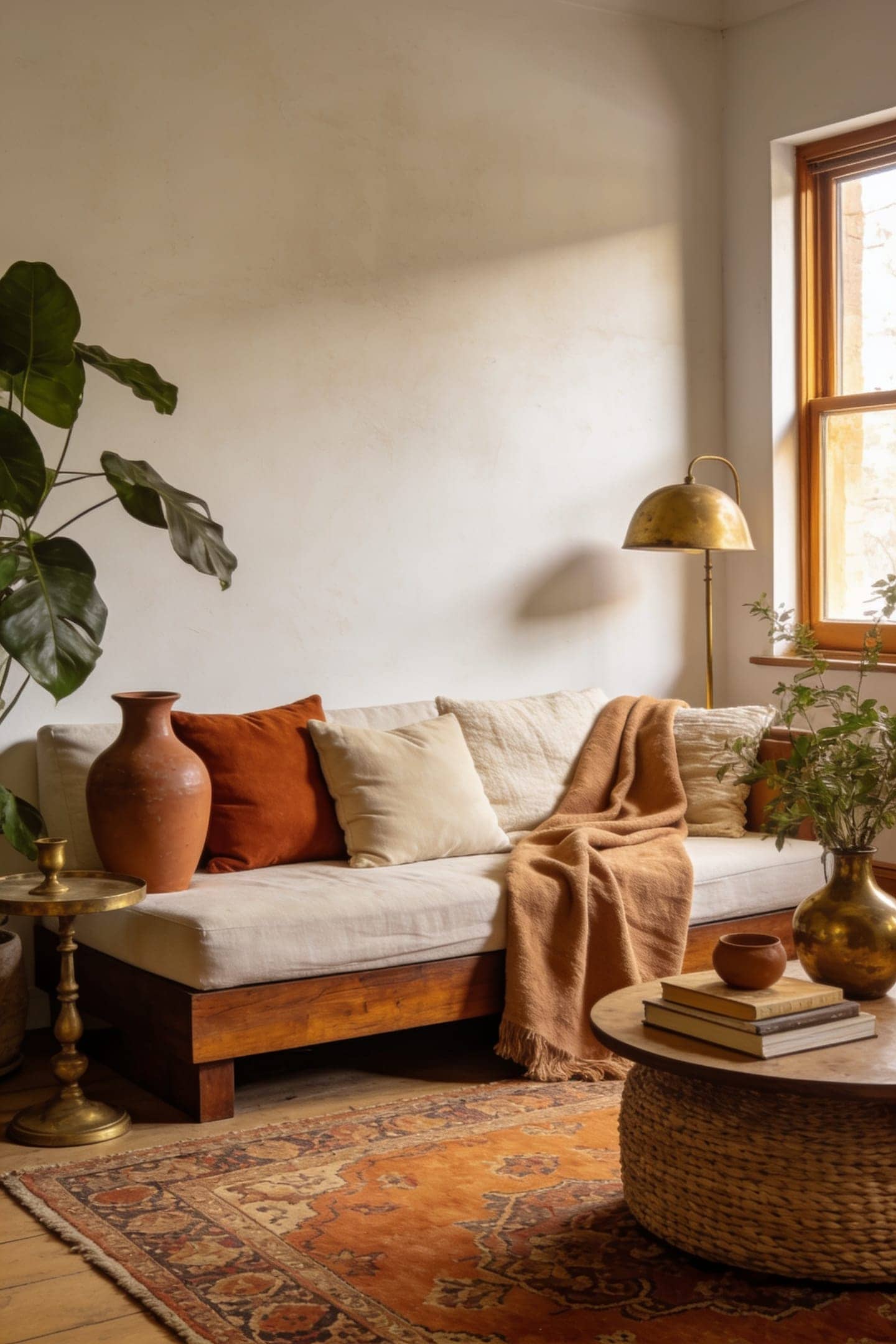
Terracotta lives or dies by what sits next to it. Put it against cool gray or a stark blue-white and it looks orange and dated. Set it against cream, oat, warm beige, and soft camel, and it reads rich and intentional. If your walls are already a cool white, you do not have to repaint, just flood the room with warm neutral textiles so the terracotta has friends.
Decide: one bold move, or small hits all over
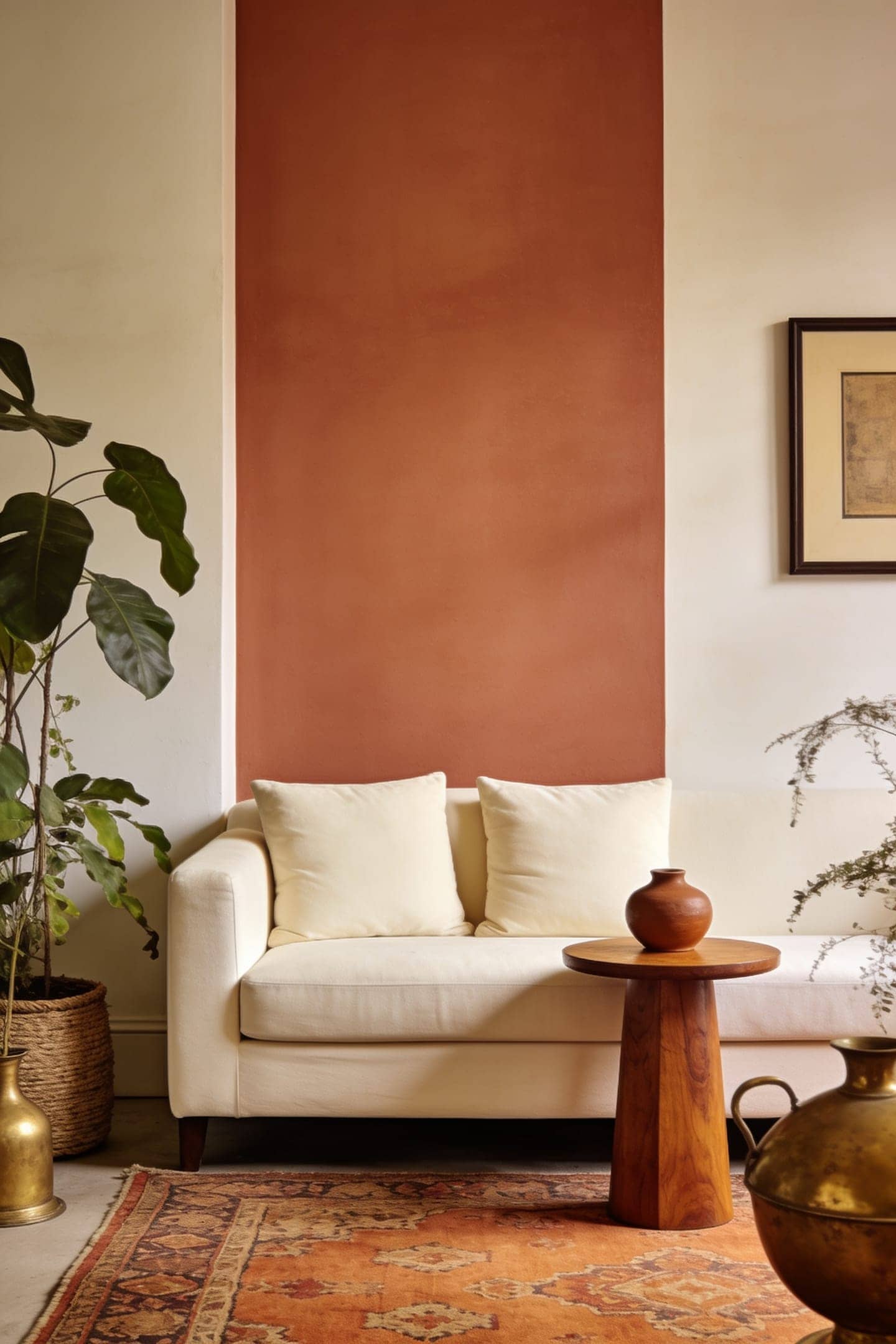
There are two ways to do terracotta, and picking one keeps it from feeling random. Either commit to one big gesture, a painted accent wall or a clay-toned sofa, and keep everything else quiet. Or sprinkle it in small repeated hits: a pillow here, a vase there, a stack of warm-spined books. What looks messy is one medium terracotta thing floating alone with nothing to echo it.
Ground it with real wood tones
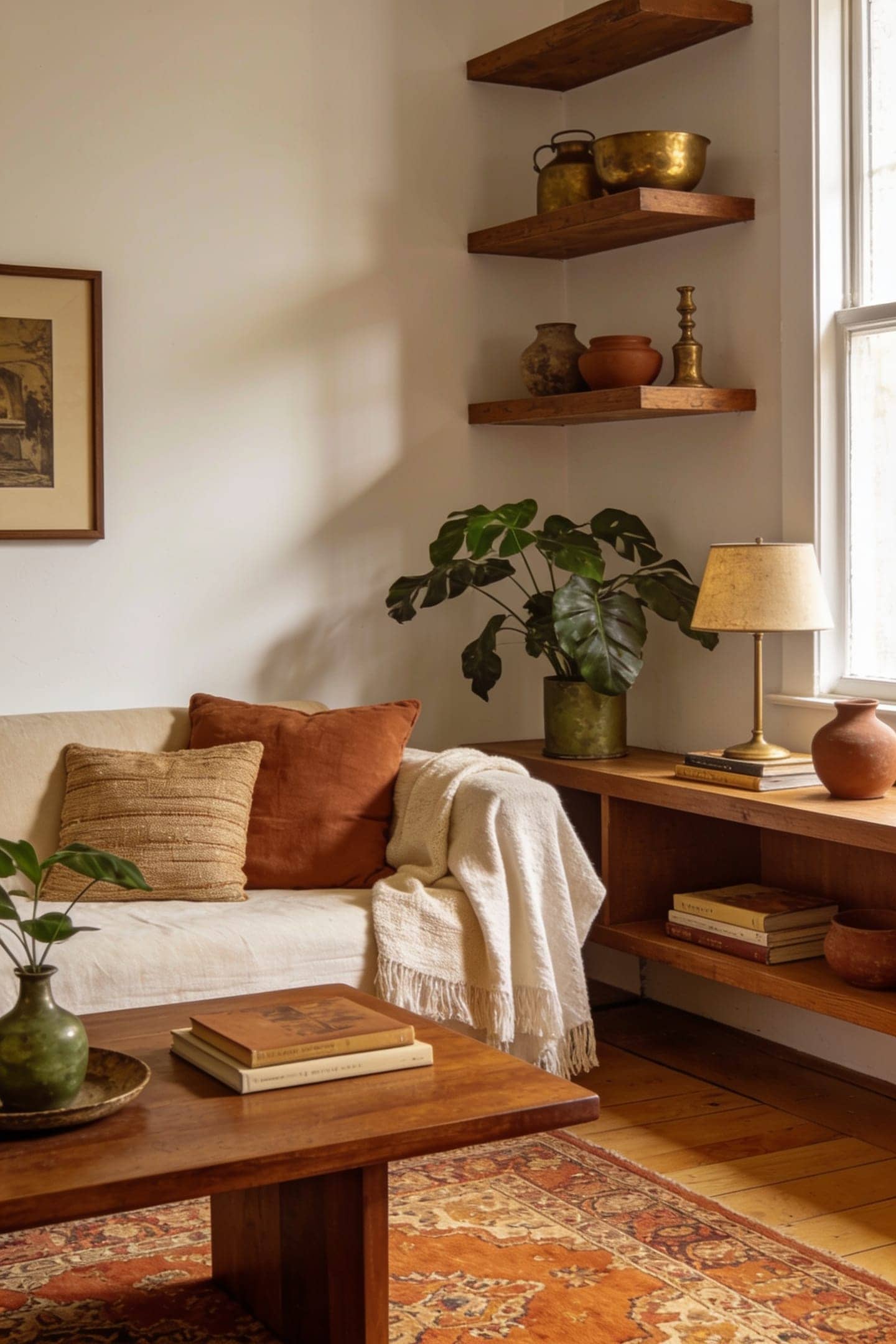
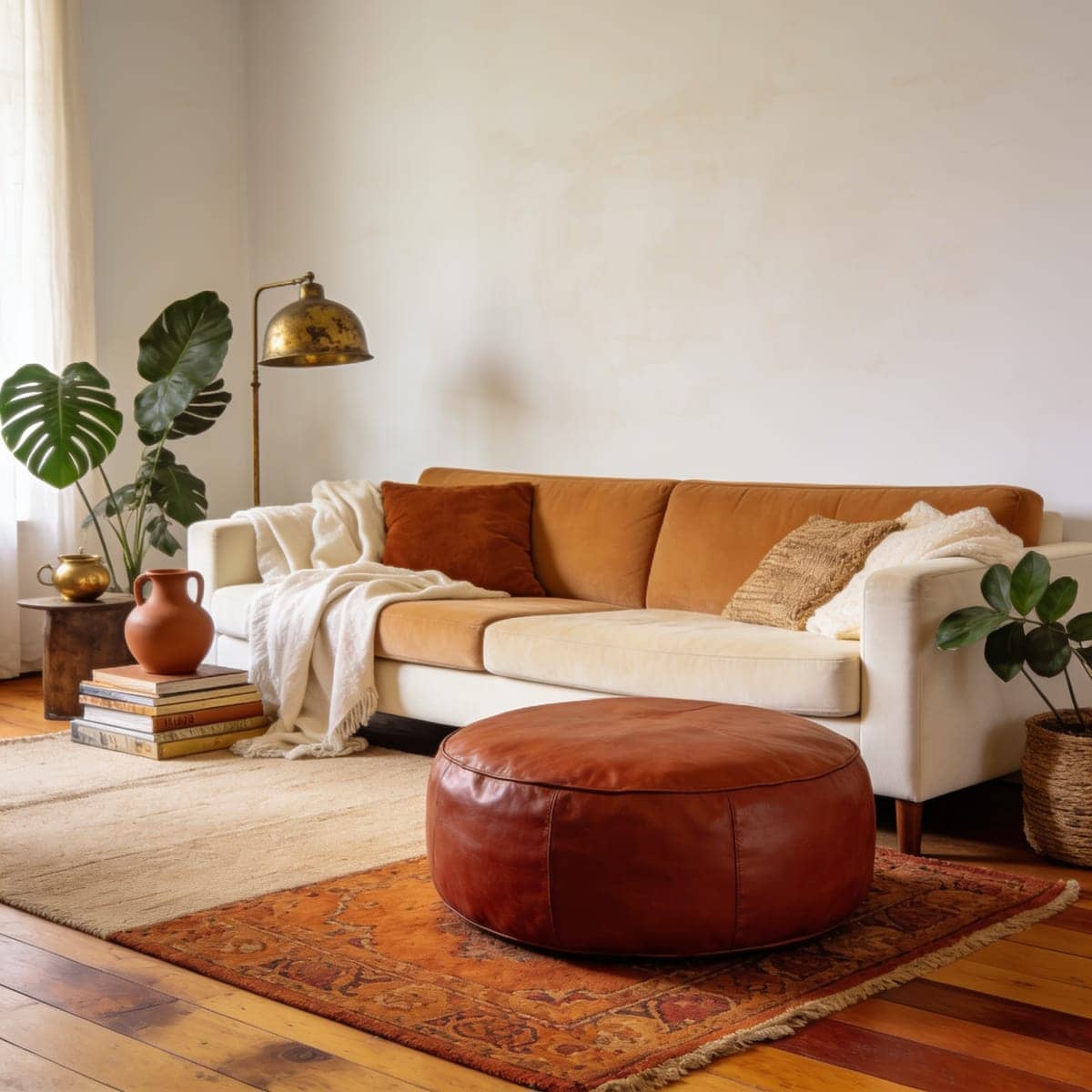
Terracotta and wood are old friends. Walnut, oak, a warm-stained coffee table, they all pull the clay tone into something that feels grounded instead of flat. Cool wood tones and black-brown furniture fight it. If your pieces lean cool, warm them up cheaply with a wood tray, a little stool, or a cutting board propped on a shelf.
Add a little black so it reads modern, not Tuscan
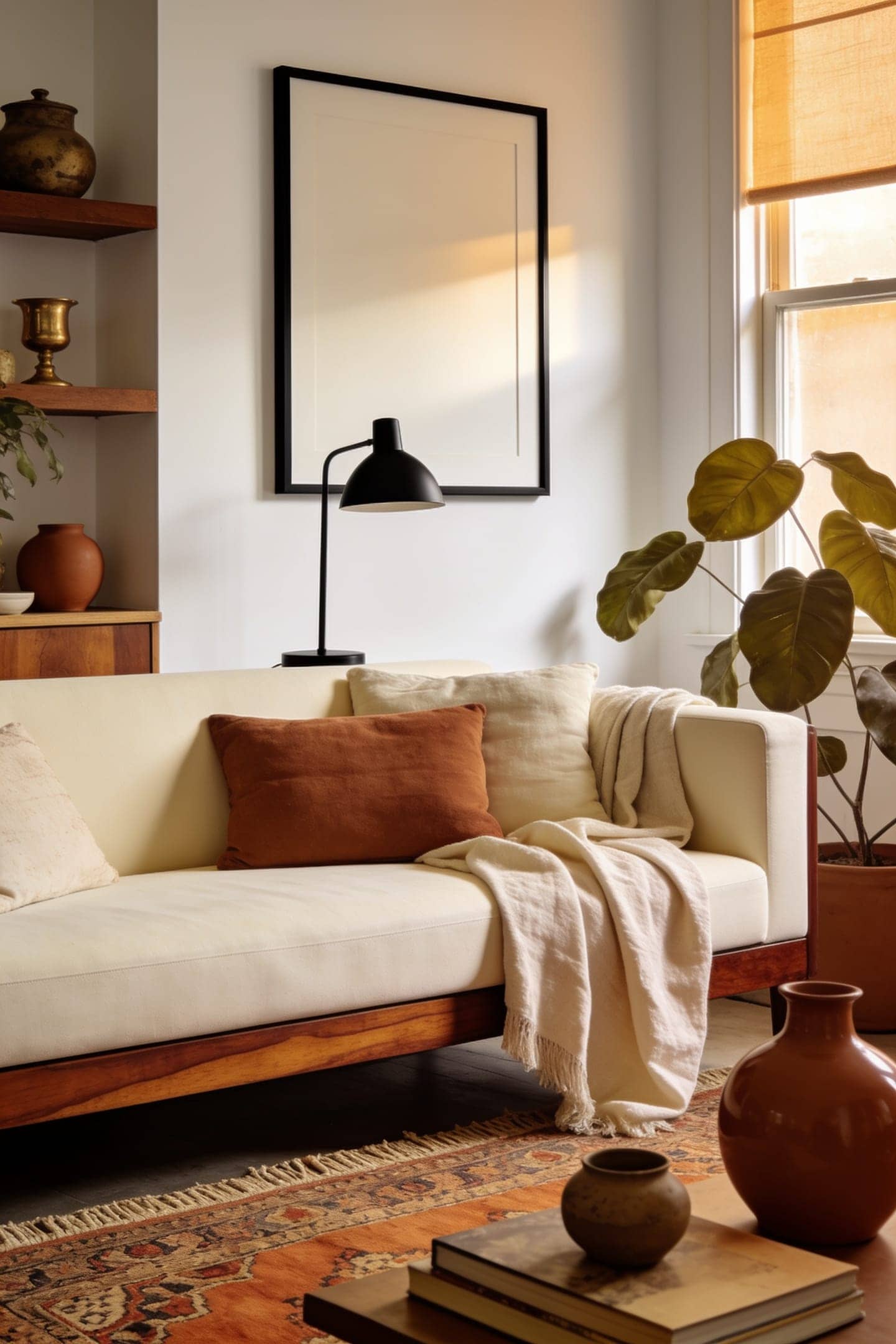
Here is the trick that drags terracotta out of 2005. A few small black moments, a lamp base, a picture frame, a thin metal leg, give the warm palette a crisp edge and stop it from tipping into Tuscan villa. You want just enough contrast to feel current. Too much and it turns heavy, so keep the black to accents and let the warmth carry the room.
Let plants and a clay pot do the warm-on-warm thing
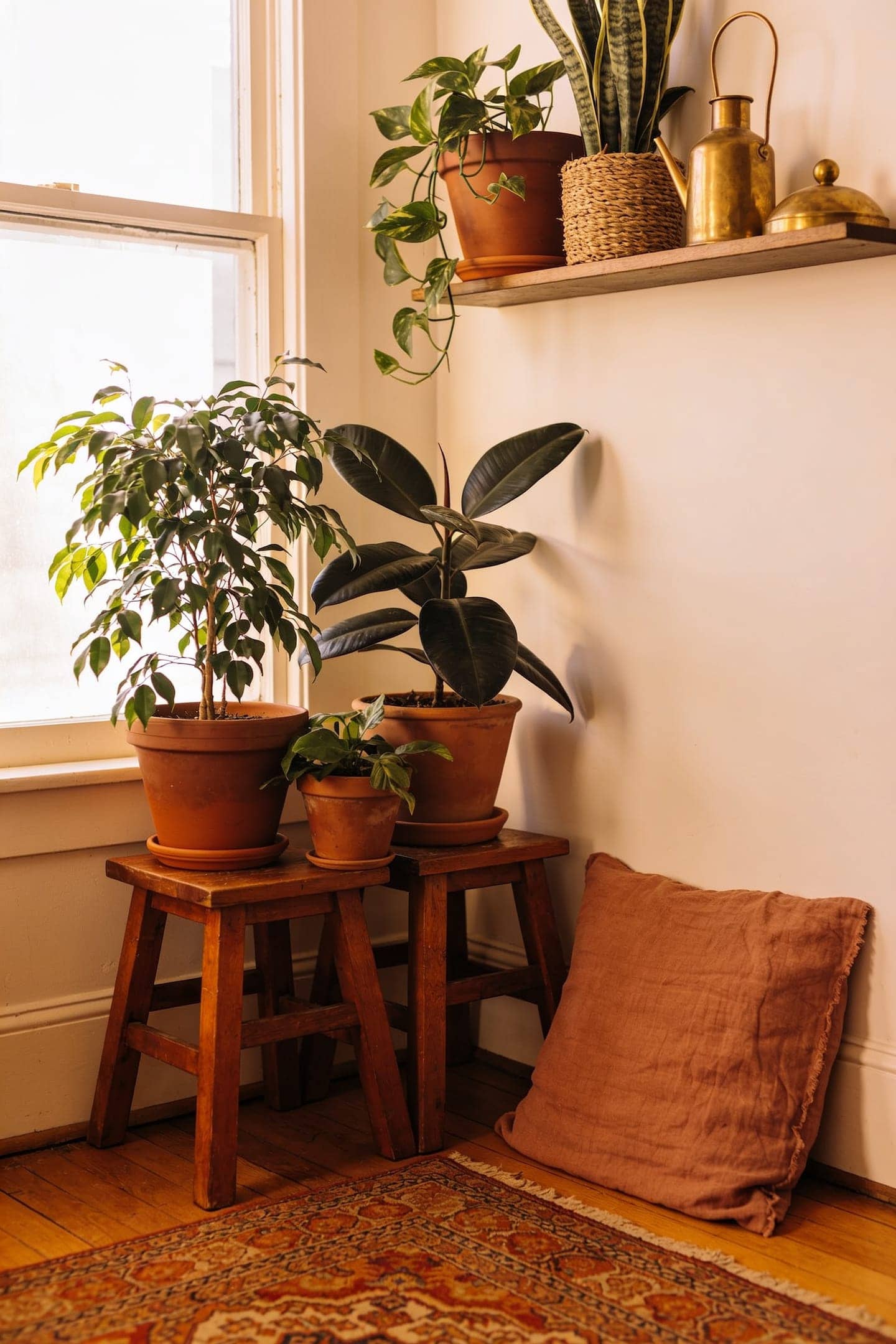
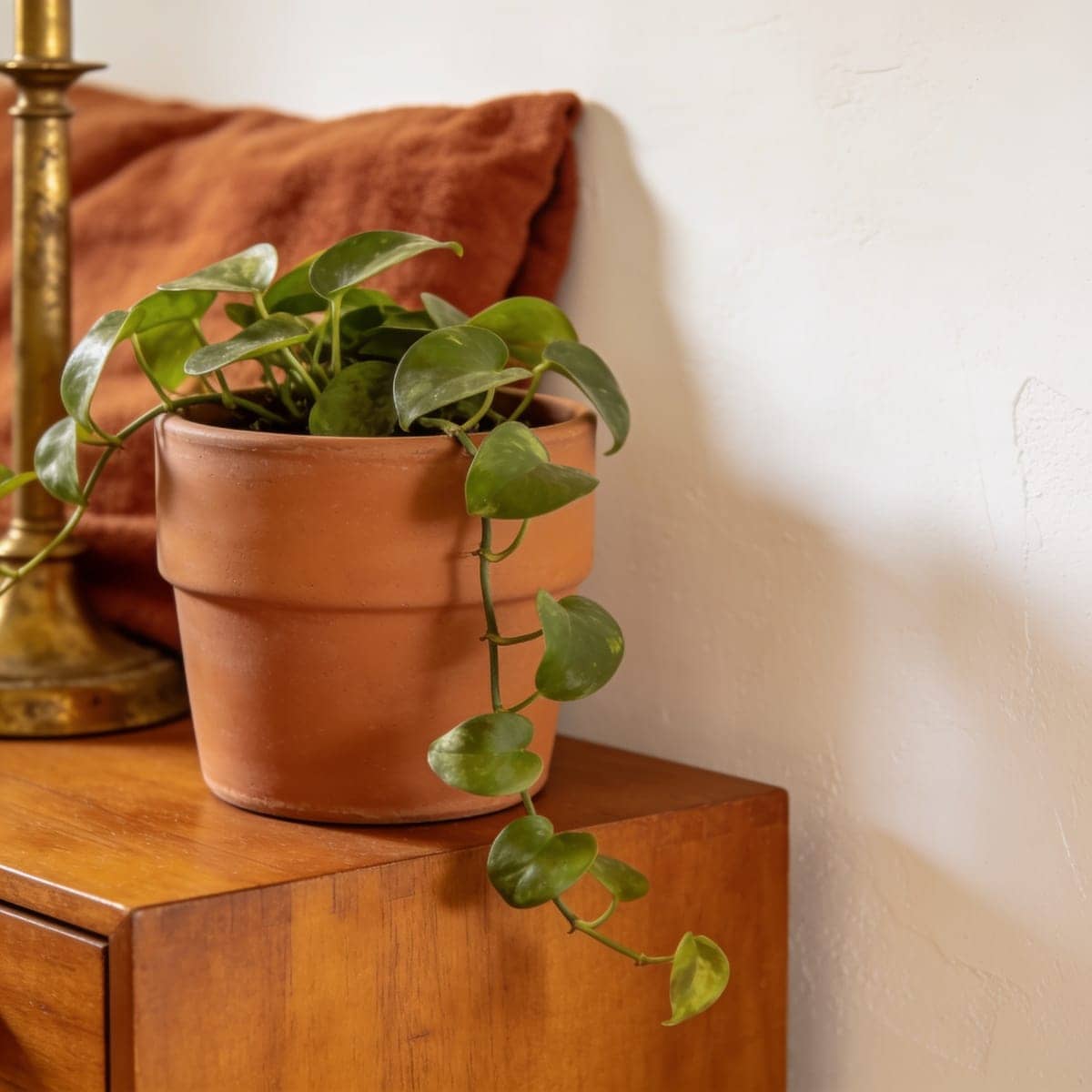
Greenery against terracotta is one of those combinations that just works. The green makes the clay look richer, and the clay makes the green look alive. Actual terracotta planters are the obvious move here and usually the cheapest pot in the store. Drop a trailing pothos or a little olive tree into one and you have added texture, life, and color in a single cheap step.
Anchor the palette from the floor up
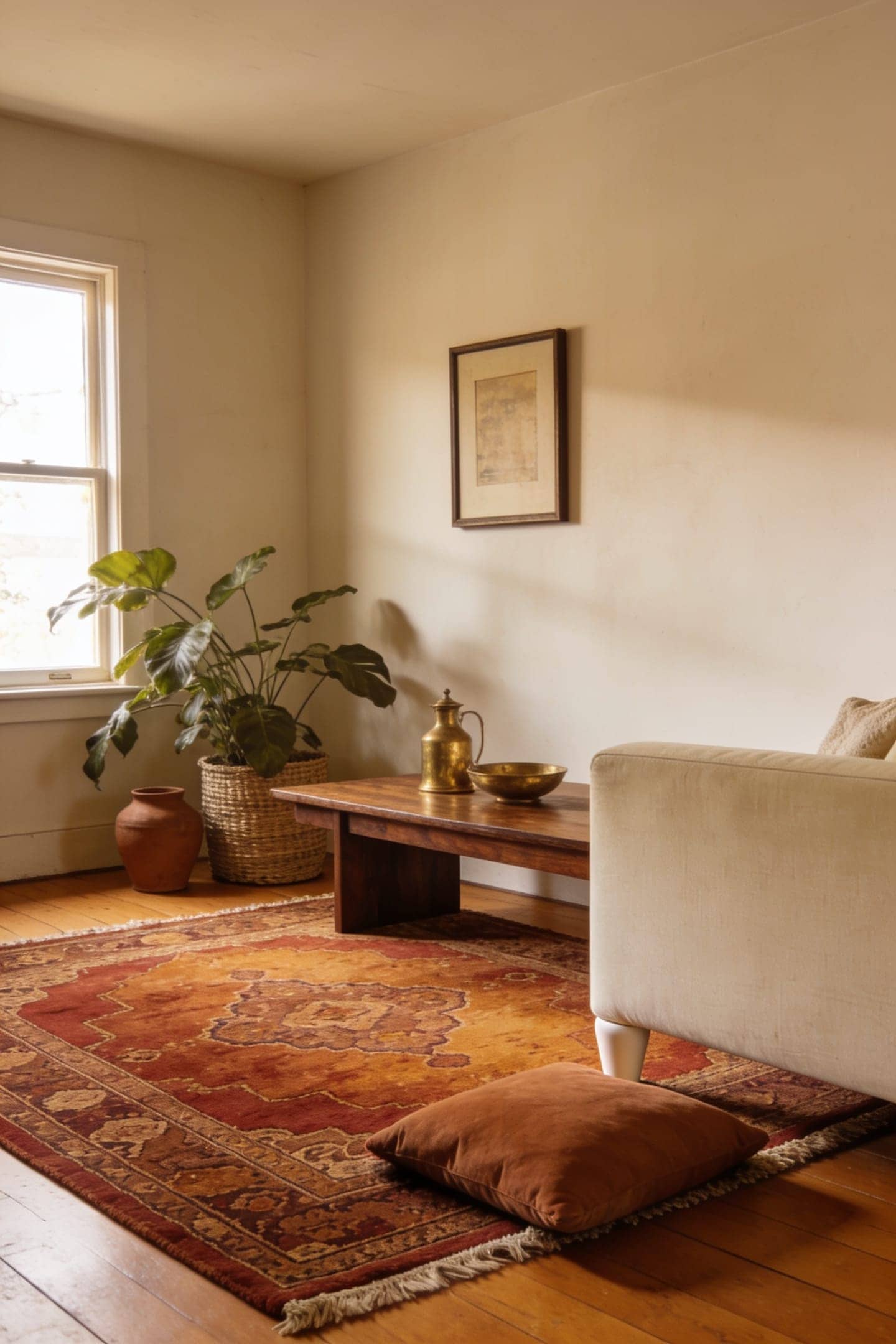
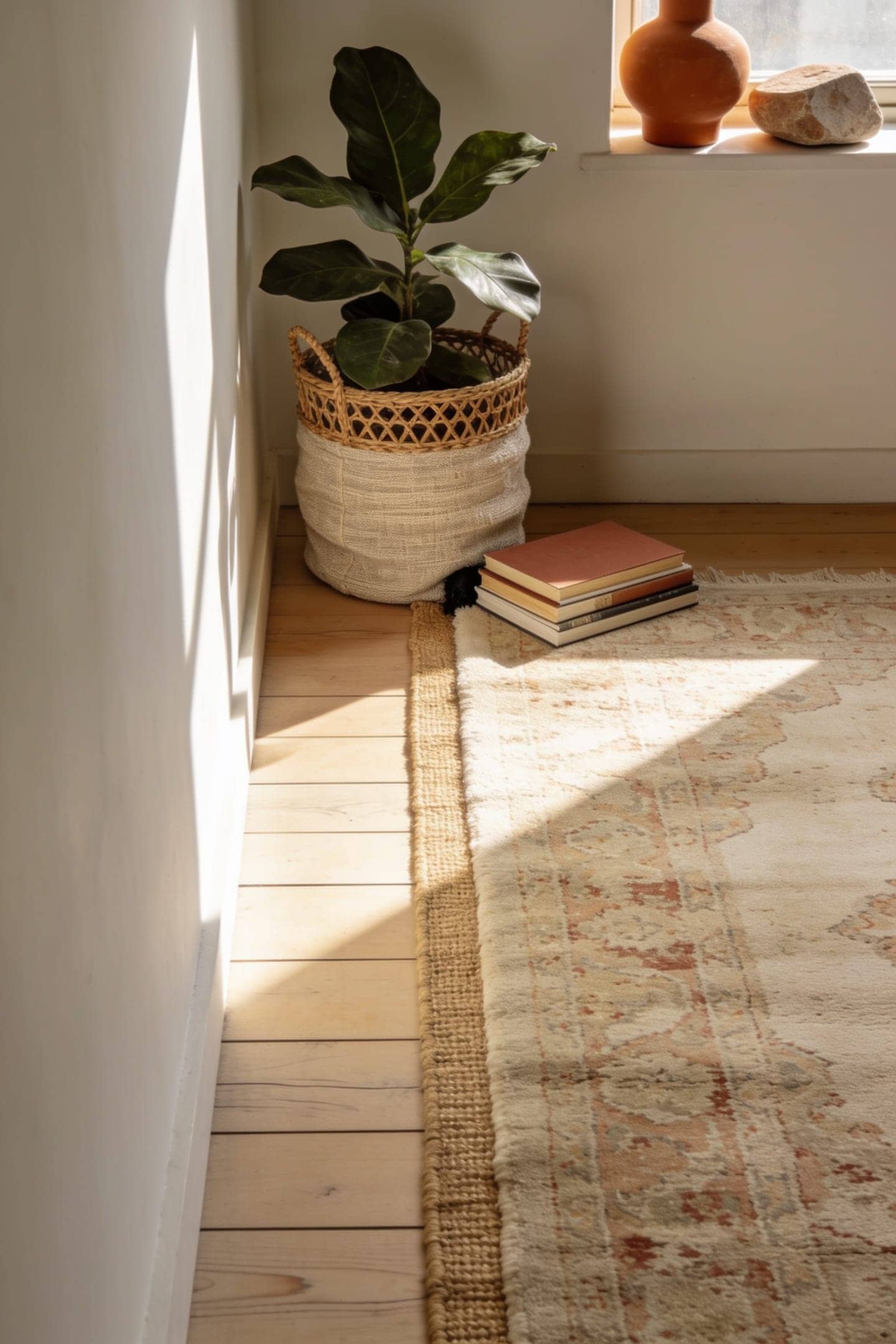
A rug with rust, clay, or warm brown running through it sets the whole tone before you add a single pillow. It also solves the floating-color problem, once the terracotta lives in the rug, everything you layer on top has something to talk to. Vintage-style Persian and Moroccan patterns carry these tones naturally, and a faded one hides real life with kids and pets. If you're shopping for the rug itself, my budget rugs list has faded vintage prints, a few of them in warm rust and clay.
Swap chrome for aged brass
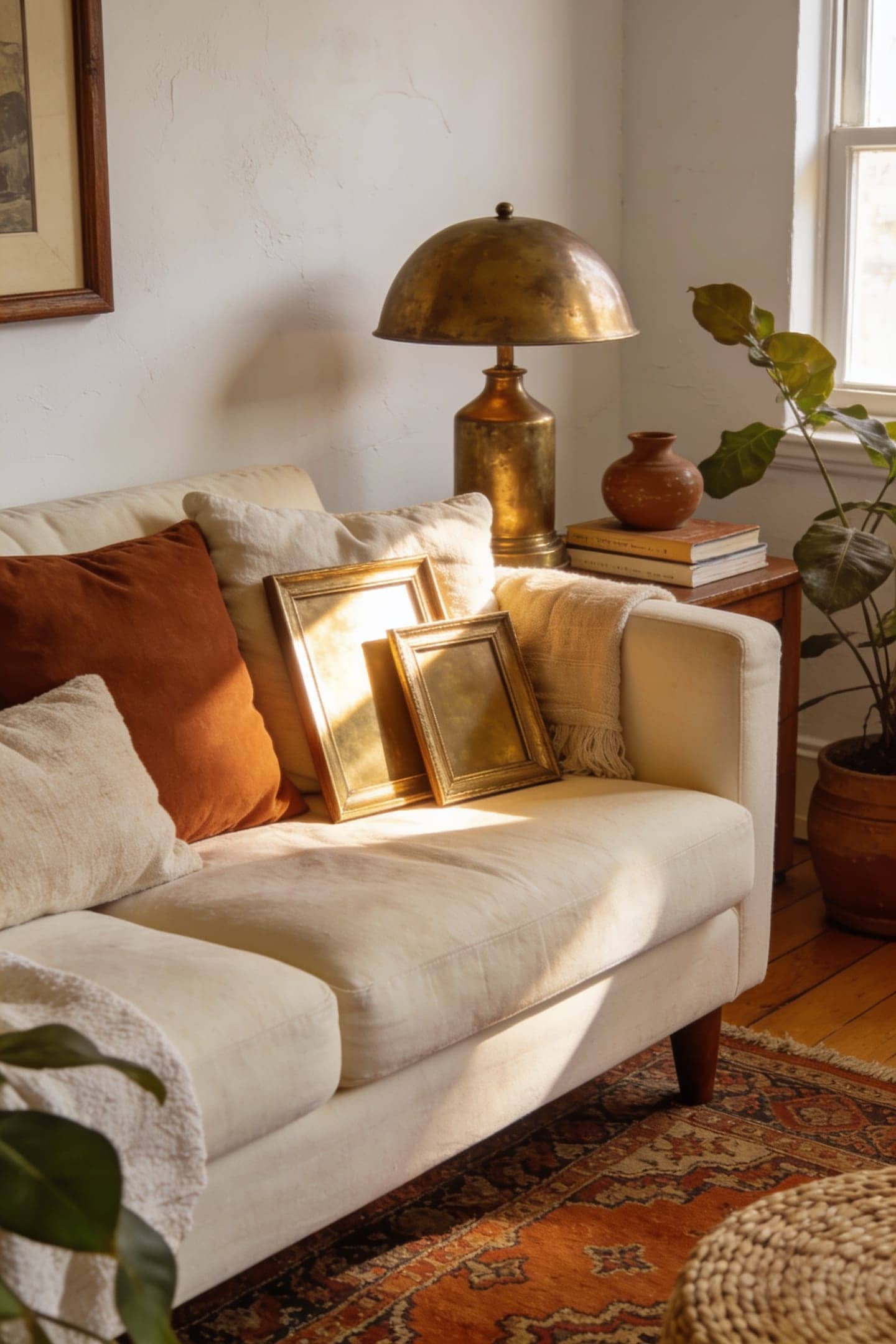
Shiny chrome and cool nickel go cold next to terracotta. Warm metals, aged brass, bronze, a touch of copper, echo the clay and make the room feel pulled together. You do not need to replace a single fixture. A brass lamp, a couple of frames, a small tray, and suddenly the metals stop clashing with the color and start agreeing with it.
Keep the walls a warm white so terracotta stars
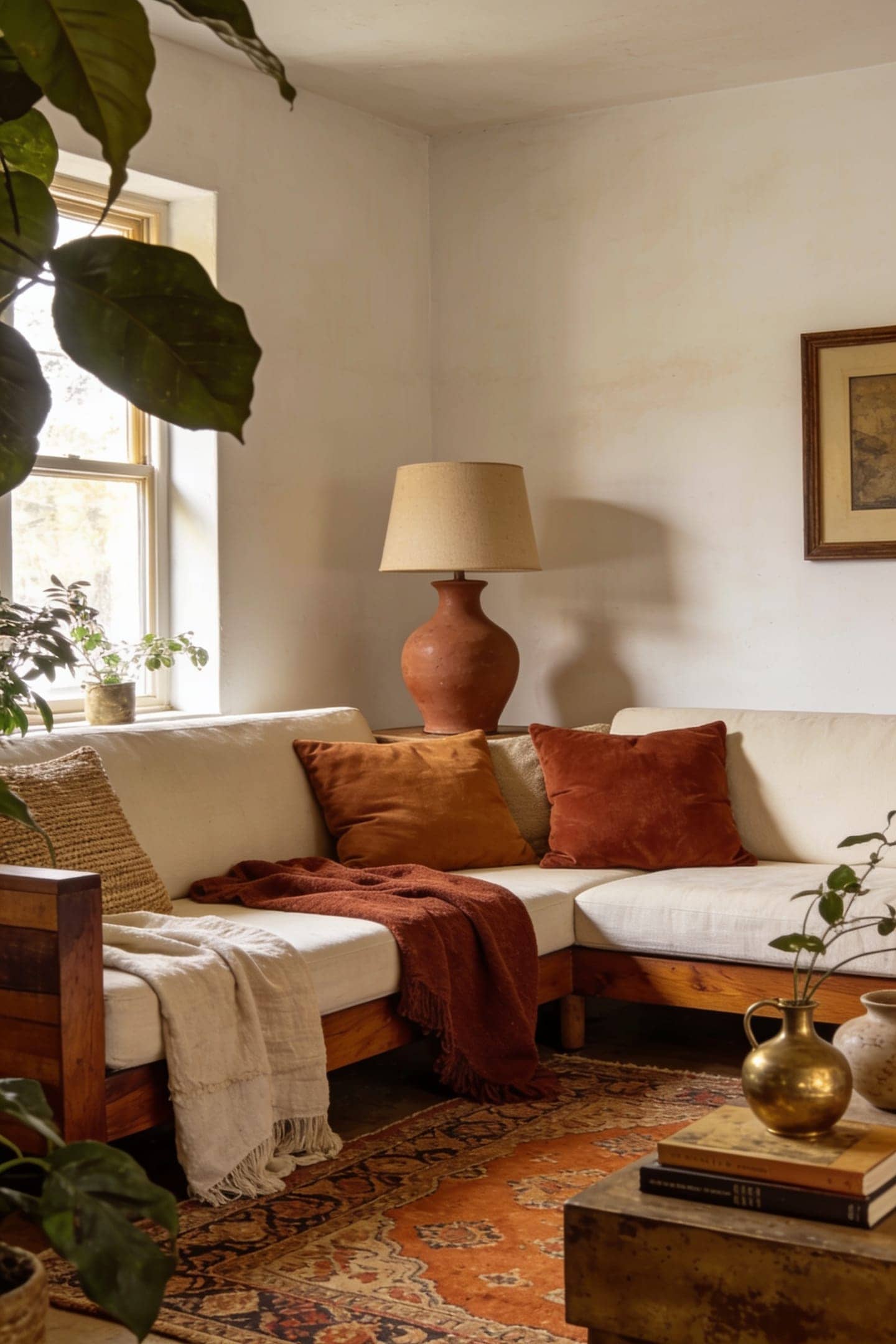
If you are not painting a terracotta wall, the safest backdrop is a warm white or soft oat, never a stark blue-white. A warm wall lets the terracotta pieces read as the star instead of fighting the paint. It also makes a small room feel bigger and cozier at once, which is the whole reason to reach for a warm color in the first place.
Add one warm accent seat
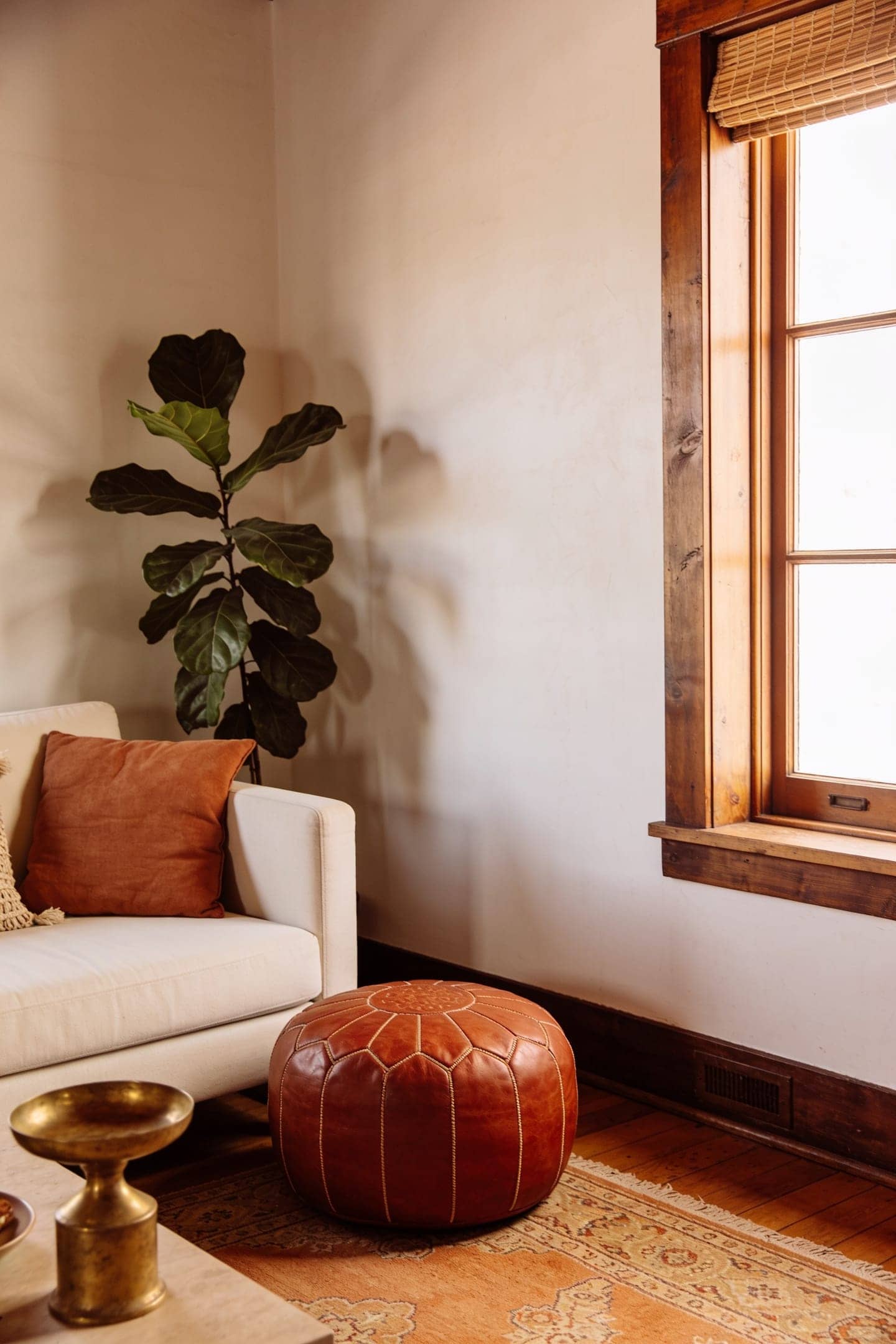
One terracotta or rust piece you can actually sit on pulls the color down to floor level and adds a spot for guests. A rust leather pouf or a clay-toned ottoman does double duty, extra seating and a footrest, without the cost or bulk of another chair. It moves easily too, so the color travels with you when you rearrange the room next season.
Edit so it lands grounded, not themed
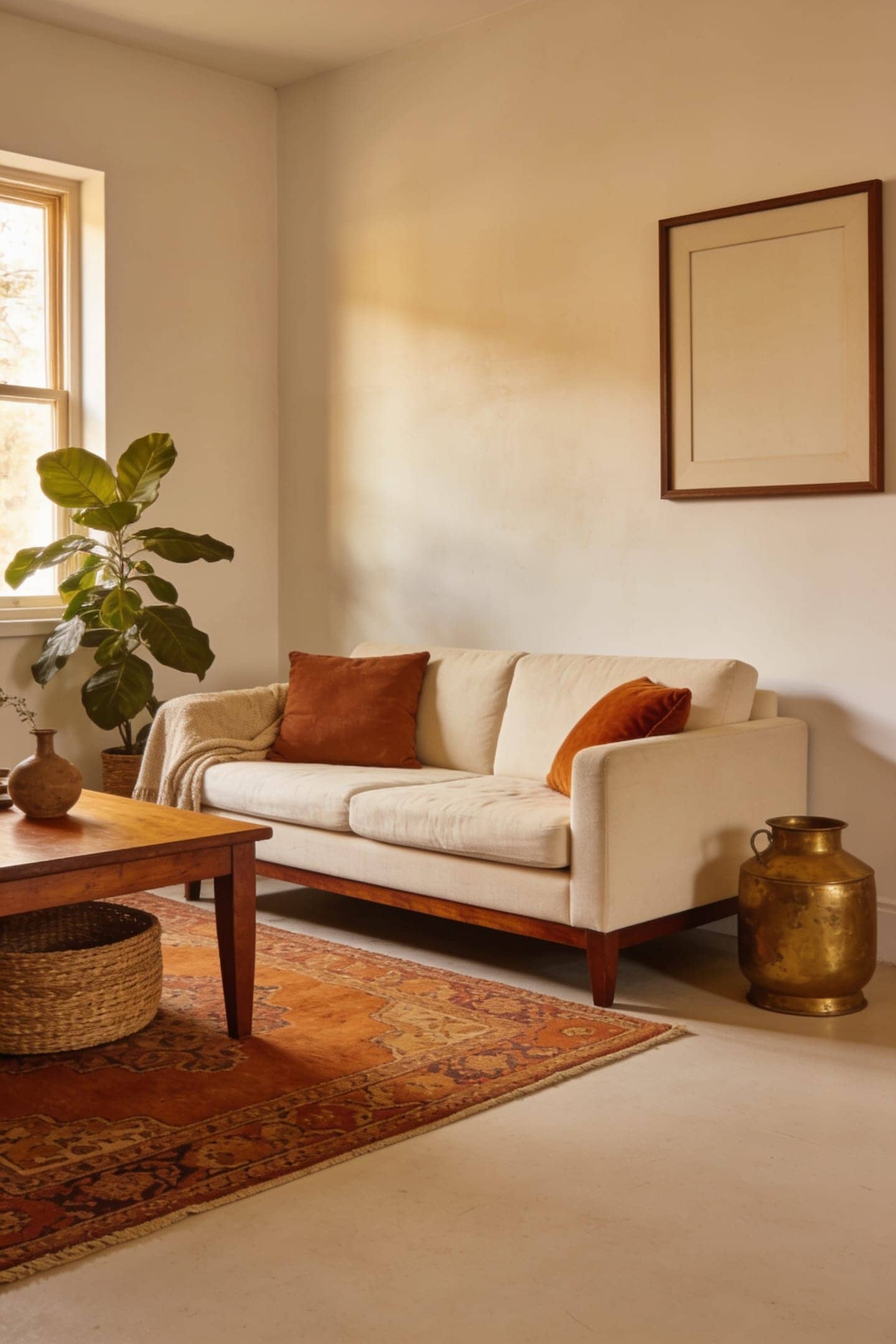
The line between a warm modern terracotta room and a Tuscan theme is restraint. Terracotta is a strong color, so a little goes a long way, and once every surface is clay-toned it stops feeling designed and starts feeling like a movie set. Pull a few pieces back to neutral, leave some breathing room, and let terracotta be the accent it is best at being. More rooms to borrow from in my budget living room ideas.
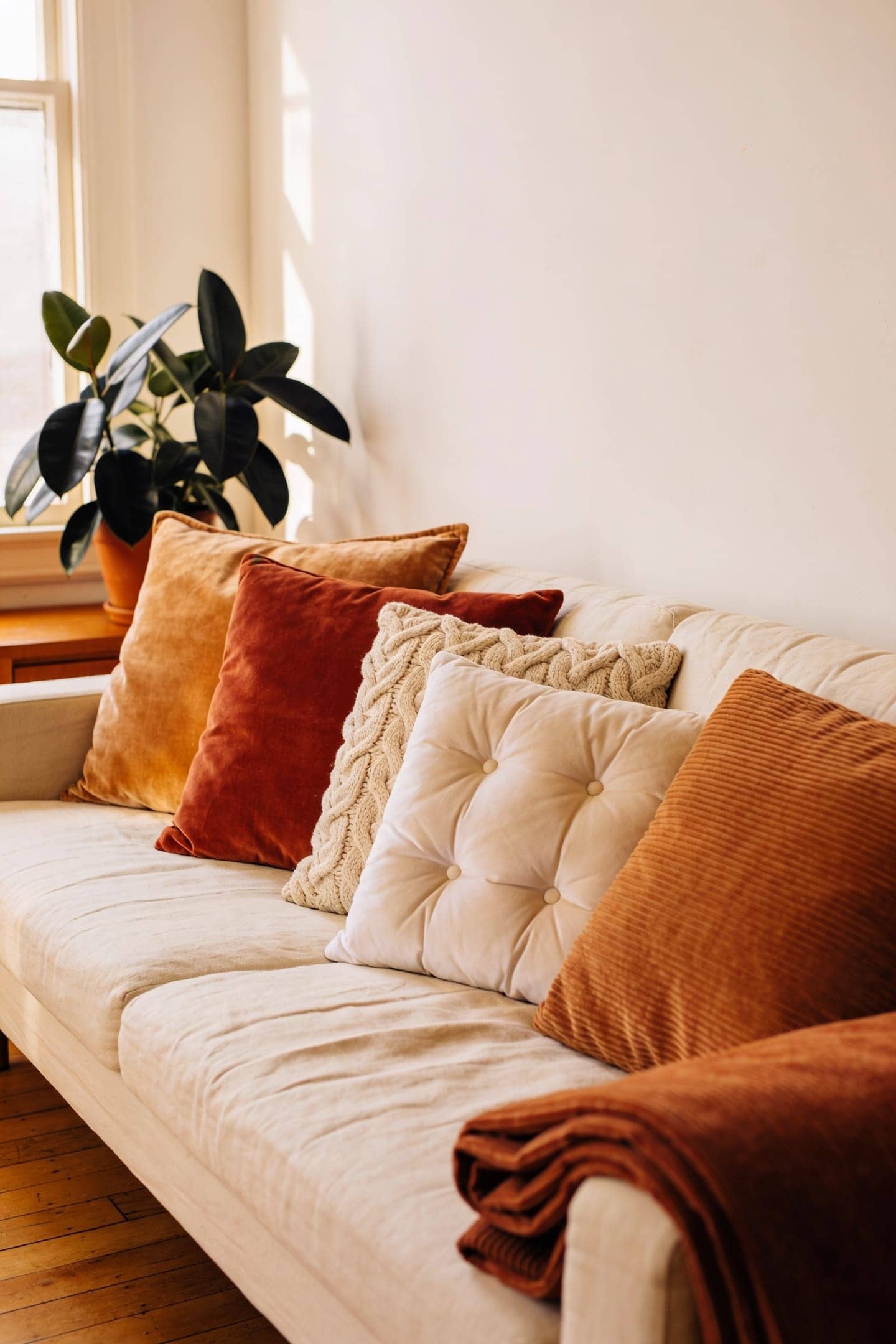
The pillows are where terracotta is easiest to get right.
Throw pillows are the cheapest, lowest-risk way to bring terracotta into a room, so I compared the budget ones worth buying and ranked the covers that actually look like linen instead of shiny polyester.
See my full list: Best Budget Throw Pillows