Some links here are affiliate links. If you buy through them, I may earn a small commission at no extra cost to you, and I only point to things I'd actually consider for my own home.
Measure the pull-out, not the table
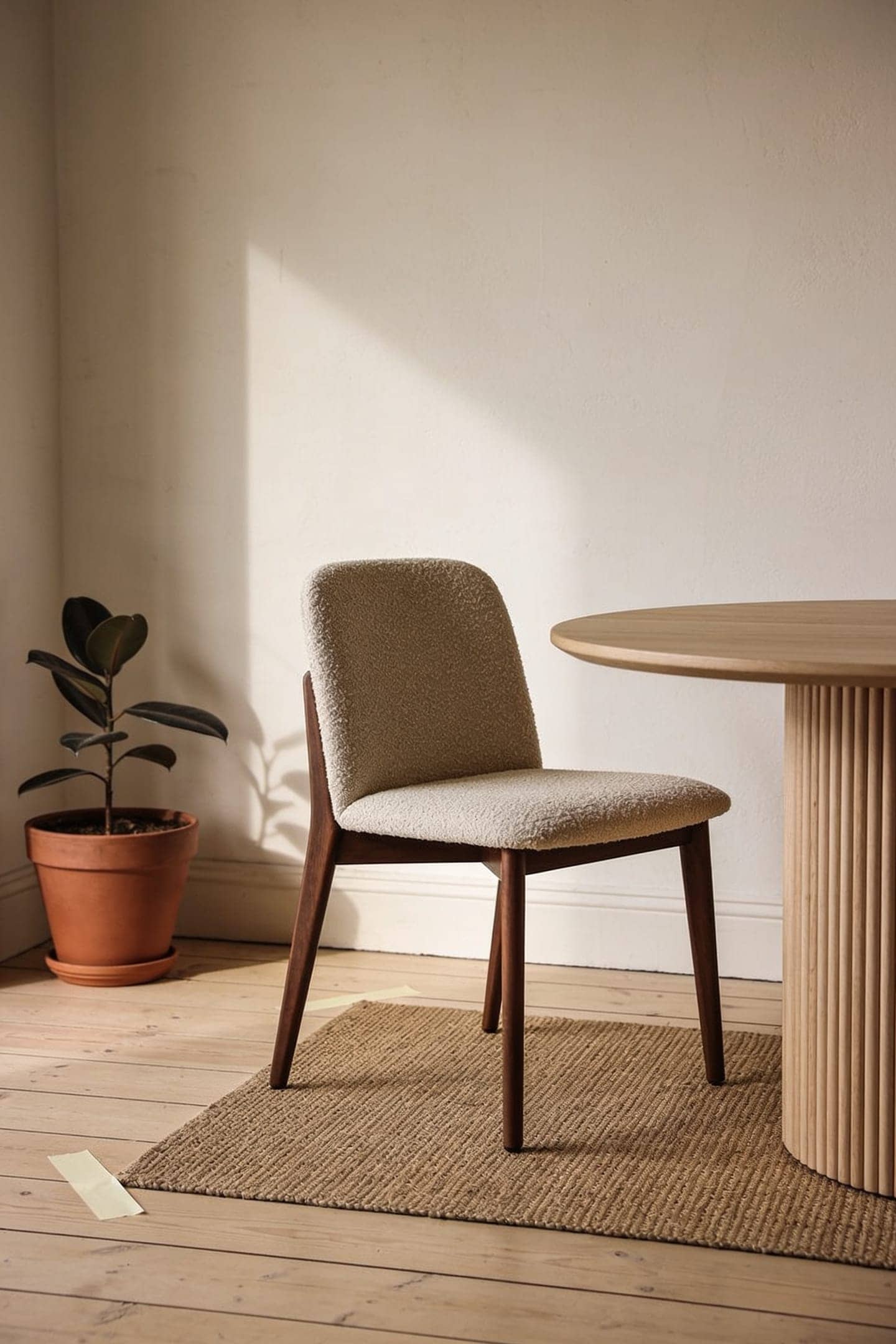
Here is the number that decides everything: you need about 36 inches behind each chair to sit down and stand up comfortably, and about 24 inches for someone to squeeze past behind a seated person. Chalk it on the floor with painter's tape before you buy anything.
Most small dining rooms fail this on one side only, which is good news, because it means you don't need a smaller table. You need a different plan for that one side.
Go round when the path is tight
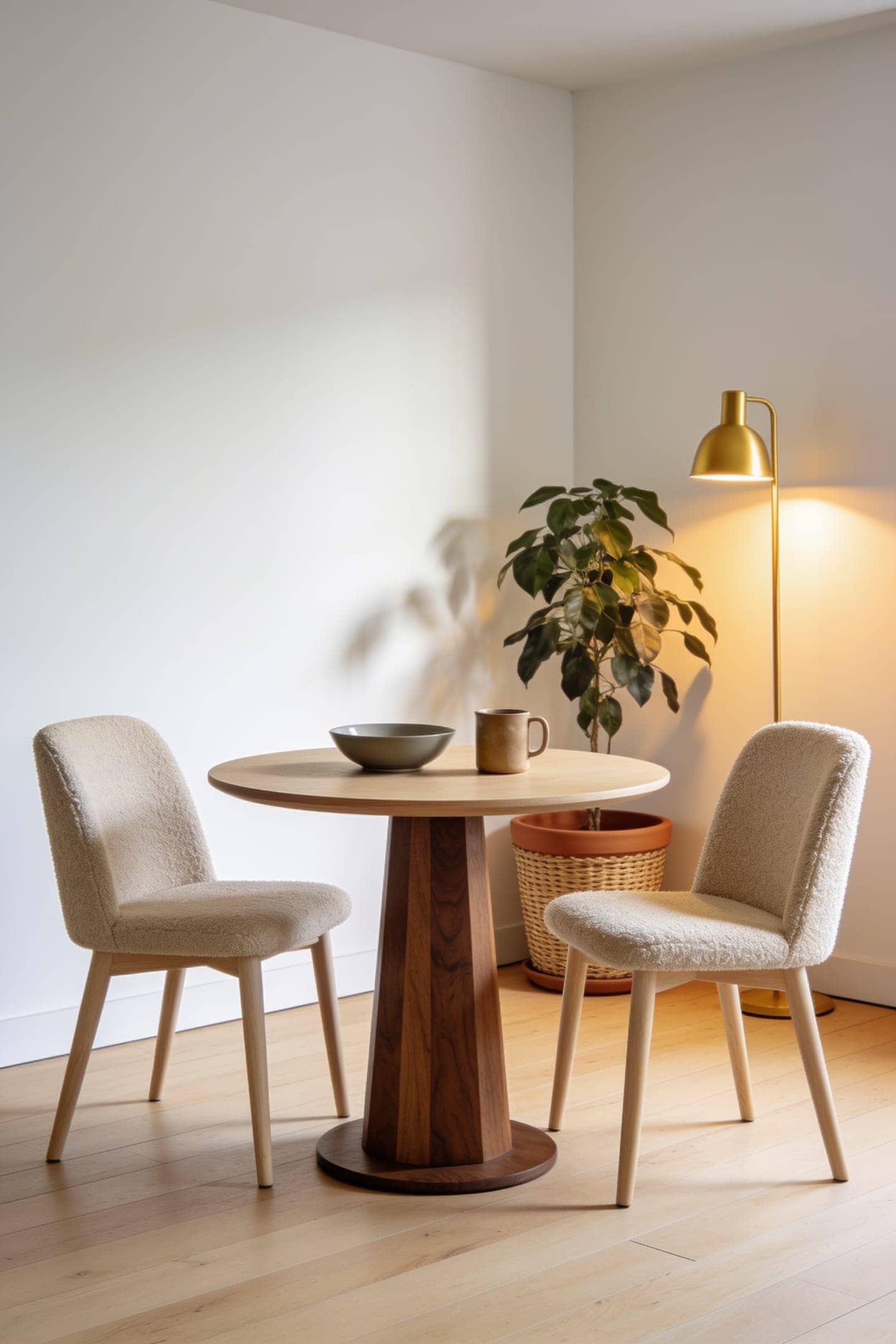
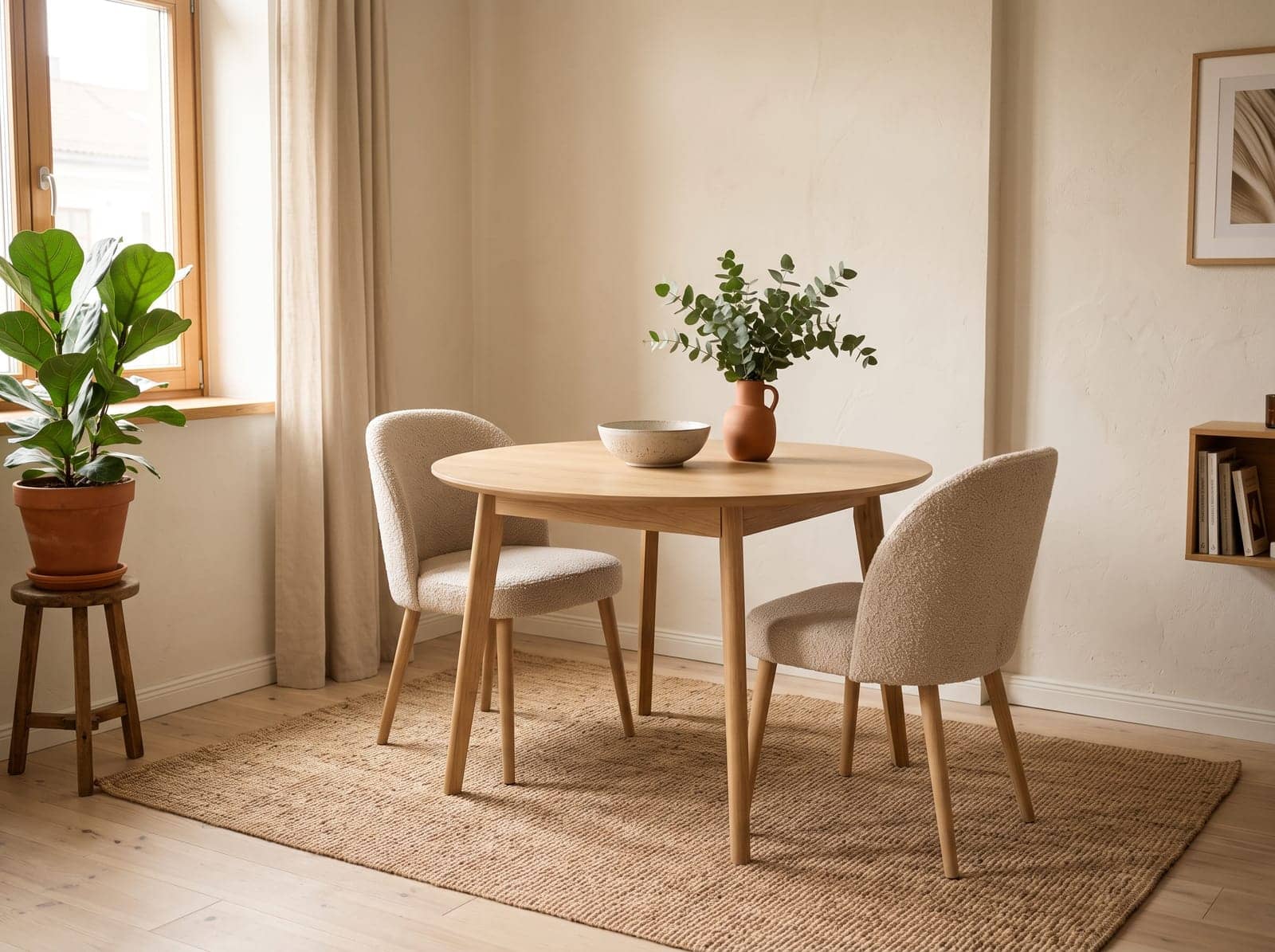
Round is the cheat code for a narrow room. With no corners to catch your hip on, the walkway can run closer, and a 42-inch round seats four the way a rectangle seats four while taking up noticeably less floor.
It also solves the awkward fifth person, since you can always slide one more chair around a curve. A rectangle just says no.
Push it against the wall and put a bench on that side
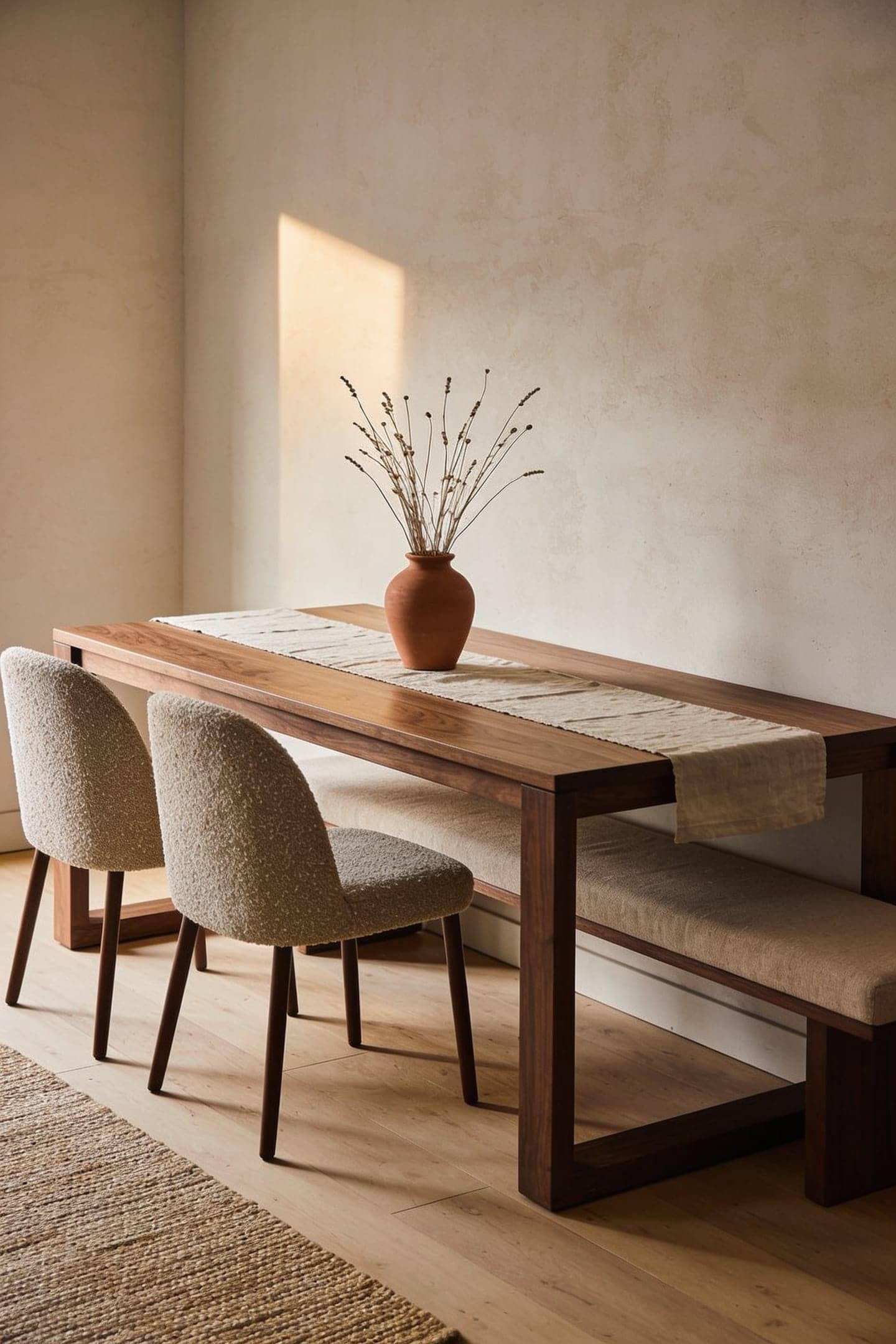
If one side of the room fails the 36-inch test, stop fighting it. Slide the table to that wall and put a bench there instead of chairs, because a bench slides all the way under and gives you back the whole walkway when nobody is eating.
Two adults fit on a bench in the footprint of one and a half chairs. In a small room that is the single biggest thing you can do, and it usually costs less than the chairs it replaces.
Buy chairs that tuck all the way in
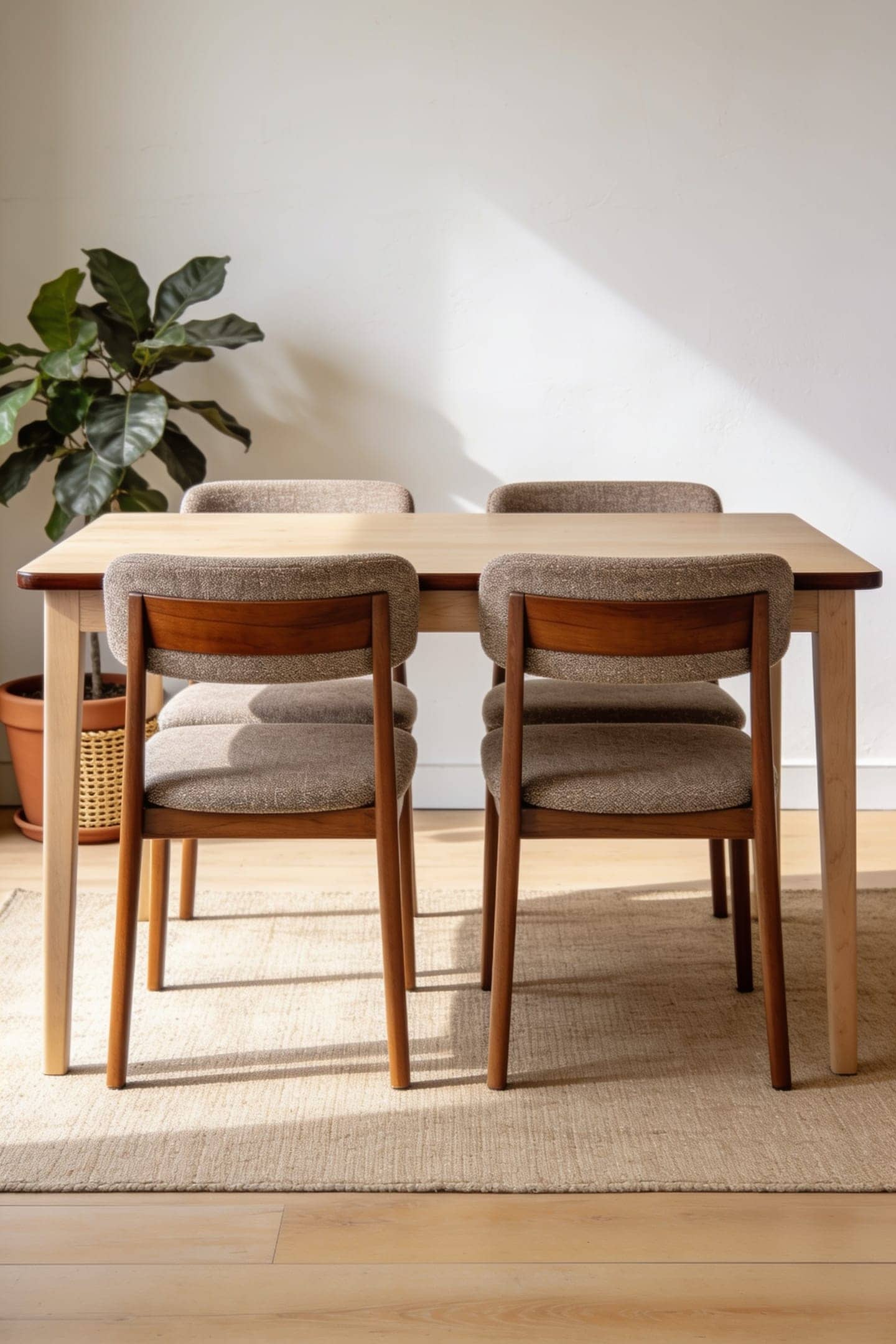
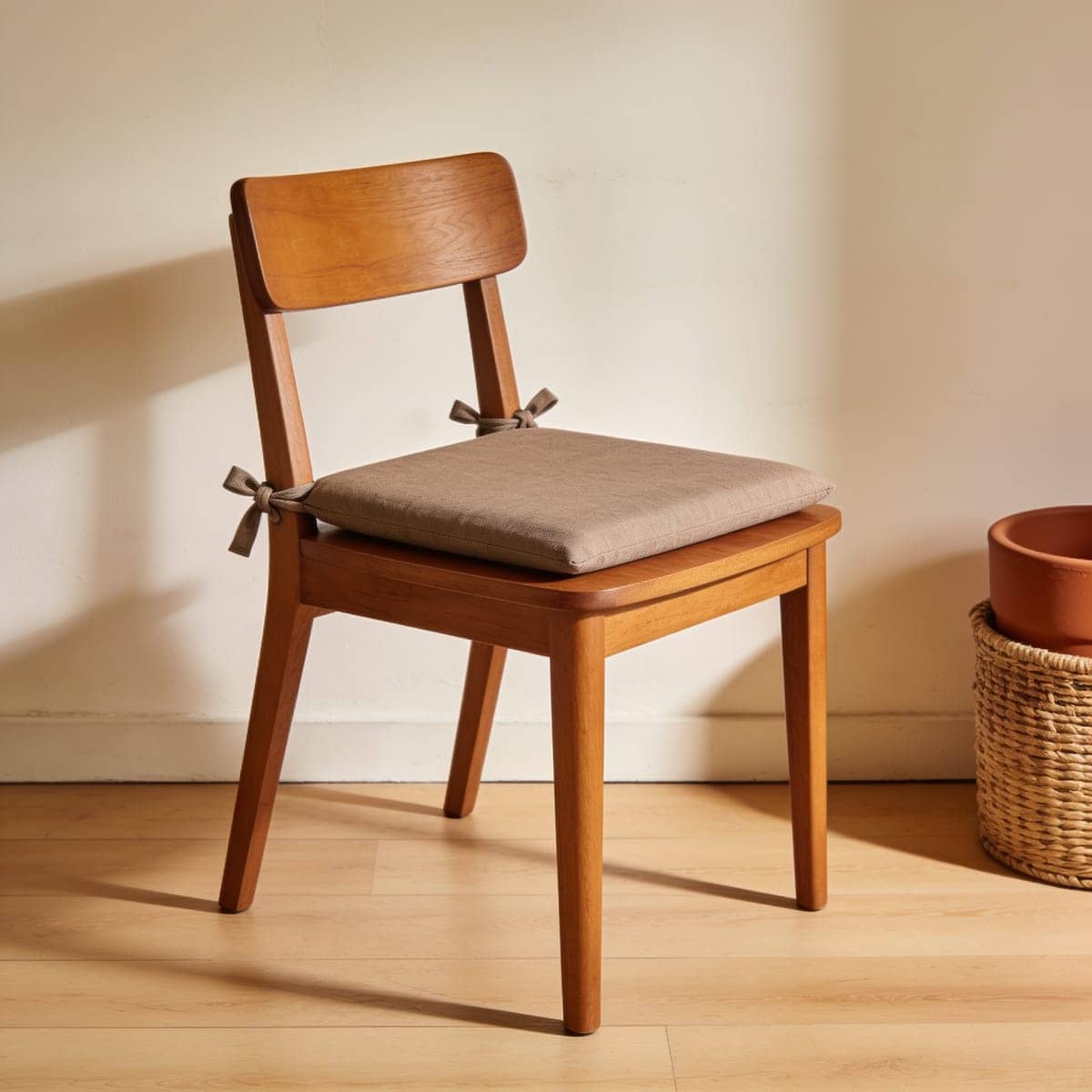
A chair that sticks out four inches when it's pushed in is stealing four inches from your room, permanently, every hour you're not eating. Low backs, no arms, and a seat that doesn't extend past the tabletop are the specs that matter far more than the style.
This is the part of a small dining room where I would actually spend, because it is doing structural work. I compared the budget sets properly rather than guessing from photos.
The ranked roundupI compared the budget dining chairs that tuck in, hold up and don't wobble, and ranked the ten I'd actually seat people in.
See the roundup: 10 Best Budget Dining ChairsGet a table that folds down most of the week
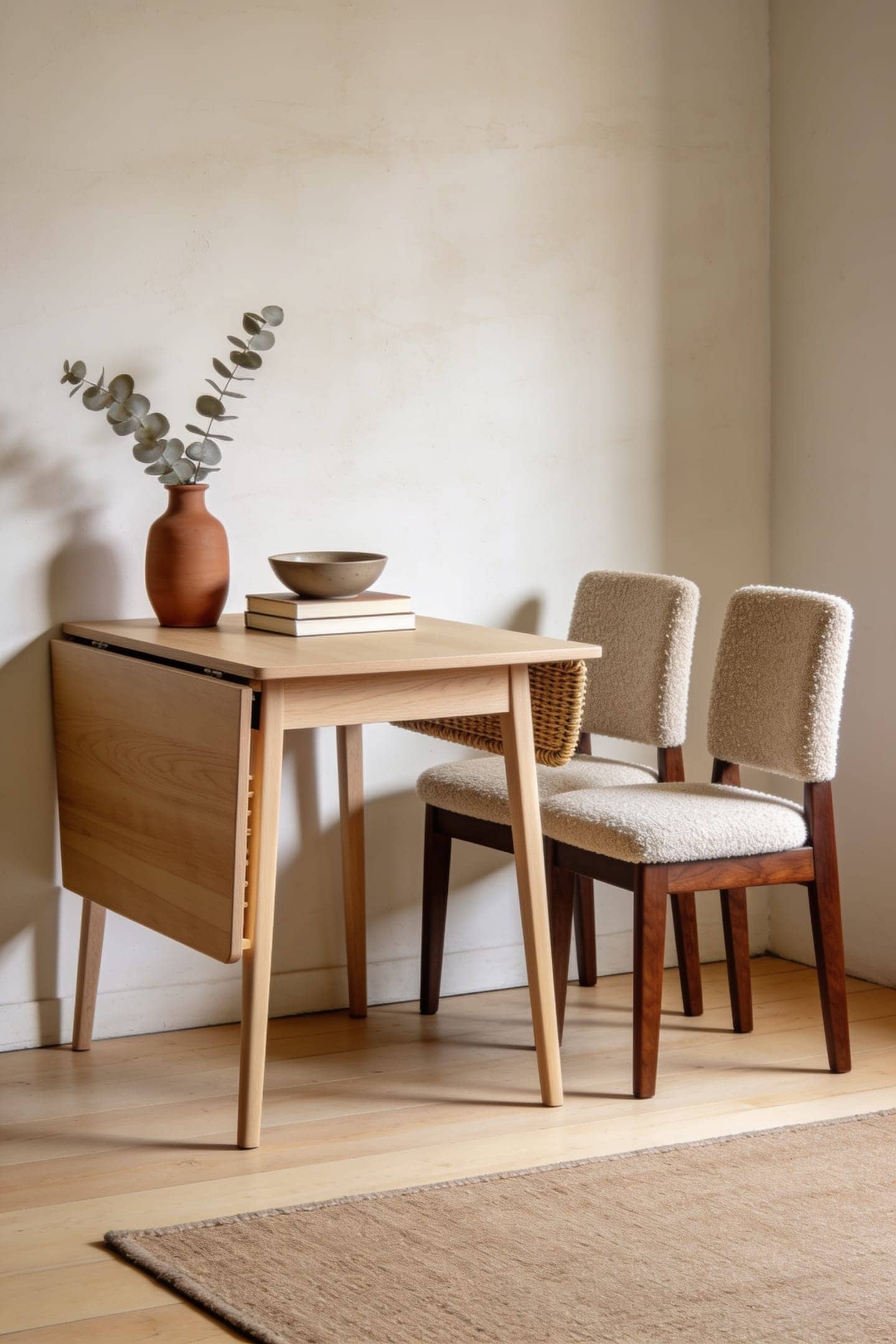
Drop-leaf and extendable tables are for people who eat with two most days and six twice a year, which is almost everyone. Folded down against a wall, a drop-leaf reads like a console. Opened up, you're hosting.
The honest catch: check that the leaf mechanism locks, because the cheap ones sag under a full plate. Reviews tell you this fast.
Size the rug for the pulled-out chair, or skip it
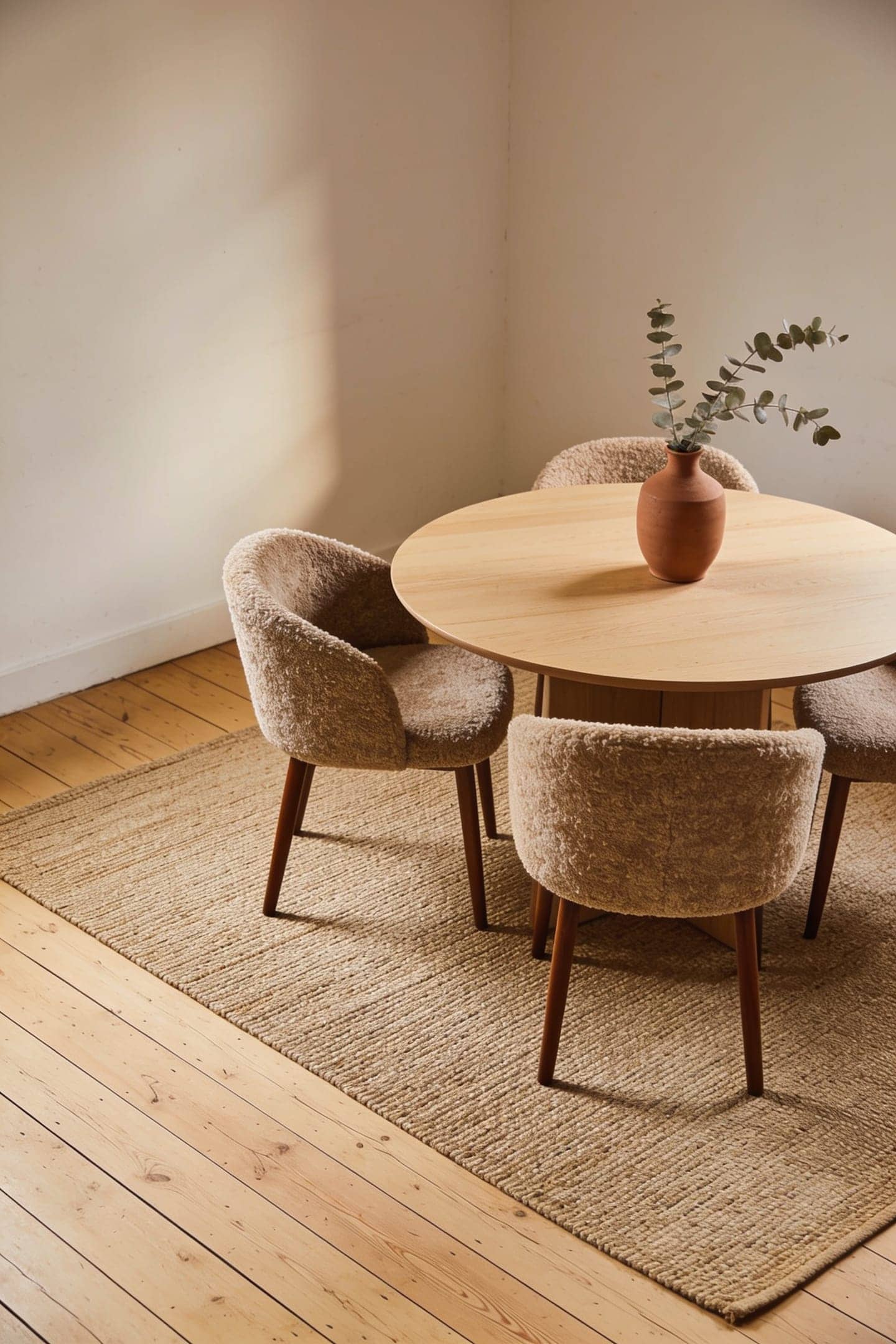
This is where small dining rooms go wrong most often. A rug needs to extend about 24 inches past the table on every side, so the back legs stay on it when someone pulls the chair out. Anything smaller and every chair catches on the edge, which is annoying at dinner and ruinous to the rug.
If the room can't take a rug that big, don't buy a smaller one. Go bare, or run a flatweave under the whole space wall to wall. Two thirds of the "cozy dining nook" photos you've saved are just a correctly sized rug.
Hang the light low and centered on the table
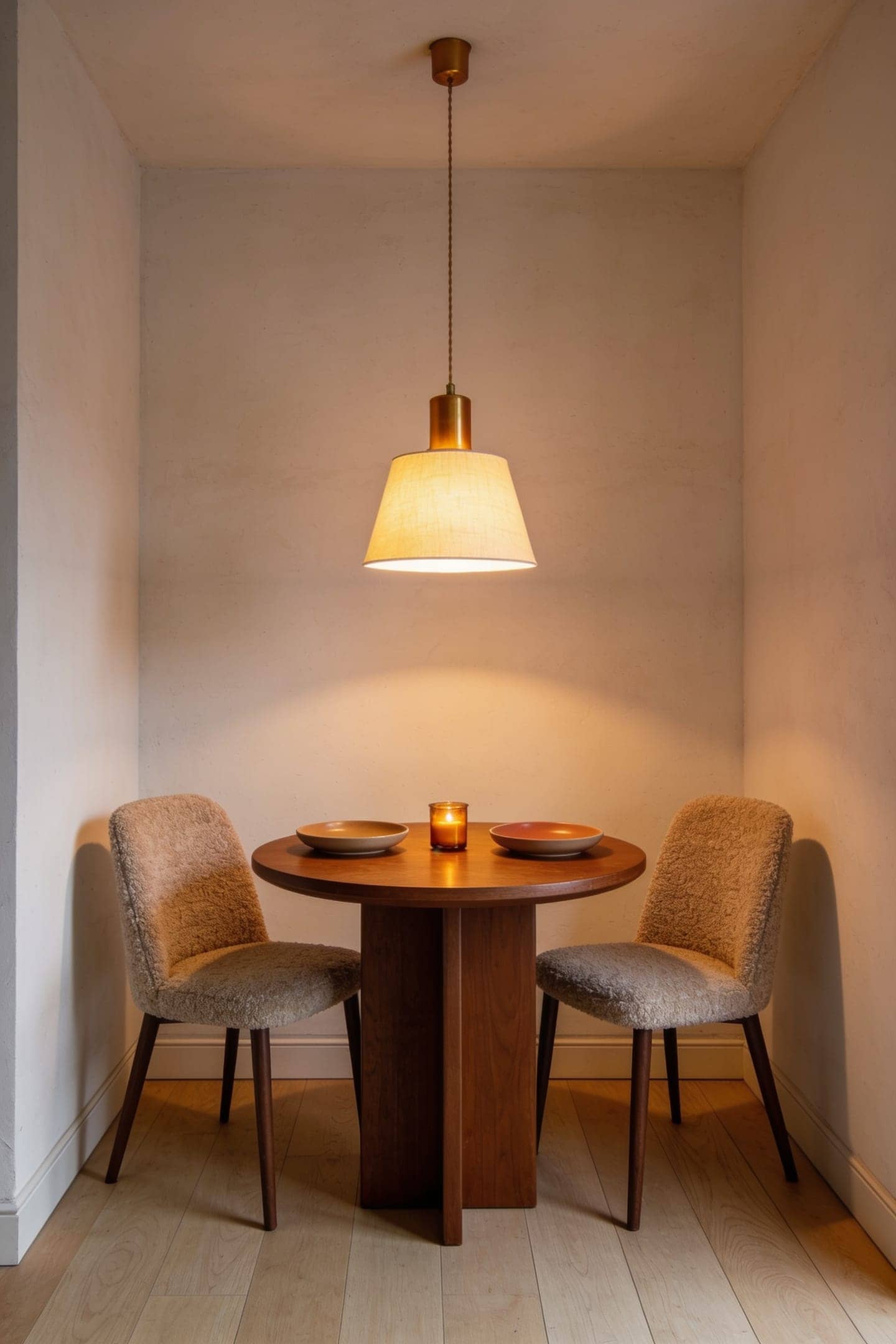
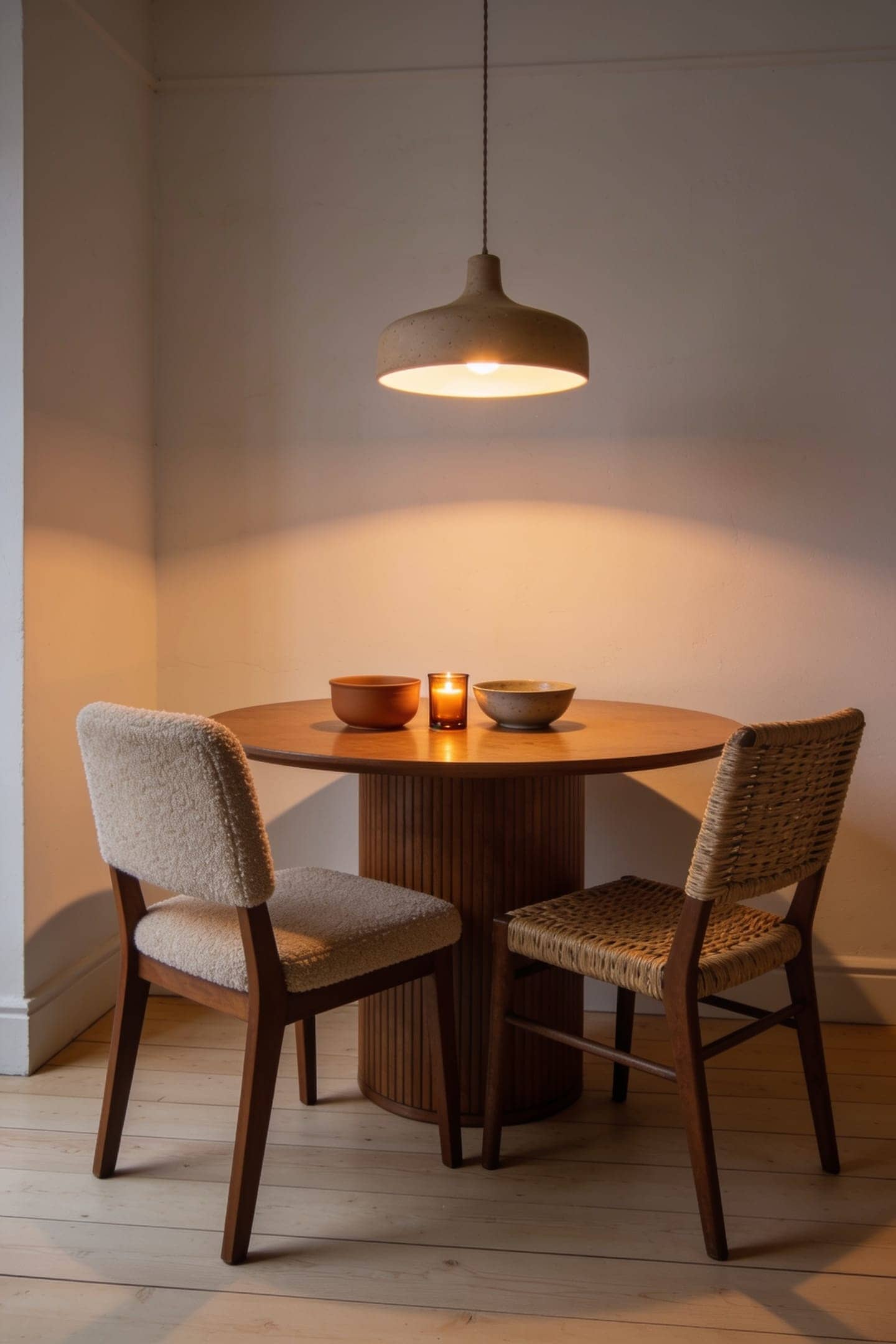
Thirty to 34 inches above the tabletop is where a dining light belongs, which always feels too low until you see it done right. Low light says "this is a room" in a way nothing else does, and it's the cheapest bit of theater in the house.
Center it on the table, not on the ceiling. In a corner dining zone those two points are rarely the same, and lining it up with the ceiling is the tell that gives away a rented apartment. A swag hook and a couple of feet of cord fix it without touching the wiring.
Get the serving stuff off the floor
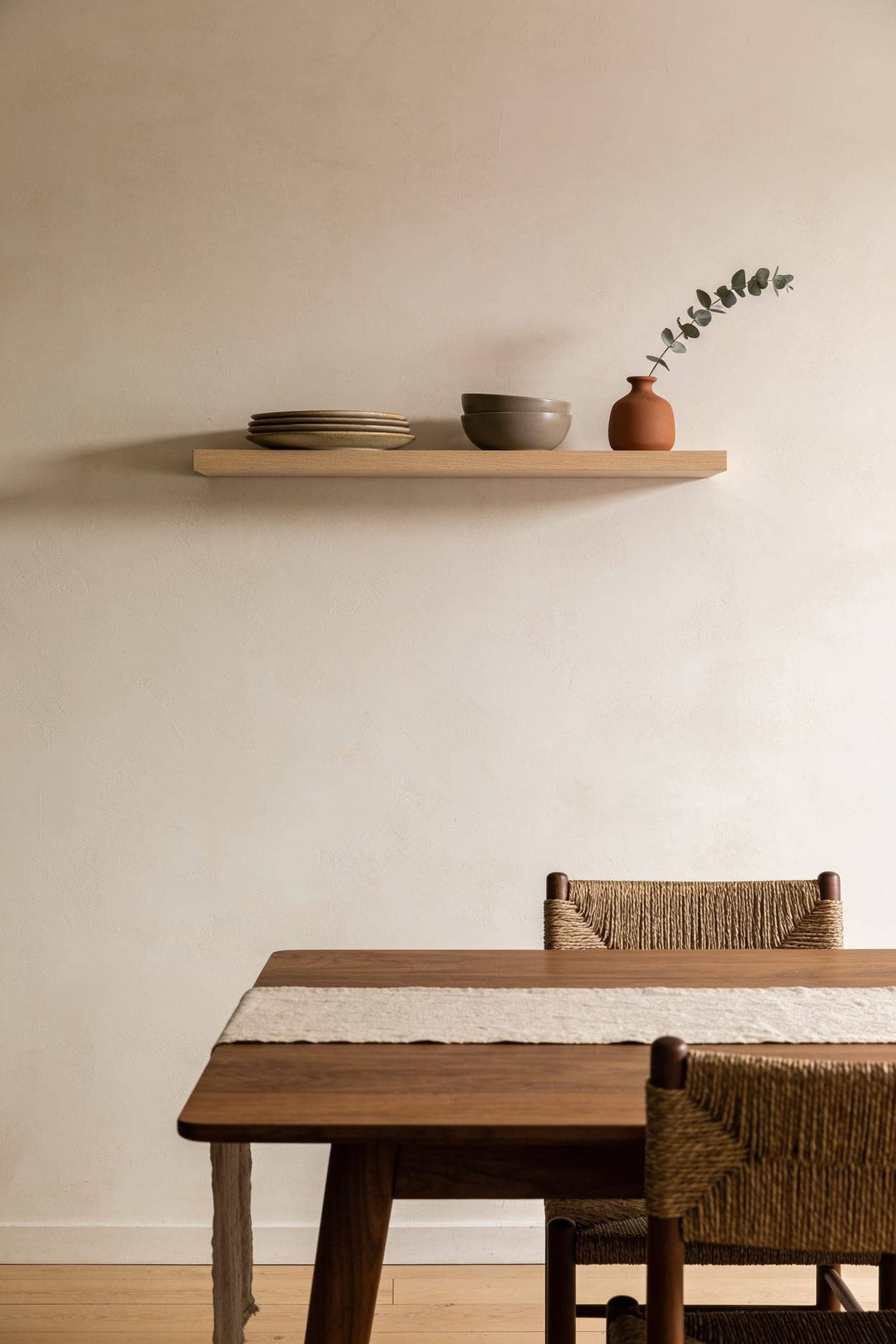
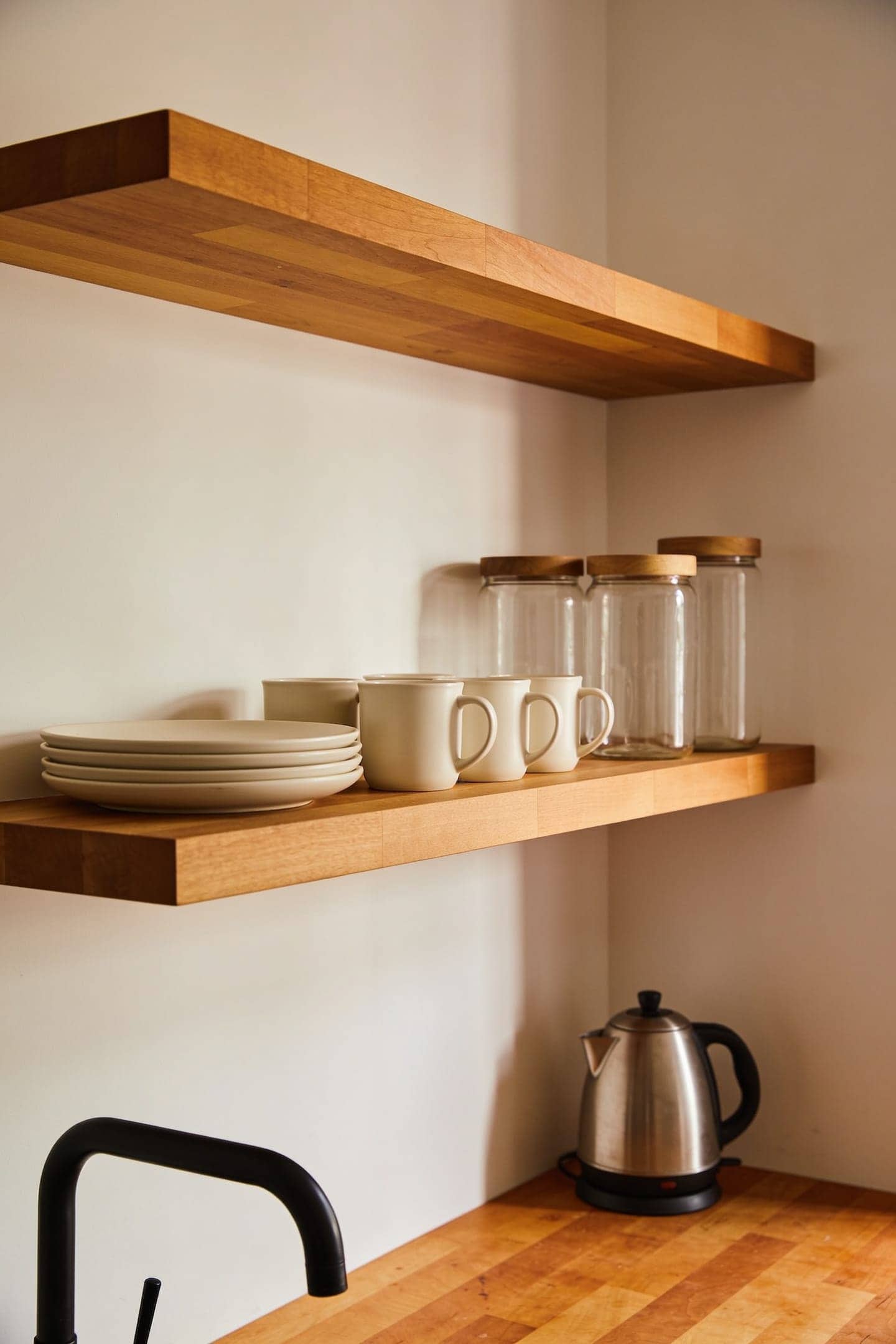
Nobody has room for a sideboard in a small dining room, and you probably don't need one. A narrow wall shelf at shoulder height holds the everyday plates, a stack of bowls and the bottle of olive oil that lives on the table, and it uses a strip of wall that was doing nothing.
Keep it to the pieces you like looking at. A shelf of mismatched plastic is not styling, it is storage with an audience.
Put a mirror where the window isn't
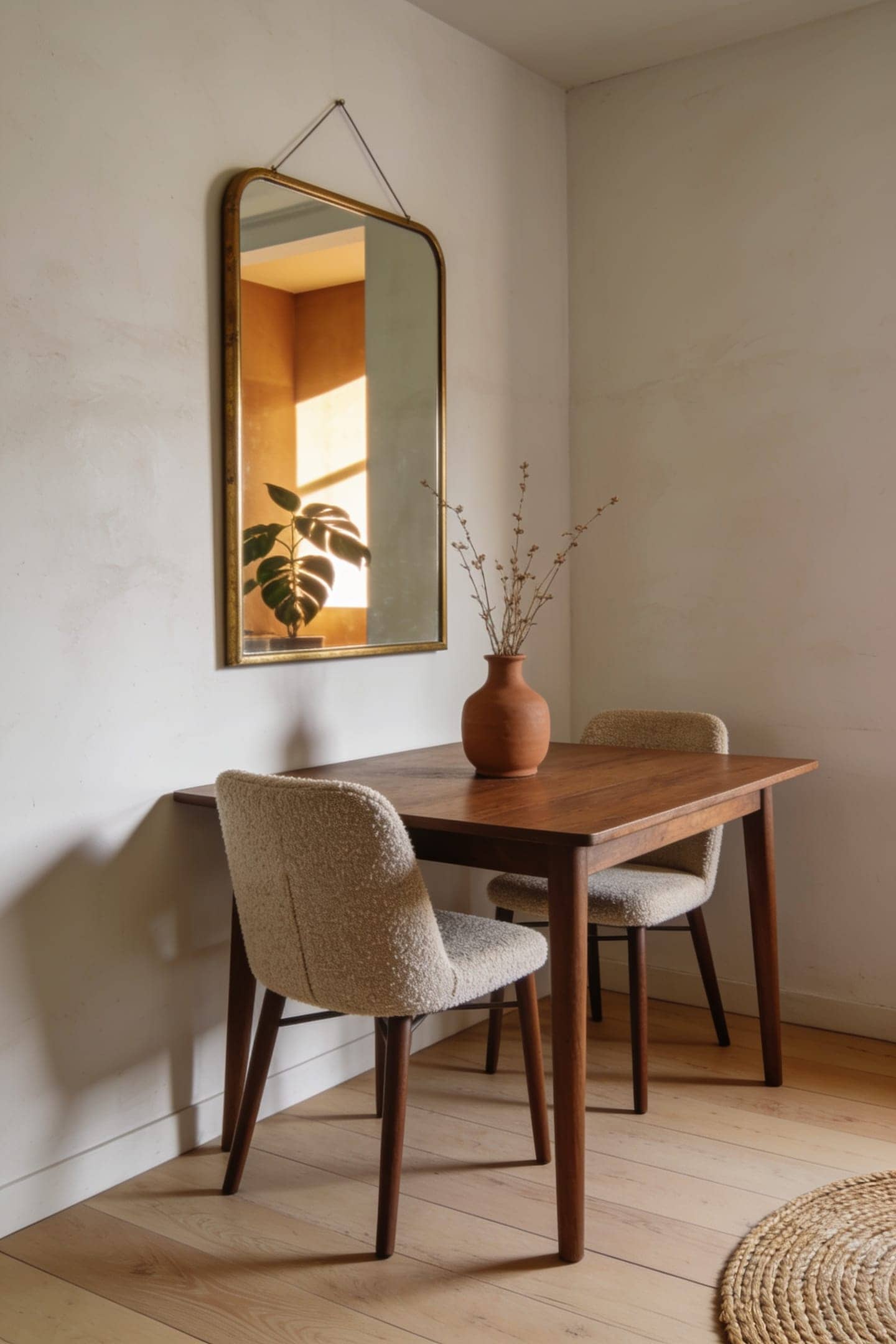
Small dining rooms are often the interior part of the floor plan, with no window at all. A big mirror on the wall opposite whatever light you do have is the free fix, and at dinner it doubles the candles, which is a nicer effect than it has any right to be.
Hang it big and low enough that seated people see something in it. Hang it at standing height and the only thing it gives you at dinner is a good view of your ceiling.
One big piece of art beats four small ones
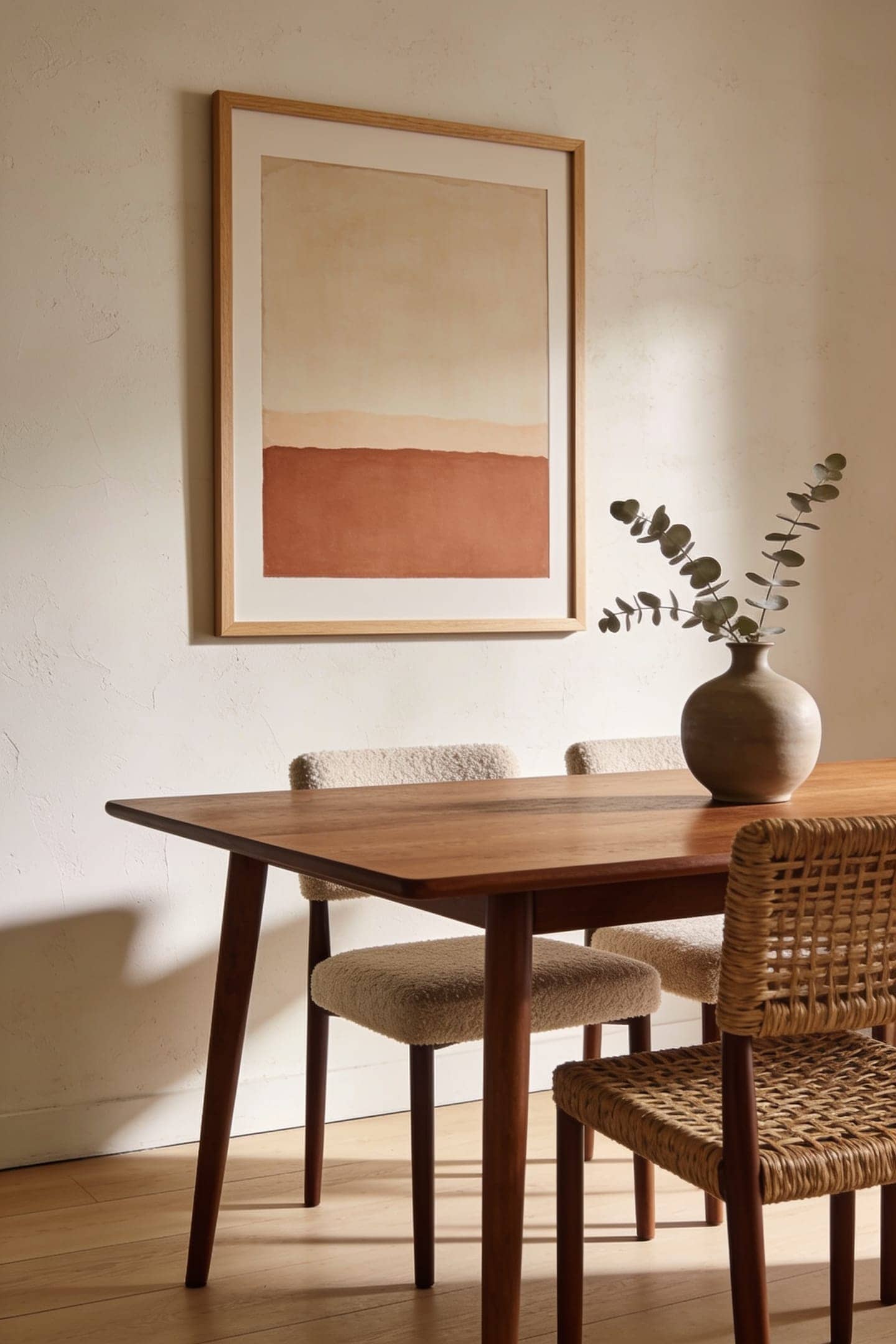
A wall of small frames makes a small room busier, and busy reads smaller. One oversized piece does the opposite: your eye lands once, the wall settles, and the room feels calmer than its square footage.
It doesn't need to be expensive. A large print in a plain frame, hung so the middle sits at seated eye level rather than standing height, is the whole trick.
Change the bulb so dinner has a different setting
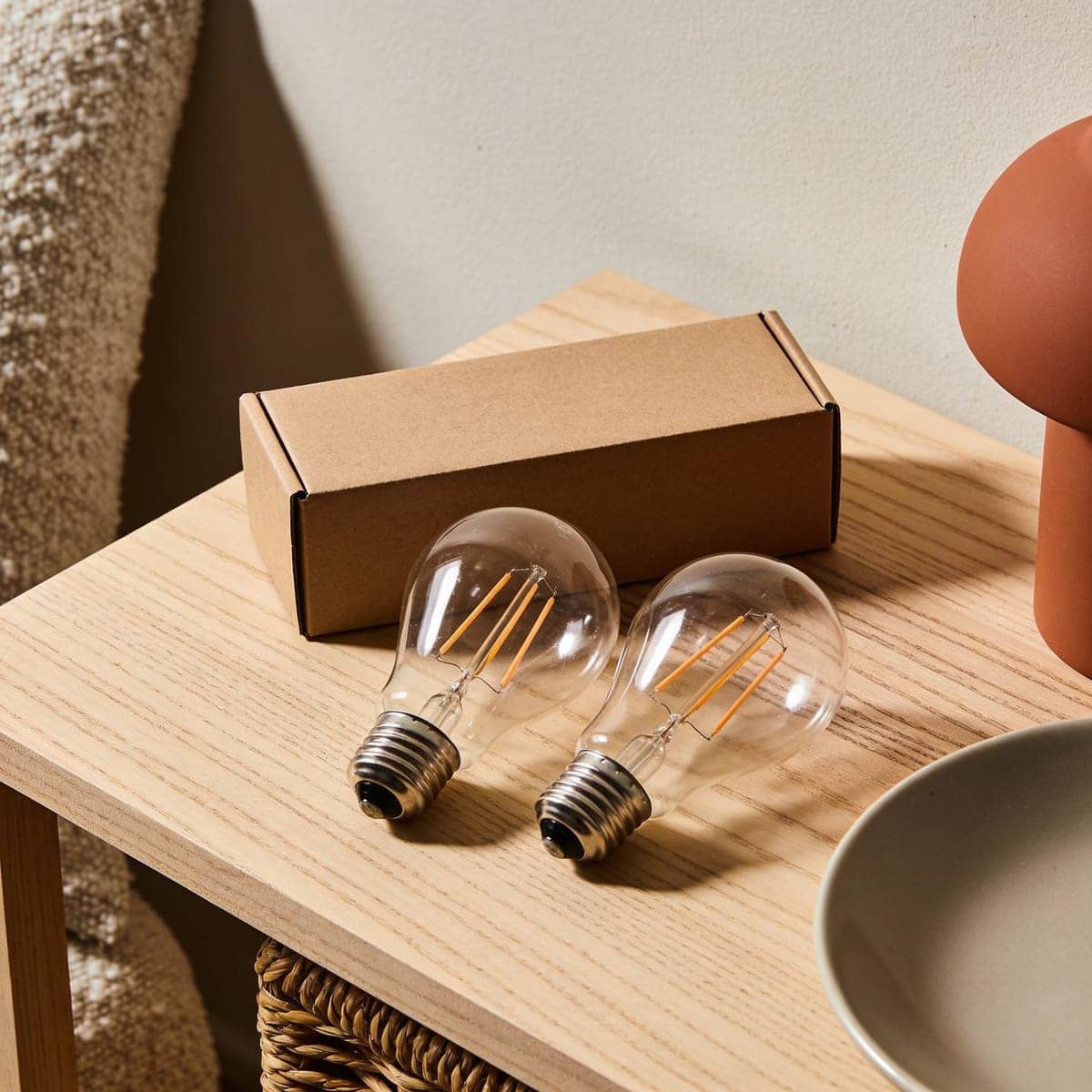
The single fastest upgrade to a dining corner costs about twelve dollars. Swap whatever cool white bulb is in the fixture for a warm 2700K dimmable one, add a cheap plug-in dimmer if the switch won't take it, and the same room stops feeling like a place where you also pay bills.
Bright for homework, low for dinner. That flexibility is what makes a small multi-use space feel like two rooms.
Seat cushions buy comfort you didn't pay for
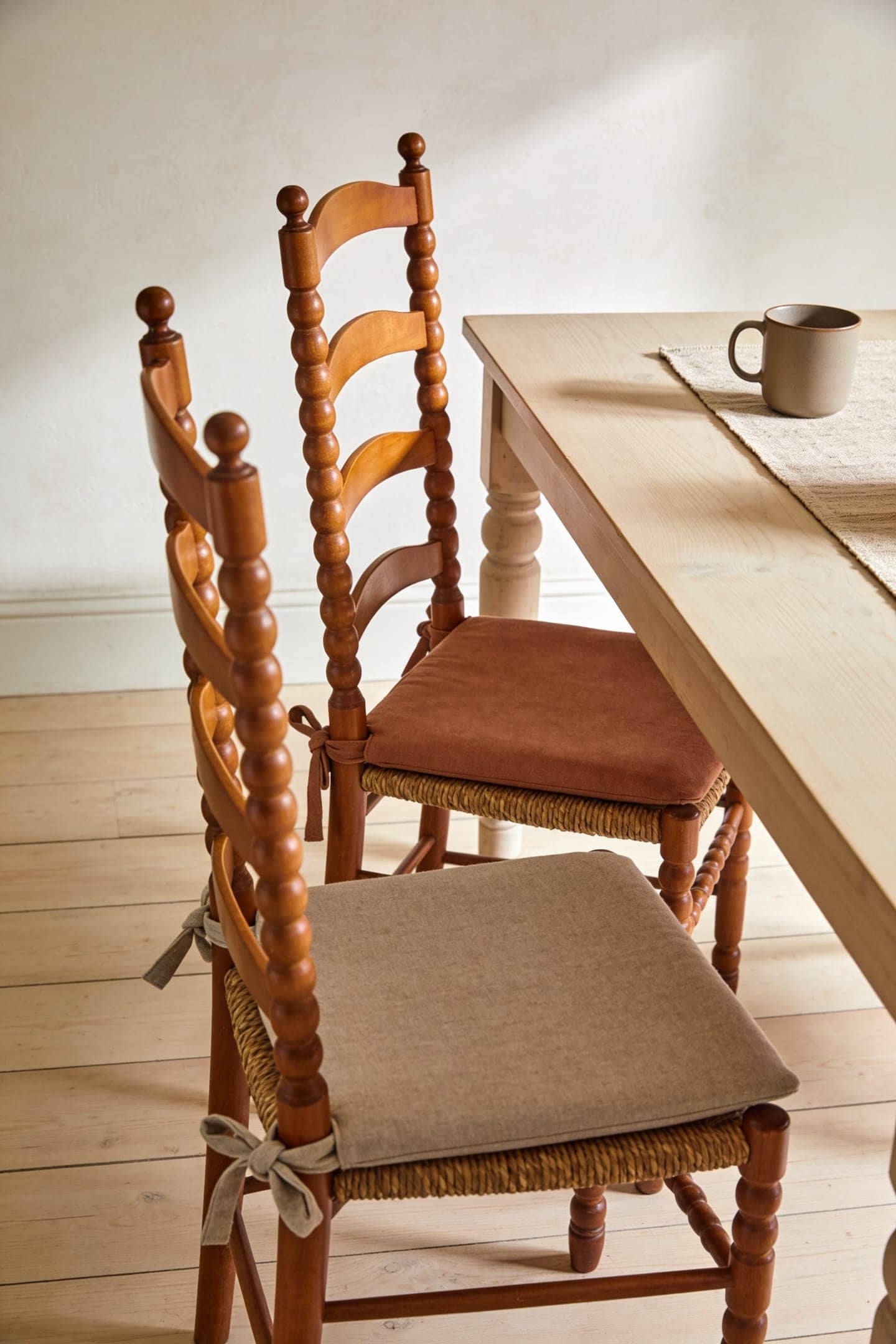
Wood and metal chairs look great and get hard around minute forty. Tie-on cushions fix that for around $25 and let you keep the slim chairs that actually fit your room, which a padded upholstered set would not.
They're also a sneaky way to bring in the one color you were scared to commit to. Cheap to swap, easy to wash, no regrets.
Keep the extra chairs in a closet, not in the room
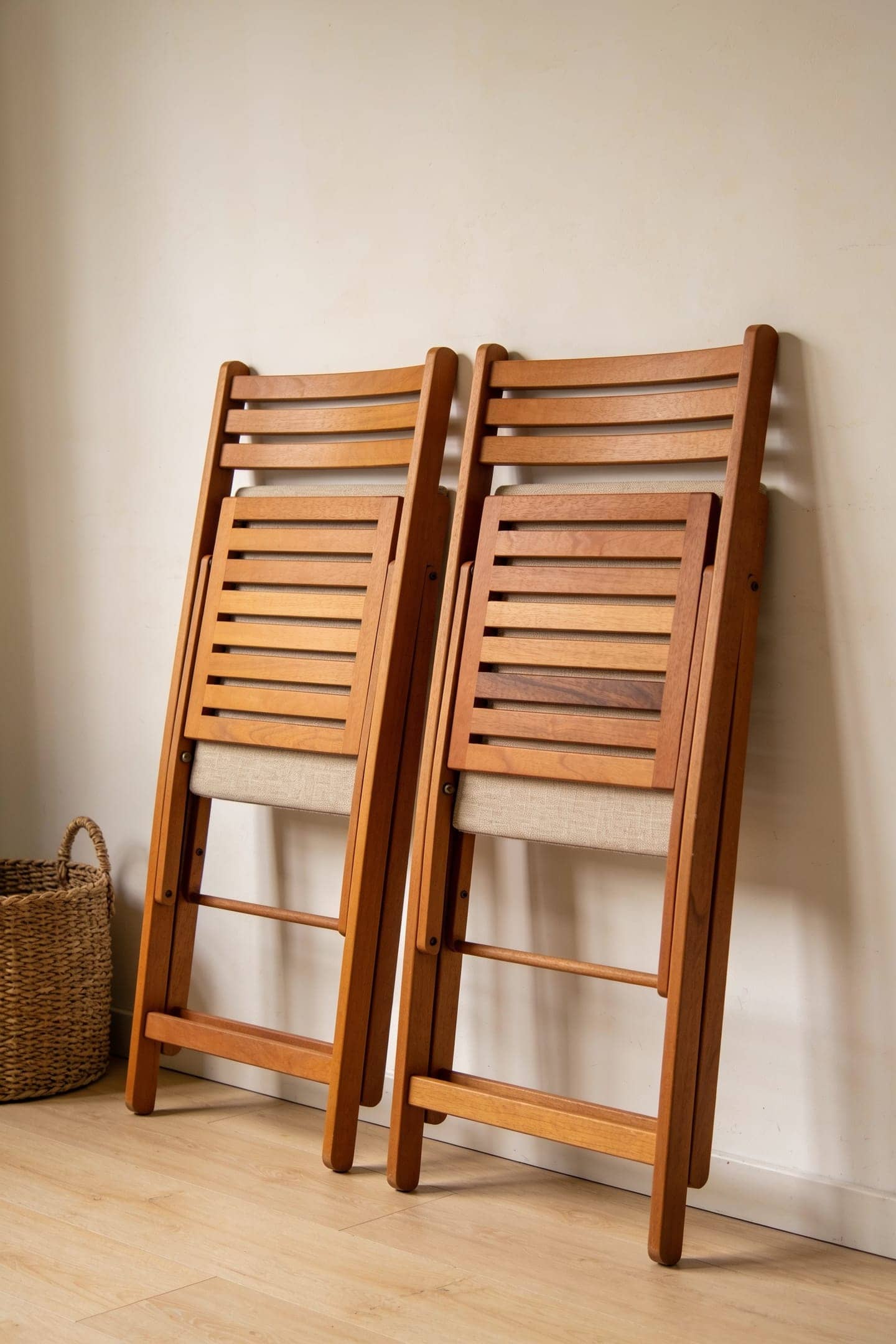
Stop furnishing your everyday room for the dinner party you host twice a year. Seat the number of people who actually eat there, and keep two folding chairs flat behind a door or in the coat closet for the nights it matters.
Wood folding chairs with a padded seat look nothing like the metal ones from a church hall, and they cost less than the floor space you'd give up keeping them out. That is the whole philosophy of a small dining room, honestly: everything earns its footprint or it goes away.
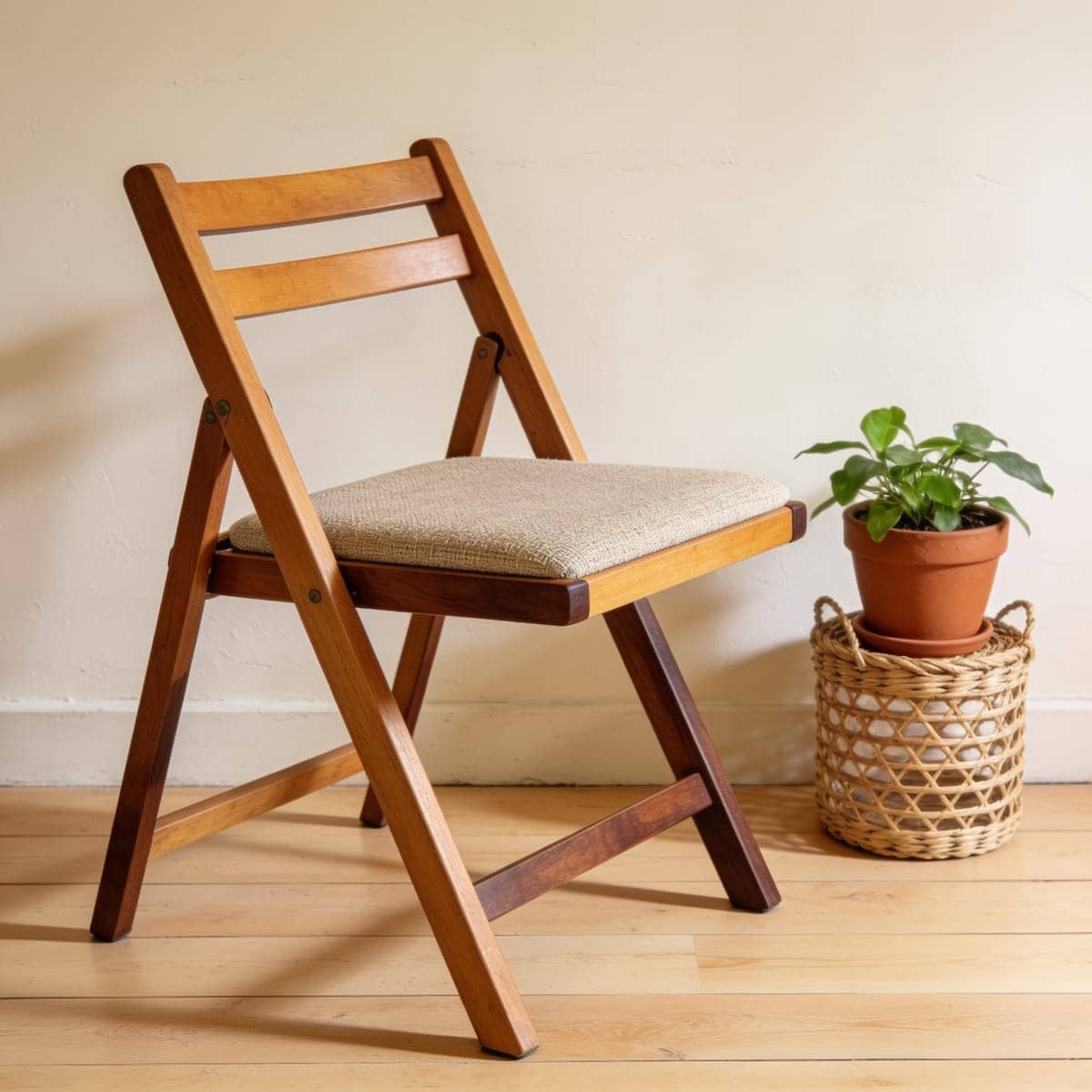
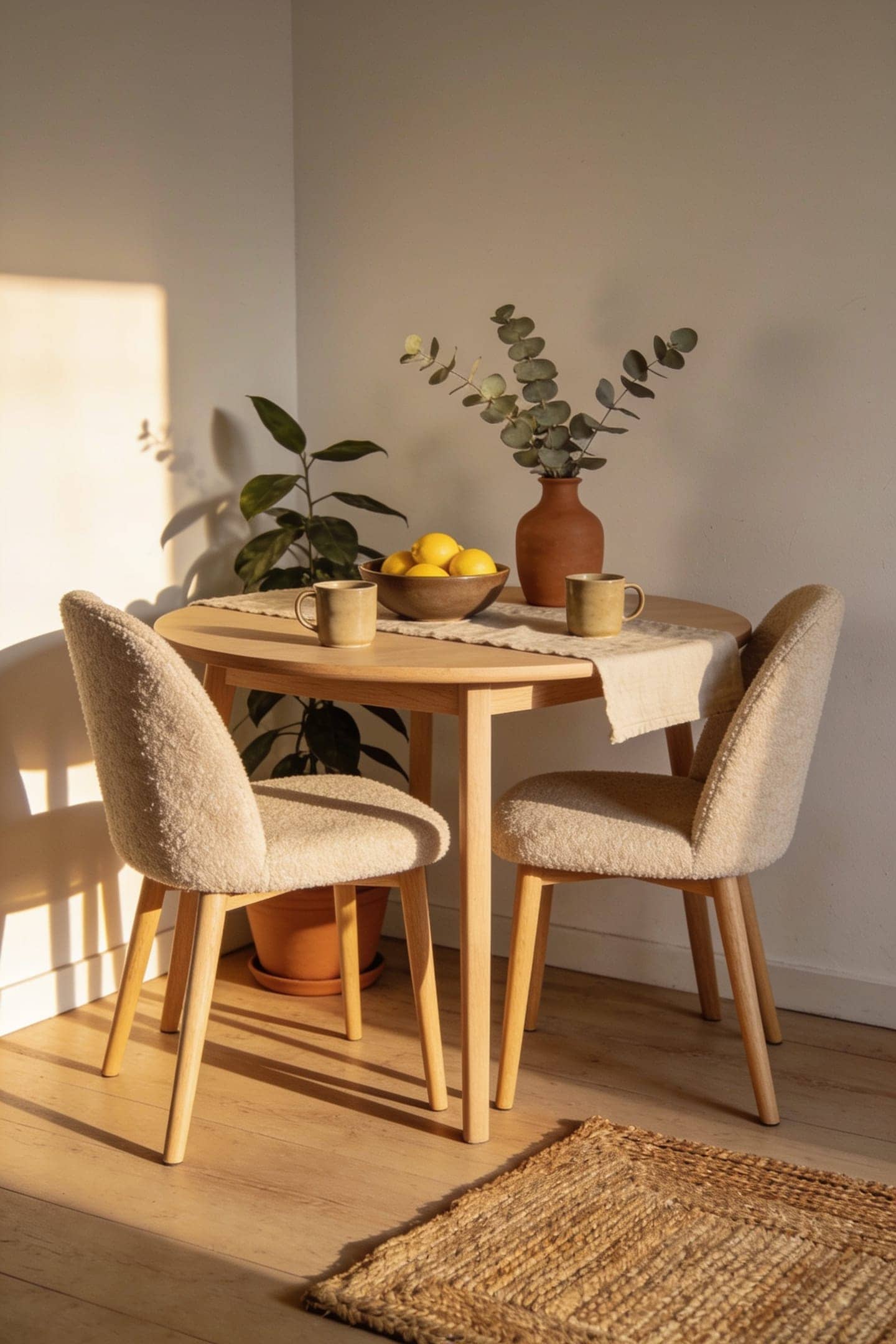
The chairs decide whether the room works.
Clearance, tuck-in depth and a joint that doesn't loosen matter more than the style here, so I compared the budget sets and ranked them.
See my full list: 10 Best Budget Dining Chairs