Apartment Lighting Ideas on a Budget
If your rental gives you one ceiling light per room, or none at all, you're working with the wrong light. You can't rewire a rental, and you don't need to. Lamps, the right bulbs and a few plug-in tricks turn a dim box into a cozy home, and none of it touches the wiring.
Updated October 2026
6 guides & ideas
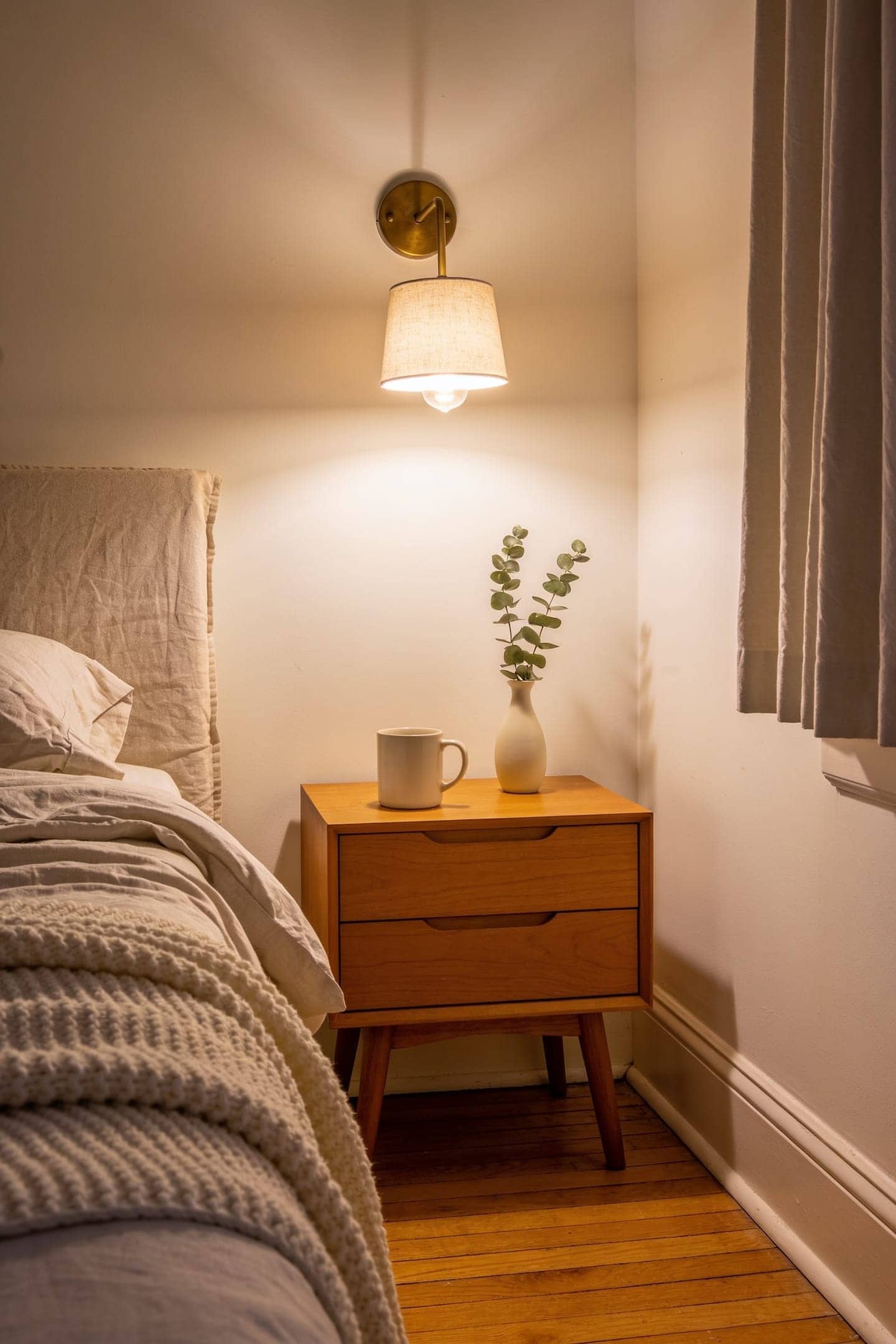
11 Best Rechargeable Wall Sconces Under $60 (No Electrician Needed)
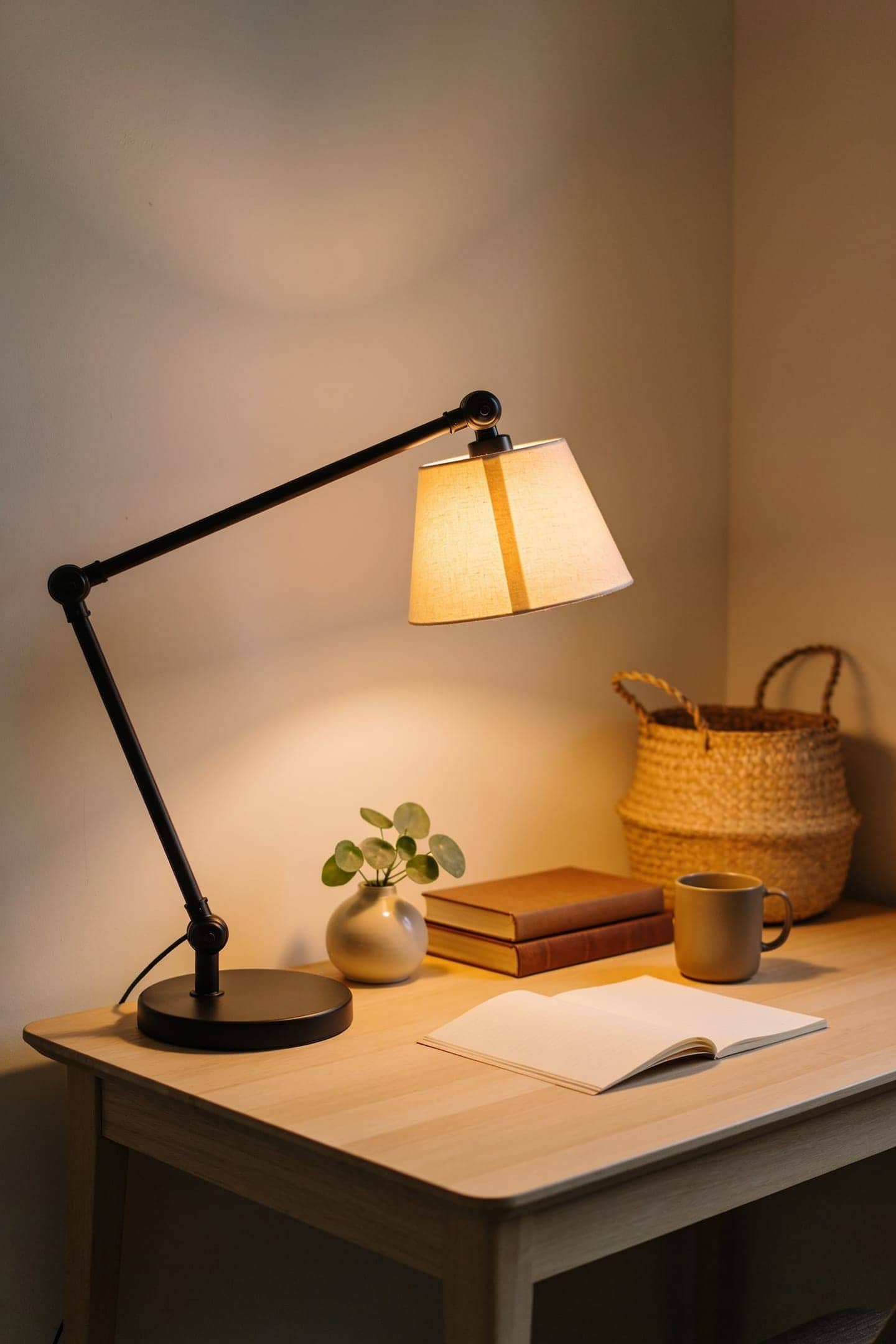
10 Best Budget Desk Lamps Under $50 (Warm, Not Clinical)
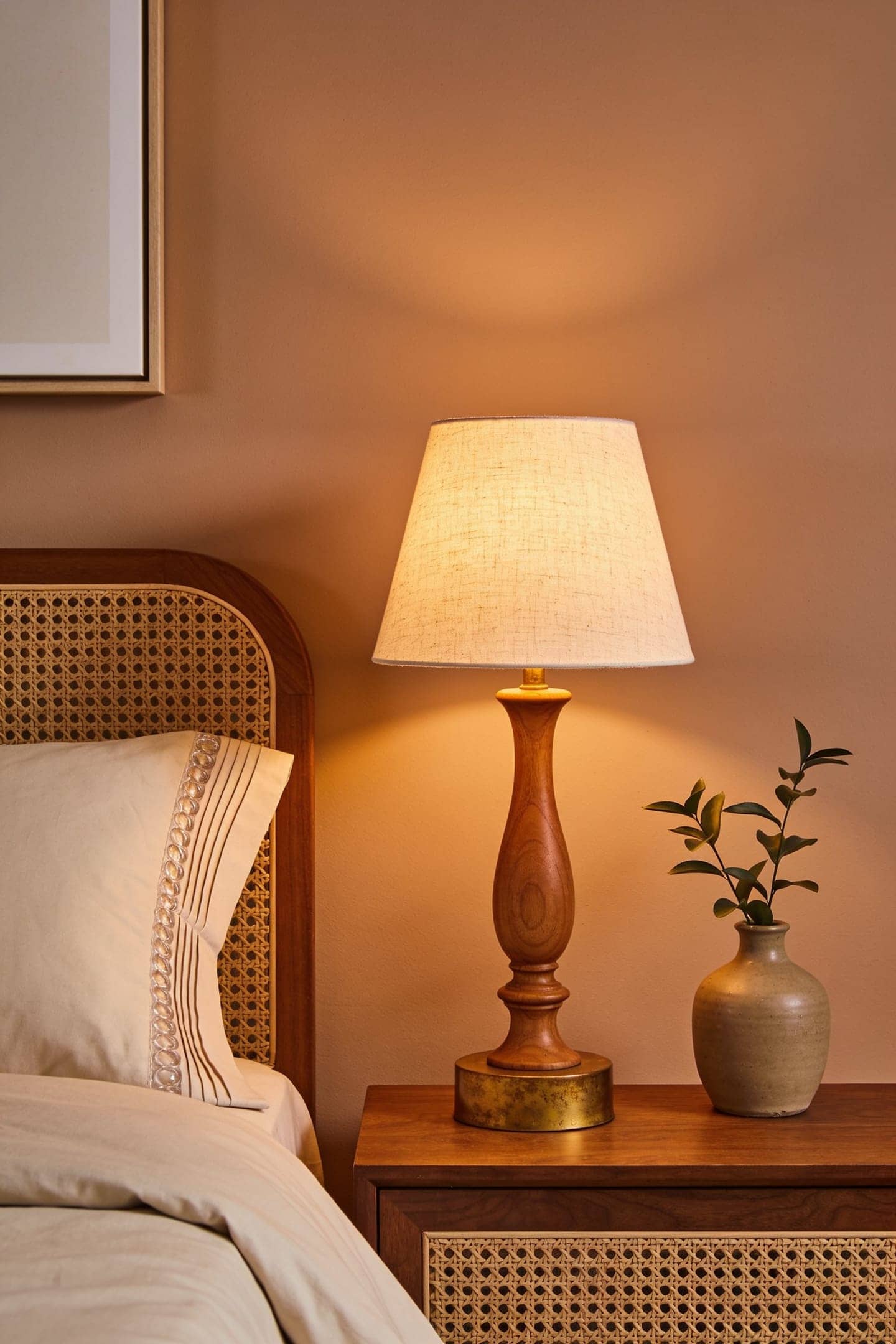
10 Best Budget Table Lamps Under $60 (That Look Expensive)
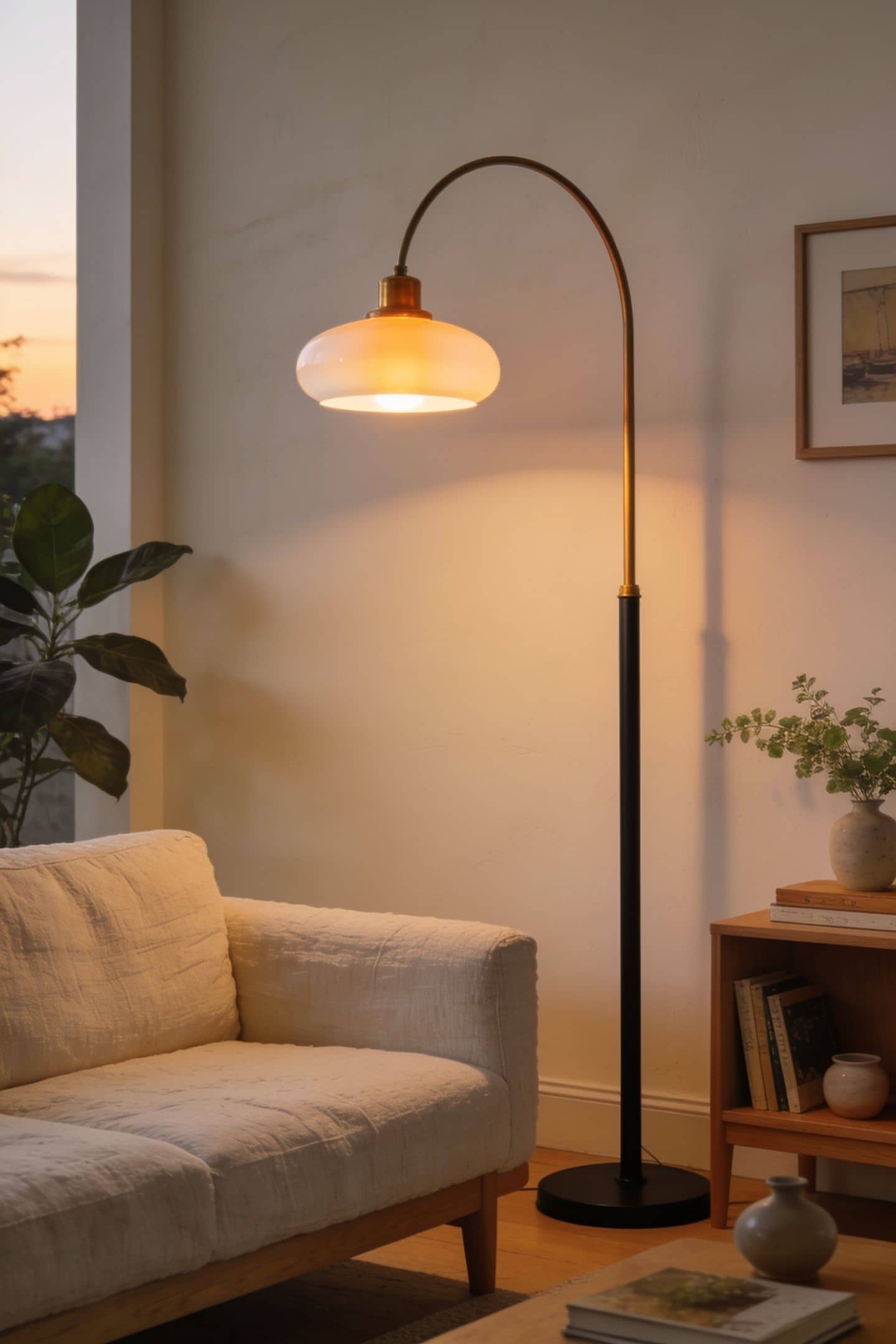
10 Best Budget Floor Lamps Under $50 That Throw a Warm Glow
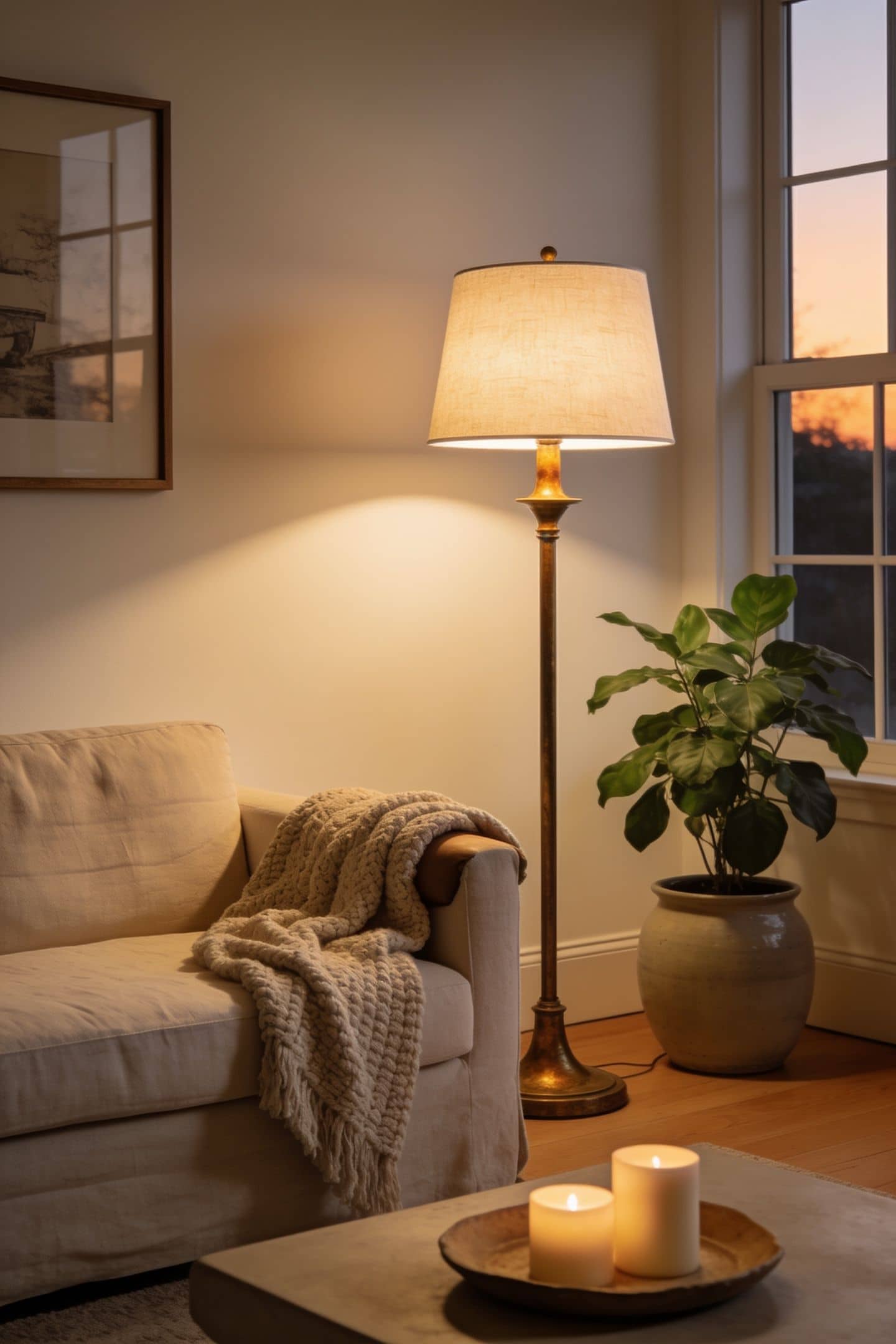
13 Cozy Living Room Lighting Ideas That Feel Warm, Not Harsh
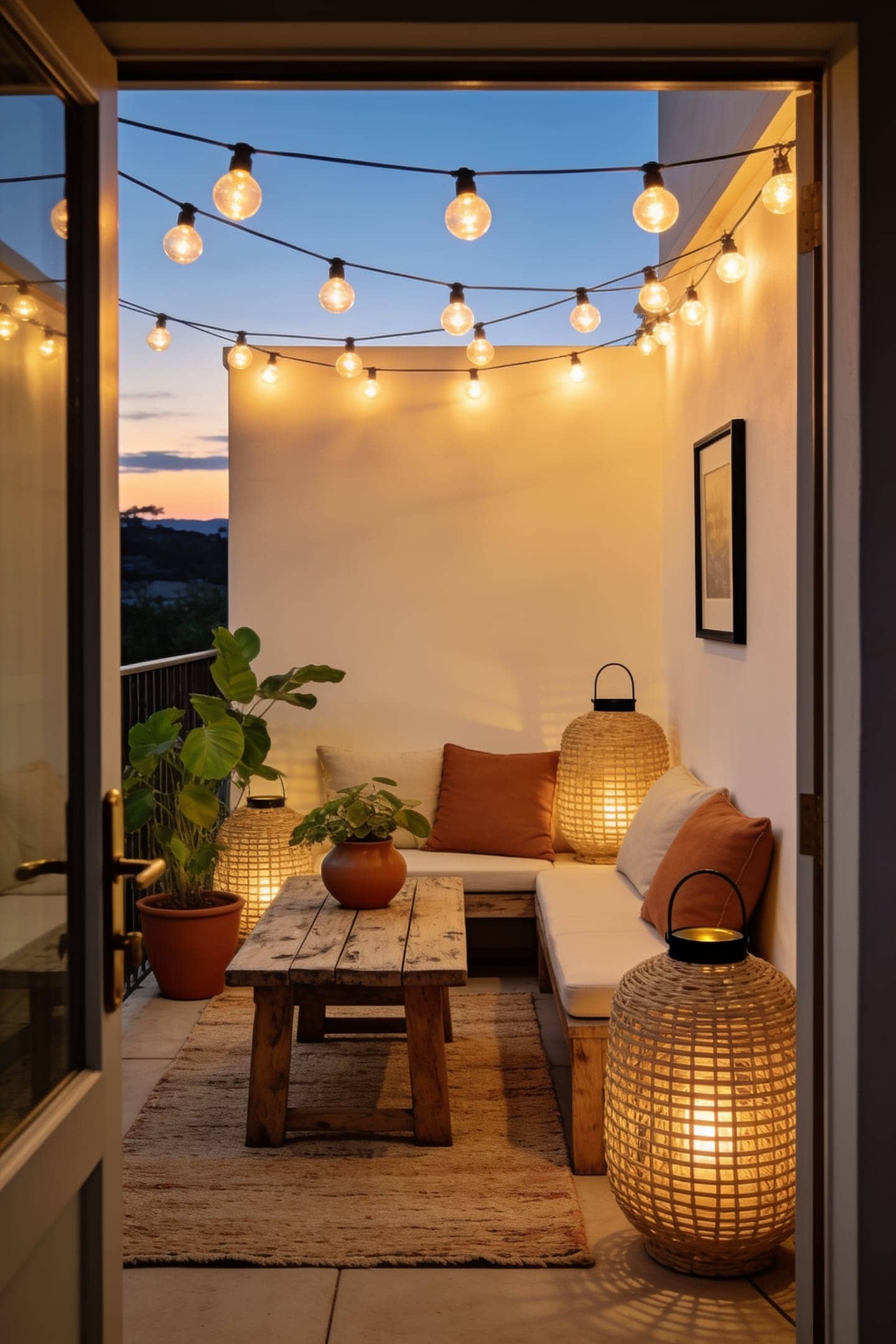
10 Best Budget Outdoor String Lights That Last (Not Just One Summer)
Lighting is the cheapest way I know to change how a room feels. Paint takes a weekend and puts your deposit at risk. A bulb swap takes thirty seconds. This is the whole method I use, from the bulb up, and whenever a piece has its own guide, I link it on the way.
If you only do four things
- Add two or three lamps at different heights, a floor lamp, a table lamp, something low on a shelf, spread across the room instead of bunched in one corner.
- Swap the bulbs to 2700K to 3000K in the living room and bedroom. It's the fastest mood change there is.
- Flip every wall switch. One of them may control an outlet, and a lamp plugged in there works like a ceiling light.
- Put a rechargeable sconce where there's no outlet, by the bed, in the hallway, next to a reading chair.
The rest of this page explains why those work, then goes room by room: living room, bedroom, kitchen, entryway, desk corner, and the apartment with no ceiling light at all.
Start with three layers, not one big light
Designers sort light into three kinds. Ambient is the general glow that lets you cross the room. Task is the focused light you read, cook or work under. Accent is the small, low light that makes a room look finished: a lamp on a shelf, a light over a print, string lights along a bookcase.
That trio is what people mean by the "rule of three" in lighting. Interior designer Marie Flanigan described it to Homes & Gardens as ambient, task and accent working together. Some designers add a second reading: light at three heights, one up high, one around eye level, one lower down. Same idea either way. One light makes a room flat. Three make it feel lived in.
In a rental, the ceiling fixture is usually the only ambient light, and it feels harsh because everything is lit from a single point overhead, which throws hard shadows. The fix isn't a fancier ceiling light. It's two or three lamps spread around the room, so the light comes from several directions at once. Real Homes, talking to designers, lands on the same number: two or three per room.
Pick the bulb before you pick the lamp
The bulb does more for the mood than the lamp it sits in. Three numbers on the box tell you nearly everything.
Color temperature, the K number. Lower is warmer. For living rooms and bedrooms I stay between 2700K and 3000K, sold as warm white or soft white. Kitchens and home offices are the exception: the lighting retailer Lumens.com puts them in neutral white, 3500K to 4100K, where seeing clearly matters more than mood. Daylight bulbs at 5000K and up belong in a garage, not next to your sofa. And keep one room on one color: a warm lamp beside a cold ceiling light always looks like a mistake.
Lumens, the brightness. Watts measure power, not light, so shop by lumens. LEDVANCE's conversion chart gives the easy anchors: 450 lumens replaces an old 40 watt bulb, 800 replaces a 60, and 1,100 replaces a 75. For a whole room, add up every source that's on at once.
| Room | Total lumens, average room |
|---|---|
| Living room | 1,500 to 3,000 |
| Bedroom | 1,000 to 2,000 |
| Kitchen | 4,000 to 8,000 |
Those starting points are Lumens.com's. Dark walls and high ceilings absorb more light, so nudge your total up if you have either.
Color rendering, or CRI. It hides in the fine print. It scores how true colors look under the bulb, out of 100, and lighting retailers recommend 90 or higher at home. Below that, paint colors and wood tones can look dull.
One last check: if a lamp sits on a dimmer, buy bulbs marked dimmable. A non-dimmable LED on a dimmer can flicker and burn out early.
Living room: spread the lamps out
This is where lamps do the most work. My default layout has three points of light, never in the same corner:
- A floor lamp by the sofa, beside or just behind the arm, for reading and for general glow. Slim bases save floor space in a small room, and my budget floor lamps under $50 are sorted by how they light a room.
- A table lamp across the room, on a console, a side table or a bookshelf, so the light is balanced and no corner goes dark. The affordable table lamps I'd put there all stay under $60.
- One accent, like a small lamp on a shelf, a light over your art or a strand of string lights.
Run the numbers on that setup. One 800 lumen bulb in the floor lamp plus two 450 lumen table lamps is 1,700 lumens, already inside the living room range before the accent light and the ceiling light. That's the moment the ceiling light becomes optional, which is the whole goal.
Shades matter as much as bulbs. Linen, paper and frosted glass soften the light. StreetEasy points out that a plain white shade can give a colder, harsher light, so a cream or warm-toned linen shade is an easy upgrade. My cozy living room lighting ideas build a whole room around this in 13 moves, and if you're redoing more than the lights, start from the living room ideas.
Bedroom: soft by default, bright when you need it
A bedroom needs less light than you think, around 1,000 to 2,000 lumens in total, but it needs it in the right places. Put a light on each side of the bed, either lamps or wall sconces. When you sit up against the pillows, the bottom of the shade should land at or just below eye level, so you see the glow and never the bulb.
Night is where the color of the light matters most. Harvard Health recommends dim red lights for night lights, because red light is less likely to shift your body clock or hold back melatonin, the hormone that makes you sleepy. The Sleep Foundation suggests a reading lamp with a red or orange glow instead of a blue one. For everything else in my bedroom, I keep the bulbs warm and on a dimmer, so the room winds down with me.
Nightstand too small for a lamp? A pair of rechargeable wall sconces frees the whole surface and needs no outlet. Bedding, rugs and the rest of the room are in my bedroom ideas.
Kitchen: light the counter, not the floor
When the only kitchen light is on the ceiling behind you, you chop in your own shadow. The fix is light under the upper cabinets, and none of it needs wiring: battery puck lights, rechargeable motion bars that hold with magnets or adhesive, or plug-in LED bars that run to the nearest outlet. If there's an outlet close by, I'd go plug-in, so I never have to think about charging.
For color, aim for 3000K to 4000K under the cabinets, matched to whatever is already on the ceiling. That's Lumens.com's advice, along with 200 to 500 lumens per foot of light bar for real prep work, and 100 to 200 per foot if you only want a glow. I also love a small lamp in a corner of the counter for the evening shift. Want the kitchen to look as good as it's lit? That's what my kitchen ideas are for.
Entryway and hallway: light that turns itself on
If your hallway has no outlet where you need light, a motion sensor sconce is the one I'd pick. It lights when you walk by and turns itself off, so the battery stretches for weeks instead of hours. On a console by the door, I put a lamp on a smart plug or a cheap plug-in timer, so I never come home to a dark apartment.
Desk corner: one good lamp
A work corner needs one focused light more than anything else. A desk lamp with an adjustable arm lets you aim the light at the page and away from your eyes and your screen. For daytime work, a neutral bulb around 3500K to 4000K gives the clearest light. If the desk lives in your bedroom or living room and you mostly use it at night, I'd keep it warm so the corner doesn't feel like an office. For the chair and the desk itself, see my home office ideas.
No ceiling light at all? Check your switches first
Some apartments have no ceiling light in the living room or bedroom. Before you buy anything, flip every wall switch and see if one of them controls an outlet. The US electrical code allows a switched outlet instead of a ceiling light in habitable rooms such as living rooms and bedrooms. Plug a floor lamp into that outlet and your wall switch works like a ceiling light again.
Then build the ambient layer from lamps. A floor lamp that throws light up at the ceiling spreads a soft glow across the whole room. A plug-in pendant, often called a swag light, hangs from a ceiling hook and runs its cord down the wall to an outlet, so you get a light over the dining table without an electrician. A small hook hole is easy to fill at move-out.
The no-electrician toolkit
These are the pieces I reach for in a rental, in rough order of how much they change a room:
- Smart bulbs. They dim from your phone, and the tunable ones shift from warm to cool, which gives you a dimmer without touching a switch plate. Warm at night, brighter in the morning.
- Smart plugs and timers. They put an ordinary floor lamp on a schedule or under voice control, so the lamps come on at sunset and nobody fumbles for a switch.
- Plug-in wall sconces. They take a regular bulb, so they're bright enough to read by. A paintable cord cover makes the cord disappear into the wall.
- Rechargeable sconces. No cord at all. Battery models put out somewhere between 60 and 300 lumens, against about 800 for a standard 60 watt equivalent bulb, so treat them as bedside and accent light, not the main source. My eleven picks have their own guide, listed further down this page.
- Cordless table lamps. Small rechargeable lamps for a dining table, a bar cart or a shelf with no outlet nearby.
- String lights. The cheapest accent light there is. My string light picks are for the patio, but indoors I like a short warm strand along a bookcase or a headboard.
Two renter rules. Adhesive mounts can take paint with them on old walls, wallpaper or soft drywall, so on those surfaces I use the screw option and fill the holes later. And if you do swap a hardwired fixture, ask your landlord first and keep the original in a labeled bag so it goes back up before you move out.
What makes lighting look cheap, and the fix
Budget lighting gives itself away in a handful of very fixable ways:
- A visible bulb. The shade should hide the bulb from wherever you sit.
- Mixed whites. One warm lamp and one bluish bulb in the same room. Pick one color temperature per room and stick to it.
- Daylight bulbs in living spaces. They make a room feel like a waiting room. Go 2700K to 3000K.
- Flat, dull color. A low CRI bulb dulls everything it touches. Look for 90 or above on the box.
- The lonely overhead. One central light and nothing else. Add two lamps and turn it off.
- Cords everywhere. Run them behind furniture, along the baseboard, or inside a cord cover painted the wall color.
- The wrong scale. A tiny lamp on a big console looks lost. A handy rule from designers: the shade should be about a third of the lamp's total height.
- Shiny plastic shades. Linen, paper, rattan and frosted glass all diffuse the light into a soft glow.
FAQ
What is the 3 lighting rule?
Three kinds of light in every room: ambient for the general glow, task for reading or cooking, accent for atmosphere. In a rental, that's usually two or three lamps in different spots, and the ceiling light becomes a backup you can leave off.
How do I add more lighting to an apartment?
Start with lamps, because they leave with you. Then fix the bulbs: warm white in living rooms and bedrooms, neutral in the kitchen. Use rechargeable sconces where there's no outlet, and battery or plug-in lights under the kitchen cabinets. No electrician needed for any of it.
How do you light an apartment with no ceiling lights?
Check your wall switches first. One may control an outlet, and a floor lamp plugged in there acts like a ceiling light. After that, add a table lamp, a plug-in pendant on a ceiling hook, or a pair of sconces.
What type of lighting is best for a living room?
A mix of lamps rather than one overhead light: a floor lamp by the sofa, a table lamp across the room, one small accent light, all warm white. Around 1,500 to 3,000 lumens covers an average room. My cozy living room lighting ideas take it step by step.
Which light is best for a bedroom at night?
Dim and warm. For a night light, Harvard Health points to dim red light, which is gentler on your sleep. For reading in bed, the Sleep Foundation suggests a lamp with a red or orange glow over a blue one.
What are the downsides of using ambient lighting?
On its own, it flattens a room. One overhead light throws hard shadows and leaves the corners dull. It works best as the base, with lamps on top.
Should under cabinet lighting be 3000K or 4000K?
Either one. Match what's already on your ceiling: 3000K if your kitchen bulbs are warm, 4000K if they're neutral and you want the crispest light for chopping.