10 Best Budget Living Room Curtains Under $50 Each
Cheap curtains give themselves away on width, not price. The 10 budget living room curtains I'd buy under $50 each, and how much fabric a window really needs.
Some links here are affiliate links. If you buy through them, I may earn a small commission at no extra cost to you, and I only point to things I'd actually consider for my own home.
At a glance
| # | Pick | Price | Best for |
|---|---|---|---|
| 1 | Linen-Look Light-Filtering Curtains | about $30 | Best all-rounder |
| 2 | Extra-Wide Curtain Panels | about $42 | Best for real fullness |
| 3 | Pinch-Pleat Curtains | about $45 | Most custom-looking |
| 4 | Sheer Linen-Look Panels | about $20 | Best for daylight and privacy |
| 5 | 108-Inch Extra-Long Curtains | about $38 | Best for high ceilings |
| 6 | Washable Cotton Slub Curtains | about $26 | Best with kids and pets |
| 7 | Room-Darkening Living Room Curtains | about $32 | Best for screen glare |
| 8 | Striped Linen-Blend Curtains | about $34 | Best pattern that stays calm |
| 9 | Textured Woven Curtains | about $36 | Best texture in a neutral room |
| 10 | Extra-Long Adjustable Curtain Rod | about $25 | Best fix for the hardware |
Linen-Look Light-Filtering Curtains
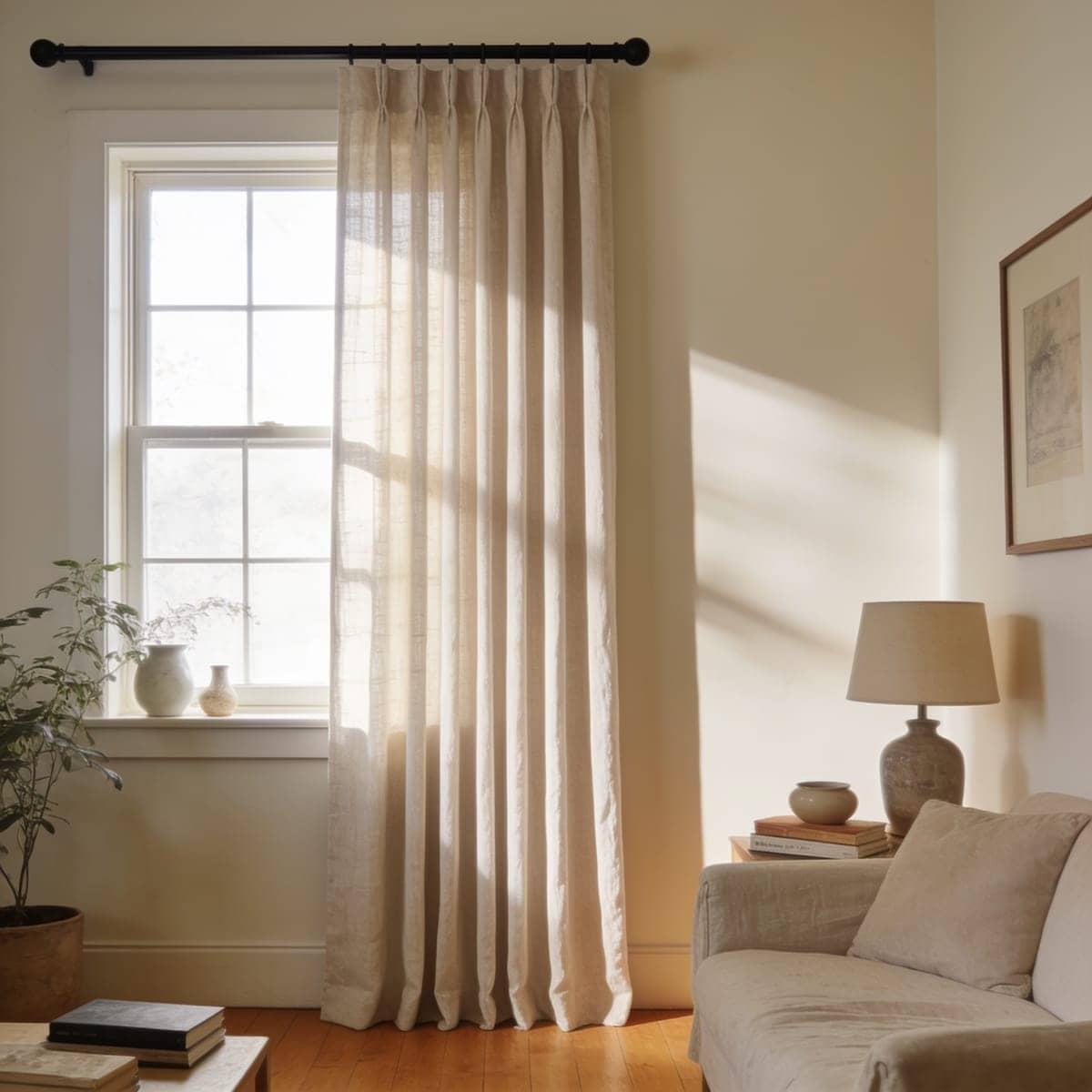
about $30This is the one I'd buy without thinking about it much. A linen-look weave in oatmeal or greige filters daylight into something soft instead of blocking it, and the slight irregularity in the weave is what stops it reading as polyester from across the room. Reviewers consistently say the color runs a touch warmer than the listing photo, which in a living room is usually a bonus. Order two panels per window even if one would technically cover it.
Extra-Wide Curtain Panels
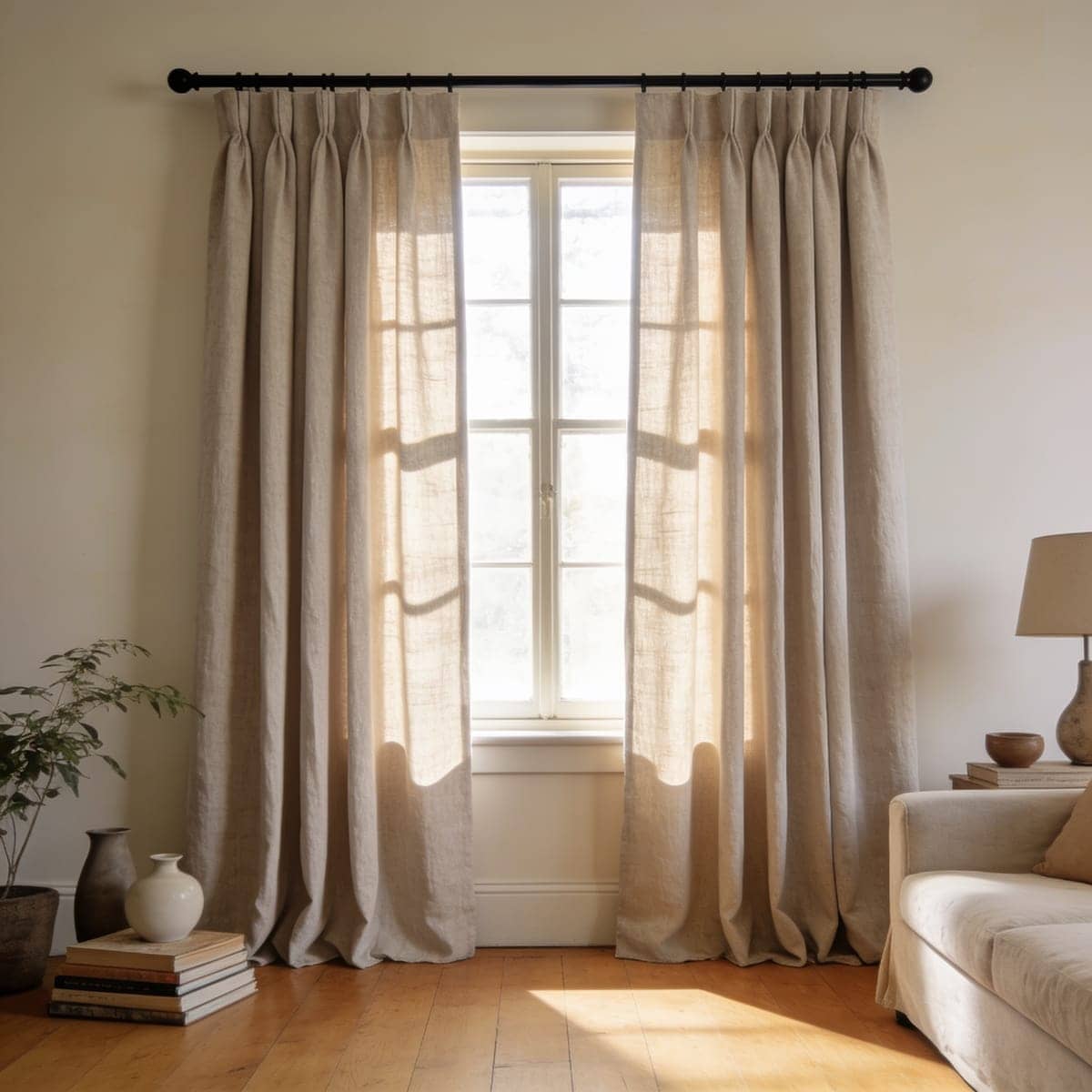
about $42Standard panels are about 52 inches wide, which is why so many living rooms end up with two flat sheets stapled to either side of the window. These run closer to 100 inches each, so a single panel per side gathers into actual folds. If your window is wide, or you want the curtains to stack past the frame and make the wall look bigger, this is the fix. They are heavier to hang, so check your rod brackets before you order.
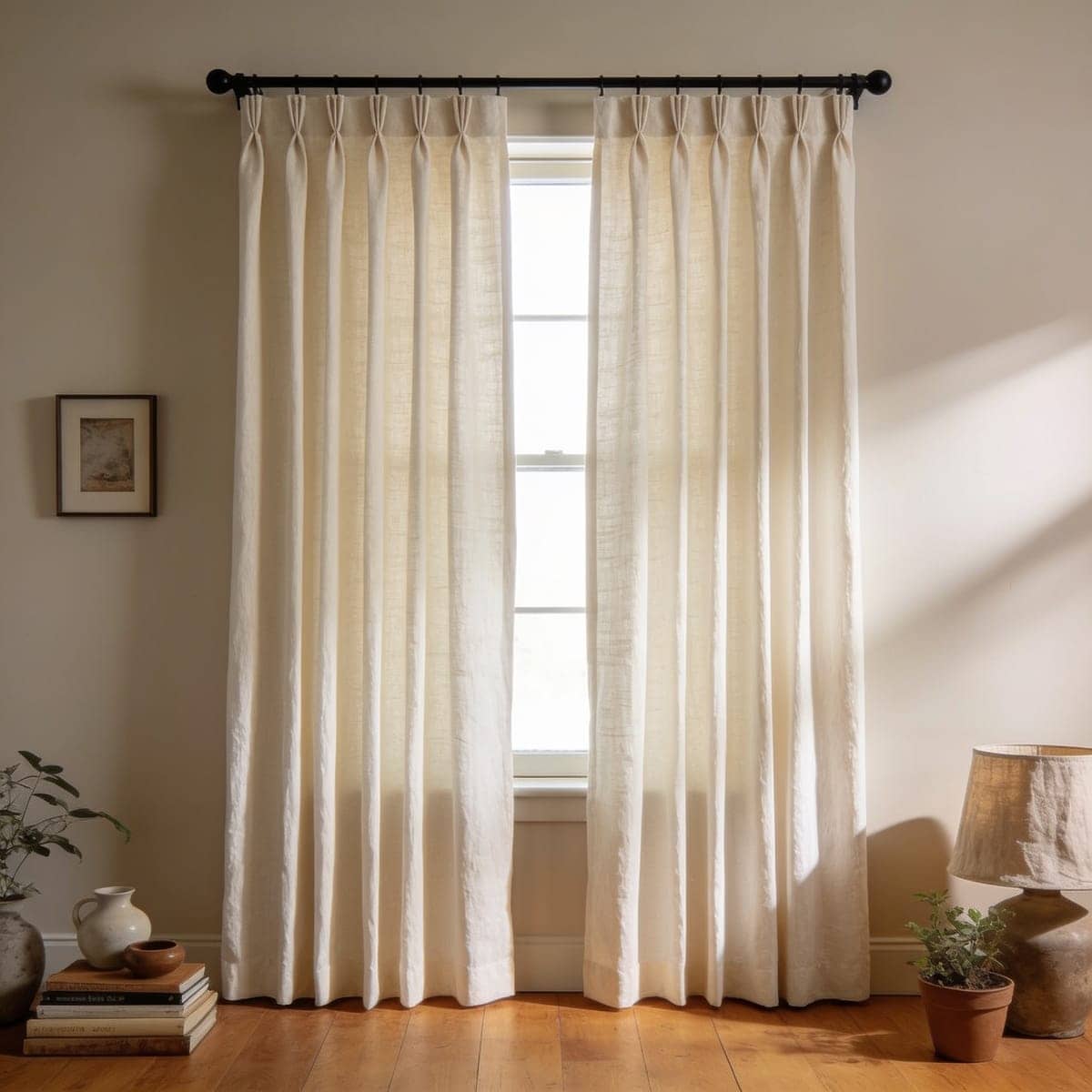
Pinch-Pleat Curtains
about $45Want the look of curtains someone paid for? It's the header. Pinch pleats hold their folds permanently instead of relying on you to arrange them, and that one detail is most of the difference between $45 panels and $300 ones. The catch is that they need rings or hooks, which most sets do not include, so budget another $12 or so. Worth it on the window everyone sees.
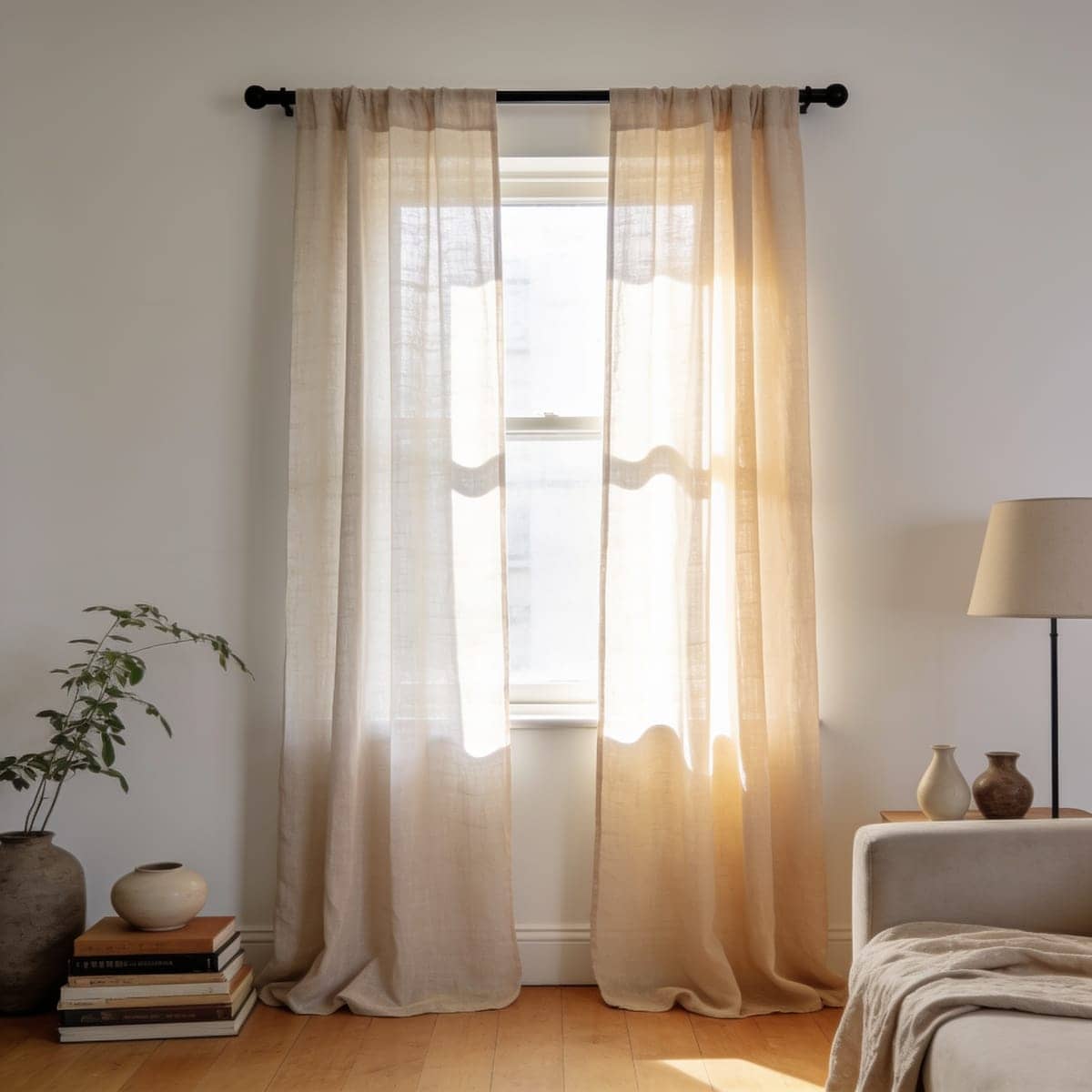
Sheer Linen-Look Panels
about $20The cheapest pick here and the one that solves the ground-floor problem: you want light, you don't want the street watching you eat dinner. Sheers in a linen-look weave do both, and they layer under heavier panels on a double rod if you want the option to close things at night. They wrinkle badly out of the package. Steam them or hang them damp, otherwise you'll spend a week looking at fold lines.
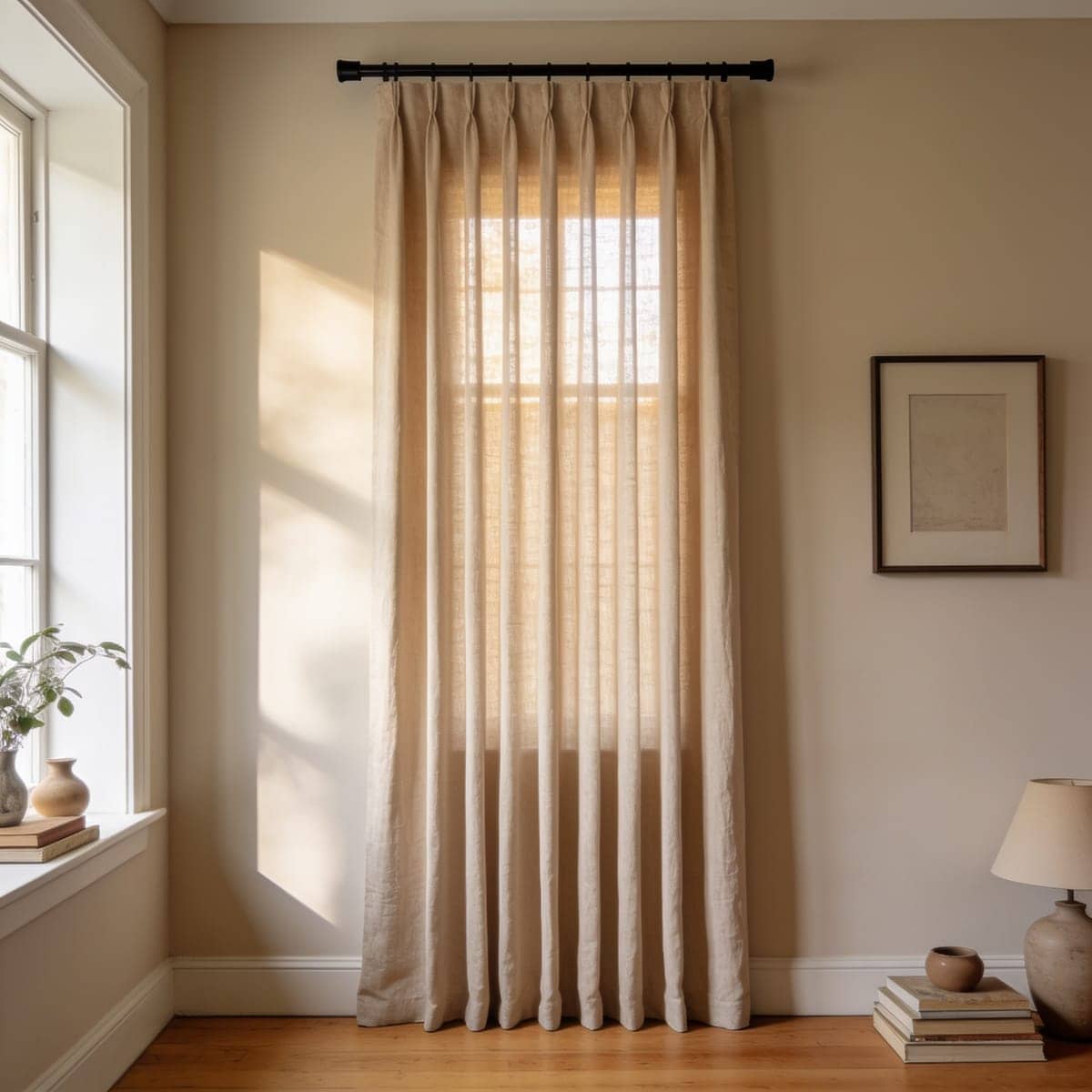
108-Inch Extra-Long Curtains
about $38Hanging the rod near the ceiling is the free upgrade everyone recommends, and then the standard 84-inch panel floats six inches off the floor and ruins it. That's what 108 inches is for. Measure from where the rod will actually go, not from the window frame, and give yourself an inch of clearance at the bottom. A few reviews mention the extra length making the panel look narrow, which loops back to buying enough width.
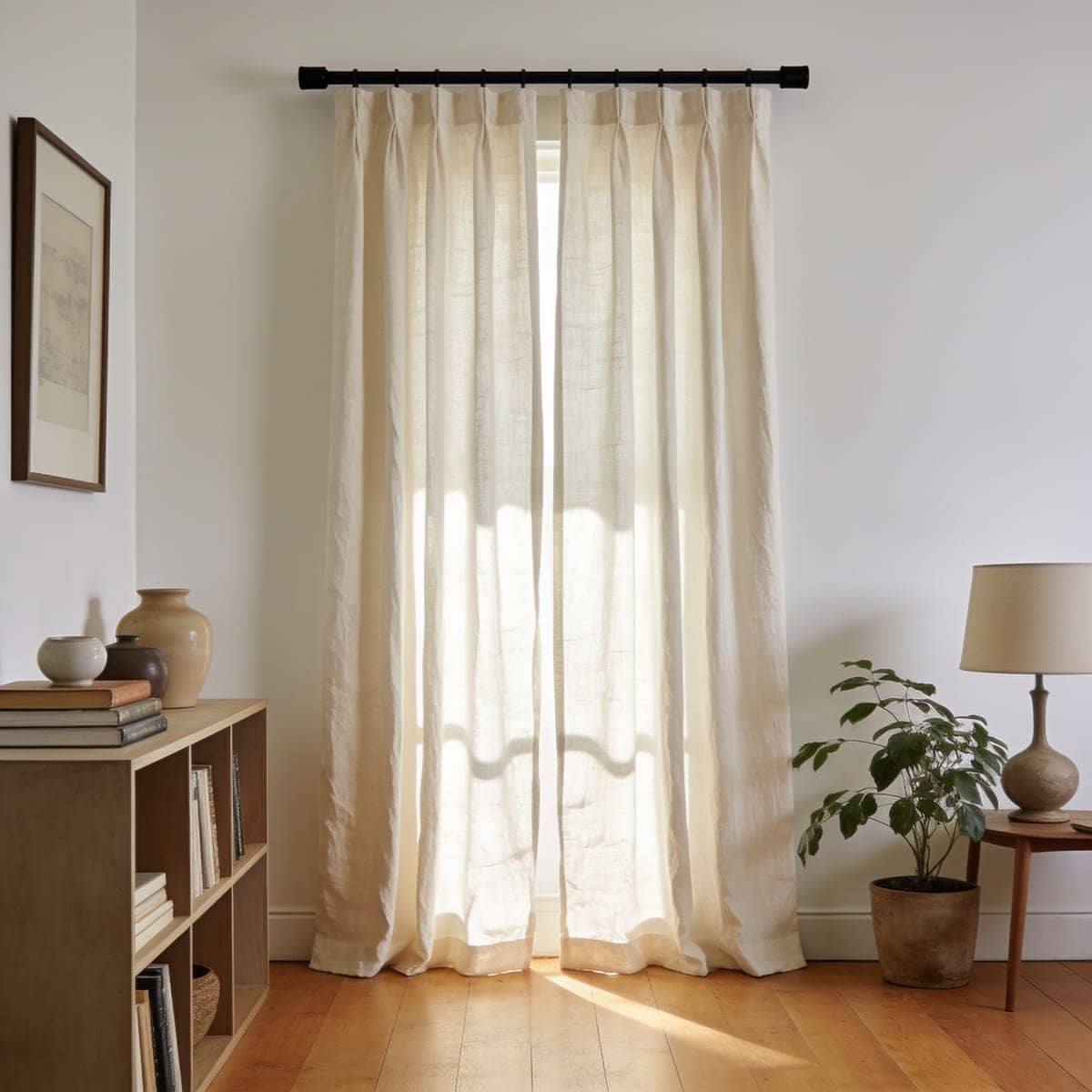
Washable Cotton Slub Curtains
about $26Living room curtains get touched. Sticky hands, a cat who has decided the panel is a ladder, the dog that leans on everything. A cotton slub blend goes in the machine and comes out fine, which is not true of most linen-look polyester once it has been ironed. Expect some shrinkage on the first wash, so buy the next length up if you're between sizes. Around $26 a panel and genuinely low maintenance.
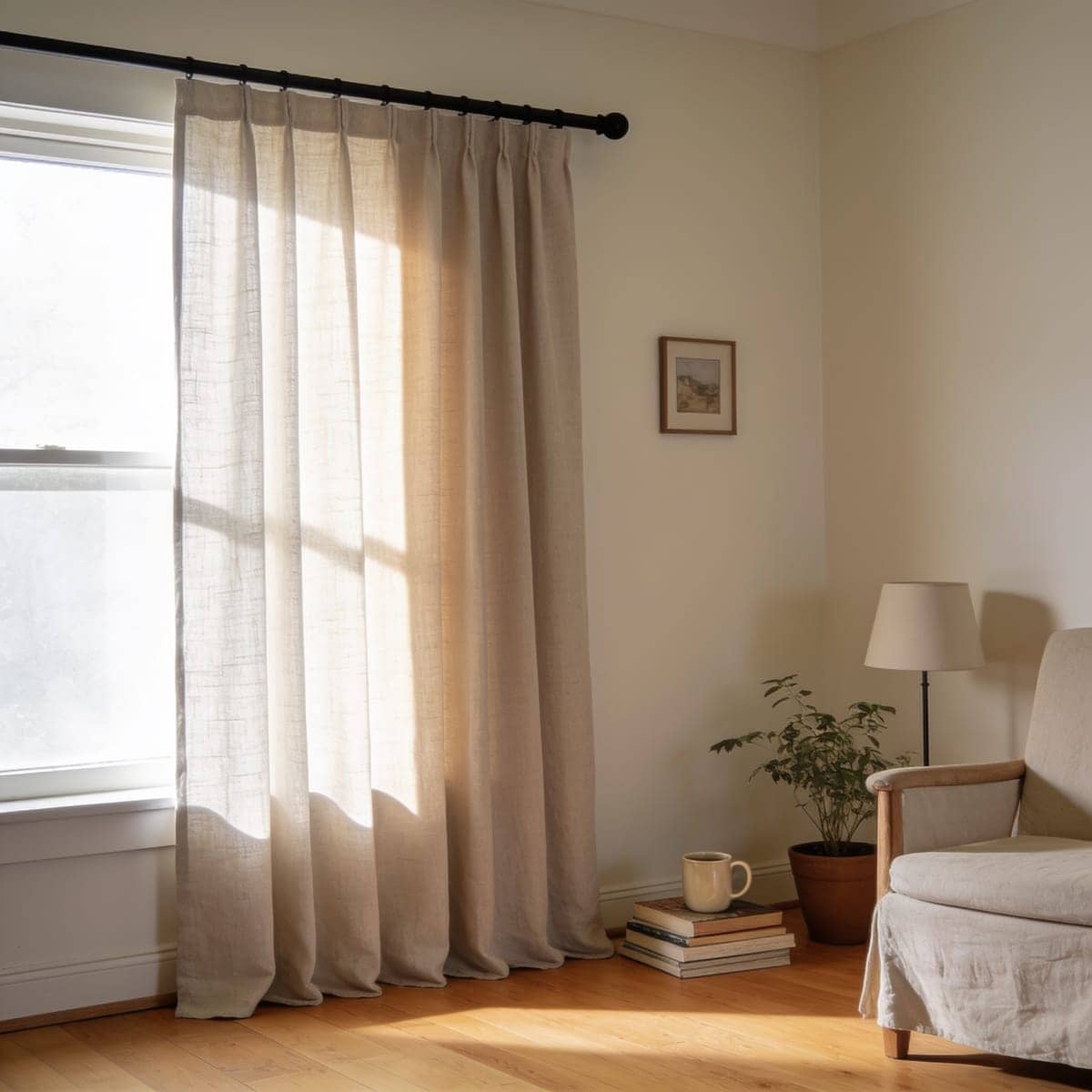
Room-Darkening Living Room Curtains
about $32Blackout belongs in a bedroom. In a living room it makes the space feel like a basement at two in the afternoon, and you end up never closing the curtains at all. Room-darkening is the softer version: enough to kill the glare on the TV during a bright afternoon, not enough to erase daylight. Look for a triple-weave fabric rather than a rubbery laminated backing, which is the layer that cracks and gives cheap panels away.
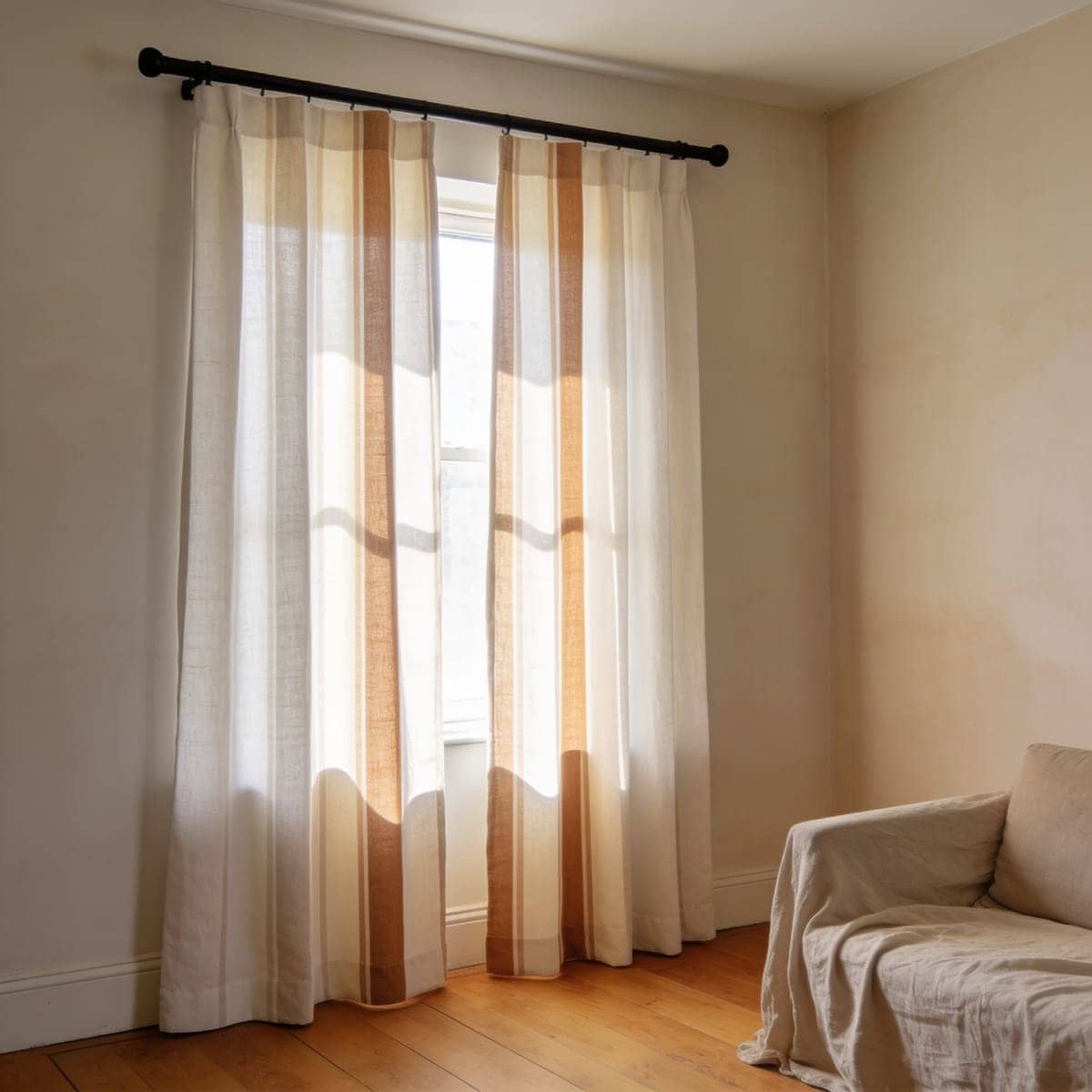
Striped Linen-Blend Curtains
about $34Pattern on a curtain is a commitment, since it's the biggest thing in the room. A quiet vertical stripe, tonal rather than high-contrast, is the version that doesn't get exhausting, and it adds height as a bonus. Two things to check before ordering: whether the stripe runs vertically in the actual panel (some listings show the fabric bolt sideways) and whether the pair is truly a pair. Fabric-printed stripes fade faster in direct sun than woven ones.
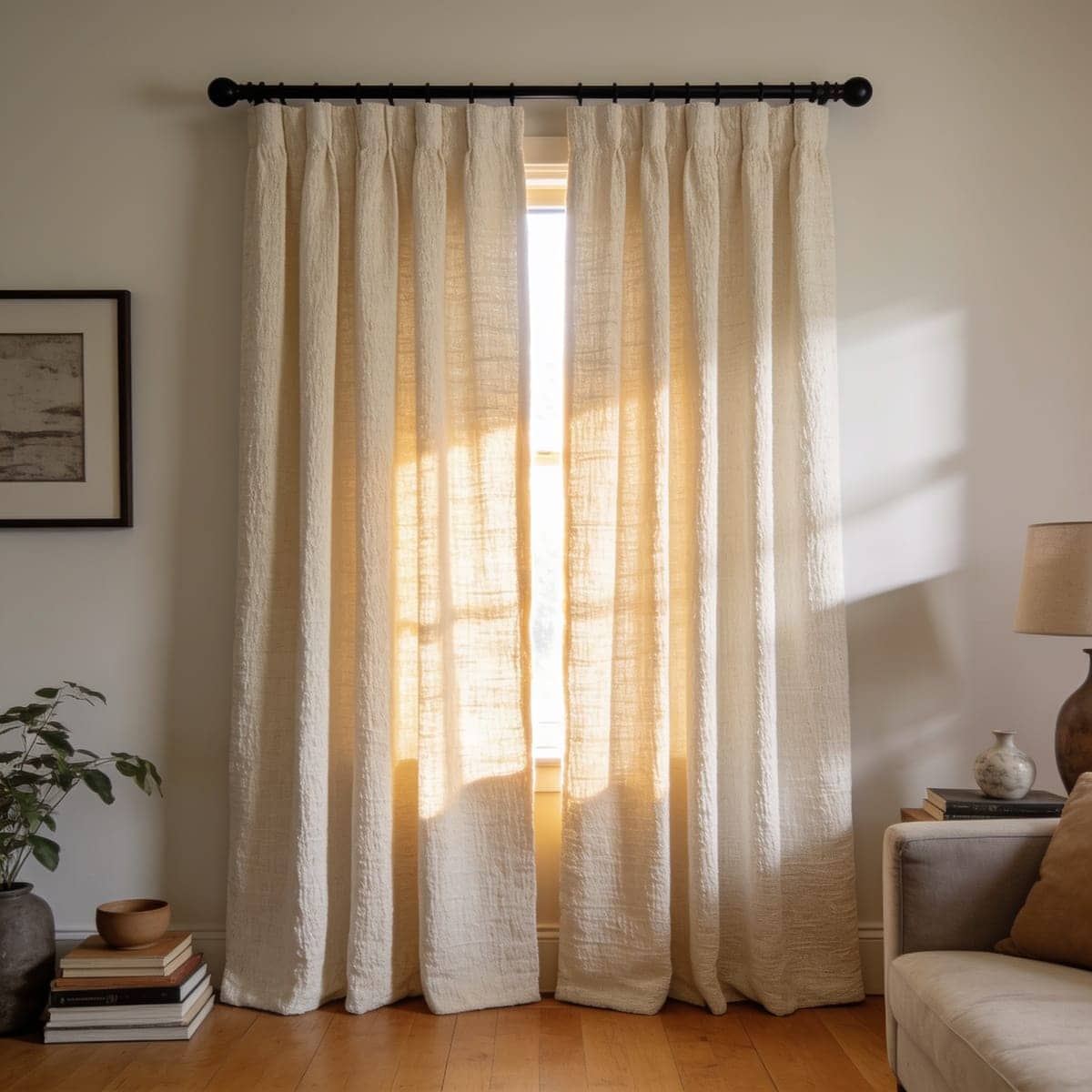
Textured Woven Curtains
about $36If your living room is all warm neutrals, this is where the interest comes from. A heavier nubby weave catches light unevenly, so a plain cream panel stops looking like a plain cream panel. It also hangs better than anything else at this price, because weight is what makes fabric fall in a straight line. The tradeoff: less light gets through than a linen-look panel, so it suits a room with decent windows rather than one dim corner.
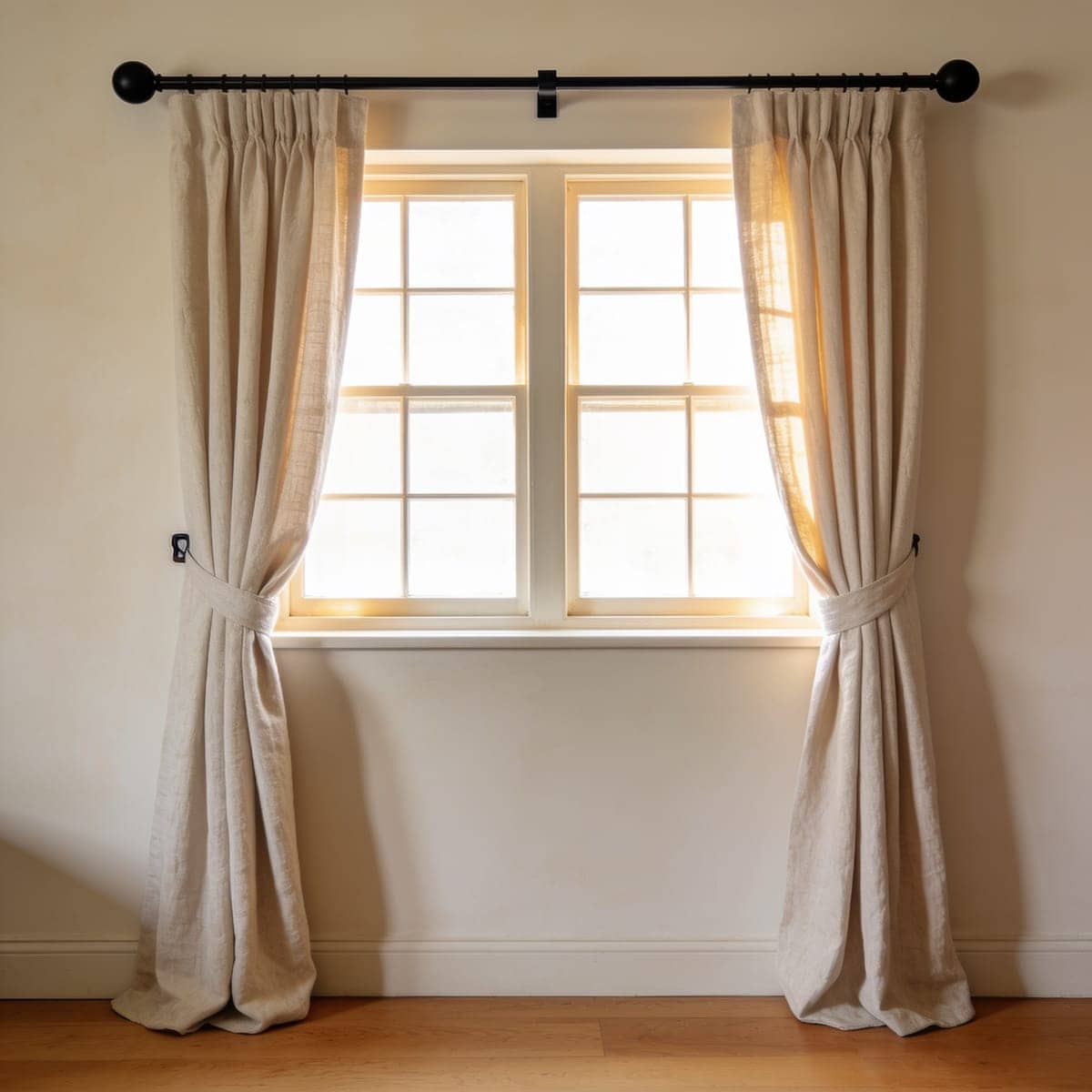
Extra-Long Adjustable Curtain Rod
about $25The only non-panel pick, and the one people skip. Curtains look expensive when the rod extends 8 to 12 inches past the frame on each side, so the open panels sit on the wall instead of covering half your window. Standard rods are usually too short for that, and the flimsy ones sag in the middle under lined panels. An adjustable rod that reaches 120 inches with a center support solves both, and $25 spent here does more than $25 more spent on fabric. If you want more choice on hardware, I compared the best curtain rods under $50, double rods and no-drill brackets included.
What to look for in budget living room curtains
The single biggest tell is fullness. Your panels together should measure roughly twice the width of the window plus the wall you're covering. Two 52-inch panels on a 60-inch window is flat and sad; two 52-inch panels on a 40-inch window looks intentional. This is why the cheap fix is usually buying more panels, not more expensive ones.
After that it's weight and header. Heavier fabric falls straight, thin fabric flares out at the bottom and shows every crease. And the top of the curtain is what your eye actually reads: grommets are fine and easy, back-tab is neater, pleats look custom.
- Enough width. Aim for 2x the coverage. Two panels per window is the default, not the upgrade.
- Length that touches the floor. Measure from the rod height you're going to use, then pick 84in, 96in, or 108in. A half inch above the floor is the safe target.
- Matte, uneven weave. Shine is the cheap tell. Linen-look, slub cotton, and woven textures all photograph like fabric rather than plastic.
- Check the pair. Plenty of listings show two panels and sell one. It's the most common angry review in this whole category.
How much to spend on affordable living room curtains
Around $20 to $30 a panel buys a good light-filtering neutral, and honestly that's where most people should land, because the money is better spent on a second pair of panels than on nicer fabric. The $35 to $45 tier gets you real texture, pleated headers, and extra-wide panels, all things that read as custom. Above $50 a panel you're mostly paying for lining and brand, which a living room rarely needs. My honest split for one window: about $60 on two panels, $25 on a rod that's long enough.
How I picked
I line up the specs that actually decide how a panel looks on a rod (stated panel width, fabric weight, header type, available lengths), then I go read the unhappy reviews. The two complaints that killed picks for me: panels sold as a pair in the photo but singly at checkout, and a "beige" that shows up pink.
FAQ
How many curtain panels do I need per window?
Two, almost always, even on a narrow window. One panel pulled across looks like a shower curtain. If the window is wide, either use two extra-wide panels or go to four standard ones, because the goal is total fabric width around twice what you're covering.
Should living room curtains be blackout?
Usually not. Blackout is a bedroom tool. In a living room you want light-filtering or room-darkening panels so the space still feels like daytime with the curtains closed, unless you're fighting serious glare on a TV.
How long should living room curtains be?
Long enough to just brush the floor from wherever the rod is mounted, which is usually near the ceiling rather than at the window frame. That normally means 96 inches or 108 inches, not the default 84. Short curtains are the fastest way to make a nice room look unfinished.
Do cheap curtains look cheap?
Not if you hang them right. Width, length, and rod placement matter more than what you spent, which is exactly why a $30 panel hung high and wide beats a $90 panel hung at the frame. The one thing that always shows is shine, so avoid anything glossy.
Can I wash budget curtains?
Cotton blends yes, most linen-look polyester technically yes but they come out creased and never quite recover. If your room involves kids, pets, or a smoker, buy the washable cotton and save yourself the argument.
The verdict
If you want one decision made for you, get the Linen-Look Light-Filtering Curtains at about $30 a panel and buy two per window. Wide window, or you want the folds to look deliberate? The Extra-Wide Curtain Panels are the upgrade that shows. Ground floor and you just want light without the audience: the Sheer Linen-Look Panels at about $20. And whatever you pick, an Extra-Long Adjustable Curtain Rod does more for the room than another $25 of fabric would.