The 10 Best Curtain Rods Under $50 (That Don't Sag)
The best curtain rods under $50 that stay straight under heavy and blackout curtains, plus the double rods, brackets and no-drill options worth knowing.
Some links here are affiliate links. If you buy through them, I may earn a small commission at no extra cost to you, and I only point to things I'd buy myself.
At a glance
| # | Pick | Price | Best for |
|---|---|---|---|
| 1 | 1-Inch Adjustable Rod With Center Support | about $36 | Best all-rounder |
| 2 | Basic 1-Inch Rod for Small Windows | about $18 | Small windows |
| 3 | No-Drill Window Frame Curtain Brackets | about $20 | Renters, light curtains |
| 4 | Wrap-Around Blackout Curtain Rod | about $26 | Blackout curtains |
| 5 | Modern Cap-Finial Curtain Rod | about $28 | Most modern look |
| 6 | 1-Inch Double Curtain Rod | about $30 | Sheer plus blackout |
| 7 | Brushed Brass Curtain Rod | about $32 | Warmest finish |
| 8 | 1 1/4-Inch Heavy-Duty Curtain Rod | about $42 | Heavy curtains |
| 9 | Wood Curtain Rod | about $45 | Natural look |
| 10 | Heavy-Duty Double Curtain Rod | about $46 | Large windows |
1-Inch Adjustable Rod With Center Support
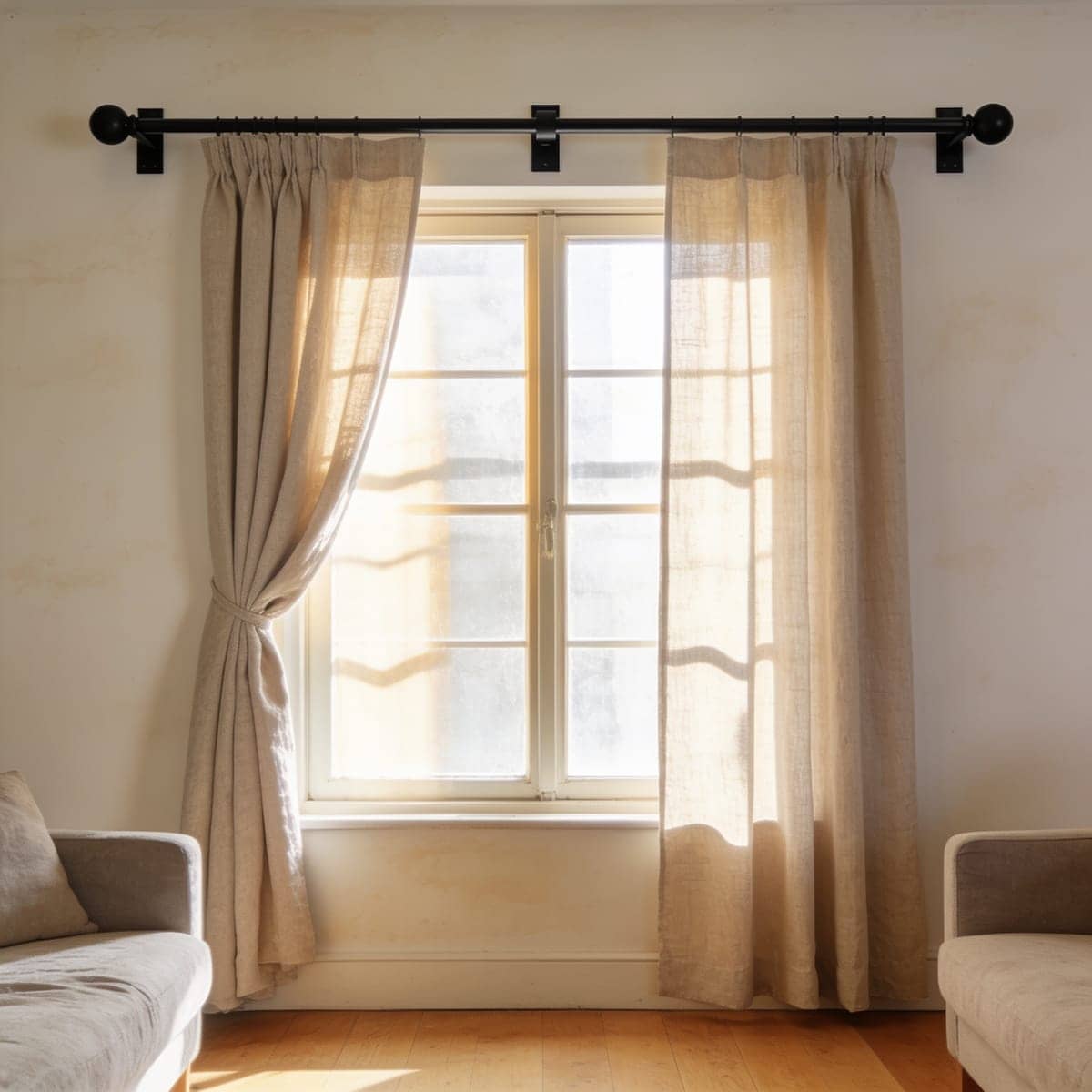
about $36If I could only recommend one rod for a living room, it would be a plain 1-inch steel rod that telescopes from about 72 to 144 inches and ships with three brackets, one of them for the middle. That third bracket is the whole reason it makes the top spot. Most budget rods sag right at the overlap between the two tubes, and a center support sits exactly there. The length covers a standard window with the extra 8 to 12 inches on each side that makes the window look bigger, and listings in this style usually state around 30 pounds. Matte black is the easy finish to live with. Use real drywall anchors instead of the ones in the bag, though, because reviewers who skipped them are the ones writing about brackets coming loose.
Basic 1-Inch Rod for Small Windows
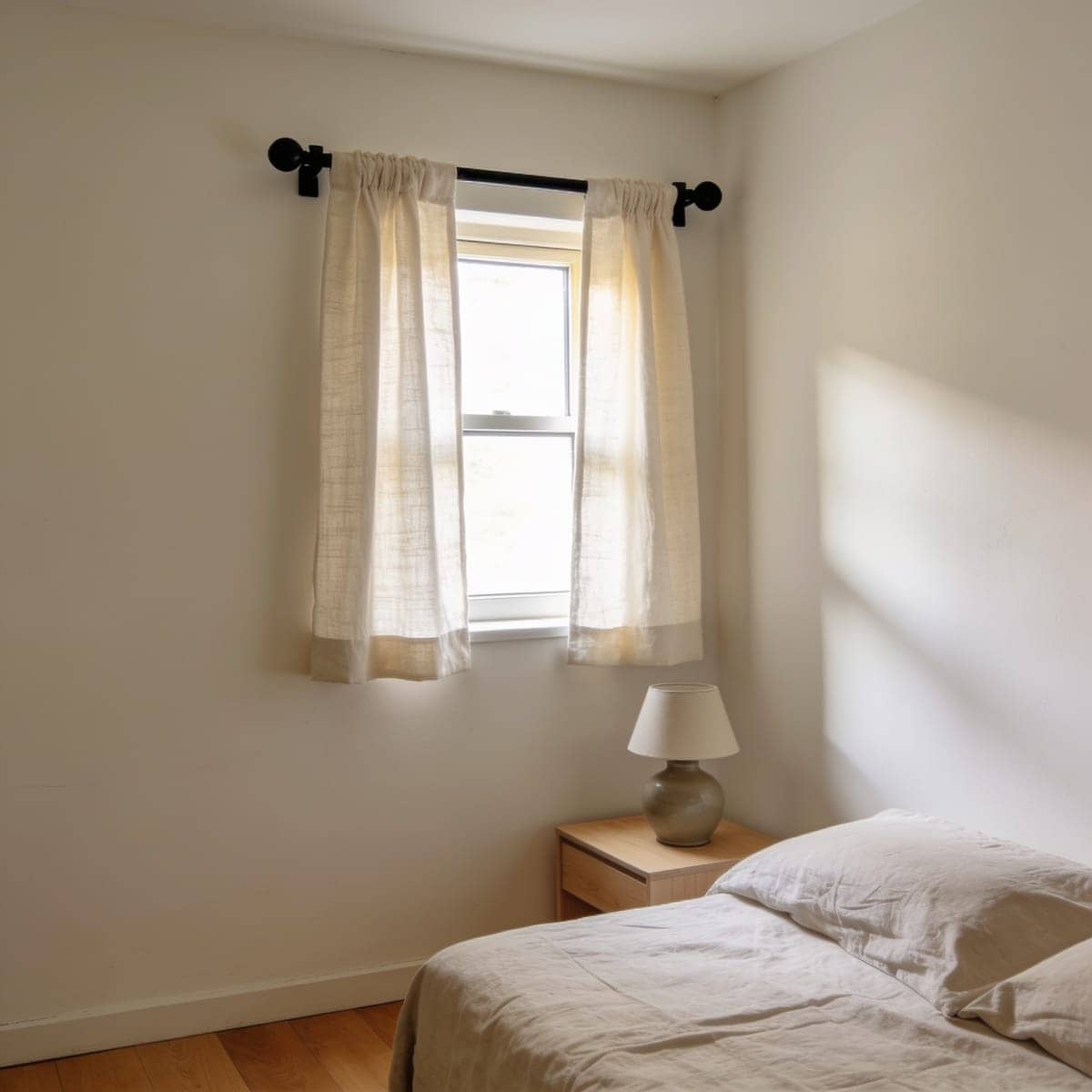
about $18Not every window needs a 12-foot rod. For a bathroom, a kitchen or a narrow bedroom window, a basic 1-inch rod that adjusts from 36 to 72 inches is all the hardware you need, and it costs less than a single curtain panel. Two brackets hold it fine at that length, since the span stays under 48 inches once it's mounted. The finials are simple and a little plain up close. Stretch it past about 60 inches with lined panels and the middle starts to dip, which is where #1 takes over.
No-Drill Window Frame Curtain Brackets
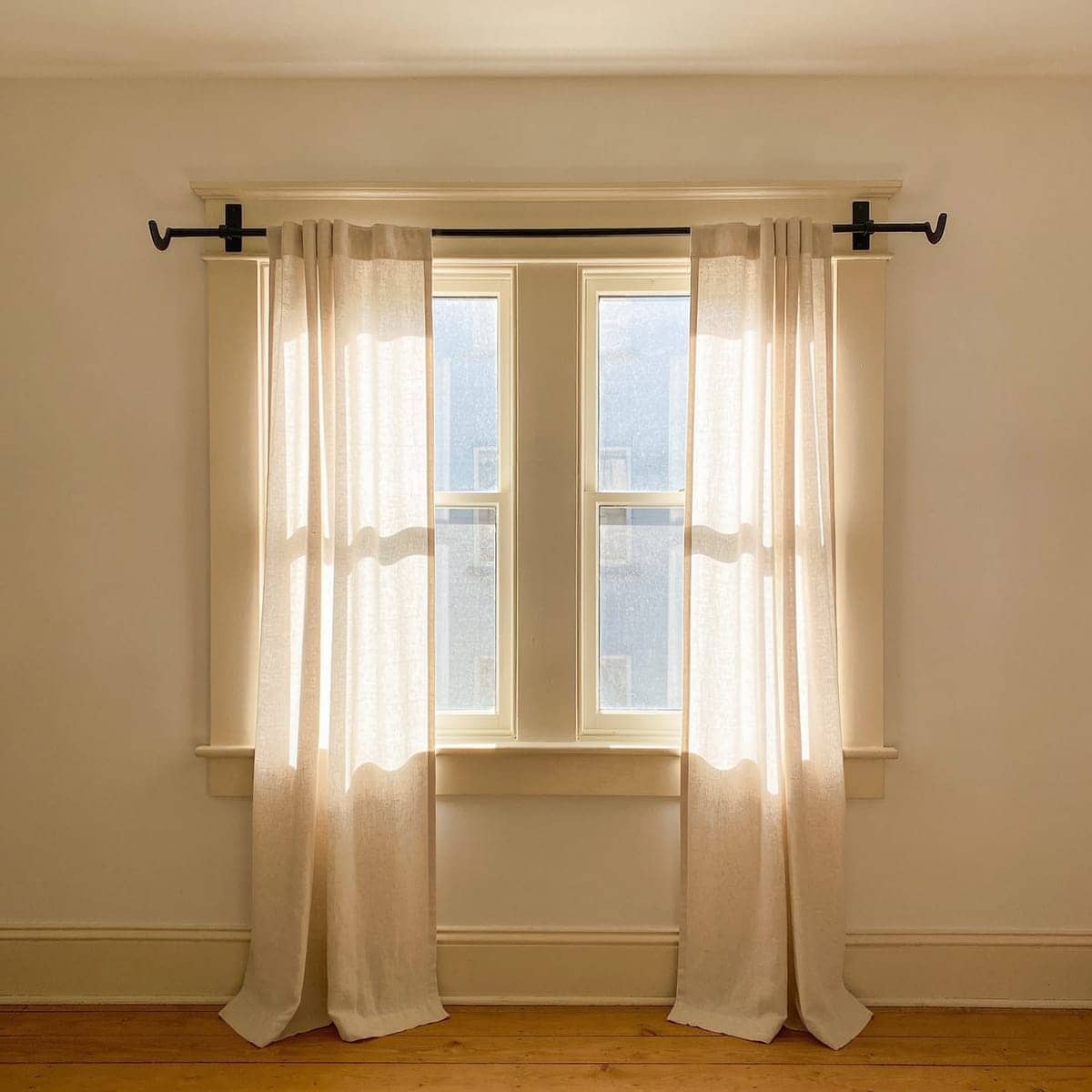
about $20These are the renter's answer, with one big condition. The brackets tap into the top of a wooden window frame with a hammer, no drill, no holes in the wall, and each one is rated for about 20 pounds. That's plenty for sheers, linen-look panels and light cotton. It is not the pick for heavy blackout or velvet, and it only works if your window has real wood trim at least half an inch deep. You'll also need a rod to go with them, and the 1-inch rod at #2 fits most versions. It's the one exception to my one-inch rule, and it earns the spot because a lease shouldn't mean bare windows.
Wrap-Around Blackout Curtain Rod
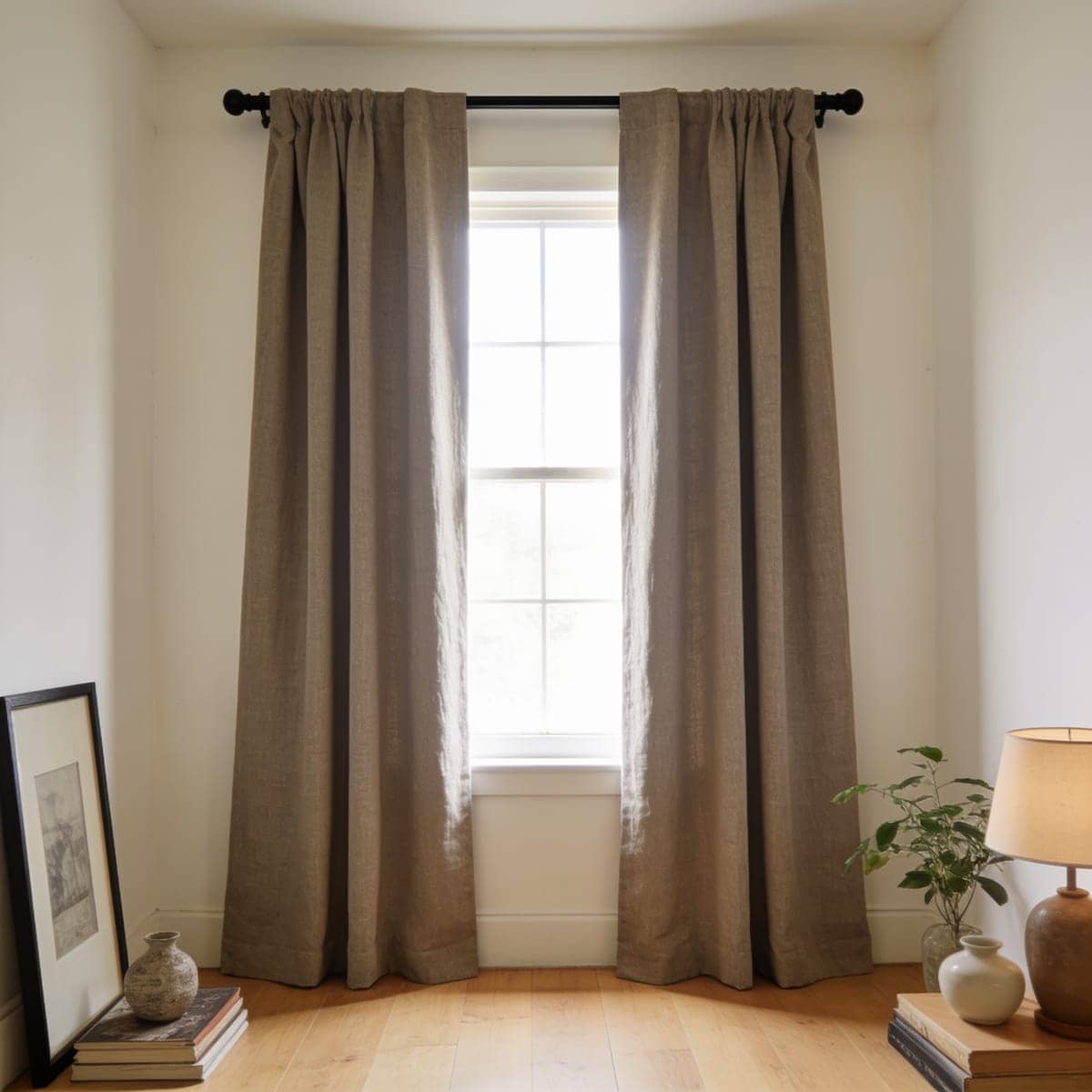
about $26Blackout curtains on a straight rod still leak light, and it comes in at the sides, between the fabric and the wall. A wrap-around rod curves back to the wall at each end, so the panels hug the wall and that gap disappears. It's the cheapest real upgrade for a bedroom that needs to be dark at 6am. The trade is that the panels can't slide past the curve, so they stack a little tighter when open. I'd take that every time over waking up to a bright stripe down each side.
Modern Cap-Finial Curtain Rod
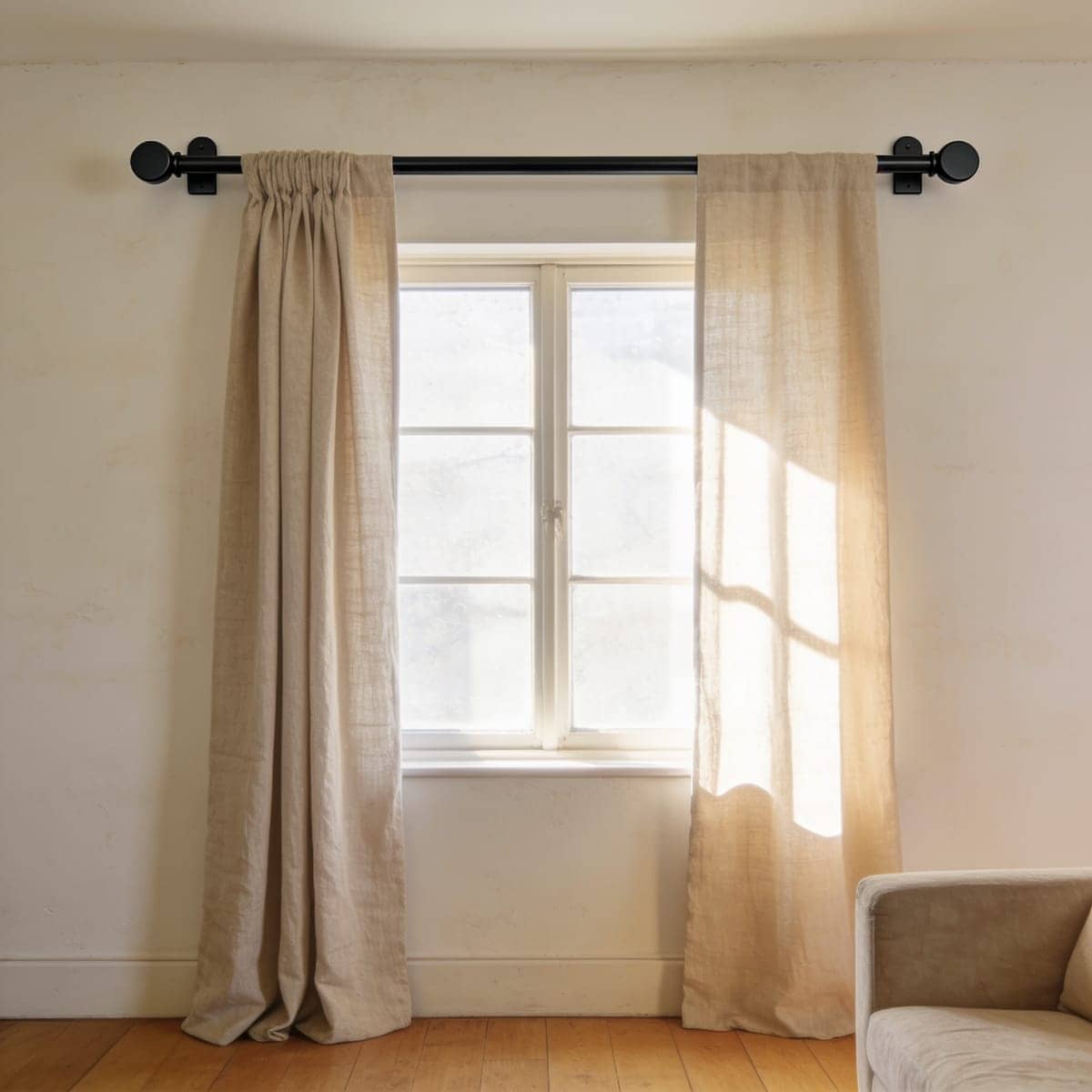
about $28Big ball finials are what date a curtain rod fastest. This style skips them for small flat caps that sit flush with the rod, the clean look design blogs keep showing right now. At about $28, it's the same price as the design-brand rod most roundups call their budget pick. The rod is a true inch, it comes with two brackets in most lengths, and it adds a center bracket once you size up past about 66 inches. Check that yours includes it before you order the longer size, since a few listings sell it separately.
1-Inch Double Curtain Rod
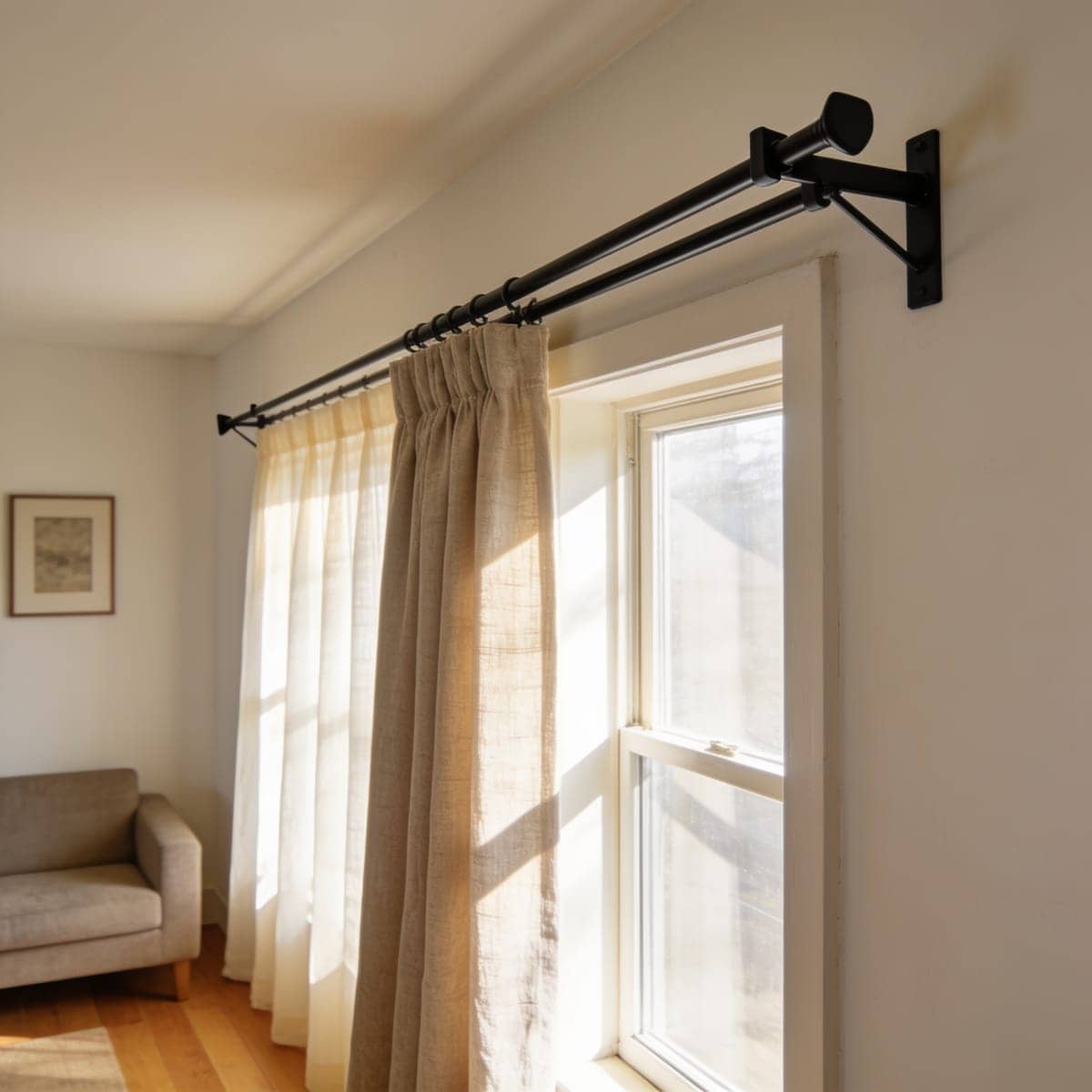
about $30Sheers in the day, something heavier at night: that's what a double rod is for. The back rod carries a sheer for privacy with daylight, the front one carries a blackout or lined panel you pull across after dark, and the room gets two moods from one set of brackets. Both rods here are 1 inch, and makers put the load at 30 to 40 pounds for the pair. Because the brackets stick out further from the wall to fit two rods, they need a solid anchor. On a plaster wall, find the stud.
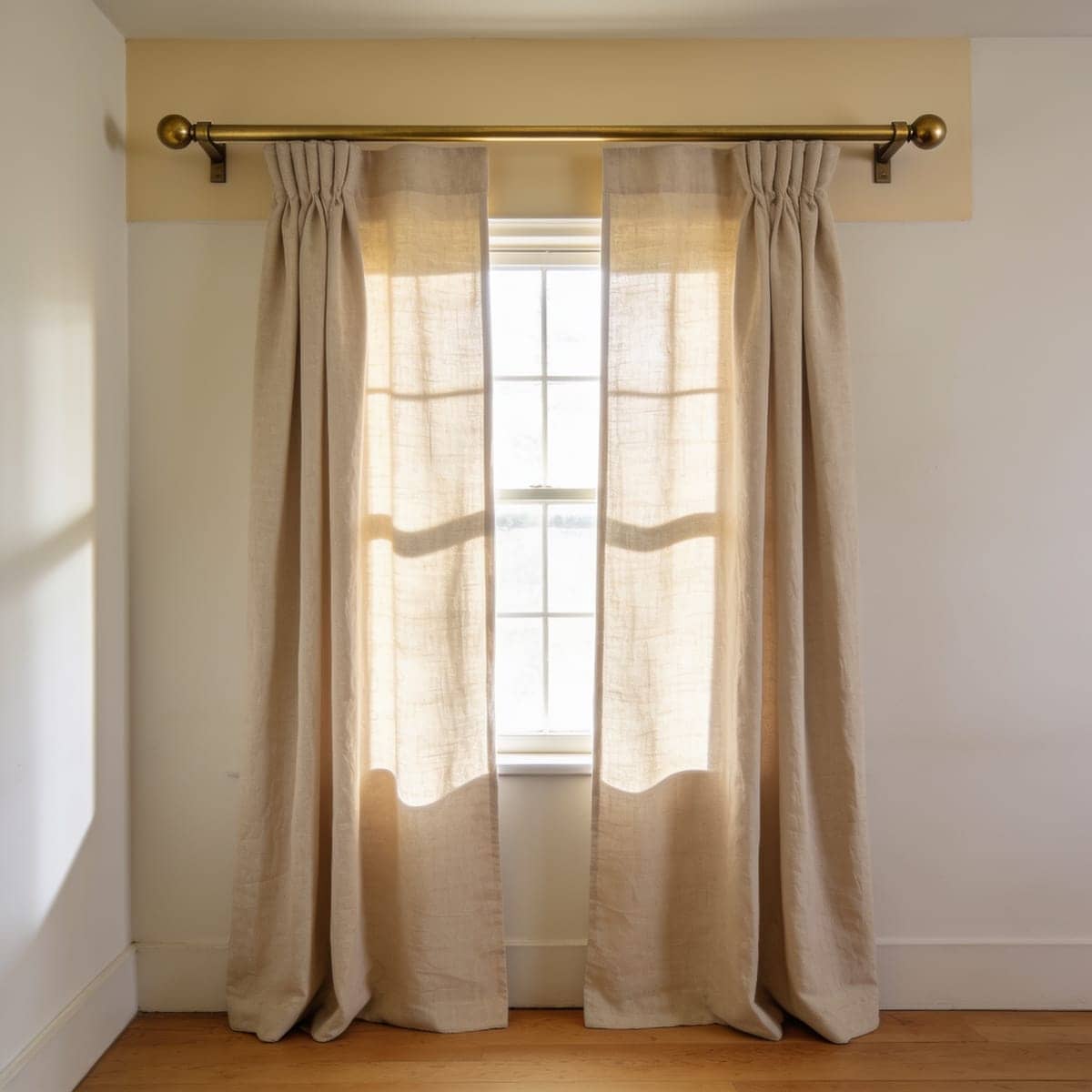
Brushed Brass Curtain Rod
about $32West Elm's simple adjustable rod in antique brass runs well past $100 in the long sizes, and this brushed brass 1-inch rod gets you the same slim look for about a third of that. Against a cream or warm white wall, brass turns the rod into part of the decor instead of hardware you try not to see. Gold is also where budget rods give themselves away, though, because some are plated a bright yellow that reads as plastic. I kept to brushed finishes and the customer photos taken in daylight, which show the real shade better than the listing does.
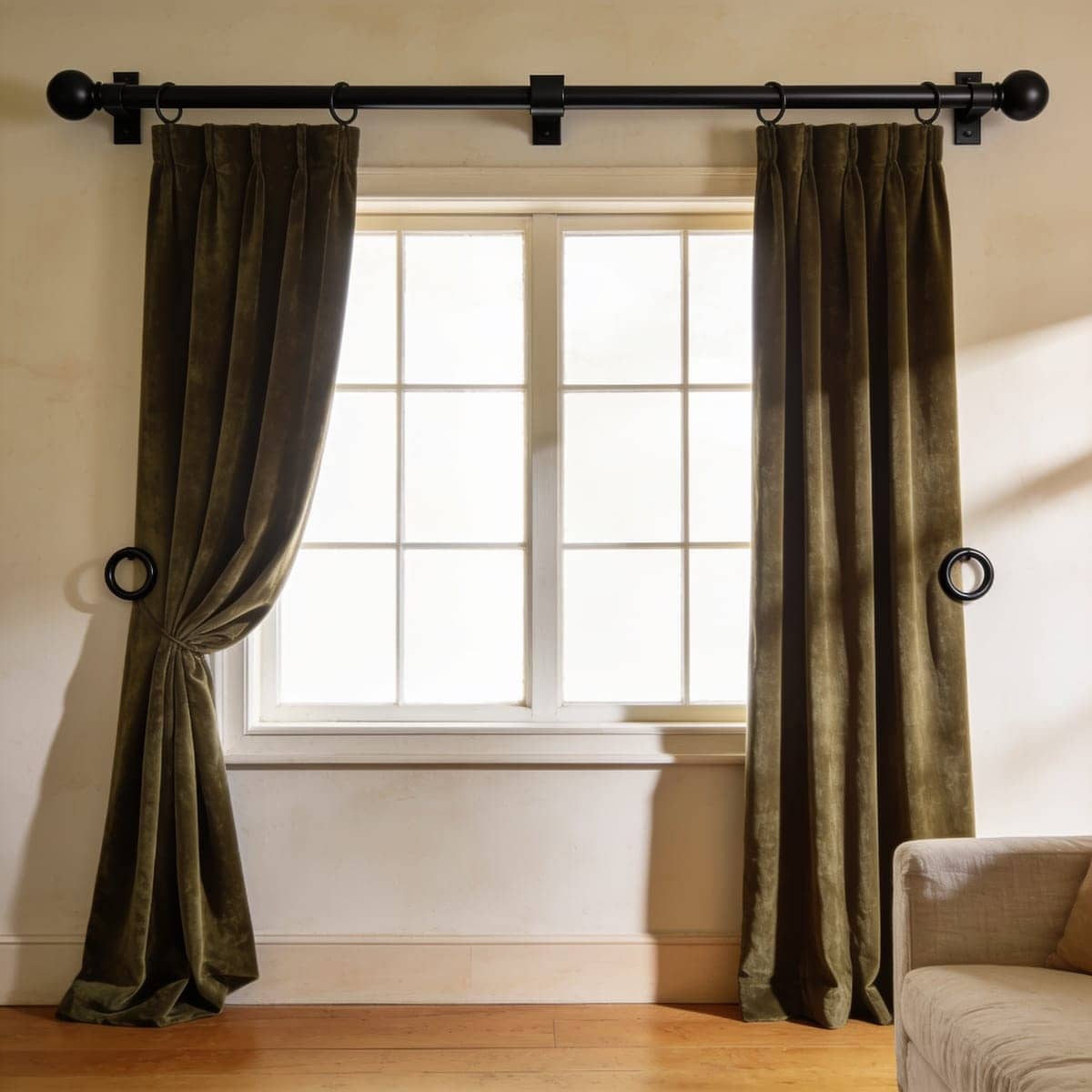
1 1/4-Inch Heavy-Duty Curtain Rod
about $42If your curtains are genuinely heavy (velvet, thermal blackout, lined linen), go up to a 1 1/4-inch rod. The thicker tube resists bending in a way a 1-inch one can't, and this style usually comes with three brackets and a stated rating up to around 80 pounds, which is more than any pair of curtains you'll hang. It looks chunkier, and in a small room that can feel like a lot of rod. Over a big living room window it reads substantial, the way custom drapery hardware does.
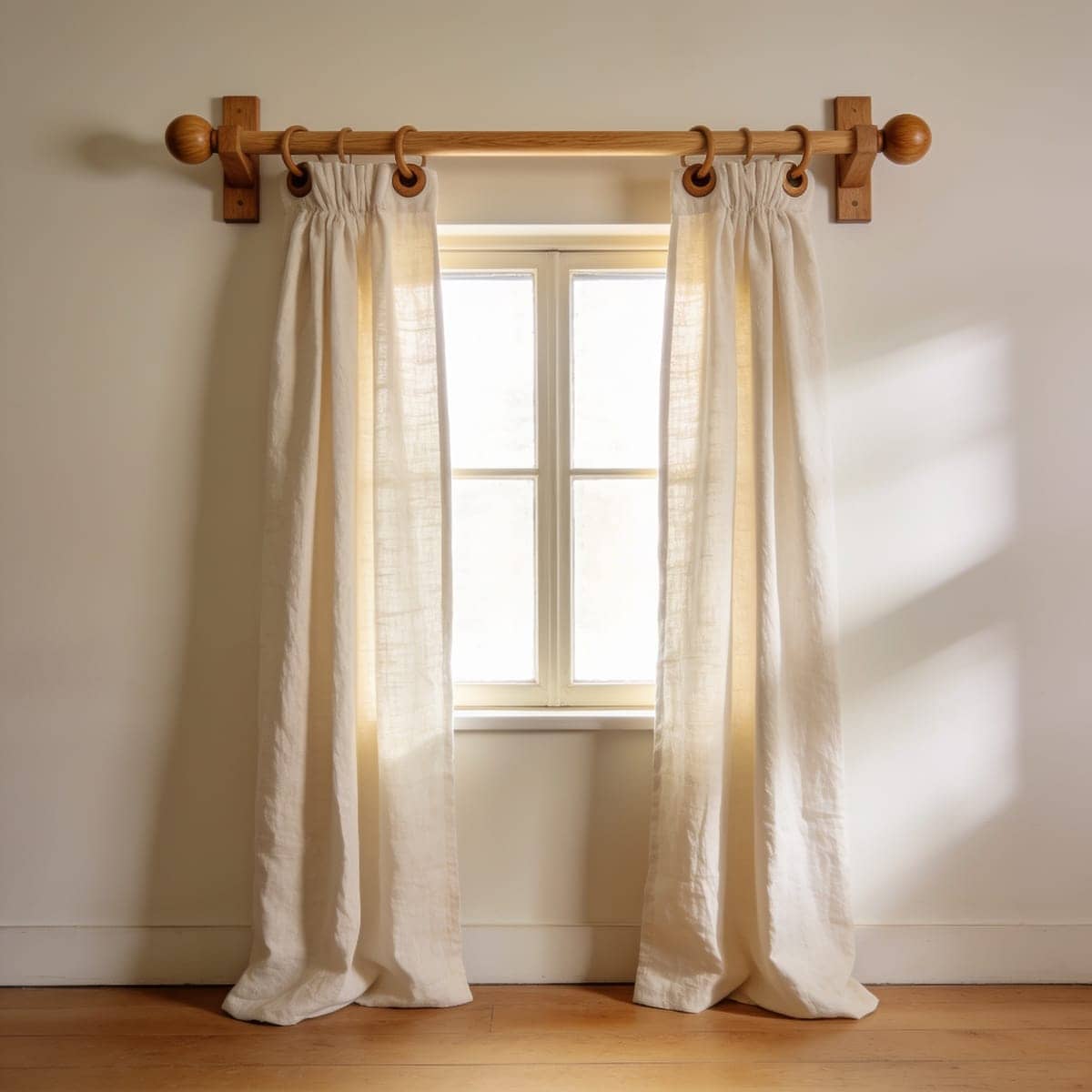
Wood Curtain Rod
about $45A wood rod is the softest-looking option on the list, and it suits a warm neutral room better than any metal. At 1 3/8 inches it's thicker than most of the metal rods here, and solid wood doesn't have a telescoping joint to sag. That's also its catch: most wood rods come in fixed lengths like 6 or 8 feet, so measure your window plus the overhang first, since you can't adjust it once it's up. The wooden brackets are part of the look, so check they come in the box.
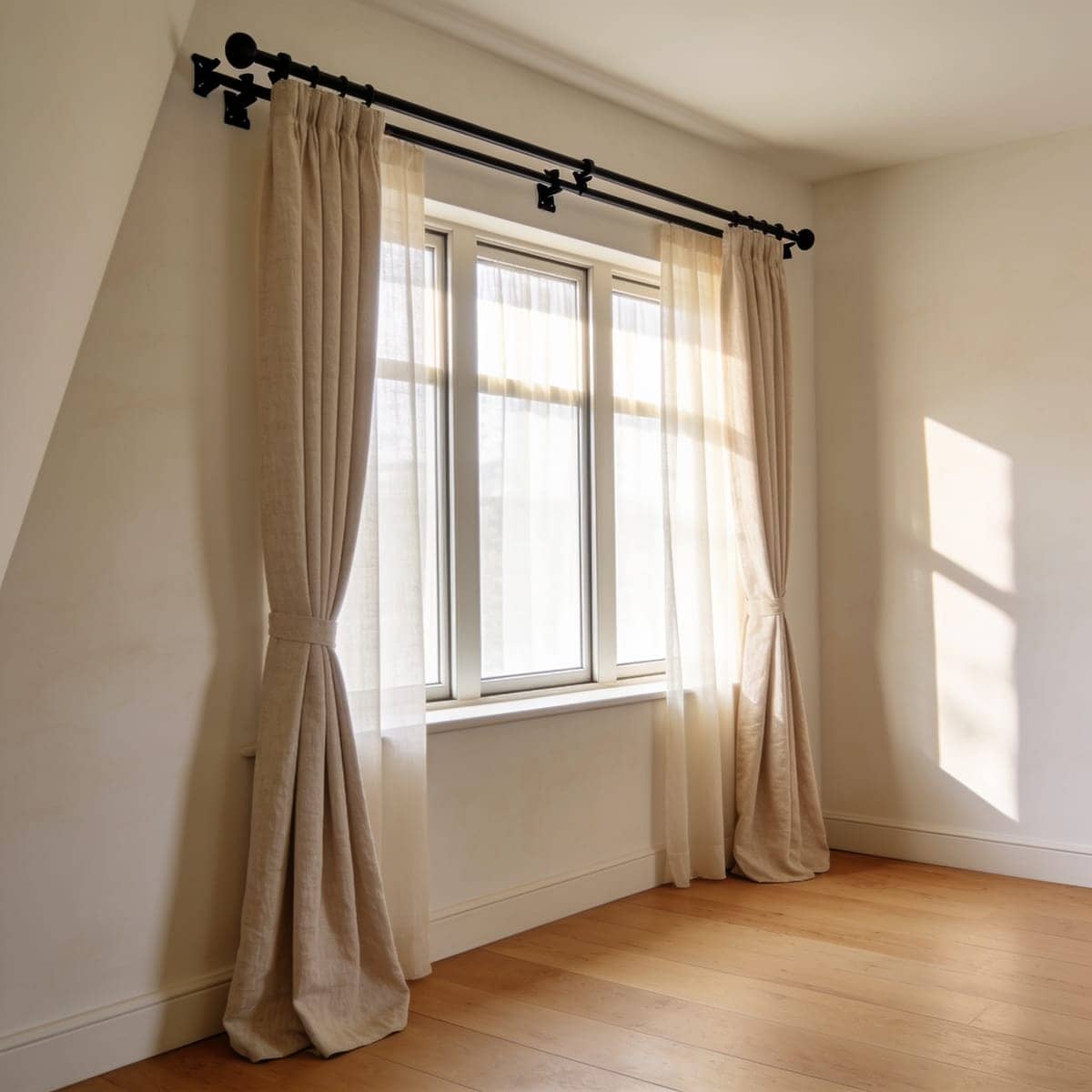
Heavy-Duty Double Curtain Rod
about $46This is the one rod on the list built for a wide window, heavy curtains and sheers behind them, all at once. It telescopes from about 36 to 122 inches, which covers most large living room windows with room to spare, both rods are a full inch, and with the extra brackets in the box, it's rated for around 40 pounds. It's the top of the budget, and on a window over 90 inches wide make sure you're using two middle supports, not one. For an even longer span, I picked a 120-inch single rod in my living room curtains roundup.
What to look for in budget curtain rods
Nobody compliments a curtain rod, but everyone notices one bowing in the middle or hanging off a bracket that's pulled out of the wall. The budget curtain rods that hold differ from the ones that don't in four places.
- The hardware in the box. The rod itself is rarely the weak link. The screws and plastic anchors are. On drywall, buy a pack of proper drywall anchors rated for 25 pounds or more for a few dollars, or screw into the stud or the header above the window.
- Anchors for plaster and drywall. Drywall needs anchors that expand behind the board; old plaster cracks if you force them in, so drill a clean pilot hole first. If you hit wood behind the wall, a plain screw is best.
- Easy installation. Brackets that let you slide the rod in from the top, rather than threading it through closed rings, save a lot of swearing on a ladder.
- Finish and finials. Matte black, brushed brass and brushed nickel look most expensive. Shiny plated finishes and oversized decorative finials are the budget giveaways. Small caps or simple balls age better.
Diameter and material: what holds heavy curtains
Diameter is the number that predicts sag. A 3/4-inch rod is fine for a sheer on a short span and bends under almost anything else. One inch is the sweet spot for most living room and bedroom curtains, including lined and blackout panels. For heavy curtains like velvet or thermal blackout, or for any span over 100 inches, go to 1 1/8 or 1 1/4 inches.
Material matters almost as much. Steel is the strongest for the money and what most of this list is made of. Aluminum is lighter and won't rust, which helps in a humid room, but it bends more easily at the same diameter. Wood looks the warmest, has no weak telescoping joint, and comes in fixed lengths.
Single or double rod?
A single rod is all you need if you hang one layer of curtains. Choose a double curtain rod when you want two layers: a sheer behind for daytime privacy and a heavier panel in front for night. It's the standard setup for blackout curtains in a bedroom that also needs light during the day.
The catch with double rods is weight. Two layers of fabric on one set of brackets means more load, and the brackets stick out further from the wall, which gives them more leverage to pull out. For heavy curtains on a double rod, stick to a heavy-duty double like #10, use a center support, and anchor into wood where you can. For blackout curtains on their own, the wrap-around rod at #4 blocks more light than a double.
Brackets and the center support
Most sag comes from too few brackets, not from a bad rod. The rule most installers use: one bracket at each end for spans up to about 48 inches, a center support once you go past 48, and two middle supports past 90. A telescoping rod is weakest where the two tubes overlap, so put a support close to that joint.
Heavy-duty curtain rods and brackets belong together: a thick rod on thin brackets still sags. A sturdy bracket that sits further off the wall also lets curtains clear window trim and radiators.
Width and height matter too. Let the rod extend 8 to 12 inches past the frame on each side, so the rod is your window width plus 16 to 24 inches. The open curtains then sit on the wall instead of covering the glass, and the window looks bigger. Mount it 8 to 12 inches above the frame, or higher if you have room, which makes the ceiling feel taller.
No-drill options for renters
If your lease says no holes, you have three options, and they aren't equal.
Tap-in window frame brackets like #3 are the sturdiest no-drill choice. They press into the top of wooden trim, hold around 20 pounds each, and come out without leaving marks. They need real wood trim, and they're for light to medium curtains.
Tension rods fit inside the window frame and hold by pressure. They're fine for a sheer or a café curtain in a small window, but heavy curtains slowly push them down, which is the most common complaint.
No-drill curtain rod hooks that stick on with adhesive are the weakest of the three. A lightweight sheer on a short rod is about their limit. Under real weight they come away from painted walls, and some take paint with them when you peel them off.
For anything heavy, the honest answer is two or four small screw holes, filled with a dab of spackle when you move out. Most landlords are fine with that, so ask.
How much to spend
About $20 to $50 buys a curtain rod that won't sag, and that's where almost everyone should land. Under $20 is fine for small windows and short spans. The $30 to $40 range gets you a 1-inch rod with a center support and a finish that looks expensive, which covers most living rooms. Pay up to $45 or so only for heavy curtains, large windows or a double rod. Above $50 you're mostly paying for a brand name or custom lengths: West Elm's rods run past $100, and made-to-measure hardware runs well into the hundreds for the same job. Put the savings into better anchors, not a pricier rod.
How I picked
I lined up the numbers that decide whether a rod holds (diameter, wall thickness, how many brackets come in the box, the stated weight rating) and then read the unhappy reviews for the same three failures: a telescoping joint that droops, brackets that pull out of drywall, and finials that fall off. I cut every 3/4 inch rod, even the pretty ones, because under anything heavier than a sheer they bend where the two tubes overlap. The only rod here under an inch is the no-drill pick, and I'll say plainly what it can and can't carry.
FAQ
How much should I spend on a curtain rod?
About $20 to $50. A basic 1-inch rod for a small window is around $18, a sturdy 1-inch rod with a center support for a living room is around $36, and heavy-duty or double rods top out near $46. Every pick on this list is under $50.
Where can I find a good selection of cheap curtain rods?
Amazon has the widest range of 1-inch rods under $40, in almost every length and finish, which is why everything here is sold there. IKEA and big-box stores are also good for cheap rods, but their long and heavy-duty options are more limited. Wherever you buy, check the diameter and the number of brackets, not just the price.
How far should a curtain rod extend past the window?
8 to 12 inches on each side of the frame. Some guides say 3 to 6 inches, which works, but the extra width lets open curtains sit on the wall instead of covering the glass, and that's what makes a window look bigger. In practice, buy a rod that reaches your window width plus 16 to 24 inches.
How high above the window should I hang it?
8 to 12 inches above the top of the frame is a good default. If you have more room, go higher, up to a few inches below the ceiling, and use floor-length curtains so they still reach the floor. The higher the rod, the taller the room feels.
Do heavy curtains need a center support bracket?
Yes, once the rod spans more than about 48 inches. Past 90 inches, use two middle supports. Heavy curtains on an unsupported telescoping rod sag at the joint, even if the rod itself is strong.
Can I hang curtain rods without drilling?
Yes. Tap-in brackets that grip wooden window trim hold light to medium curtains and leave no holes, tension rods work inside the frame for sheers, and adhesive hooks handle only the lightest fabric. For heavy or blackout curtains, a few small screw holes are still the reliable option.
What curtain rods are in style in 2026?
Slim rods with small, simple finials are what's current: matte black, brushed brass and natural wood, often hung high and wide. Big ornate finials and shiny plated finishes are what makes a room look dated.
The verdict
If you want one rod that works for most living rooms, get the 1-Inch Adjustable Rod With Center Support at about $36. Heavy velvet or thermal curtains? The 1 1/4-Inch Heavy-Duty Curtain Rod won't bend under them. Want sheers and blackout on one window? The 1-Inch Double Curtain Rod does both for about $30. And if you can't drill, the No-Drill Window Frame Curtain Brackets hold light curtains without a single hole.
Spend the money on the rod and the anchors, and $30 curtains start looking custom. Affordable, never cheap-looking.
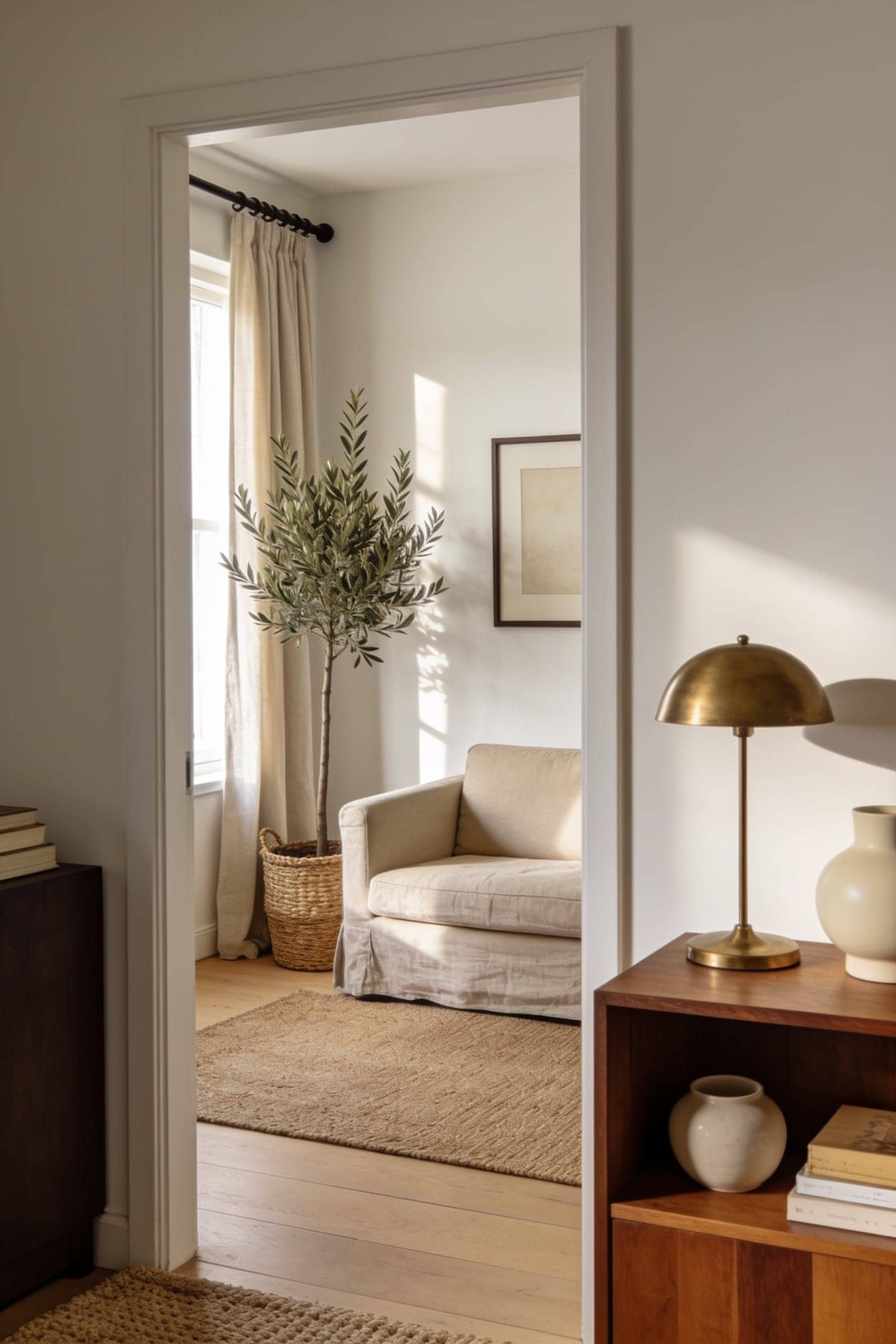
The rod is the frame, here's the whole room.
A good rod makes the curtains look intentional, but a warm neutral living room also needs its contrast, its texture and one dark piece to keep it from falling flat, so I put together the budget ideas that make it work.
See the full gallery: Warm Neutral Living Room Ideas