Best Material for Bed Sheets: Percale, Sateen, Linen or Bamboo?
The best material for bed sheets, the best cloth for how you actually sleep, and why the number on the package tells you so little.
Some links here are affiliate links. I may earn a small commission at no extra cost to you.
Best material for bed sheets, the short answer
At 200 to 400 thread count, 100% cotton percale is the best material for most beds: cool, crisp and hard to wear out. Sleep cold or want it smooth? Cotton sateen, 300 to 600. Sleep very hot? Linen. Furnishing a guest bed on a tight budget? Microfiber will do.
The rule to remember: Choose the fiber and the weave first. Thread count comes last, and a giant number on the package is mostly marketing.
For most people, the shopping list fits in one line: 100% cotton, the word "percale" on the label, a thread count of 400 or under, and a pocket deep enough for your mattress (my bedding size chart has the numbers). Replacing the comforter too? Here are the bedding sets I'd buy.
Below: every material side by side, percale vs sateen, what to buy if you sleep hot, which cotton is worth paying for, and the labels that mislead.
Best type of sheets: every material side by side
Two things decide how a sheet feels. The fiber is what the yarn is made of, and the weave is how that yarn is crossed. That is why "cotton vs percale" is the wrong question: percale is a way of weaving, and it is usually done with cotton.
| Material | Feels | Sleeps | Buy it if |
|---|---|---|---|
| Cotton percale | Crisp, matte, like a good shirt | Cool | You want one sheet for every season |
| Cotton sateen | Smooth, with a soft sheen | A little warm | You sleep cold or dislike crisp |
| Linen | Textured, softens with age | Coolest | You sleep hot and like a rumpled bed |
| Lyocell or bamboo viscose | Silky and drapey | Cool | You want silky and will wash gently |
| Microfiber | Soft and brushed | Warm | It's a guest bed or a tight budget |
| Flannel | Fuzzy | Warmest | Your bedroom is cold all winter |
| Jersey | Like an old T-shirt | Warm | You want stretch and no ironing |
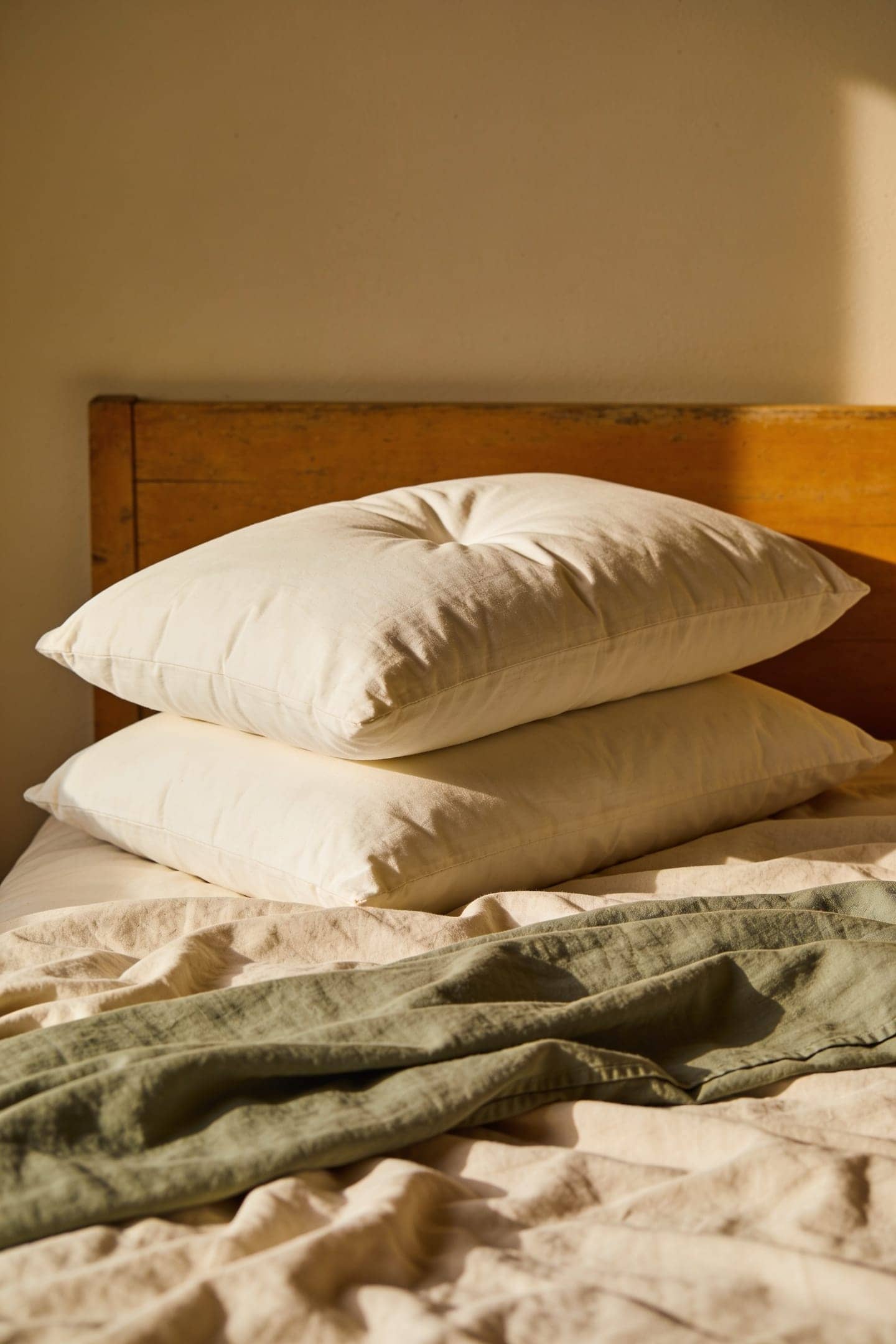
Crisp white percale is what makes a bed look like a hotel bed, even a cheap one.
Percale vs sateen sheets: same cotton, different weave
Cotton percale and cotton sateen can come off the same bale. What changes is the weave.
Percale
One over, one under
Sateen
Four over, one under
Percale crosses one over, one under. All those crossings make a matte, tight, airy cloth that feels cool when you get in and crisp like a fresh shirt. It wrinkles, and it softens with every wash. Because no yarn sits loose on the surface, it also takes a beating.
Sateen floats one yarn over four, then ducks under one. Those long floats are what give it the smooth hand and the soft sheen. They also pack the cloth a little closer, so it holds more warmth, and they can snag on a rough heel or a pet's claw. It wrinkles less, which is why a sateen bed looks made with less effort.
So the difference between percale and sateen comes down to one question: do you get into bed hot or cold? Hot sleepers want percale, and cold sleepers want sateen. If neither, pick by feel: shirt or silk blouse.

RUVANTI 100% Cotton Percale Queen Sheet Set
A 100% cotton percale queen set with a 16 inch pocket, so you get the crisp, cool weave and room for most mattresses without paying for a big name.

Soft Natural 100% Cotton Sateen Queen Sheet Set
For cold sleepers: 100% cotton sateen with a soft sheen, in a queen that fits mattresses up to 14 inches.
Best fabric for sheets if you sleep hot
Heat is really two problems. Air has to get through the cloth, and sweat has to leave it. Tight polyester microfiber fails both, which is why it feels fine at 10 p.m. and clammy at 3 a.m.
Linen is the coolest. Its thick, uneven yarns leave gaps for air, and it dries fast. It also costs the most and looks permanently slept in, which I happen to love and some people can't stand.
Cotton percale is the best value. It gets you most of the way there, at a fraction of what linen costs. For most hot sleepers, this is the one.
Lyocell (Tencel is the best-known brand) feels cool on the skin. It is silky and pulls in more moisture than cotton. It also wrinkles and needs a gentler wash.
If you wake up soaked, a looser weave and a lighter blanket will help you more than any "cooling" claim on a package. Sheets can't fix a warm room or a foam mattress that holds heat, and night sweats that are new or heavy are worth raising with a doctor.
Sateen vs percale vs linen: which one lasts
Linen is the long game. The fiber is strong, and the cloth gets softer for years. Percale comes next, and it is the one that survives weekly hot washes without complaint. Sateen wears first of the three, because those floats are what rubs and pills.
Below all of them sits brushed microfiber: softest on day one, first to pill. It's fine for a bed that gets used ten nights a year. On the bed you sleep in every night, you'll be shopping again soon.
Best type of cotton for bed sheets
Plain cotton, called upland, is what most sheets are made of, and good upland percale is perfectly nice to sleep on. The upgrade is staple length, meaning how long each fiber is. Fibers count as extra-long at about 1.4 inches, and longer fibers spin into a smoother yarn with fewer ends poking out, so it pills less.
- Pima is the extra-long kind, mostly grown in the American Southwest and Peru.
- Supima is American Pima under a licensed trademark, which makes it the most reliable name on this list.
- Egyptian tells you where the cotton is said to have grown, not how long its fibers are.
Be careful with that last one. In 2016 Target pulled about 750,000 sheets and pillowcases sold as Egyptian cotton and cut ties with the supplier, because the cotton was something else. An Egyptian label at a suspiciously low price deserves a raised eyebrow. A plain "long-staple cotton" sheet from a brand that says so is often the better buy.
Thread count: the number to read, and when to ignore it
Thread count is how many threads cross one square inch. It only means something for cotton weaves, and only up to a point.
| Material | Read the | Aim for |
|---|---|---|
| Cotton percale | Thread count | 200-400 |
| Cotton sateen | Thread count | 300-600 |
| Linen | Weight (GSM) | 150-190 |
| Flannel | Weight (GSM) | 170 or more |
| Microfiber | Weight (GSM) | 90-120 |
There is only so much yarn that fits on a loom. To print 1,000 on a package, a maker twists thin plies together and counts each ply as a thread. The FTC warned the textile trade back in 2005 that this can mislead shoppers, and you can still find it on shelves. A real 300 in single-ply yarn beats a "1,000" in multi-ply, which is heavier, hotter and often scratchier. In a 2010 Consumer Reports test, the top-rated sheet had a count of just 280.
So look for "single-ply". For percale, stop caring at about 400. Sateen can go to 600, because its weave packs in more yarn. Past that, the only thing reliably going up is the price.
Bamboo sheets: what you are really buying
Almost every "bamboo" sheet is rayon, also called viscose. Bamboo pulp gets dissolved in chemicals and spun back into a smooth fiber, so very little of the plant's character is left. In 2022 the FTC went after Kohl's and Walmart for selling rayon as bamboo, and the two paid millions in penalties. The label should say "rayon made from bamboo" or "viscose from bamboo".
That doesn't make them bad sheets. They are silky, drapey and cool to the touch, and plenty of people adore them. Just buy them for the feel, not for a promise that they are natural. They also need a cool wash and a low dryer, or they pill.
Microfiber, flannel and jersey: when they are the right call
Microfiber is very fine polyester. Cheap, wrinkle-free and quick to dry. Right for a guest room or a bed you need to furnish cheaply for now, and wrong for anyone who runs hot.
Flannel is cotton brushed until fuzzy. It's sold by weight rather than thread count, and thin flannel pills fast, so look for the weight on the listing.
Jersey is knit, not woven, so it stretches like a T-shirt. Lovely on a thick or oddly sized mattress, because it just goes on.
FAQ
What are the best bed sheets made of?
Long-staple cotton woven as percale, for most people. Sateen if you sleep cold, linen if you sleep very hot and don't mind the wrinkles.
What is the best cotton for bed sheets?
Supima, if the brand names it, since the trademark is licensed. Long-staple cotton in general comes next, then good plain cotton.
Do hotels use sateen or percale?
Mostly percale, often a cotton and polyester blend that can survive industrial laundry. To get the feel at home, buy white percale in 100% cotton and skip the blend.
What is the softest material for sheets?
Out of the package, brushed microfiber or bamboo viscose. After a year of washing, sateen and linen. Good percale softens too, but it stays crisp.
What is the best material for bedding, not just sheets?
Cotton again for anything that touches skin, including a duvet cover. A comforter is a different call, since its fill matters more than its shell.
What are the best sheets for a memory foam mattress?
Percale or linen, because memory foam holds heat and you need the air. Check the pocket depth against your mattress, topper included.
Is it worth paying more for sheets?
Up to a point. The jump from microfiber to plain cotton percale is the big one. After that, you pay for softness and a sheet that pills later.
The ranked roundupYou know your fabric. If the whole bed needs a refresh, these are the ten sets I'd buy, from cotton to velvet.
See the bedding sets