Some links here are affiliate links. If you buy through them, I may earn a small commission at no extra cost to you, and I only point to things I'd actually consider for my own home.
Clear the whole thing and start from zero
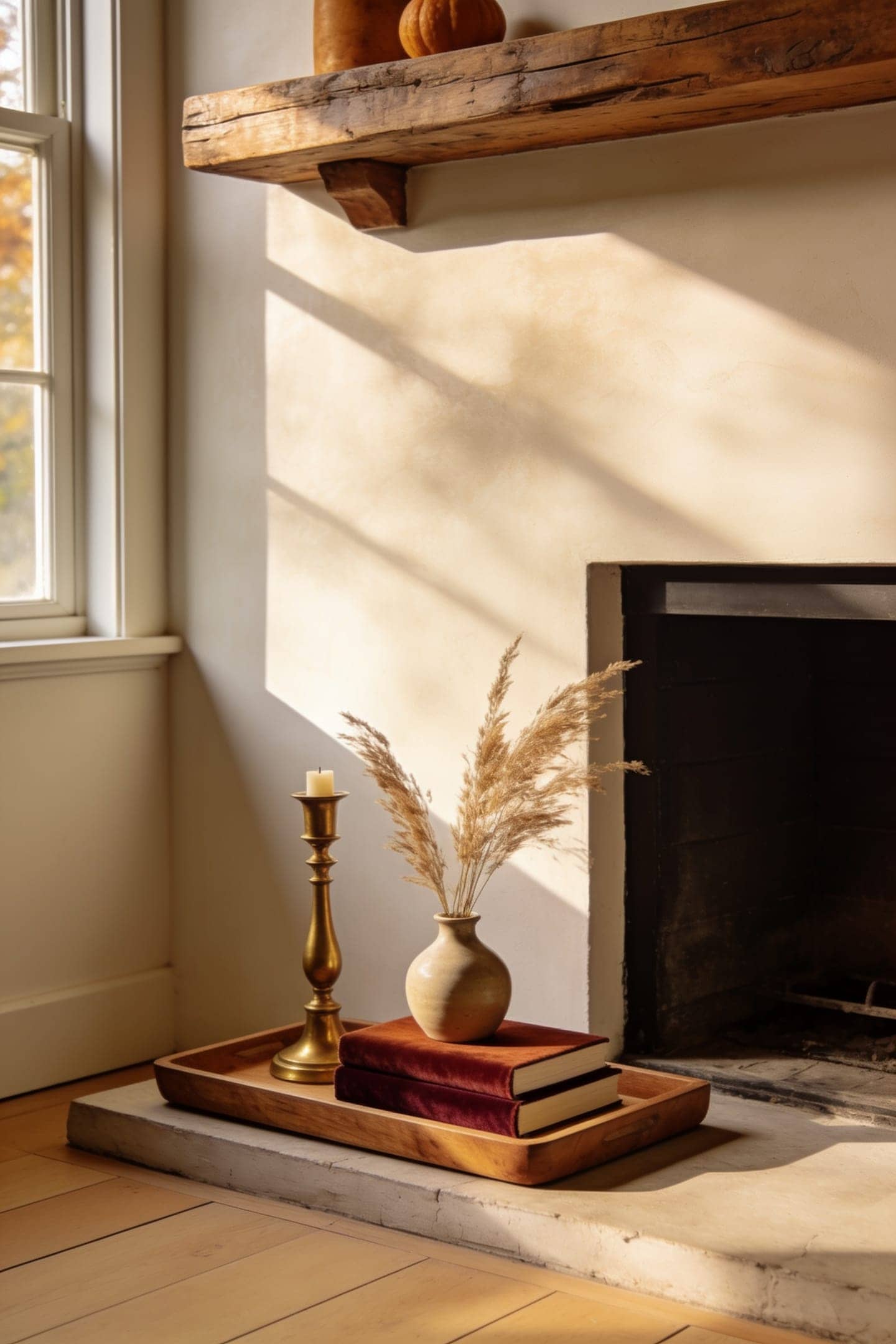
Take everything off, even the things you like. A mantel styled by addition, one souvenir at a time, always ends up as a lineup. Starting from a bare shelf is the single most professional-looking move in this list, and it costs nothing but two minutes of feeling weird about the empty wall.
Lean one big anchor, don't hang it
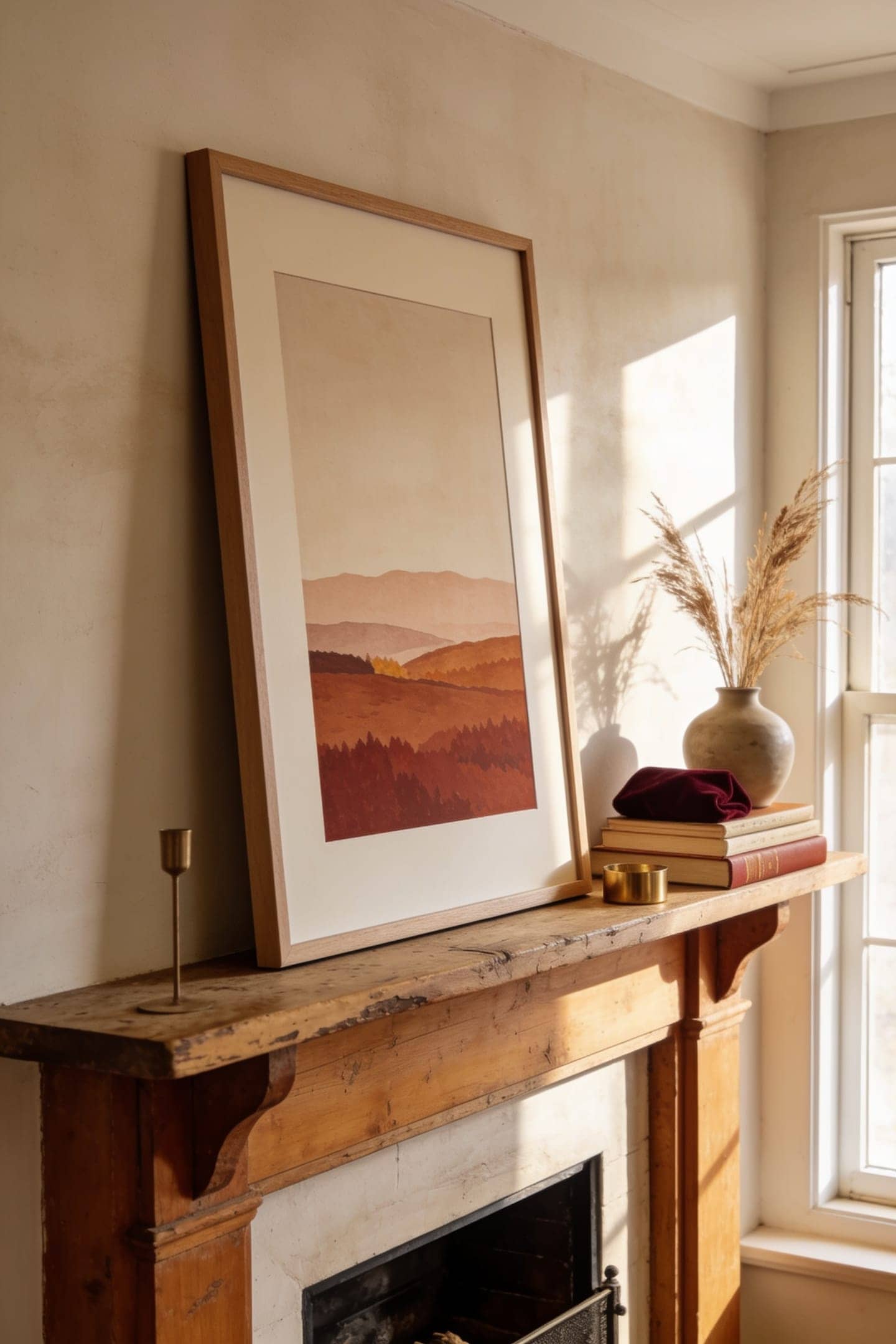
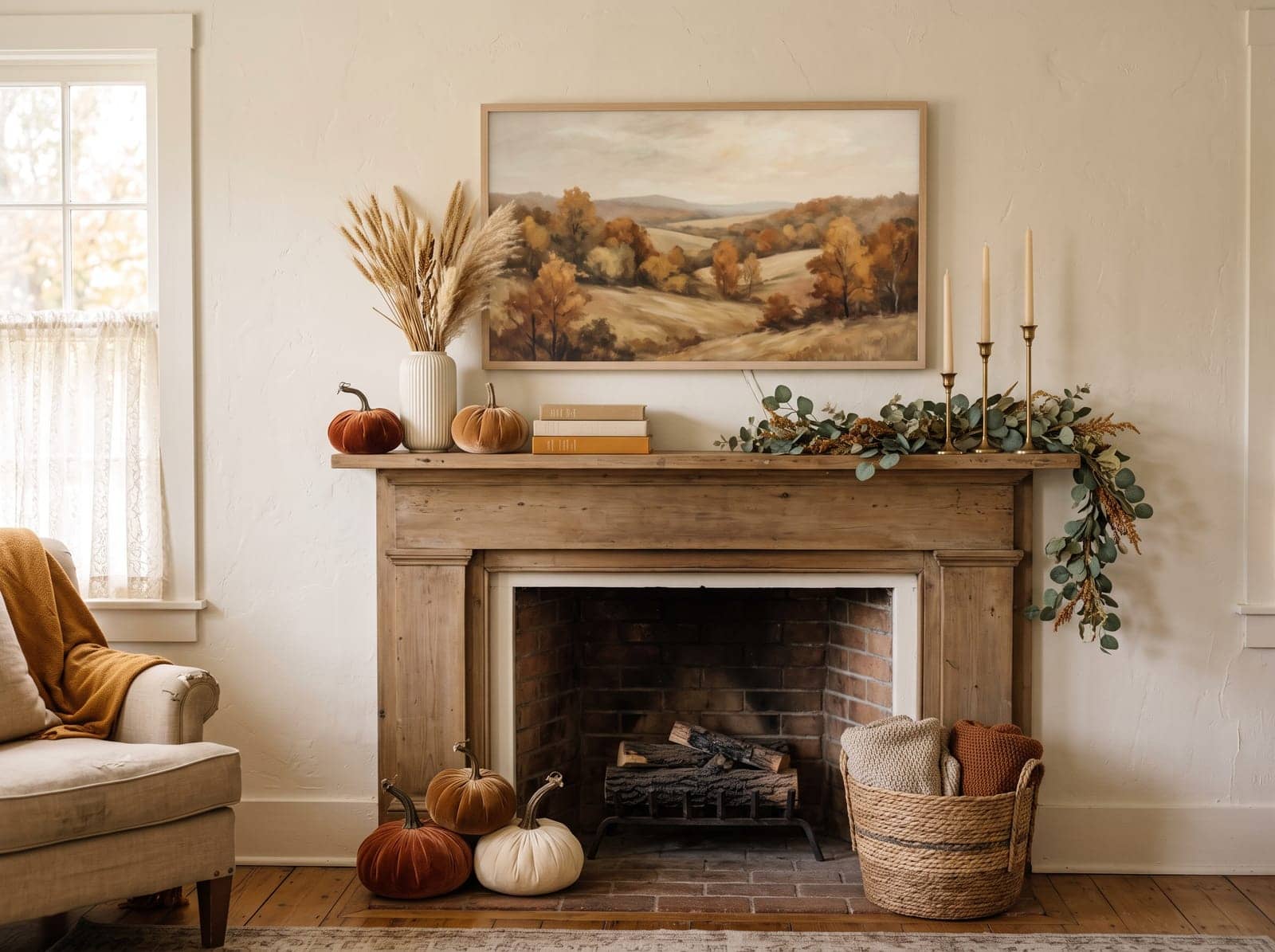
Every good mantel has a backdrop: one big piece of art or the mirror you already own, leaned against the wall, not hung. Leaning looks relaxed, layers beautifully, and never asks your landlord's permission. Go bigger than feels safe, at least two-thirds the width of the firebox below, or the whole composition starts small and stays small.
Style the air, not the shelf
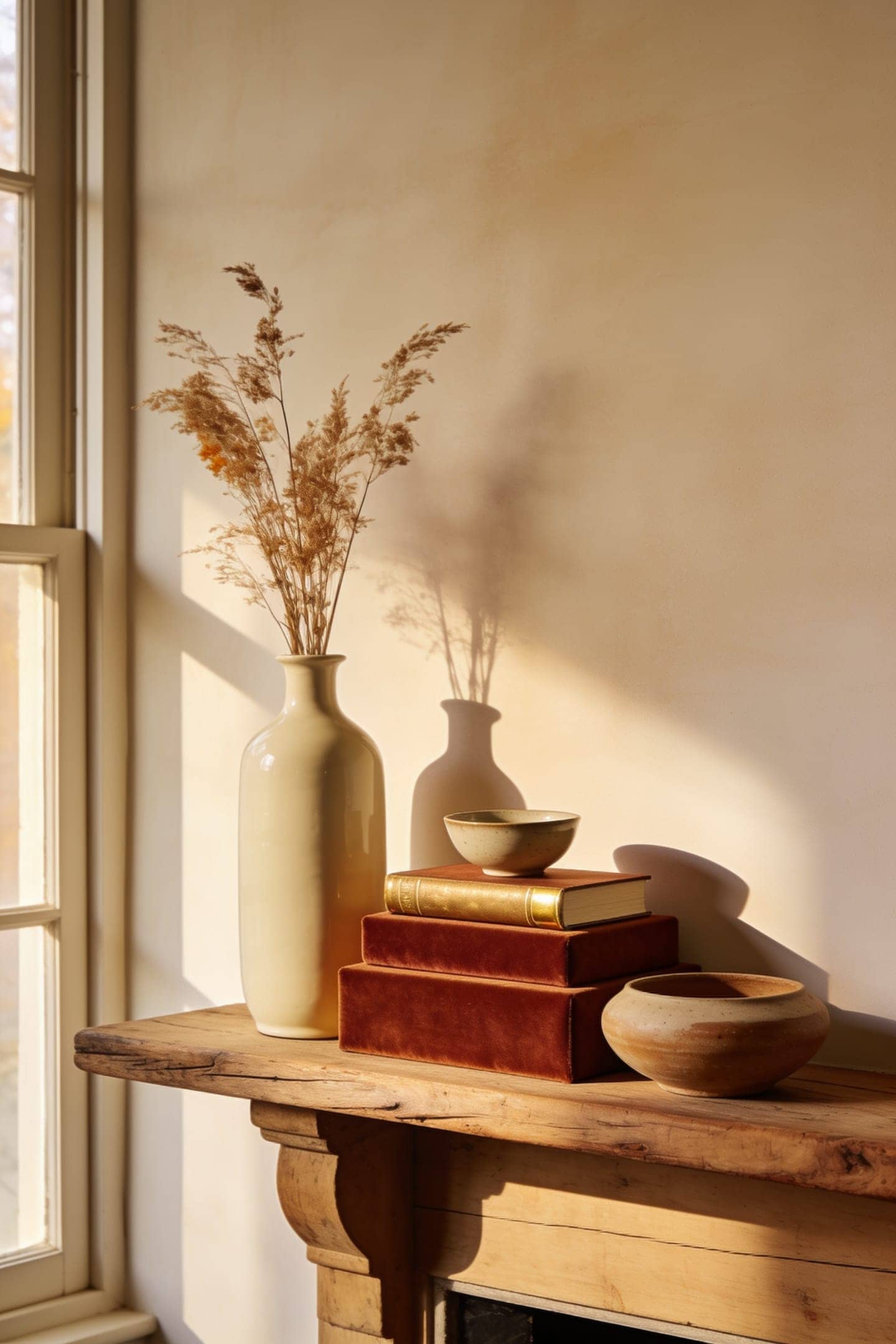
Here's the spine of the whole thing. A mantel doesn't read as a row of objects, it reads as a silhouette against the wall, like a little skyline. So vary the heights on purpose: something tall, something middle, something low and wide. If you squint and see a flat line, nothing you add will fix it. If you see peaks and valleys, you're already done styling and you can stop early.
Weight one side and let the other breathe
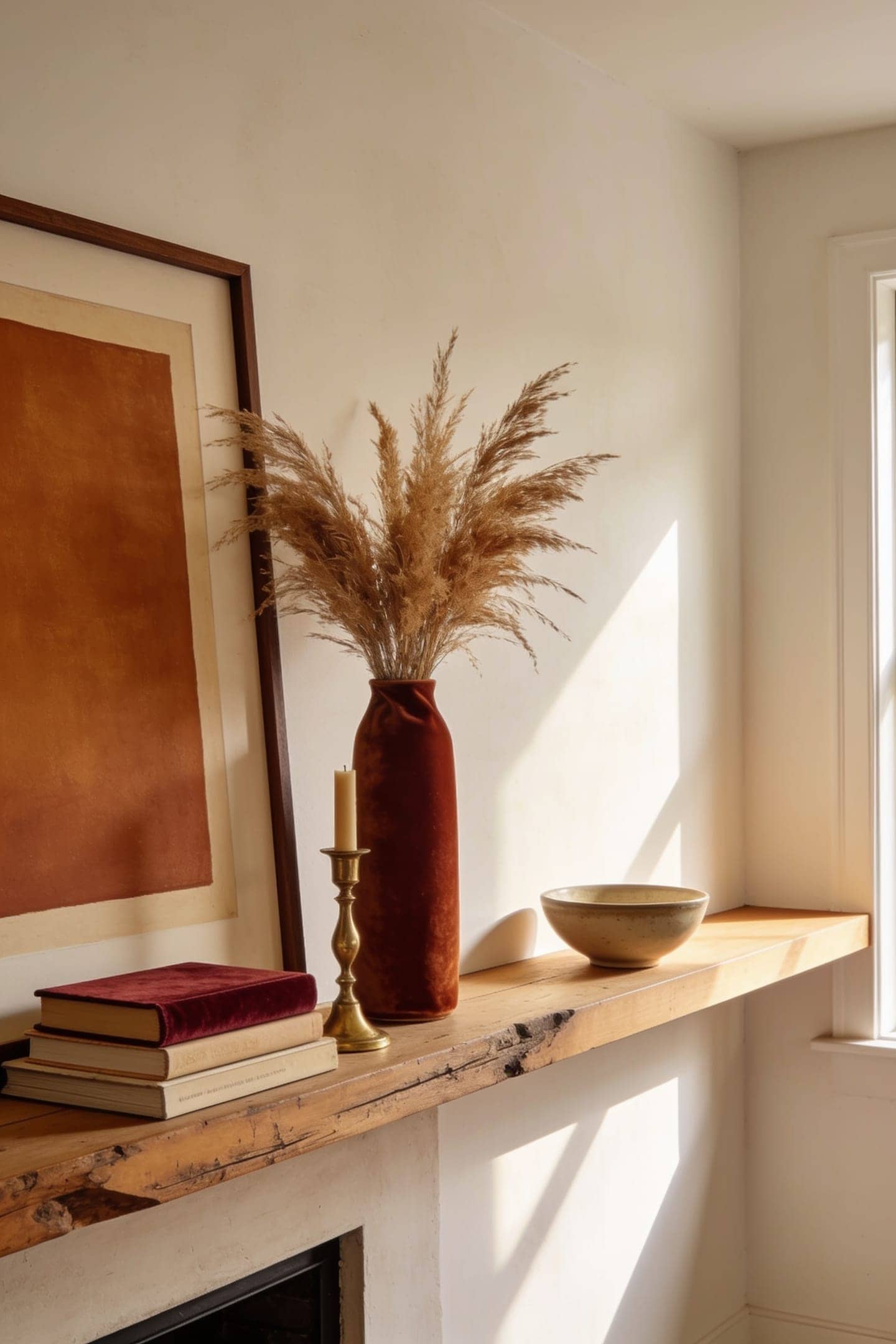
Symmetry is what fireplaces do in hotel lobbies. At home, put your cluster off to one side, tucked in front of the leaning anchor, and give the other end one low, quiet object and some empty shelf. The empty part is not unfinished, it's what makes the styled part look styled. This is also the layout that photographs best, if your mantel ever meets your phone.
Let one good vase carry the cluster
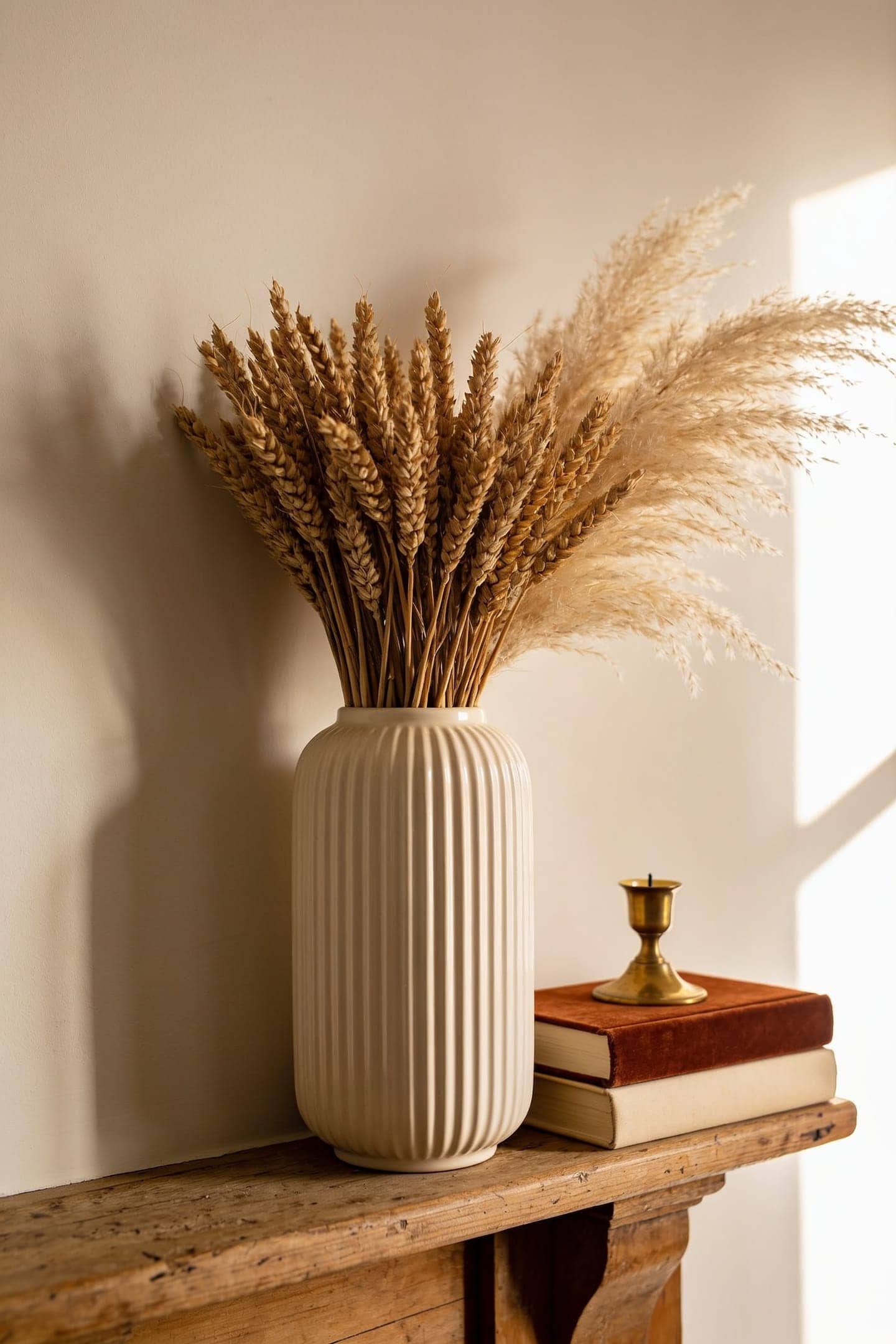
The tall thing in your skyline is almost always a vase, which makes it the one purchase that actually matters here. A matte, ribbed, or stoneware piece reads like studio pottery and carries the whole cluster; a thin shiny one undoes it. This is the exact subject of my vase roundup, so I'll hand you the shortlist instead of a cold search.
The ranked roundupI compared the budget vases that look handmade, not mass-made, and ranked the ten worth buying.
See the roundup: 10 Best Budget Decorative VasesMake it fall with stems, not fake leaves
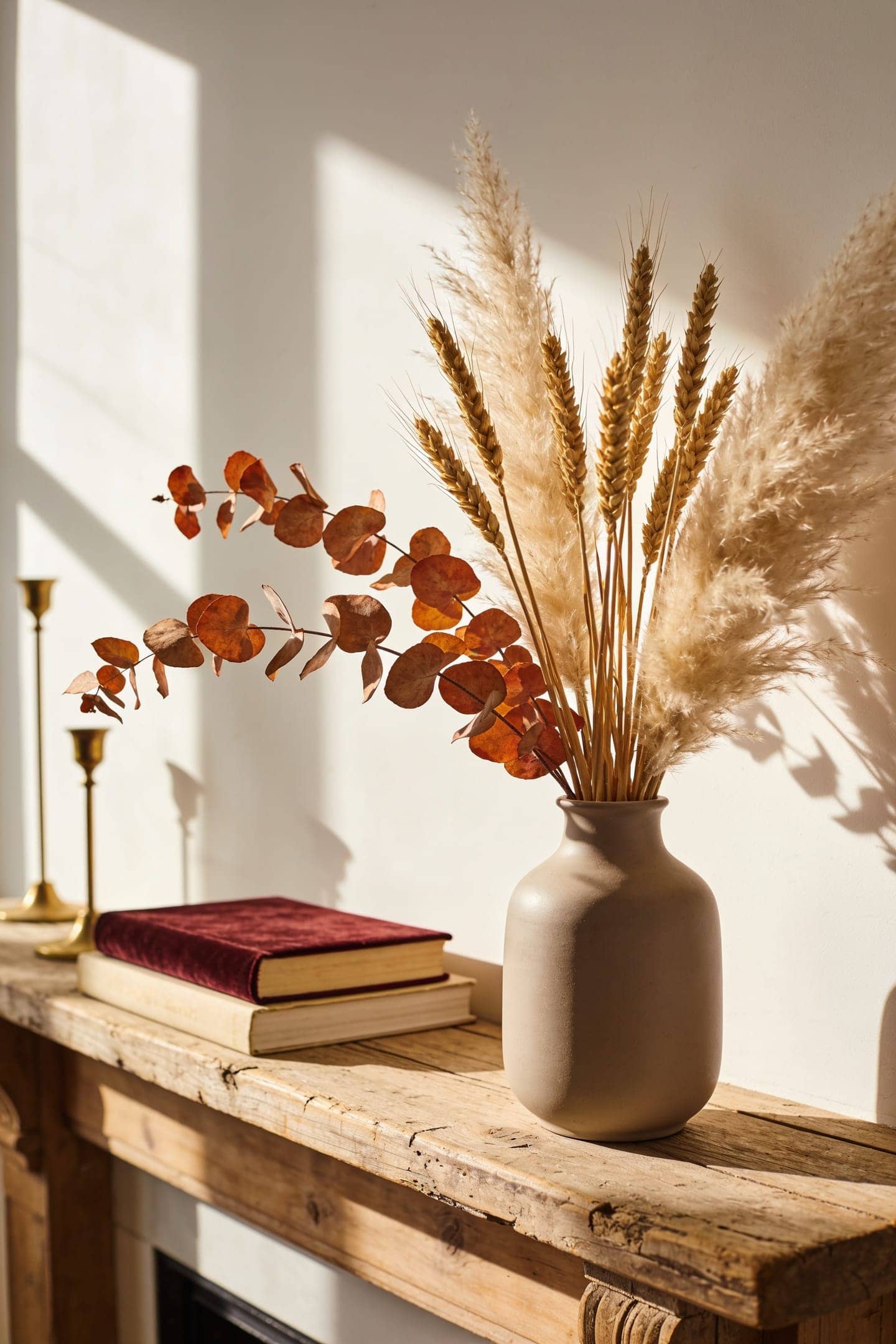
The seasonal part of a fall mantel is mostly what's in the vase. Dried wheat, pampas, eucalyptus, or literal branches cut from outside: they last for months, need no water, and swap out in thirty seconds when the season turns. Skip the plastic maple garlands entirely. Dried anything looks expensive, fake leaves look like a classroom in October.
Drape a garland off-center, like it grew there
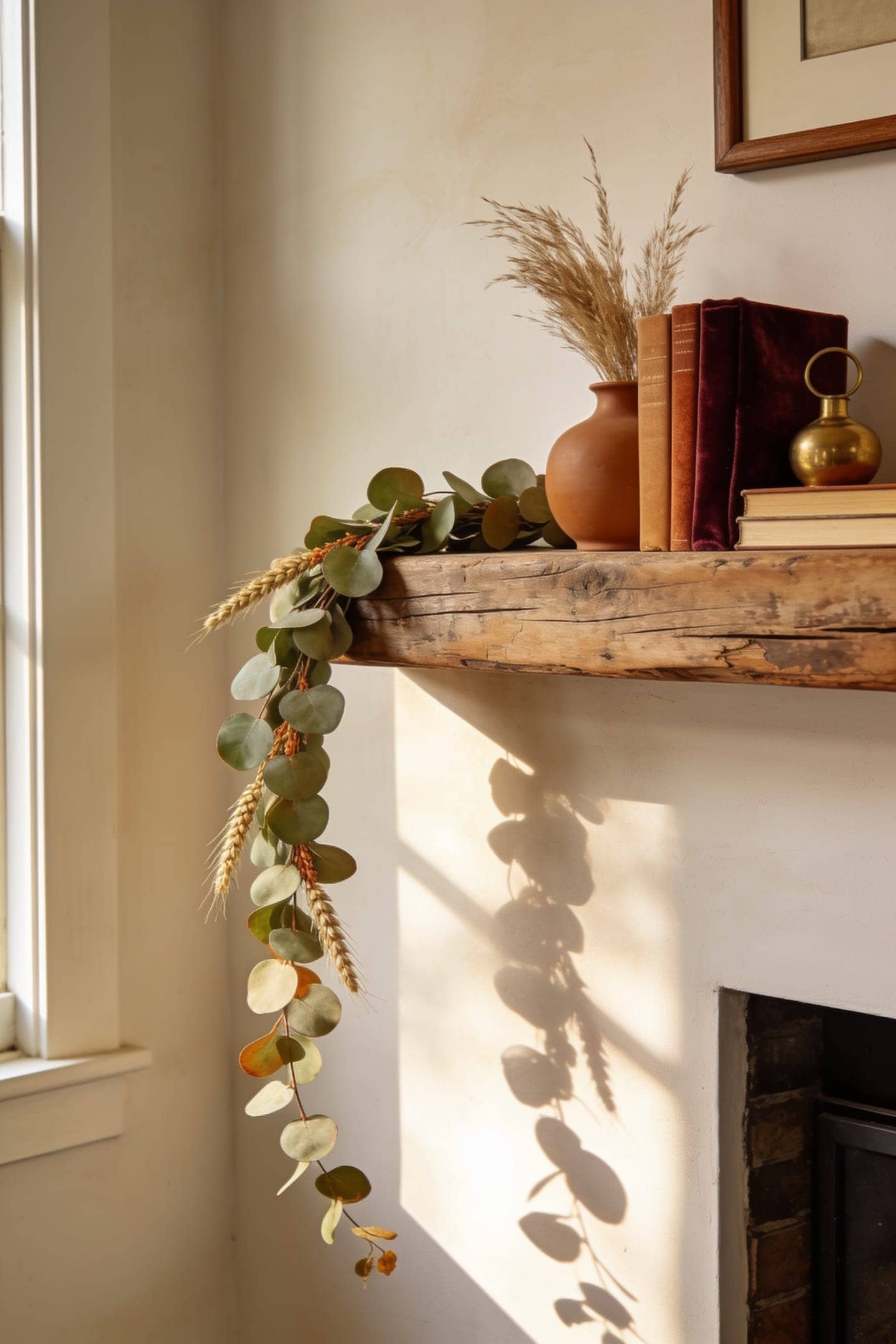
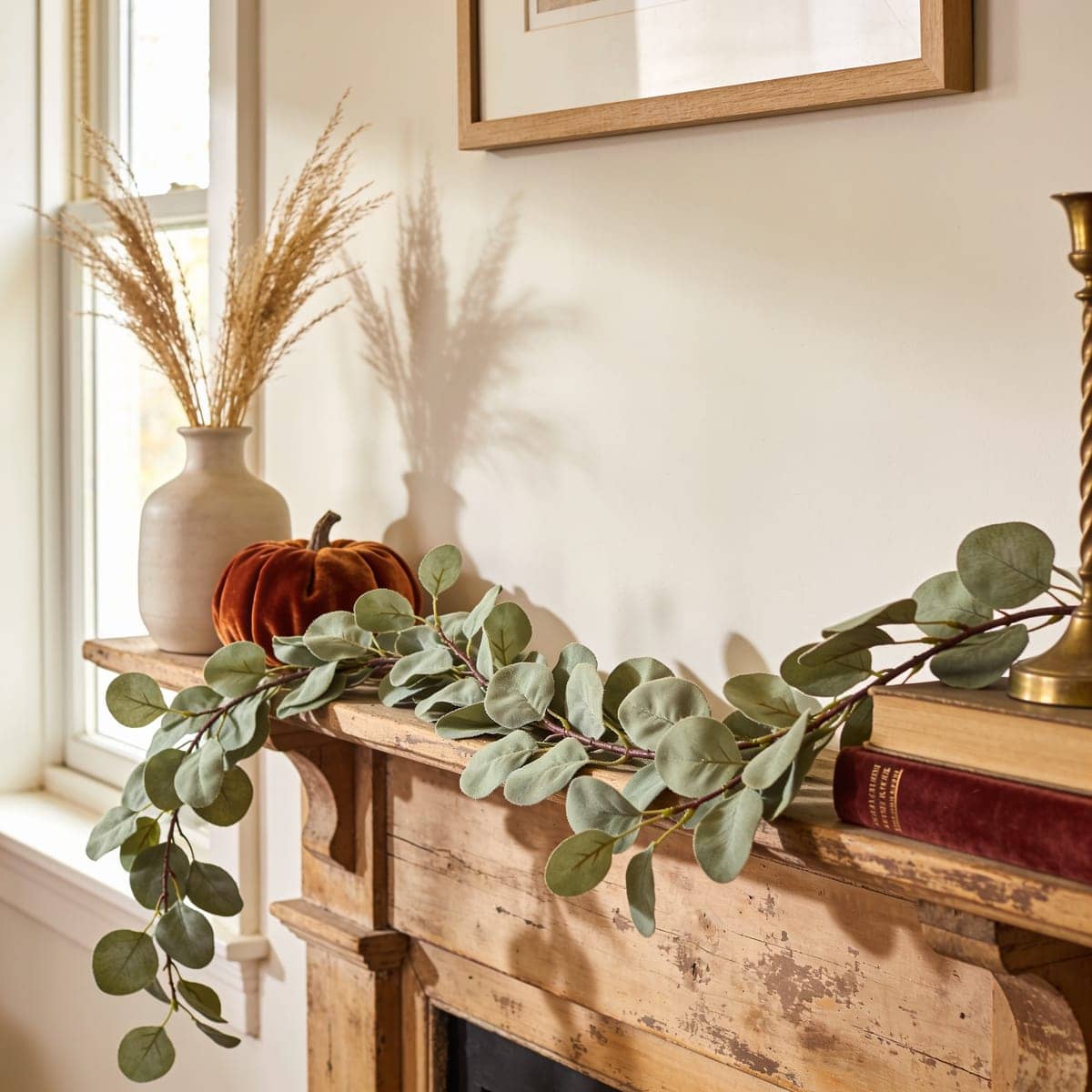
A garland softens all the hard shelf edges, but only if it falls naturally. Run it along one side and let one end spill over the corner, rather than swagging it dead-center like a picture frame. Faux eucalyptus is the one to buy: the color holds year-round, and in fall you just thread a few dried stems through it instead of buying an orange version.
Set the candlelight at two heights
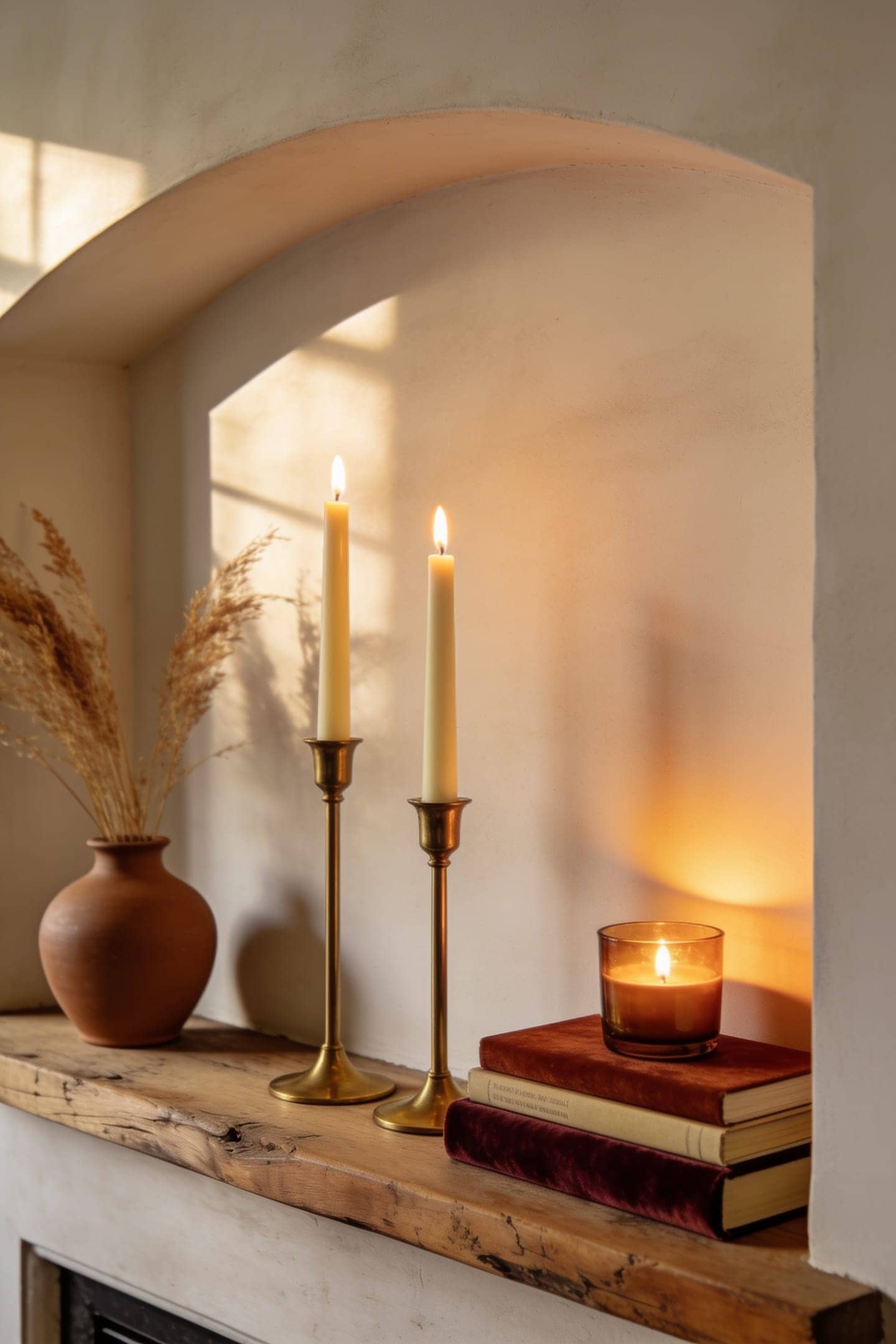
Fire below, small flames above, that's the whole mood of a fall mantel after dark. Do it at two heights: tapers up high in slim brass holders, a low votive or two down in the cluster. Mismatched brass candlesticks, thrifted or new, look collected the way a matched set never will. Unscented matters on a mantel, one scented candle is cozy, three are a headache.
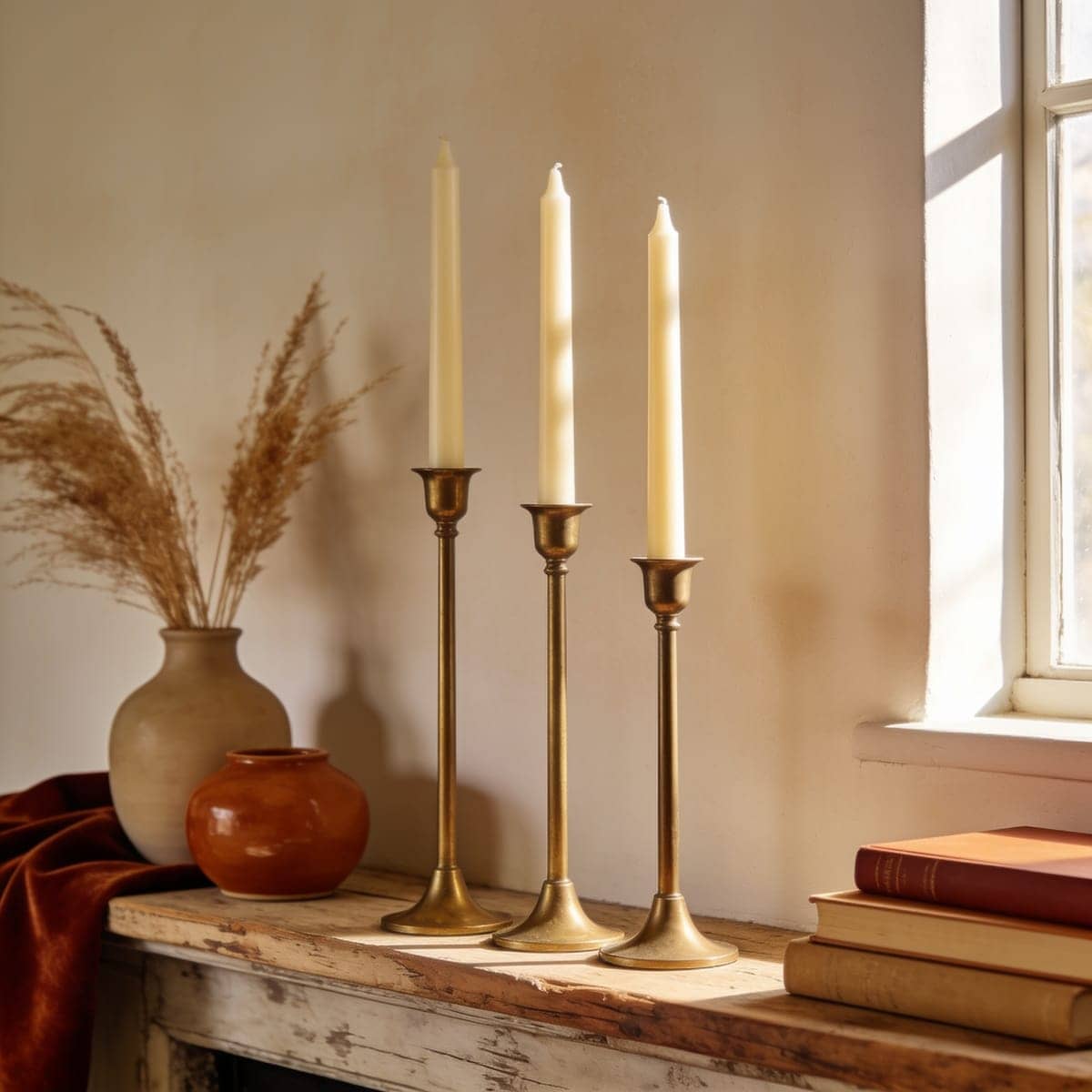
Tuck pumpkins into the cluster, don't line them up
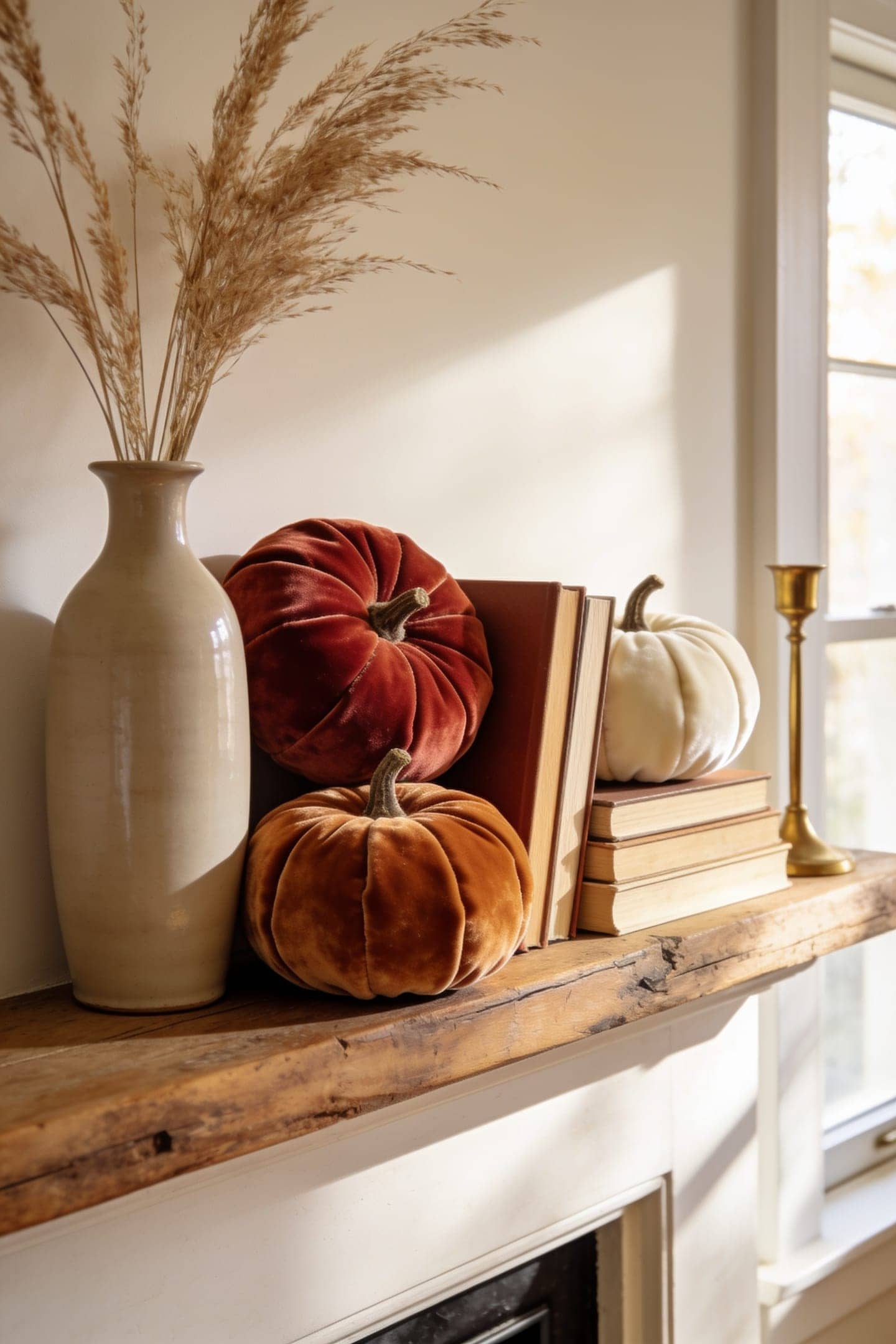
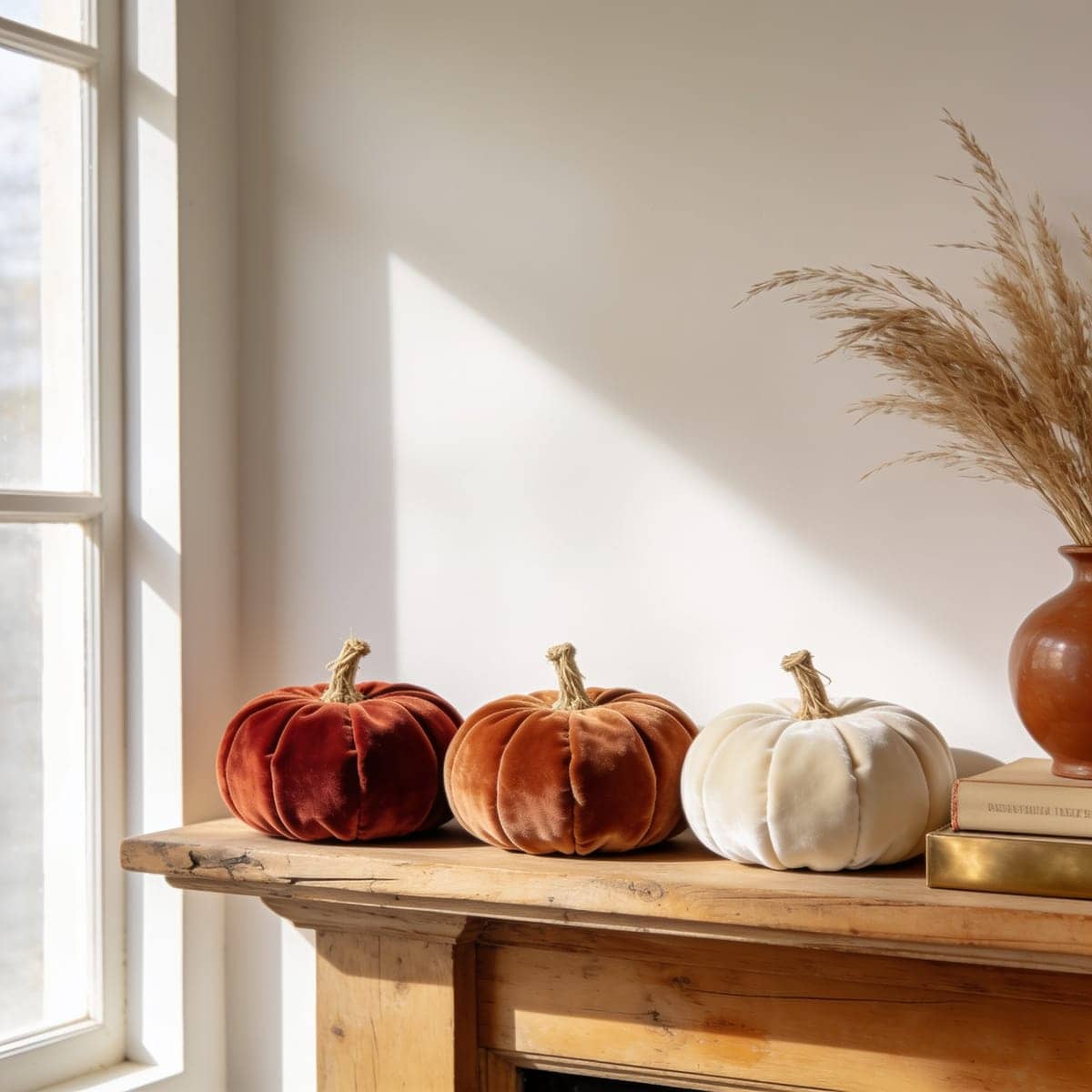
Pumpkins earn their place on a fall mantel when they behave like objects, not like a parade. Two or three in velvet or plain matte ceramic, odd numbers, tucked at the feet of the vase or leaning against a stack of books. The moment they form an evenly spaced row along the front edge, the mantel tips from styled into seasonal display, and there's no coming back from that.
Shop the house before you shop anything
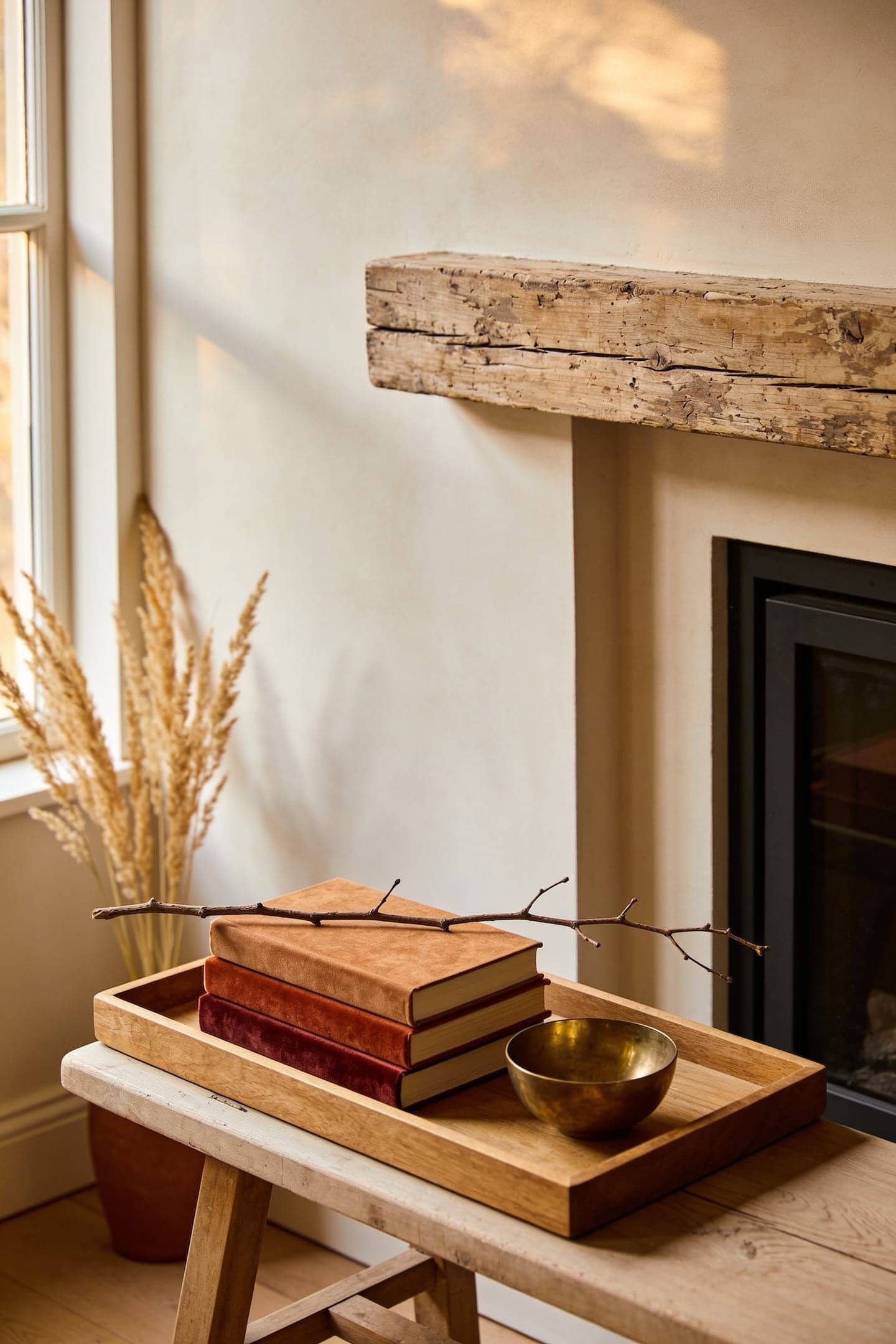
Walk the house with a tray before you spend a dollar. A short stack of hardcovers to boost something small, a brass bowl from the kitchen, a candlestick from the dinner table, one weird branch from the yard. Half of a good mantel is usually already in the house wearing a different job, and things you've owned for years are exactly what makes the shelf look collected instead of bought last Tuesday.
Overlap small frames against the anchor
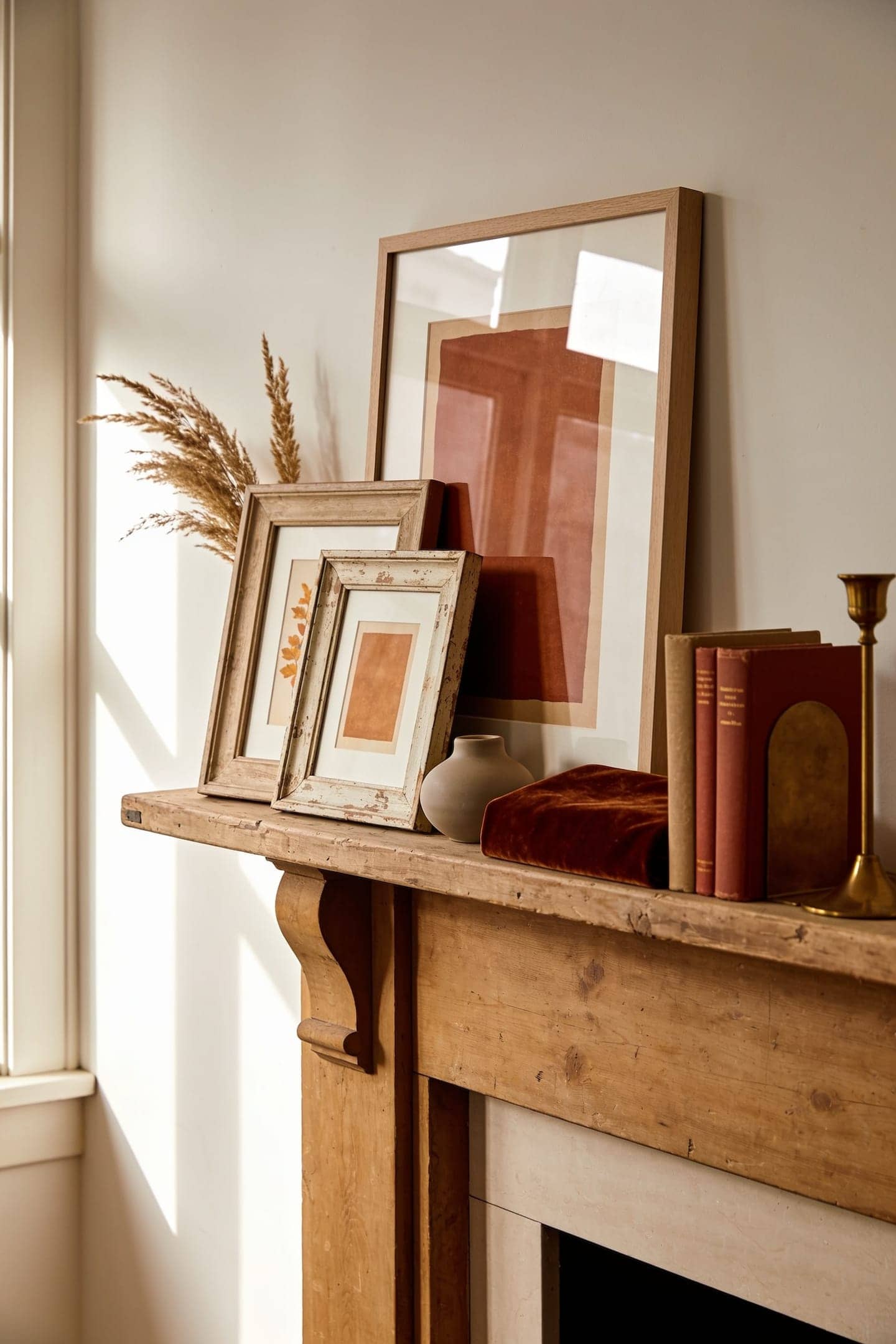
Depth is the difference between a mantel and a windowsill. Lean one or two small frames so they overlap the corner of your big anchor piece, hiding part of it on purpose. It feels wrong the first time, like you're covering the art, and then you step back and the whole shelf suddenly has layers. Thrifted frames are perfect for this, the art inside barely matters at this size.
Let the hearth finish the picture
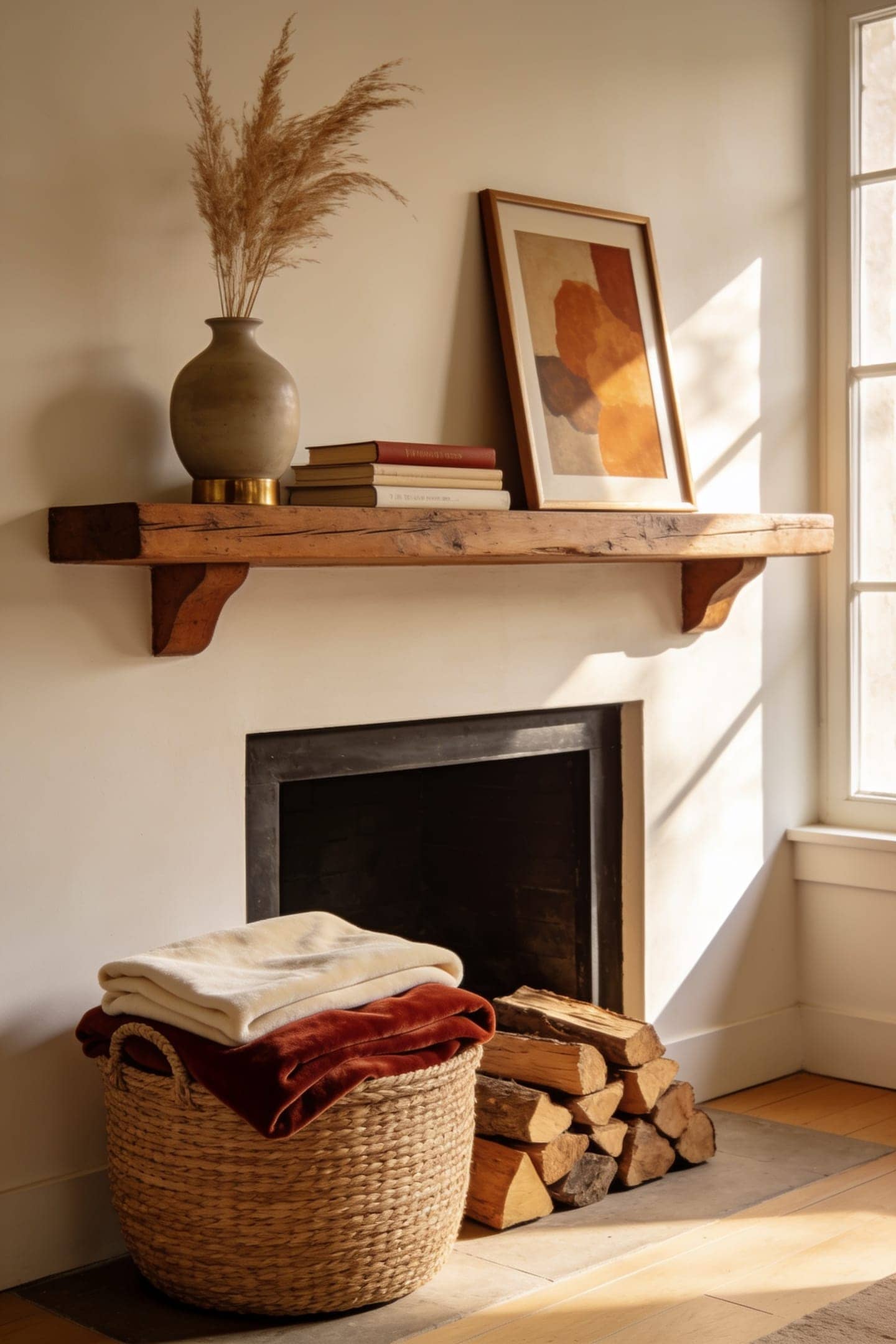
The mantel doesn't stop at the shelf, the eye reads the whole chimney as one picture. Give the hearth below one or two grounded things: a woven basket of throws, a big lantern, a short stack of firewood even if the fireplace hasn't worked since the nineties. It ties the styled shelf to the floor, and it's the cheapest square footage of styling in the house.
Take one thing off before you call it done
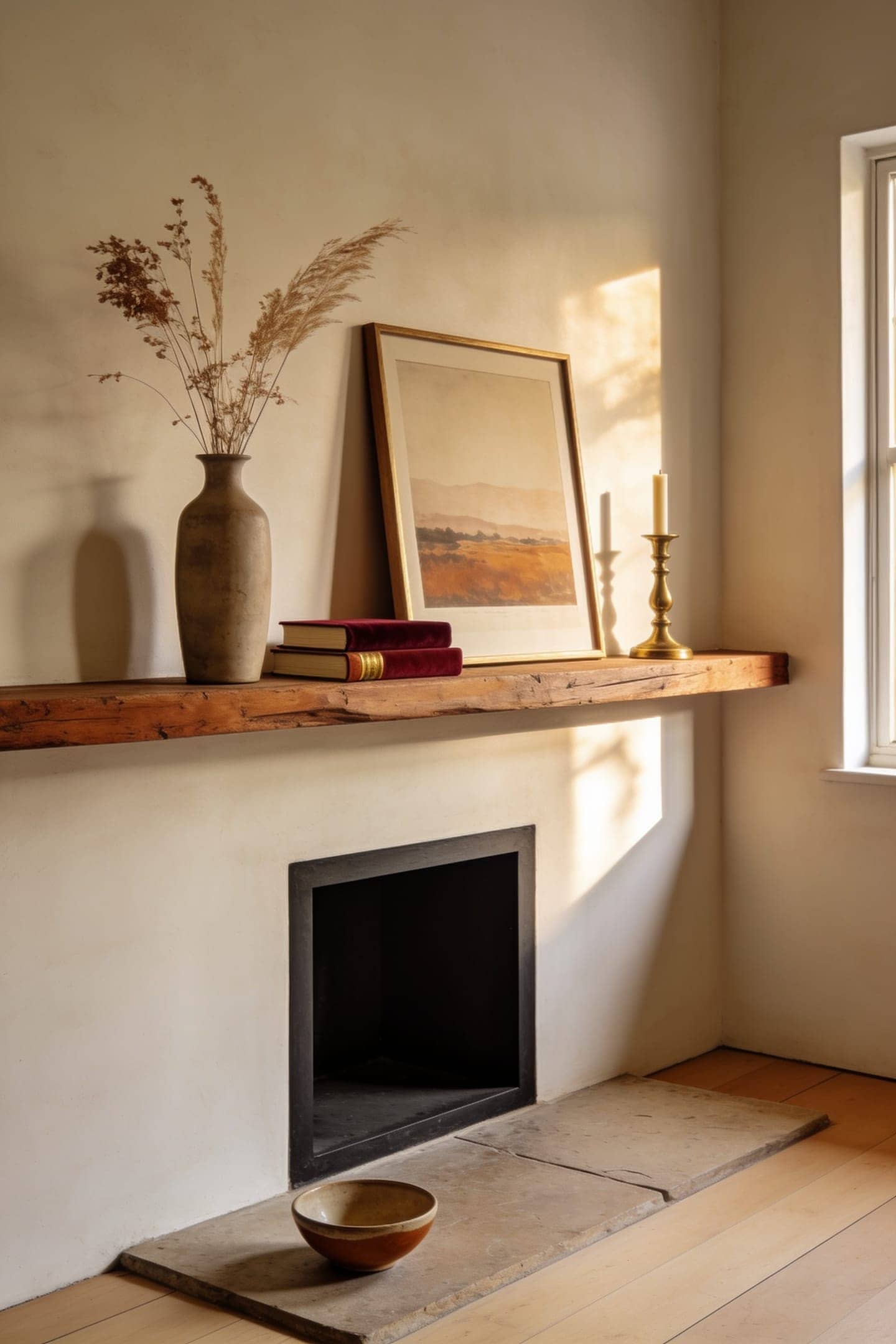
Last move, every time: step back to the doorway, squint, and remove the piece you're least sure about. A mantel needs maybe five to seven things, total, and the difference between charming and cluttered is usually exactly one object. Put it in the January box. When the season turns, you'll swap the stems, pocket the pumpkins, and the bones you built here will still be doing the work.
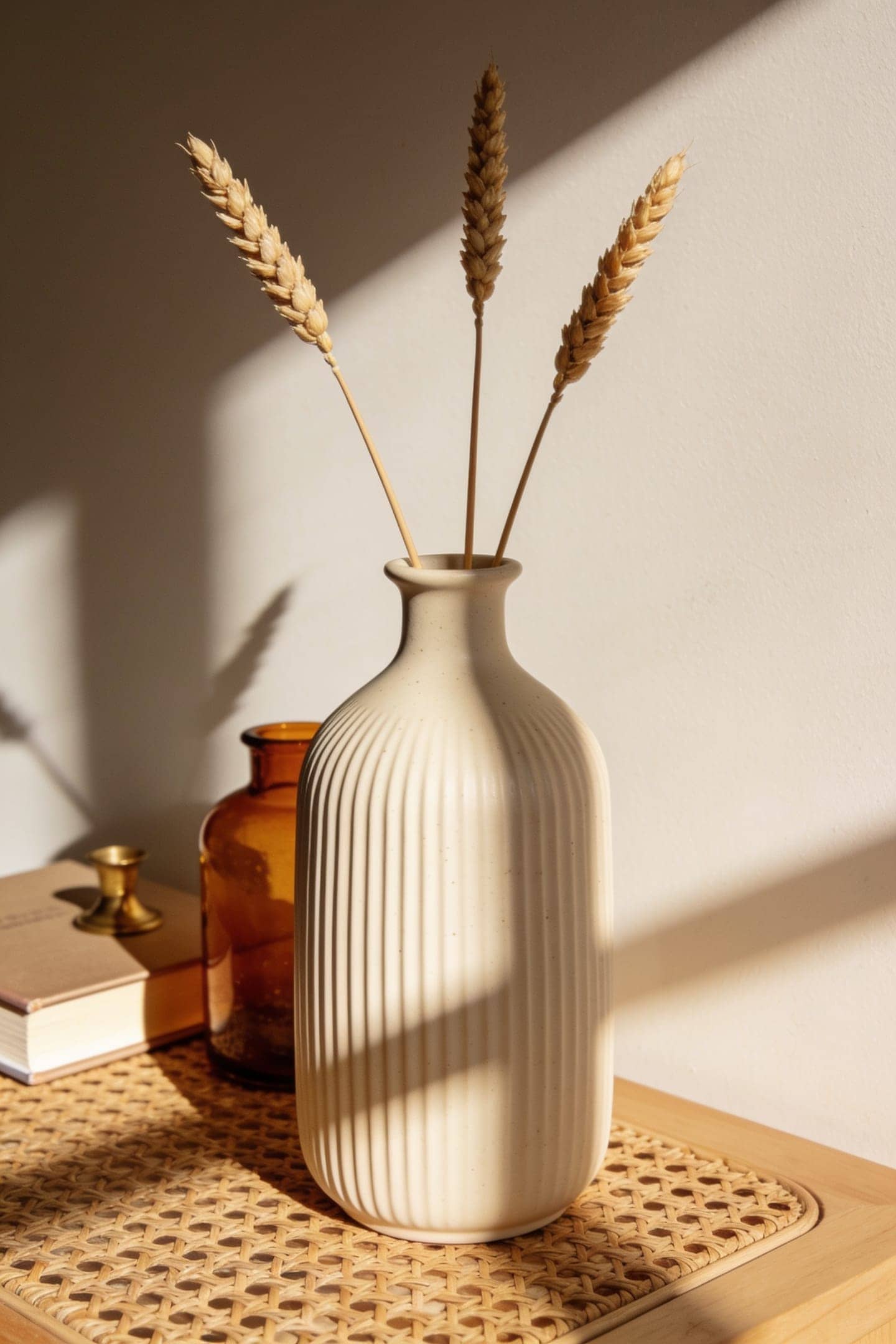
The vase does the heavy lifting, so I ranked them.
One good vessel carries the whole mantel cluster, and the budget ones that look like studio pottery are rarer than they should be. I compared them and kept ten.
See my full list: 10 Best Budget Decorative Vases