Some links here are affiliate links. If you buy through them, I may earn a small commission at no extra cost to you, and I only point to things I'd buy myself.
Decide what the shelf is for before you drill
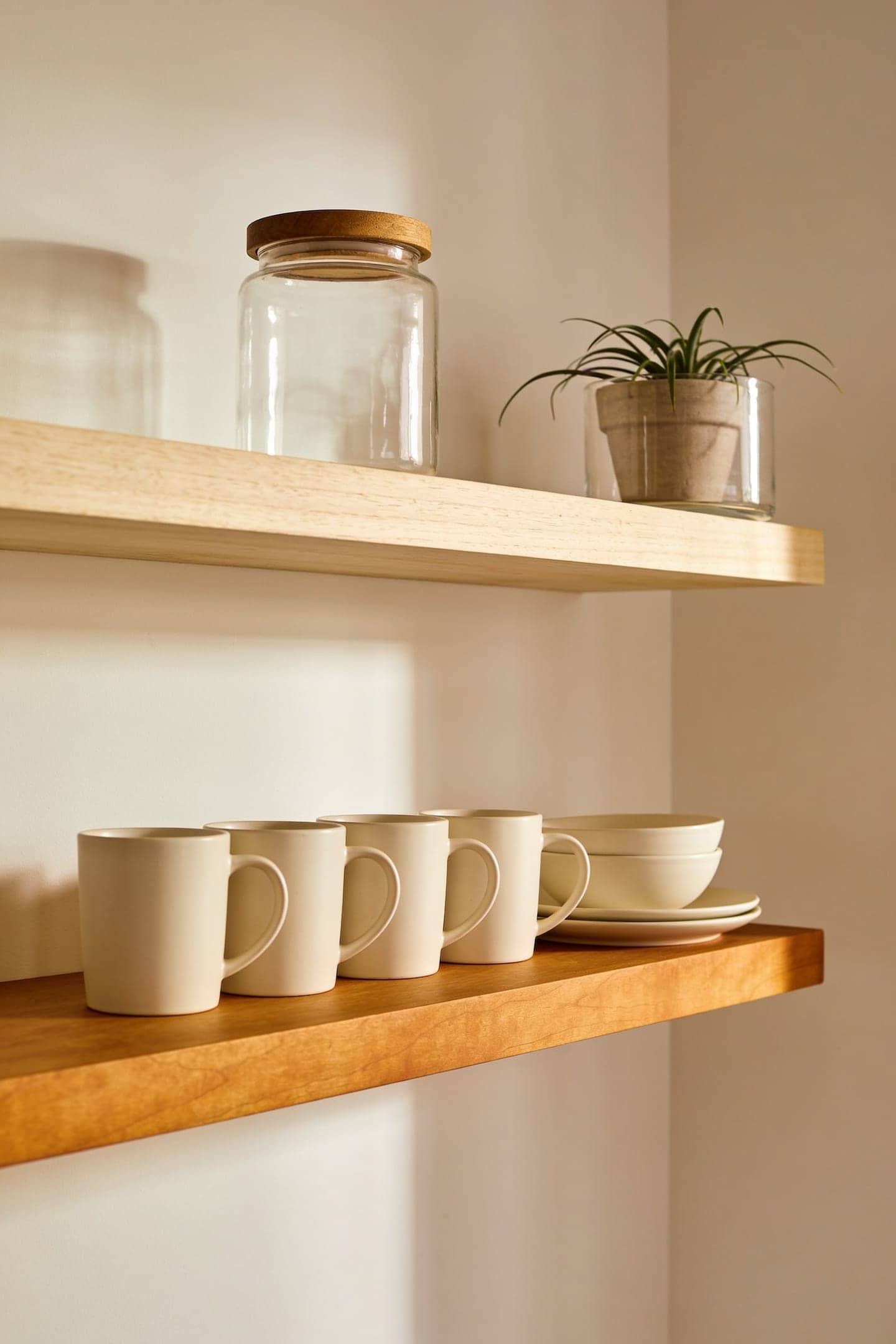
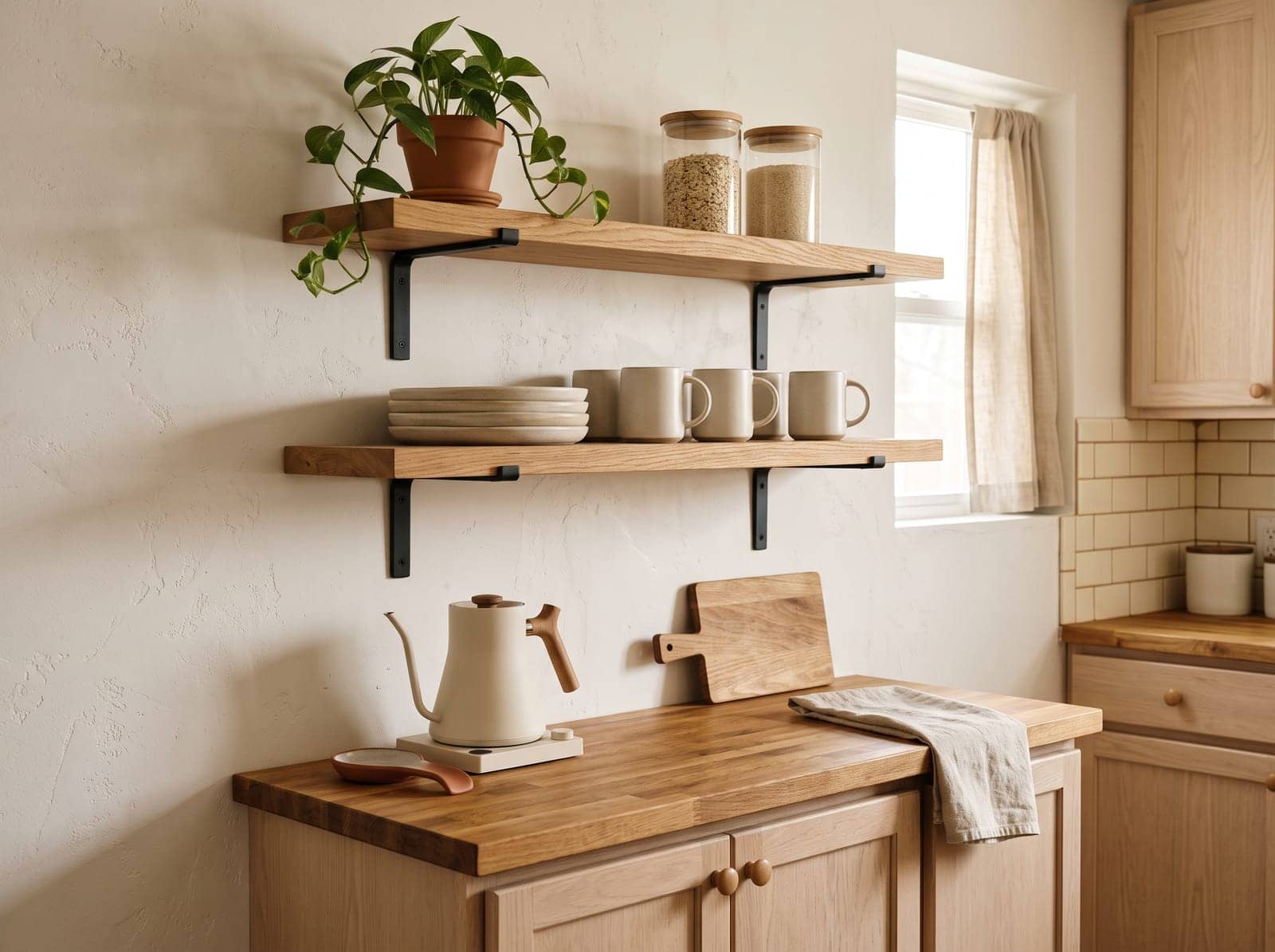
This is the whole article in one line. A working shelf holds what you reach for daily: mugs, bowls, the olive oil. A display shelf holds four things and a lot of air. When you try to make one shelf be both, you get a styled arrangement with a cereal box shoved in beside it, and that's what reads as clutter. Two shelves? Bottom one works, top one shows off. One shelf? Make it working, and style the ends.
Don't hang it over the stove
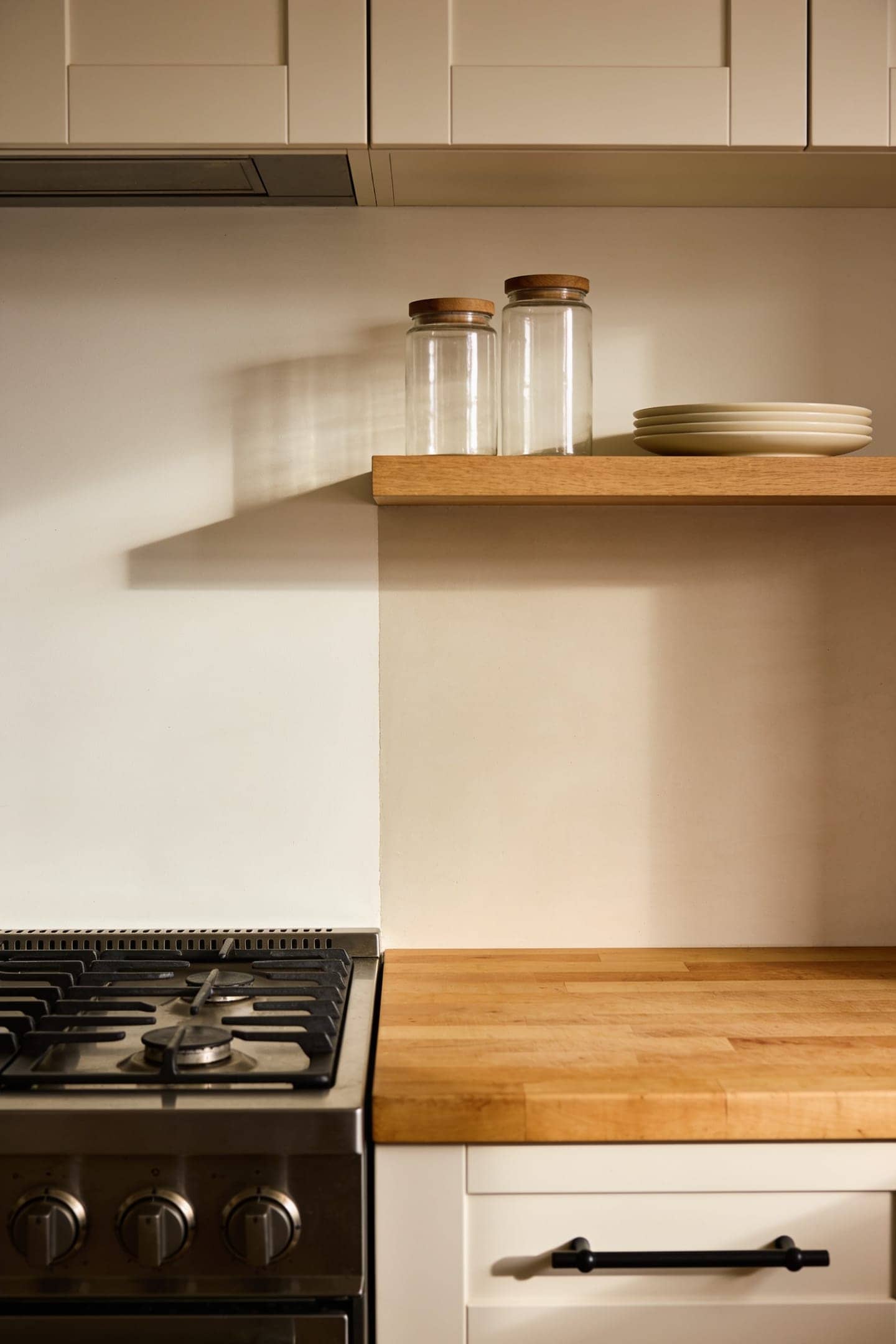
Every pretty photo puts a shelf above the range and every person who's actually lived with one regrets it. Cooking grease drifts up and lands on anything within a few feet, and it doesn't wipe off ceramic the way it wipes off a cabinet door. Give the stove a couple of feet of clearance and put the shelves next to it, or over the sink, or on the blank wall the cabinets never reached. Coffee corner is the best spot in most rentals.
One short run beats a whole wall of shelves
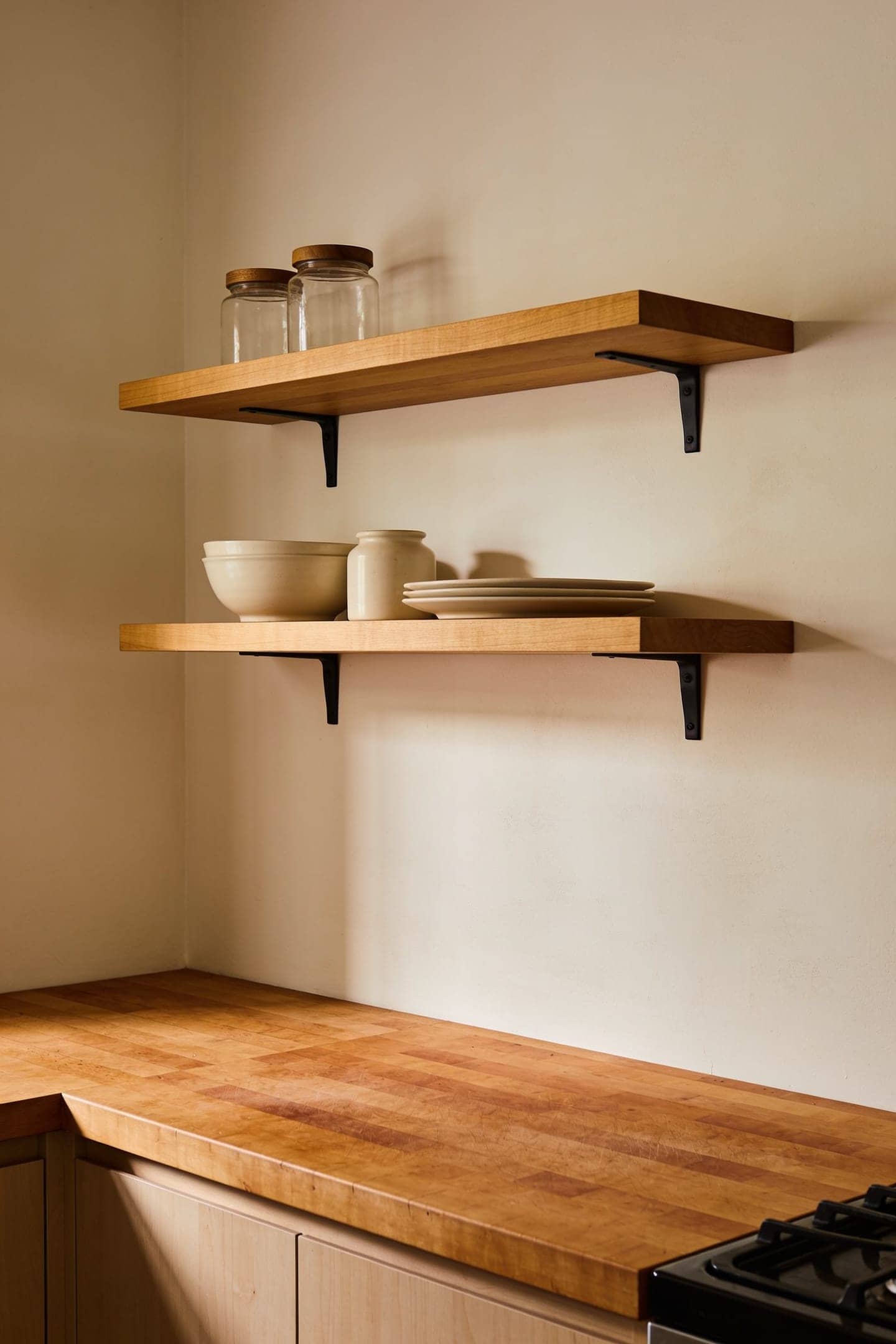
Ripping out upper cabinets is a homeowner project, and stacking five shelves up a wall to imitate it just gives you five surfaces to keep tidy. Start with a pair, three feet wide, over one stretch of counter. It costs under fifty dollars, it makes four holes instead of twenty, and honestly it's usually enough. You can add a third later. Nobody ever wishes they'd made more holes in a wall they're renting.
Get the two heights right and the rest is easy
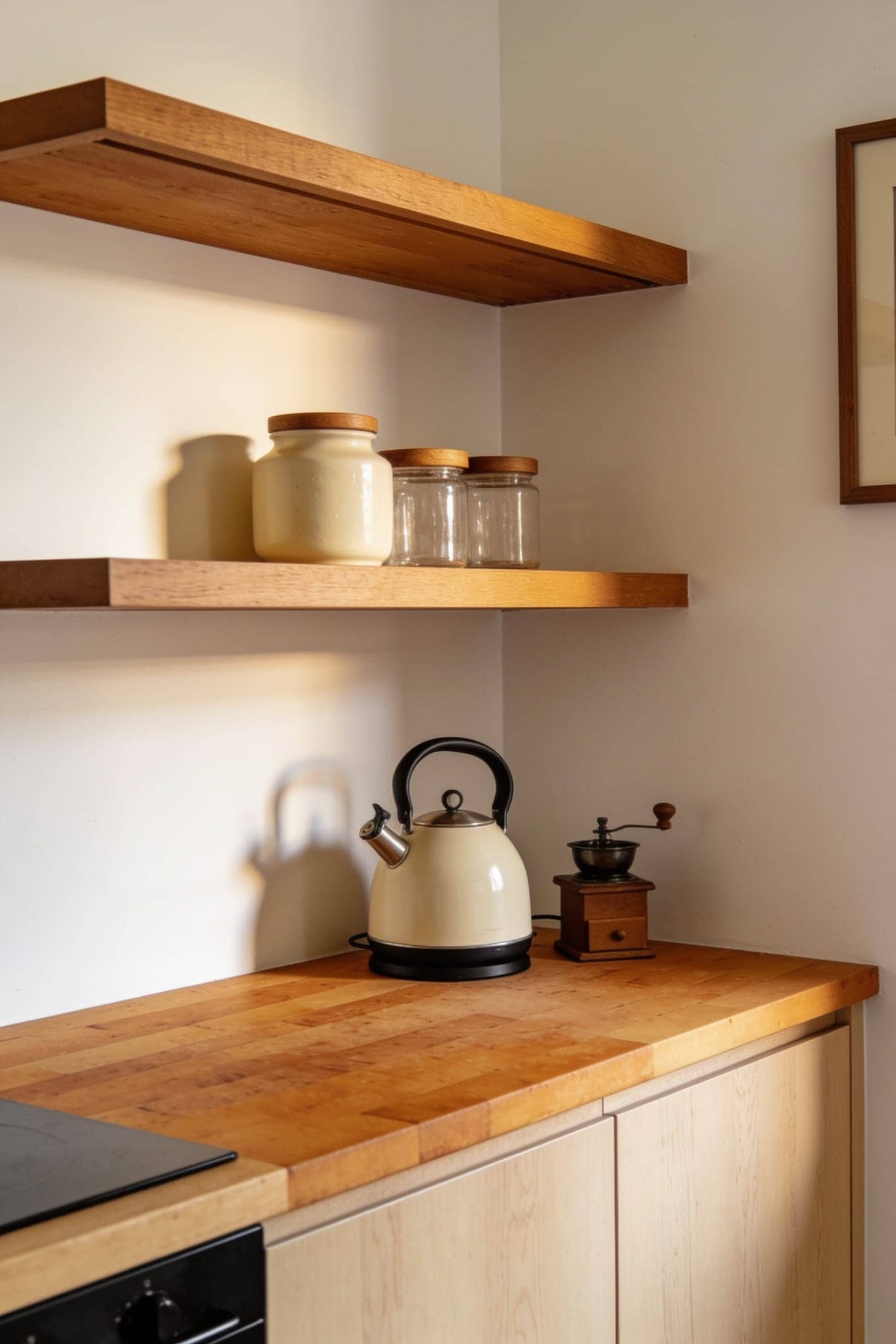
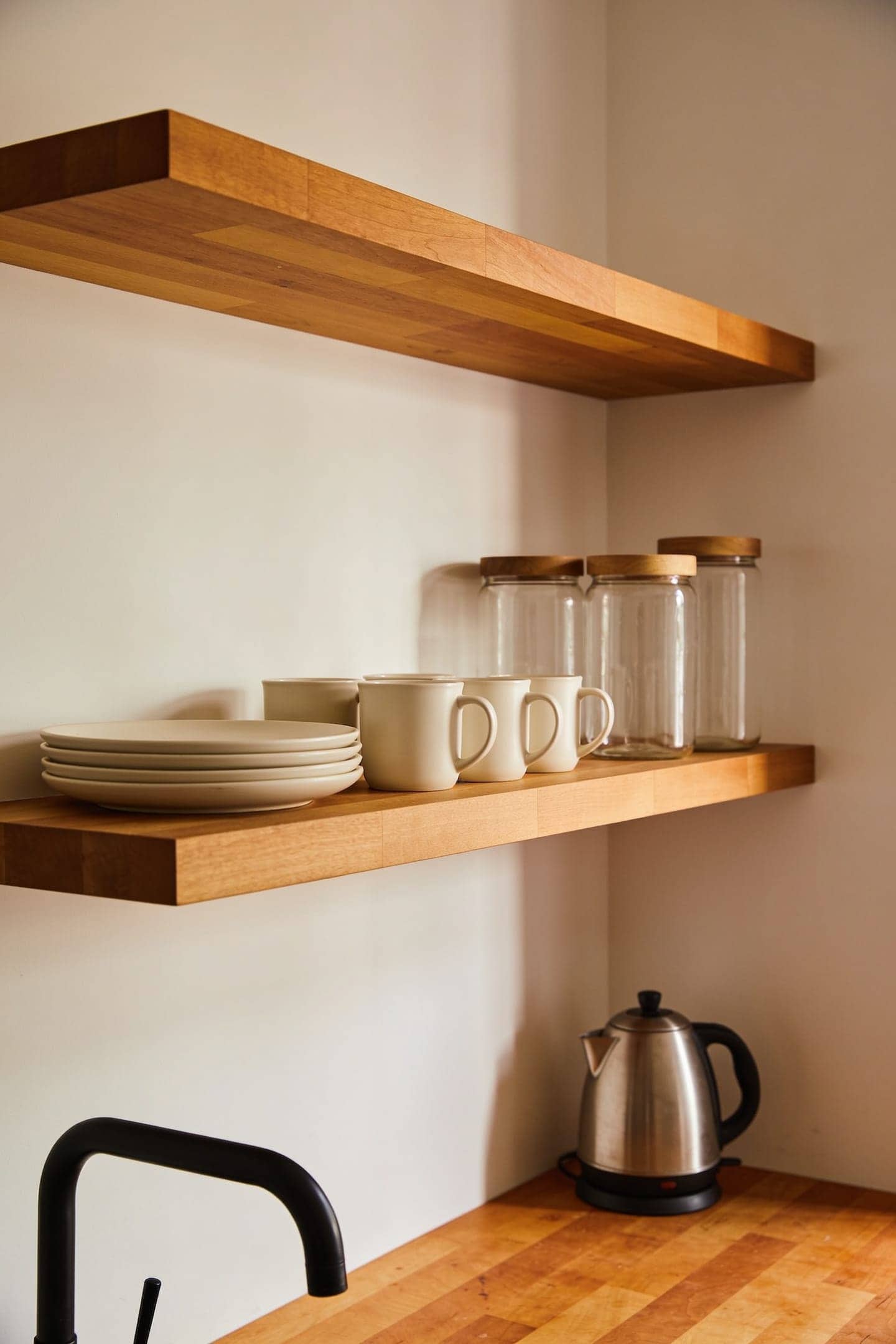
Numbers, because guessing here is how shelves end up unusable. Leave about 18 inches between the counter and the first shelf, so the kettle and the coffee grinder still fit under it. Then 12 to 14 inches between the shelves themselves, which clears a tall bottle and a stacked set of bowls. Any tighter and you can't get your hand in. Any looser and the top shelf climbs out of reach, where it collects dust and nothing else.
Buy the shelf for the wall you actually have
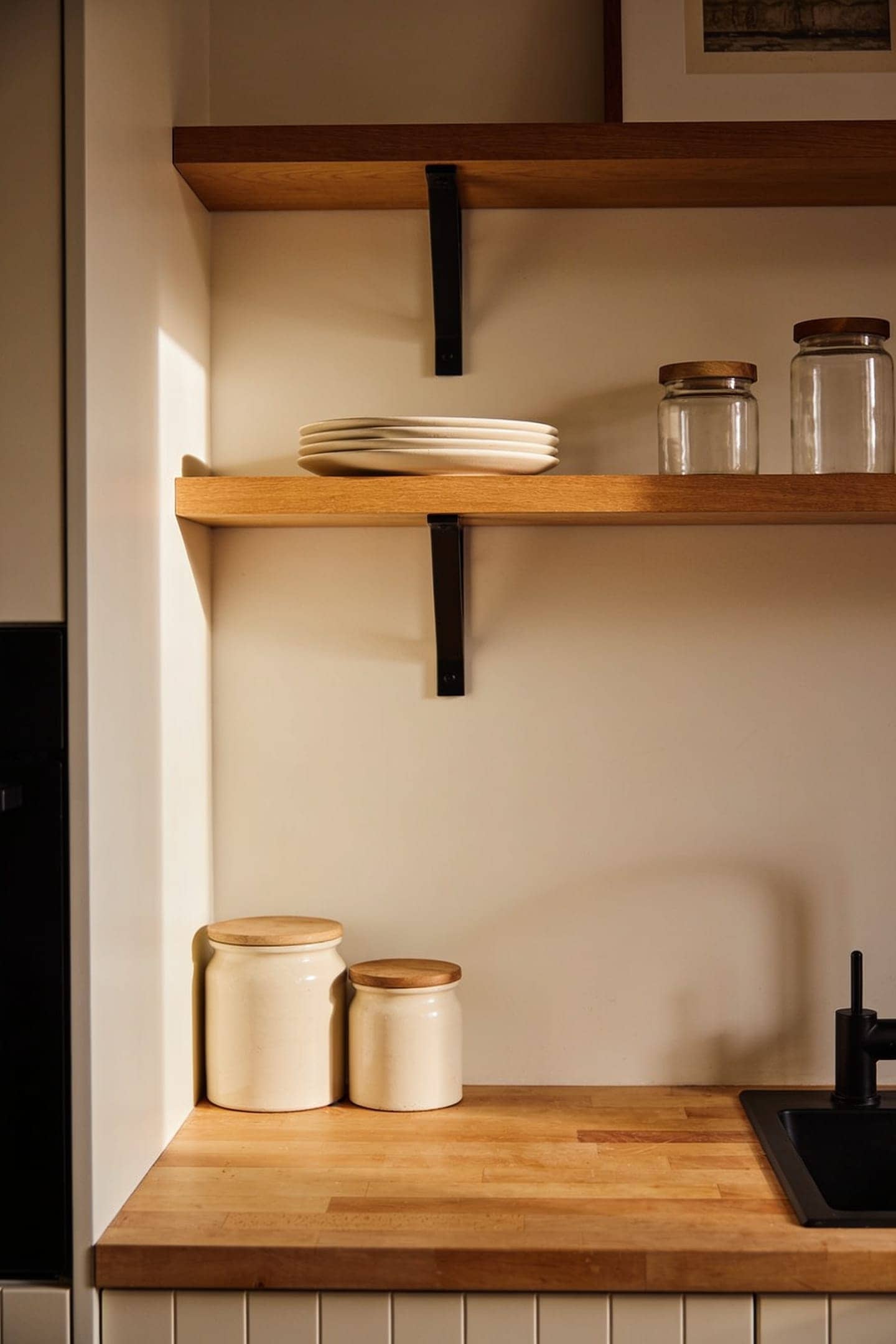
Kitchen shelves carry real weight, a stack of plates is heavier than it looks, so the shelf you buy has to match how it's going up. Into studs, almost anything works. Into plain drywall, you want proper toggle anchors and a bracket that spreads the load, not a floating shelf with two thin rods. Depth matters too: 6 to 8 inches holds plates and mugs without eating the counter, and 10 inches starts to feel like a cabinet again.
The ranked roundupThe shelf itself is where budgets go sideways, so I compared the cheap floating and bracket shelves and kept the ones that hold real dishes without sagging.
See the roundup: 10 Best Budget Floating ShelvesNo drilling allowed? There's still a route
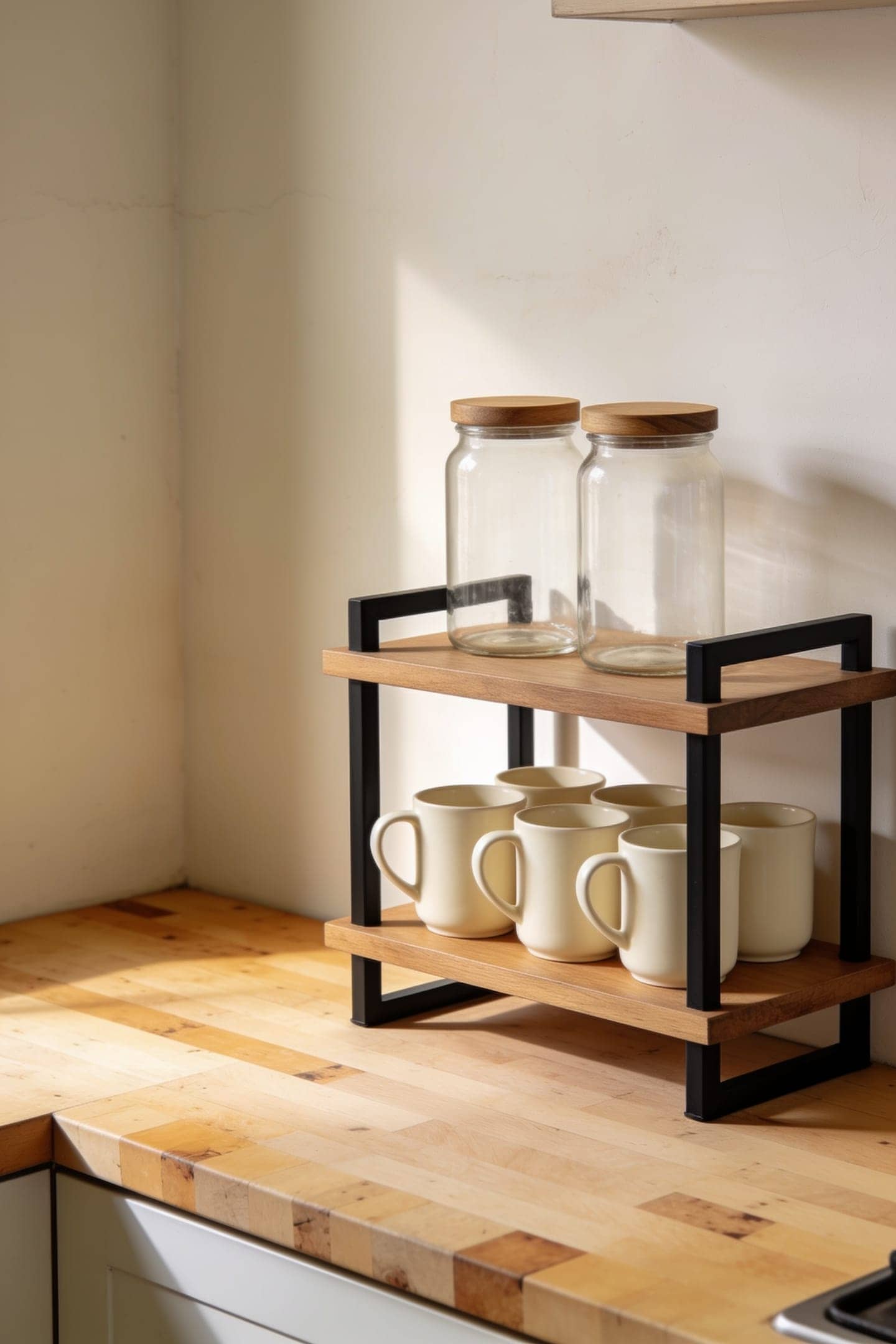
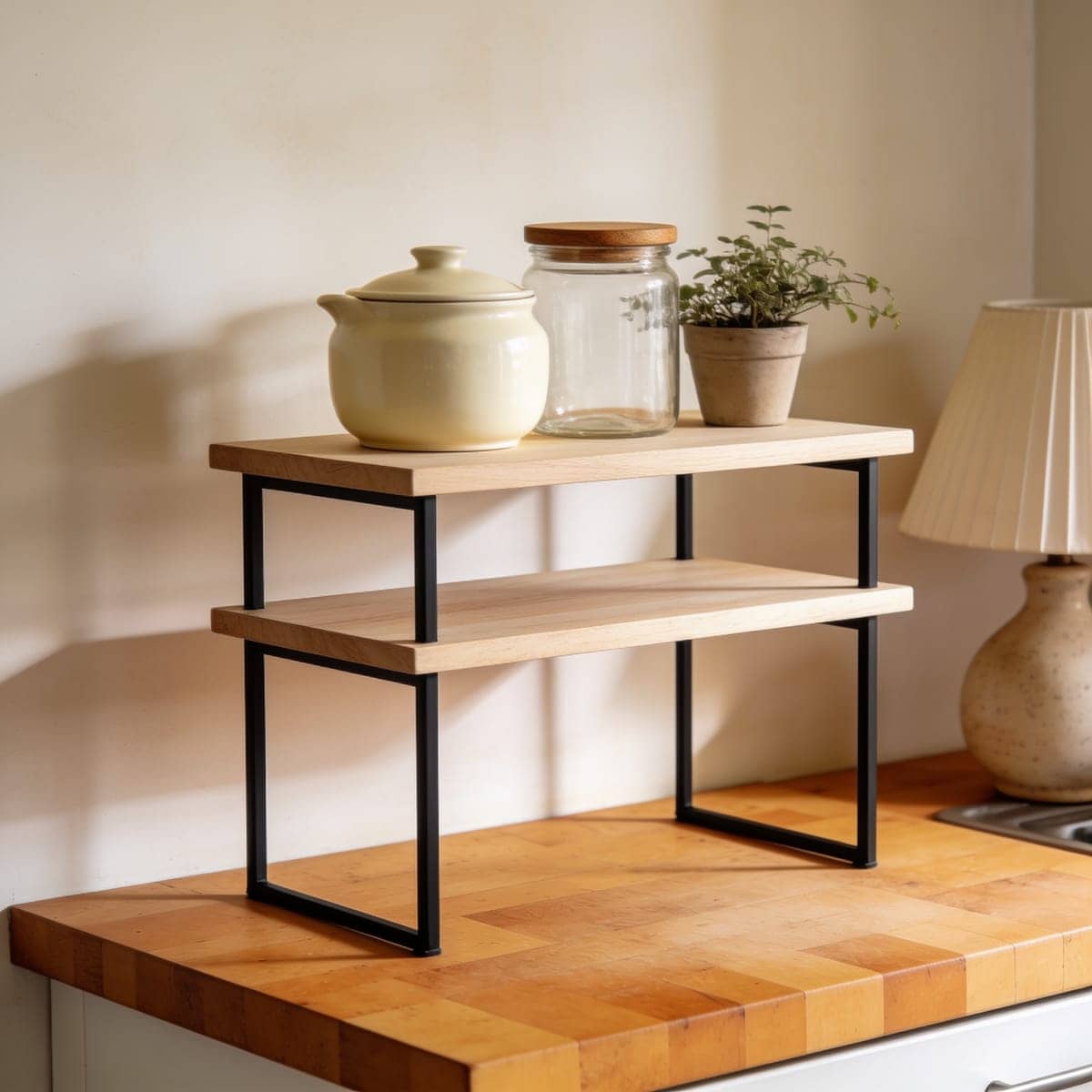
Some leases are strict, some walls are tile, and some of us just don't want the deposit conversation. A freestanding two-tier shelf sits on the counter and gives you the same stacked look for about thirty bucks and zero holes. It's not quite as airy, and it does borrow counter space back, so keep it in a corner rather than the middle of your prep zone. Over-the-sink racks and cabinet-top risers do a similar job in a different spot.
Only the stuff you touch every week gets to live out there
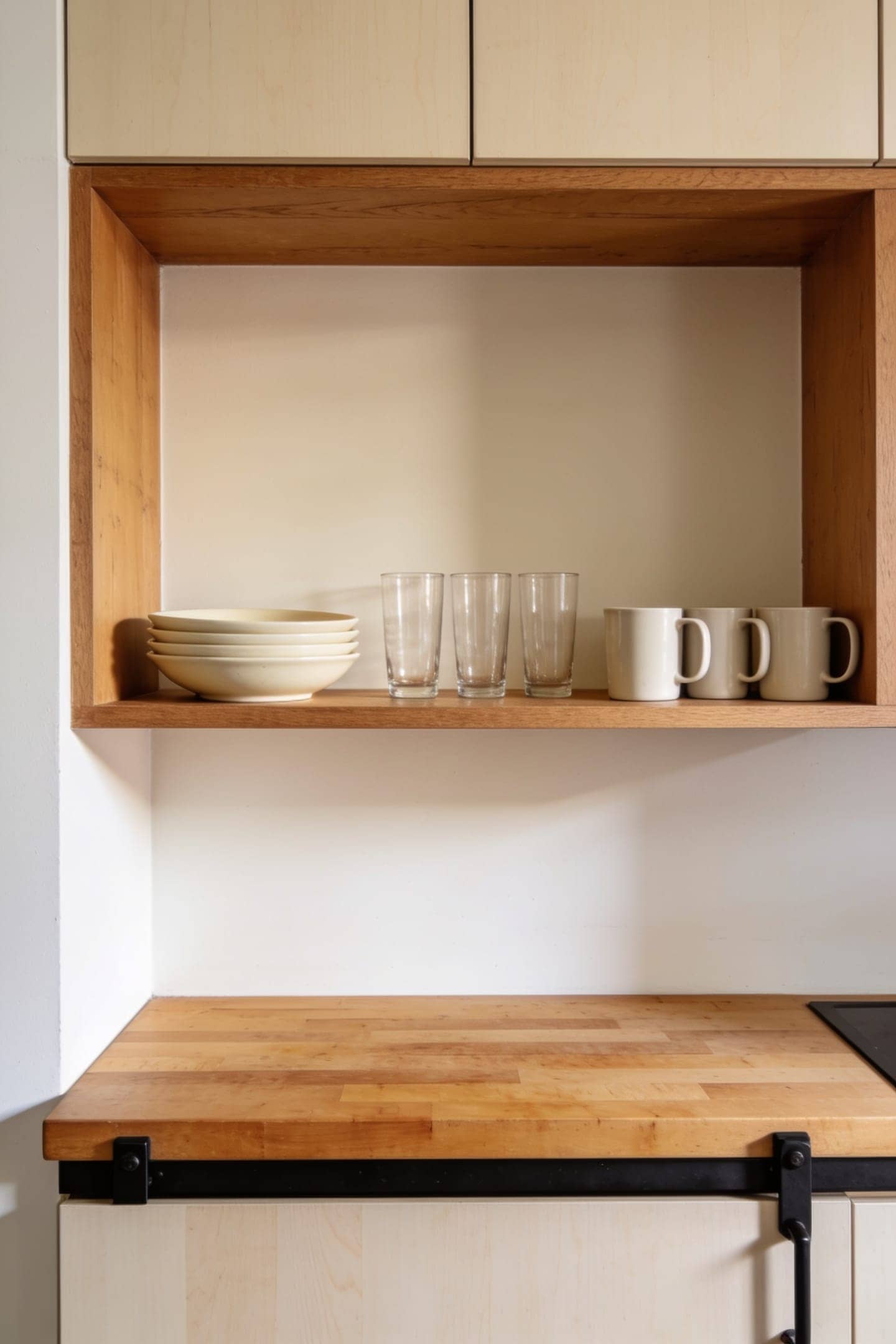
Open shelving has one non-negotiable rule and it's not aesthetic. Anything you don't use weekly will collect a fine greasy film of kitchen dust, and you will end up washing decorative bowls you never ate from. So the wedding china stays in the cabinet. What goes out is the everyday: the four mugs, the cereal bowls, the drinking glasses. Constant use is what keeps them clean, which is a very convenient excuse.
Let one repeated thing do the styling for you
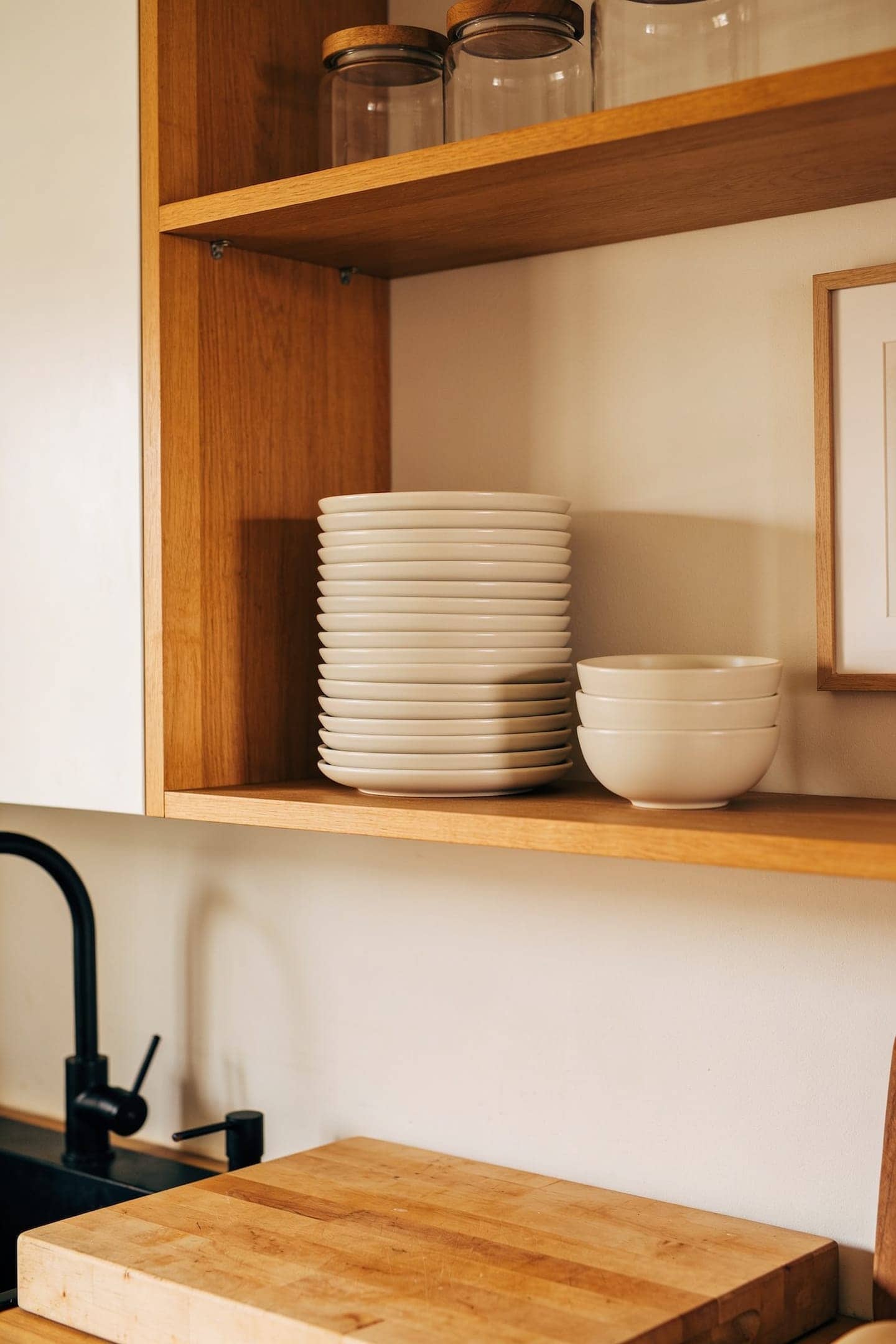
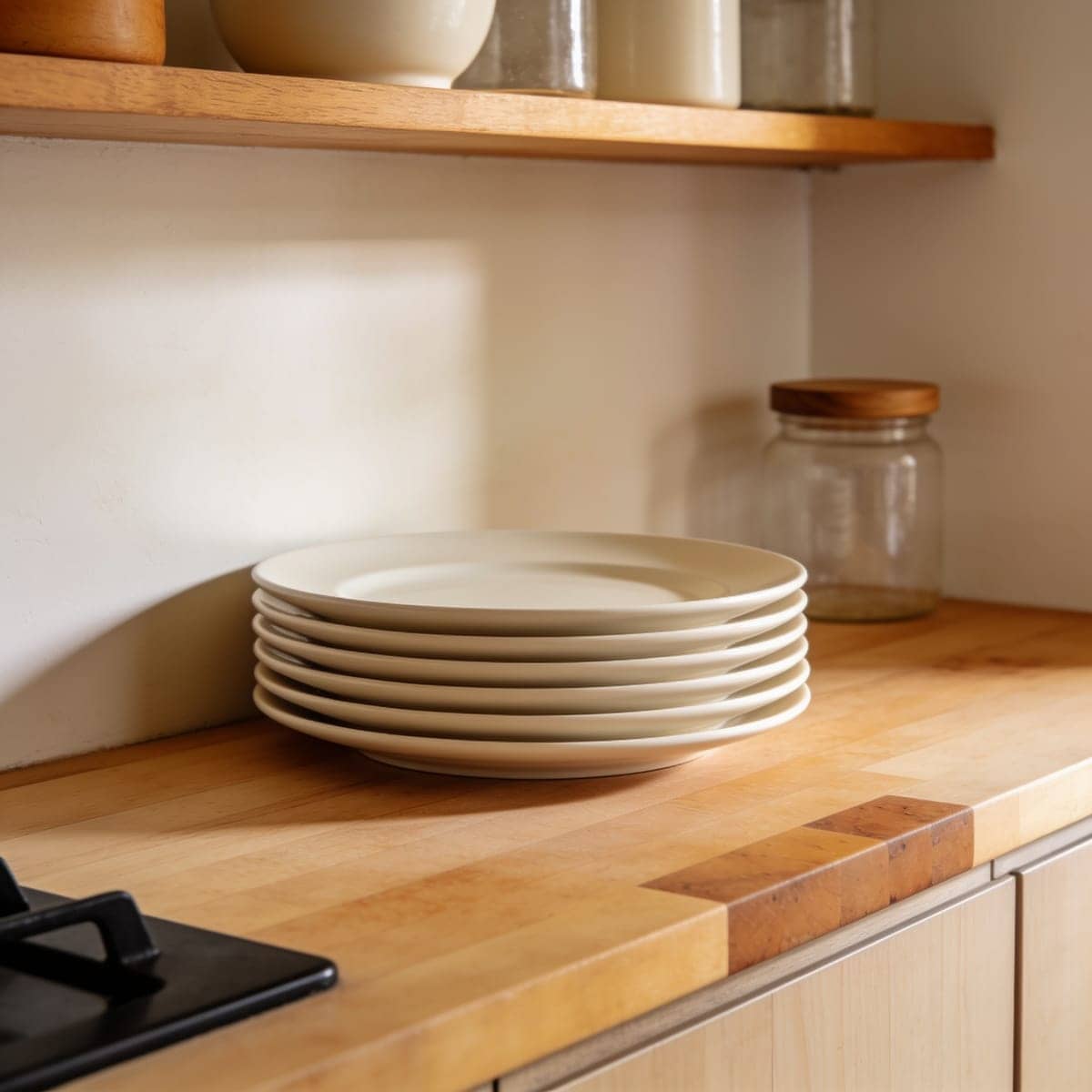
This is the cheat that makes open shelves look designed instead of exposed. A stack of eight matching plates reads as one calm block. Eight mismatched ones read as a cupboard someone left open. You don't need expensive dishes, you need consistent ones, and a plain white or cream stoneware set runs about forty dollars for service for four. Buy the set, put the survivors of your old collection in the cabinet, done.
Get the packaging out of sight
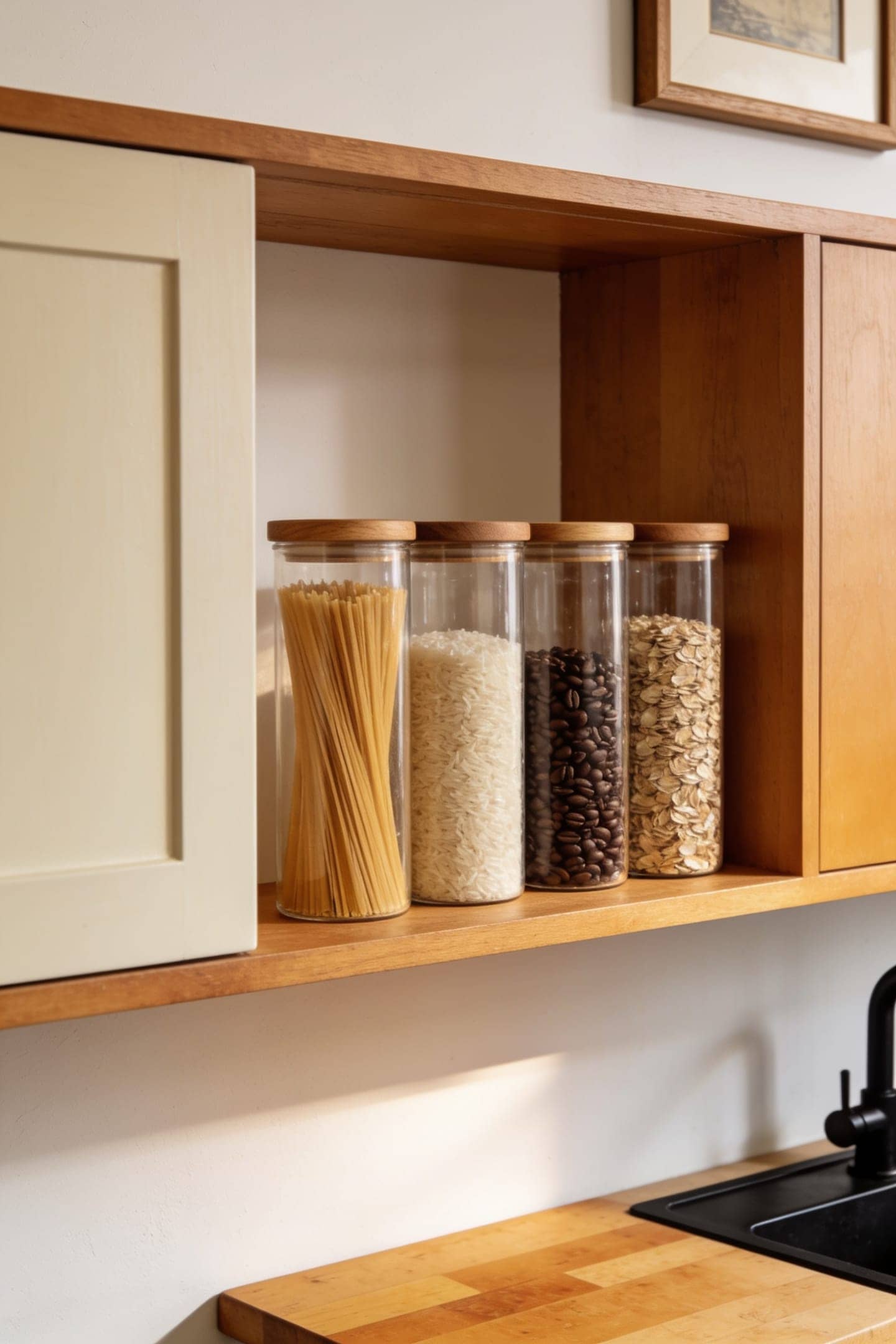
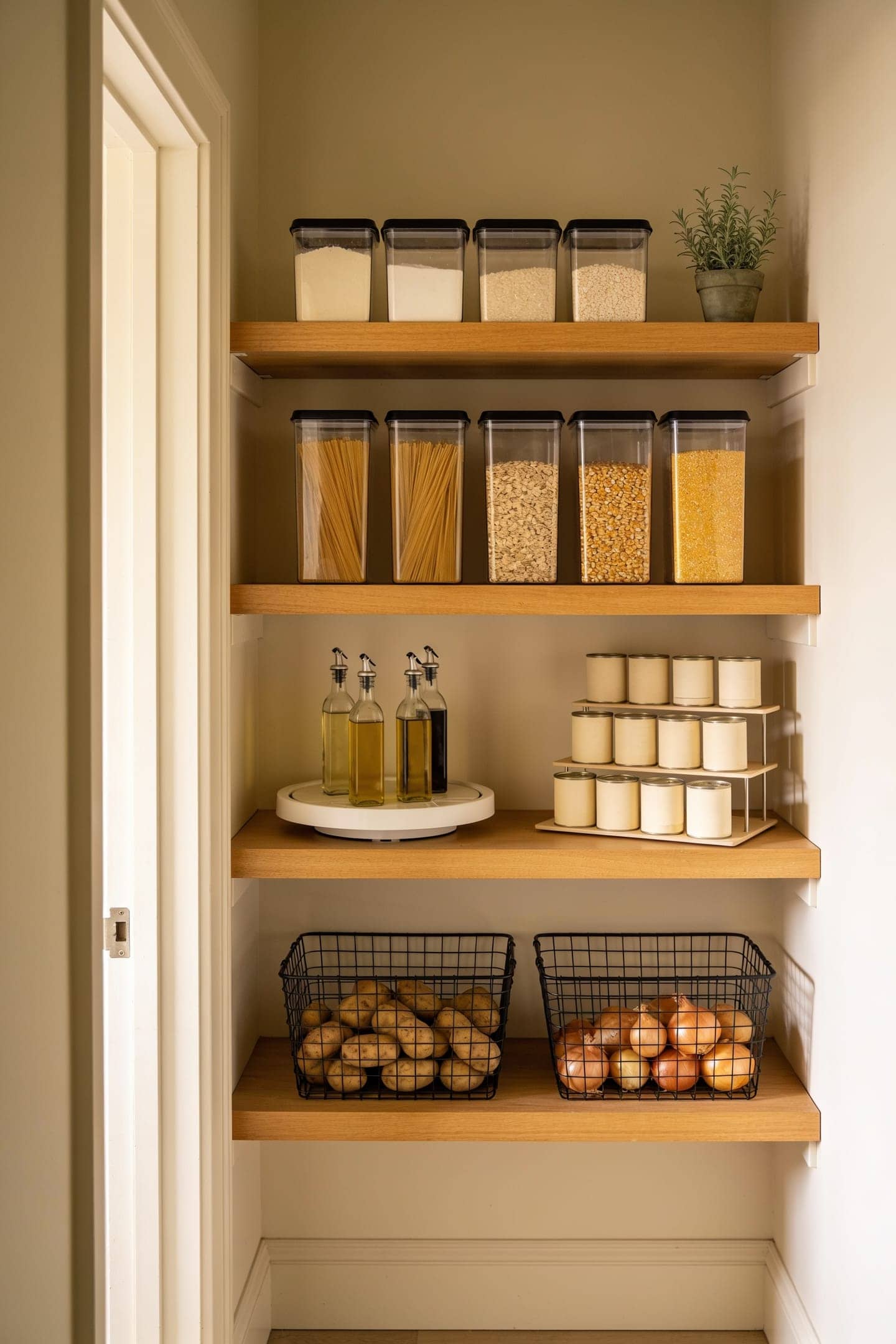
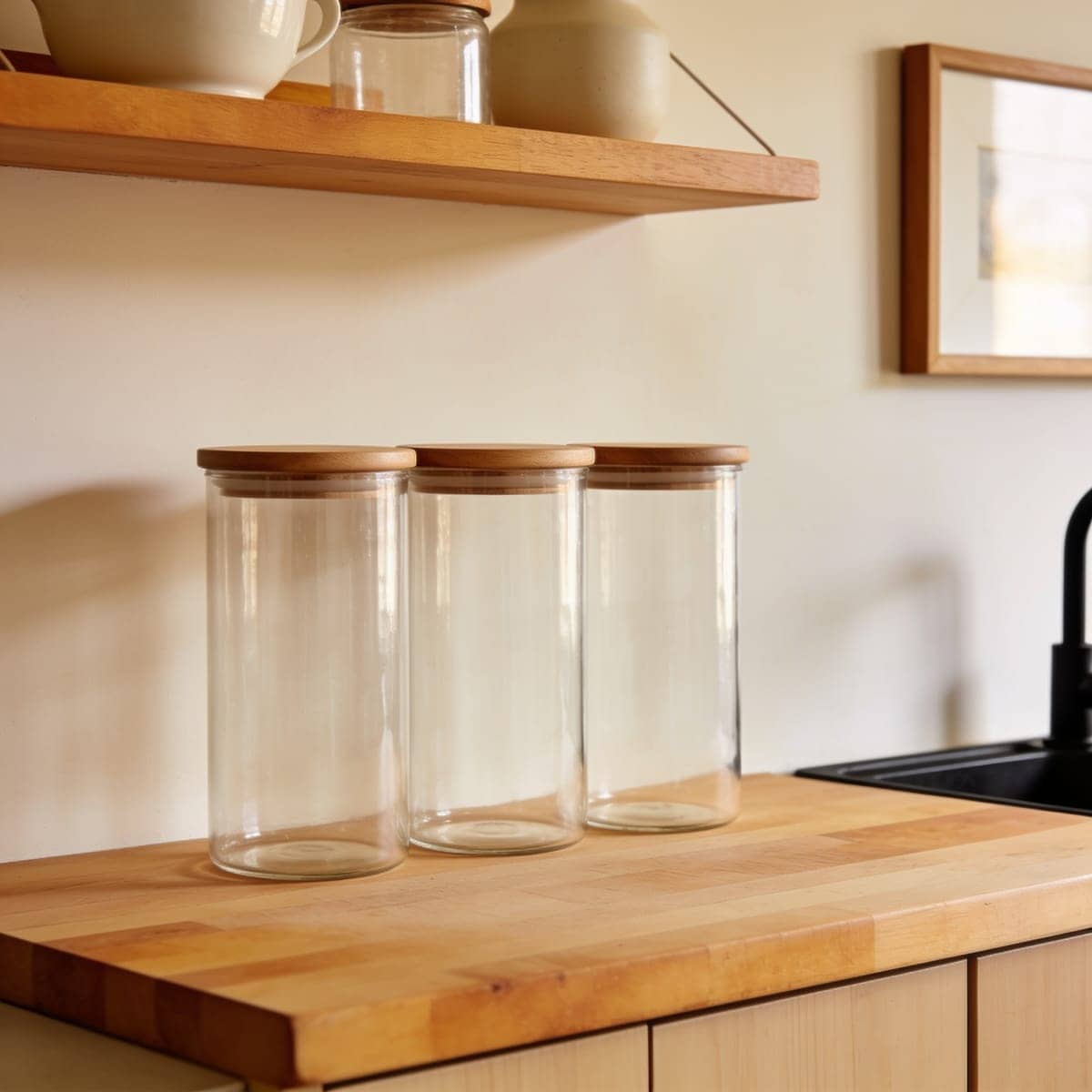
Half of what makes a shelf look chaotic is branding: a red logo here, a yellow box there, six typefaces shouting at each other. Decanting sounds like a lifestyle thing, and mostly it is, but on an open shelf it's the difference between a pantry and a display. Three or four matching glass jars, wood or metal lids, whatever you actually go through: pasta, rice, coffee, oats. Skip the labels unless you like them. You can see what's inside. Whatever doesn't make the cut goes behind a door, and my pantry organizer picks keep that side just as calm.
Hang a rail or hooks under the bottom shelf
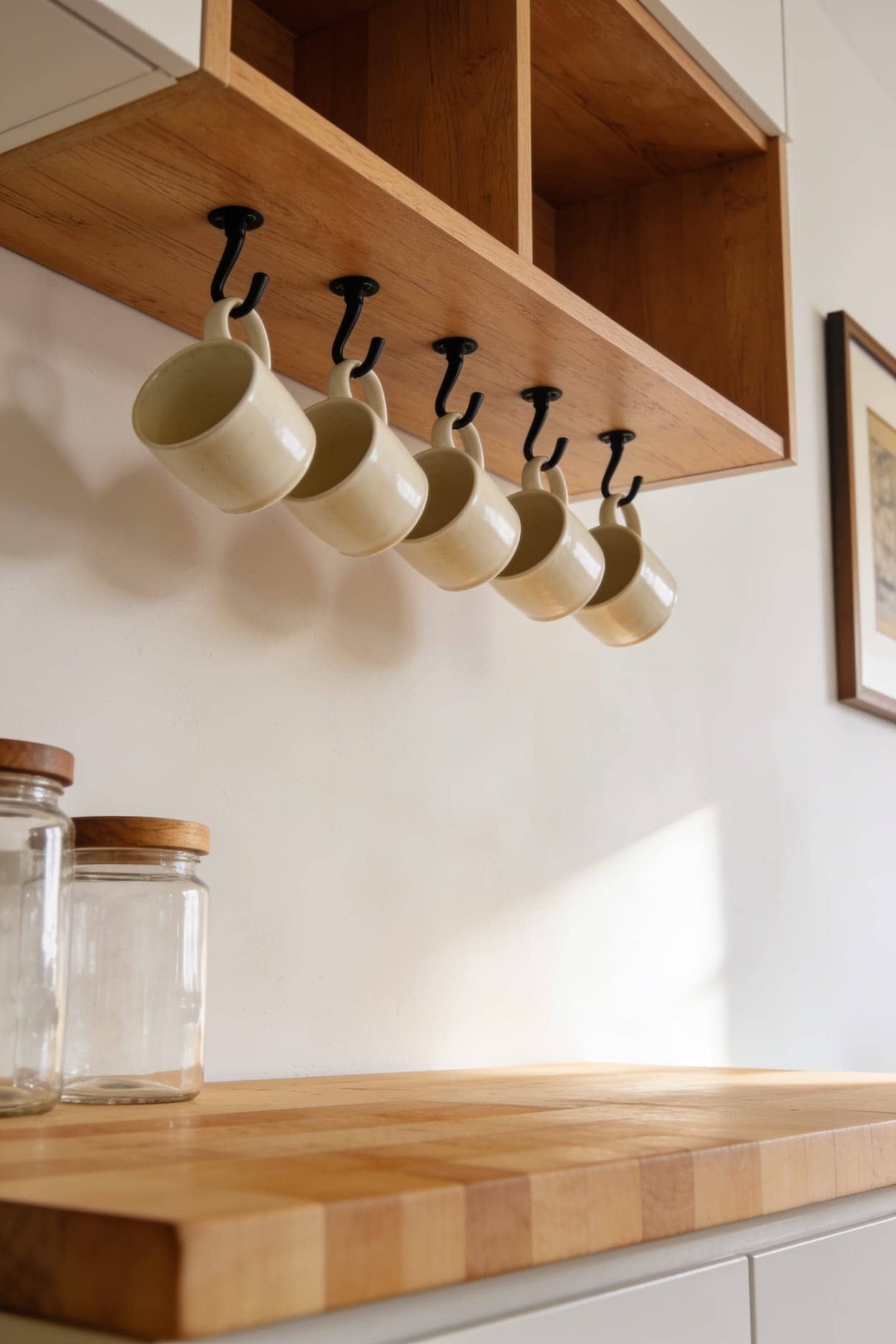
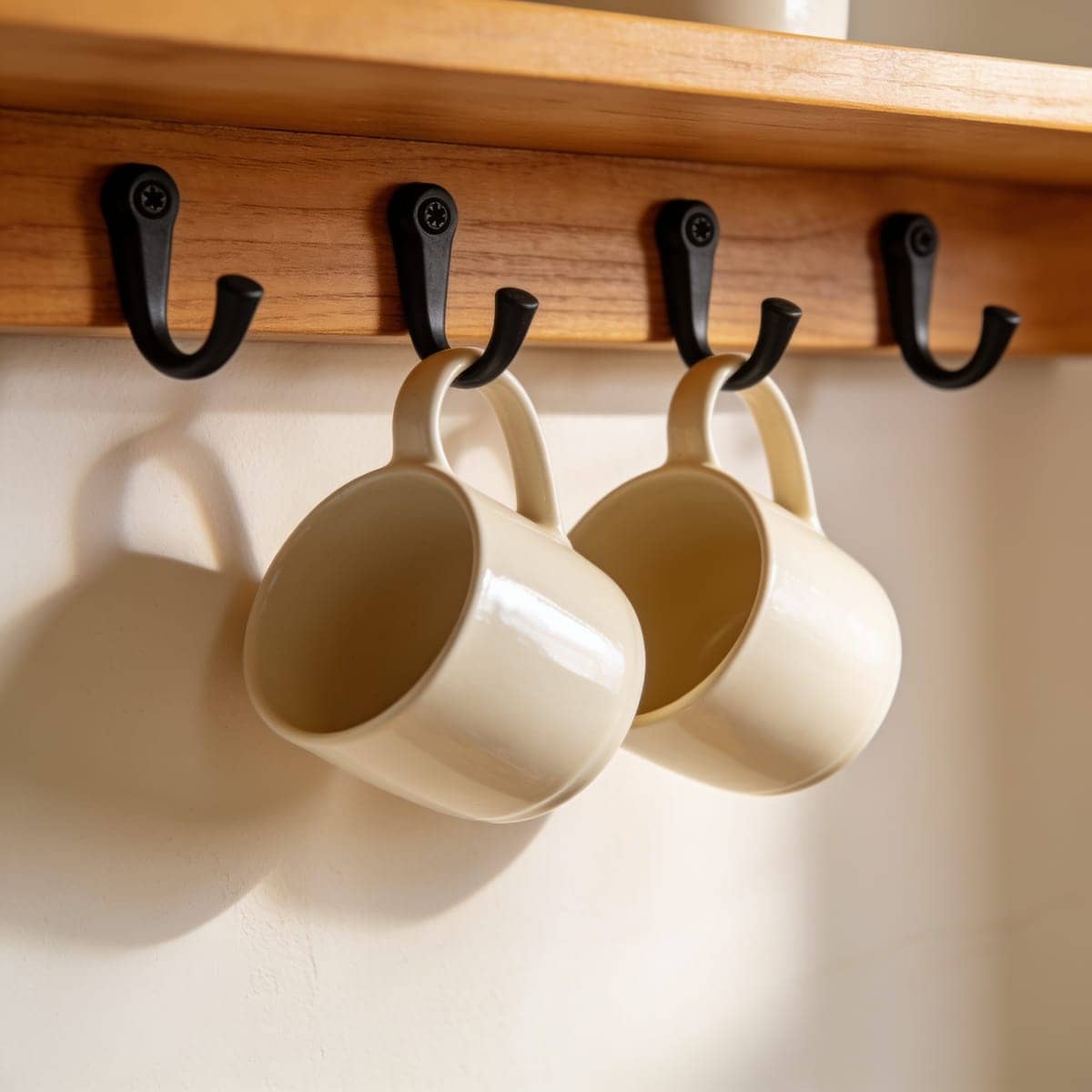
The underside of a shelf is free storage and everyone forgets it. A row of screw-in hooks turns it into a mug rack, and suddenly six mugs stop taking up shelf space. A slim rail does the same for utensils, a small pan, or a folded tea towel. It costs about twelve dollars and it's the single change that made my counter usable again. Just check the hooks clear the counter before you commit, tall mugs need the 18 inches.
Keep the metal to one finish
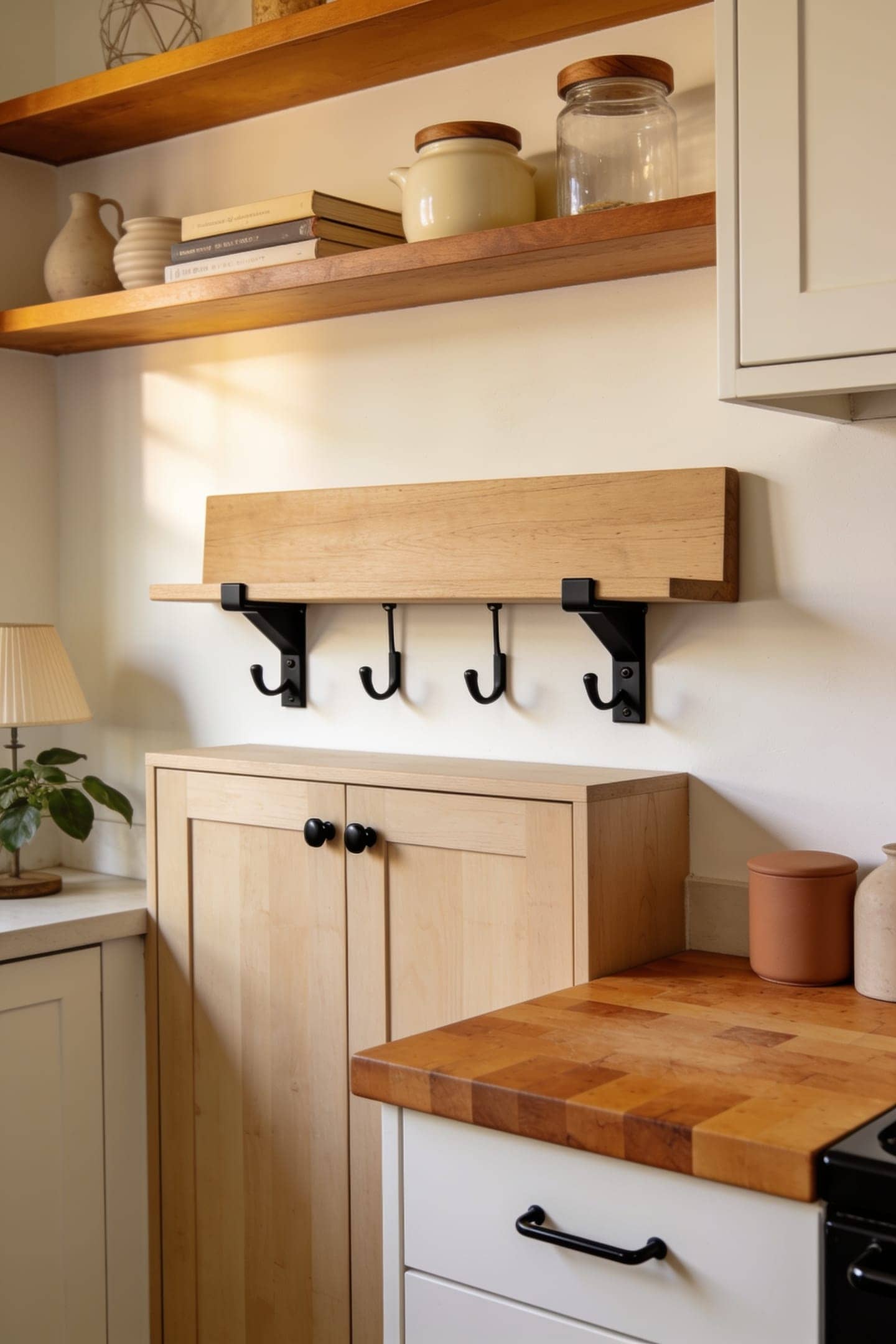
Brackets, hooks, rail, and whatever hardware is already on your cabinets: pick one finish and let them agree. Black with black, brass with brass. Mixed metals can look great when someone plans them, but in a rental kitchen you didn't choose, a random mix of chrome, bronze and satin nickel just looks like the accumulation it is. Cheap brackets in the right finish beat expensive ones in the wrong one, every time.
Light it, or the shelf becomes a dark hole
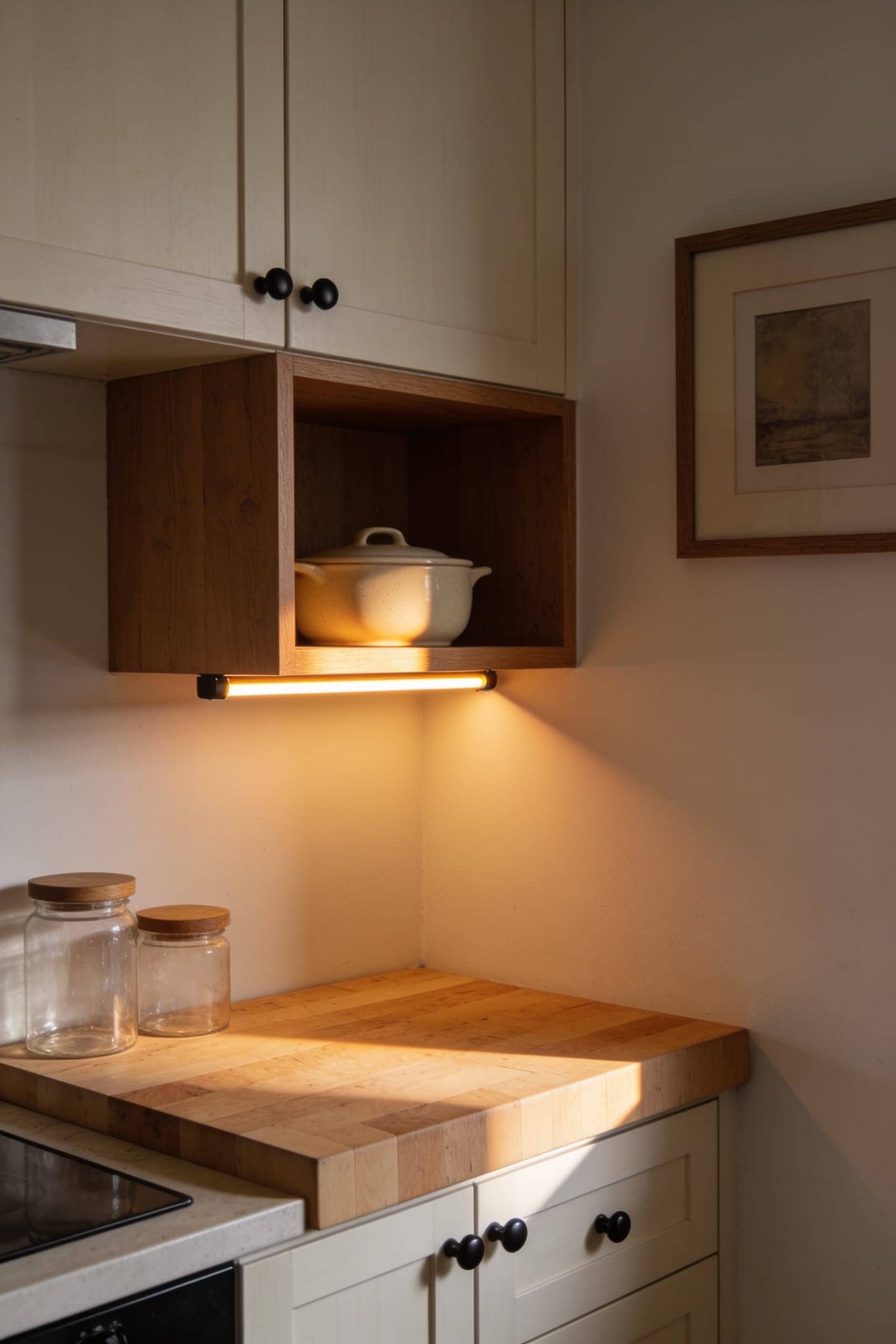
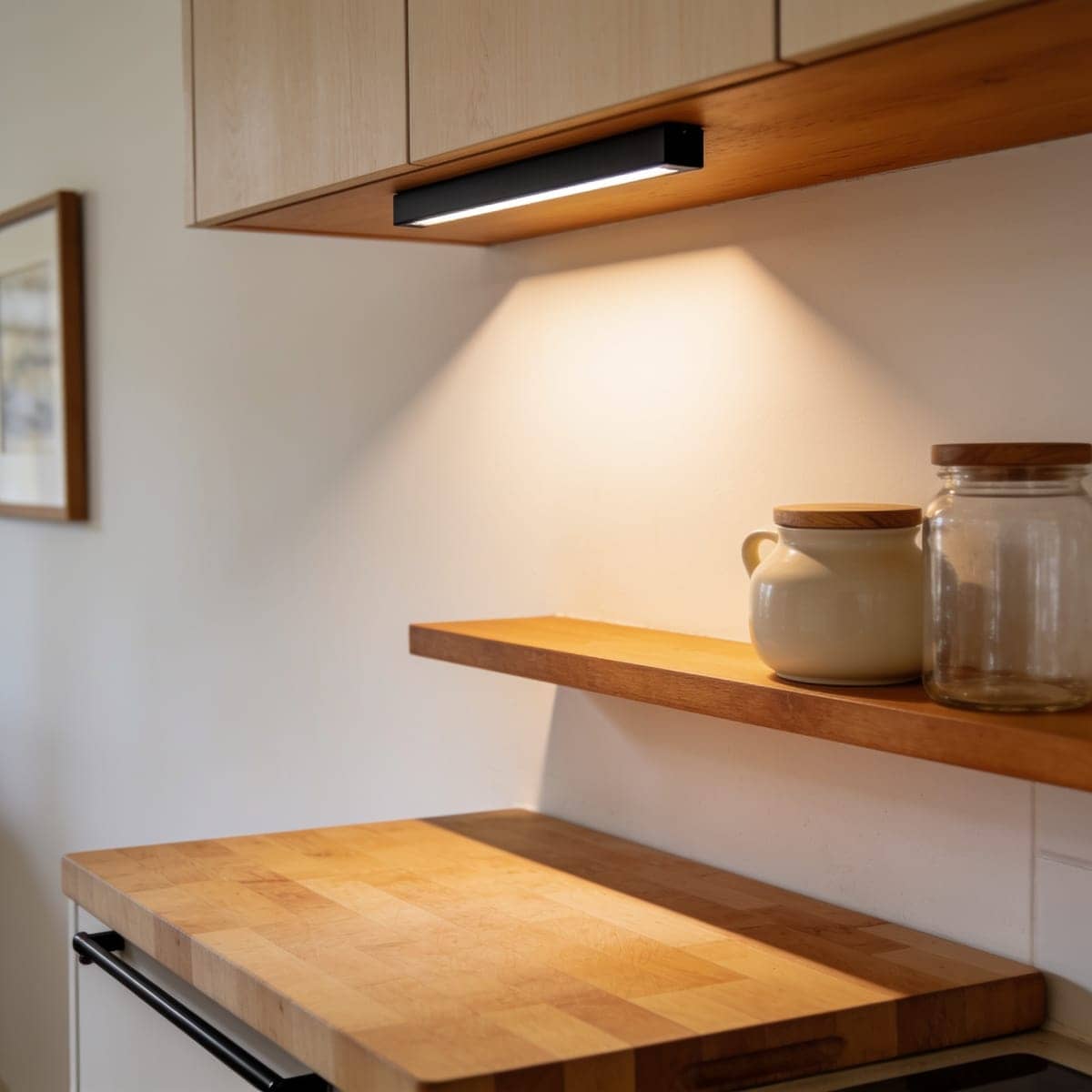
The counter under a shelf loses whatever ceiling light it had, and the shelf itself sits in its own shadow. A stick-on light bar underneath fixes both: it lights your prep surface and it makes the shelf glow instead of loom. Get warm white, around 2700K, because cool white in a kitchen makes everything look like a break room. Rechargeable ones stick on with adhesive and come off at move-out with nothing to patch. My best under cabinet lights list has thirteen, from about $16.
Leave one shelf half empty and keep it that way
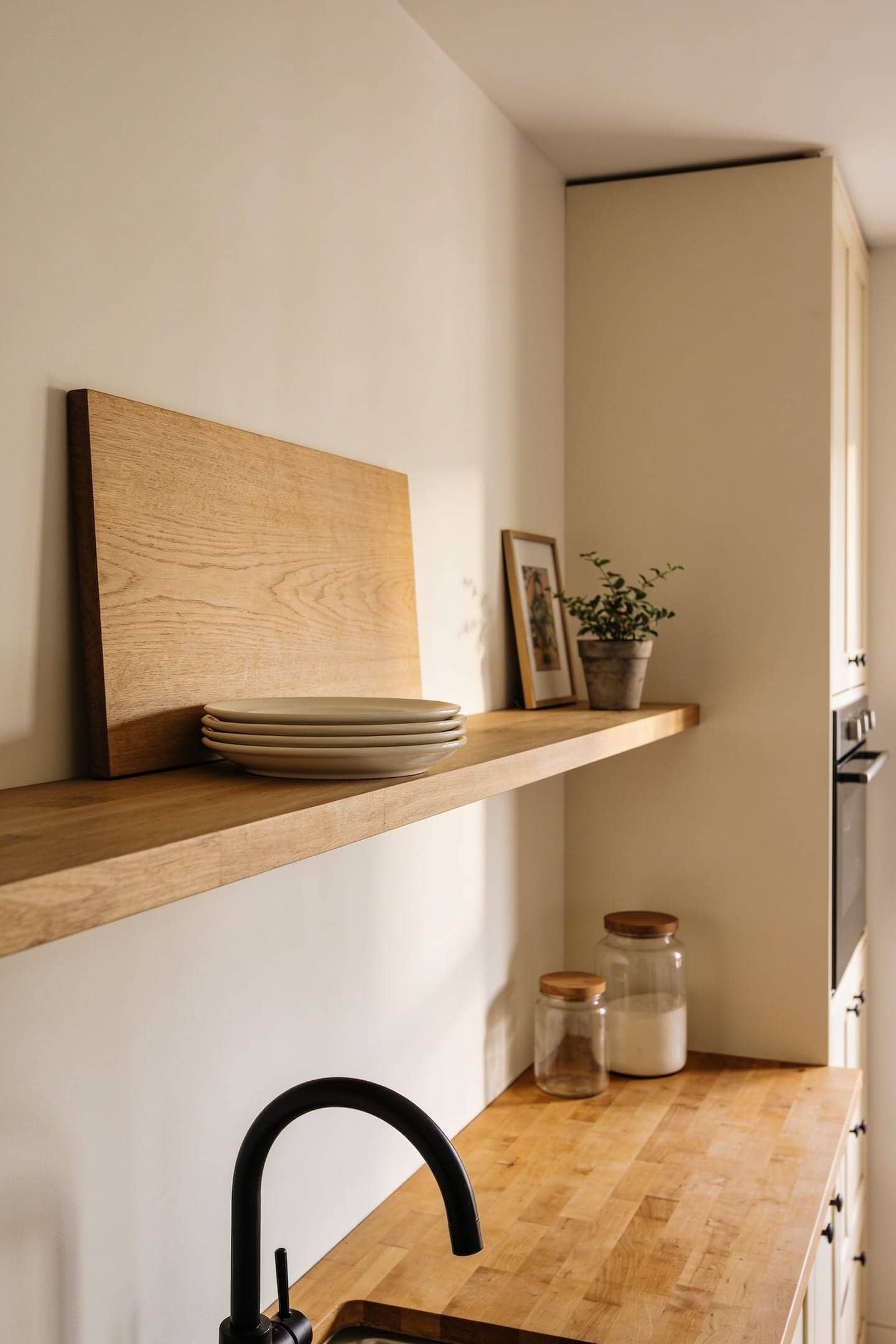
The whole look depends on air. A shelf packed end to end is storage, and that's fine if that's the job you gave it, but the display shelf has to stay hungry: a stack, a leaning board or a small piece of art, one plant or a jar of wooden spoons, and then a stretch of nothing. That empty run is the part people read as expensive. It's also the part that quietly fills up with mail and vitamins by October, so put things back. The shelf is one piece of the room, and the rest is in my budget kitchen decor ideas.
The shelf is the part worth getting right.
Cheap ones sag, bow, or ship with hardware that won't hold a stack of plates. I compared the budget floating and bracket shelves and kept ten.
See my full list: 10 Best Budget Floating Shelves