Some links here are affiliate links. If you buy through them, I may earn a small commission at no extra cost to you, and I only point to things I'd actually consider for my own home.
Stop shopping for the right beige
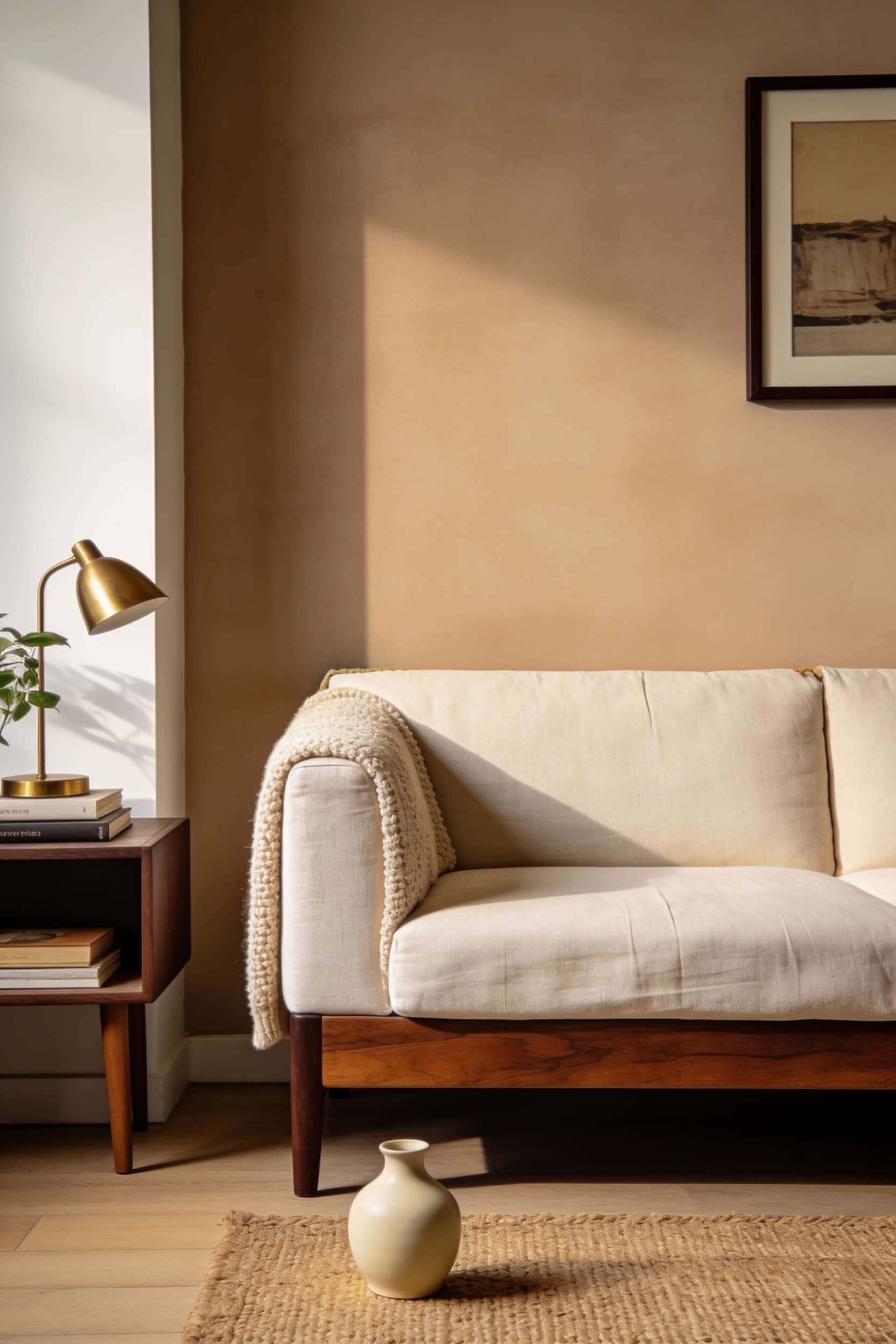
The hunt for the perfect warm neutral is a trap. There isn't one beige that saves a room, because a single beige, repeated everywhere, is exactly what makes a room look flat. What you actually need is a range: something pale, something in the middle, something deep. Pick any warm off-white you like for the walls and stop agonizing there. The decisions that matter come later, and they're cheaper.
Do the black-and-white photo test
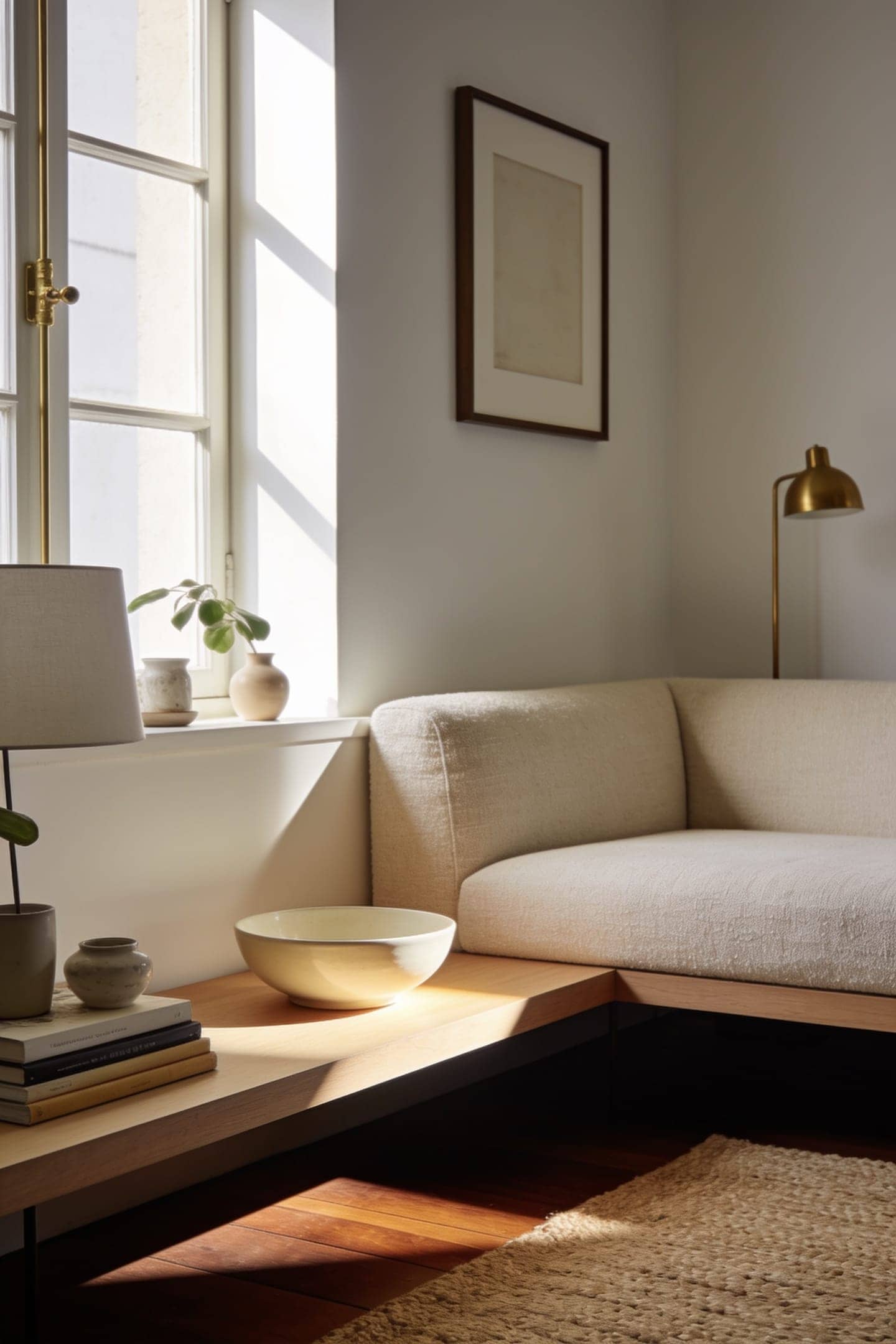
This is the fastest diagnosis I know, and it's free. Take a photo of your room, turn it black and white on your phone, and look at it. If the whole picture is one mushy gray, that's the problem, and no new cushion in a slightly different oatmeal will fix it. A good neutral room in grayscale still reads: you can see where the light stops and the dark begins. I redo this every time a room feels off and can't tell me why.
Let the biggest surfaces stay the quietest
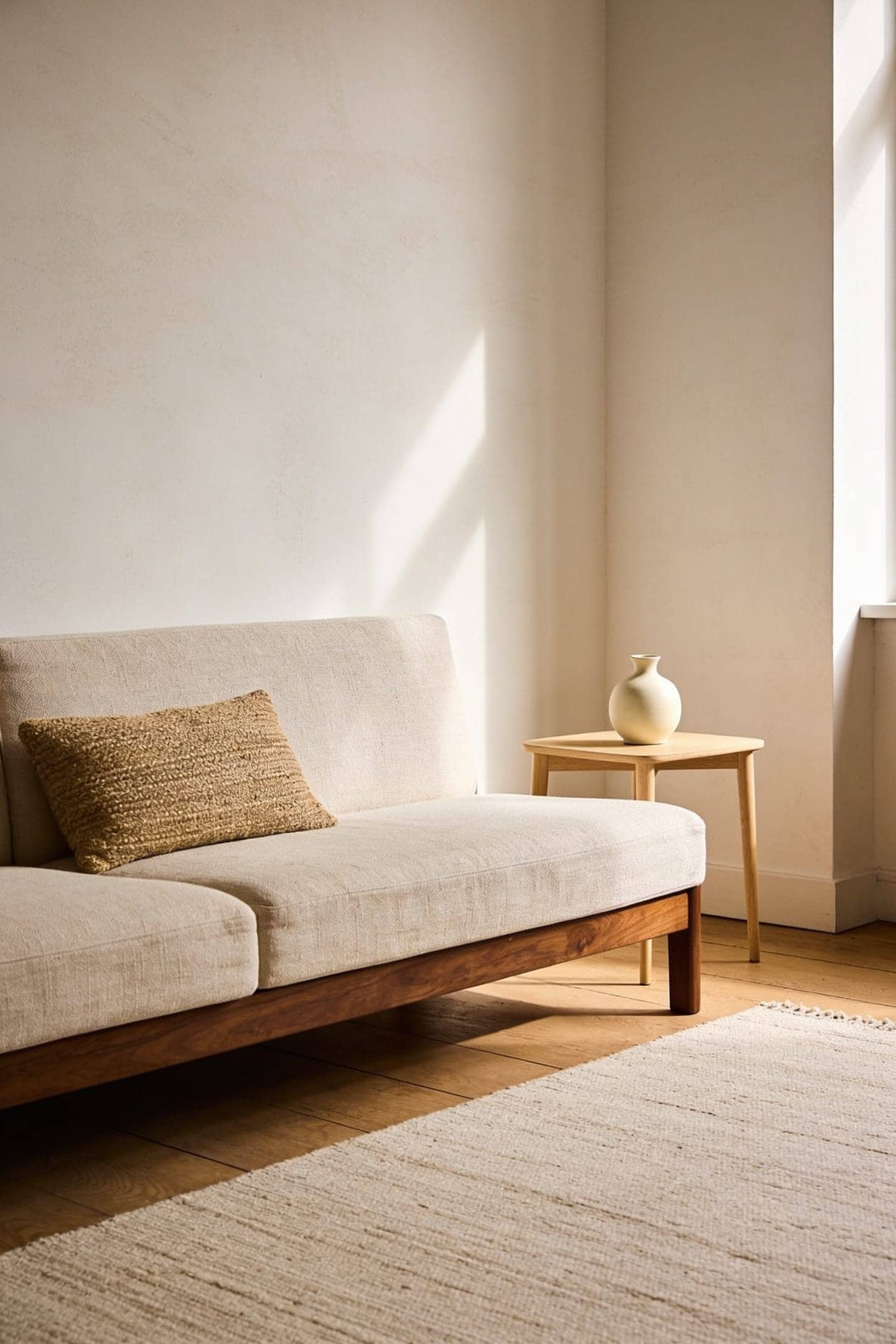
Walls, sofa, rug: that's most of what you see, and all three should sit near the light end. Not identical, just close. It sounds boring and it's the whole reason the small stuff gets to be interesting later. Rooms that put a pattern or a strong tone on the biggest surface spend the rest of their life apologizing for it, usually with more stuff.
Put one truly dark thing in the room
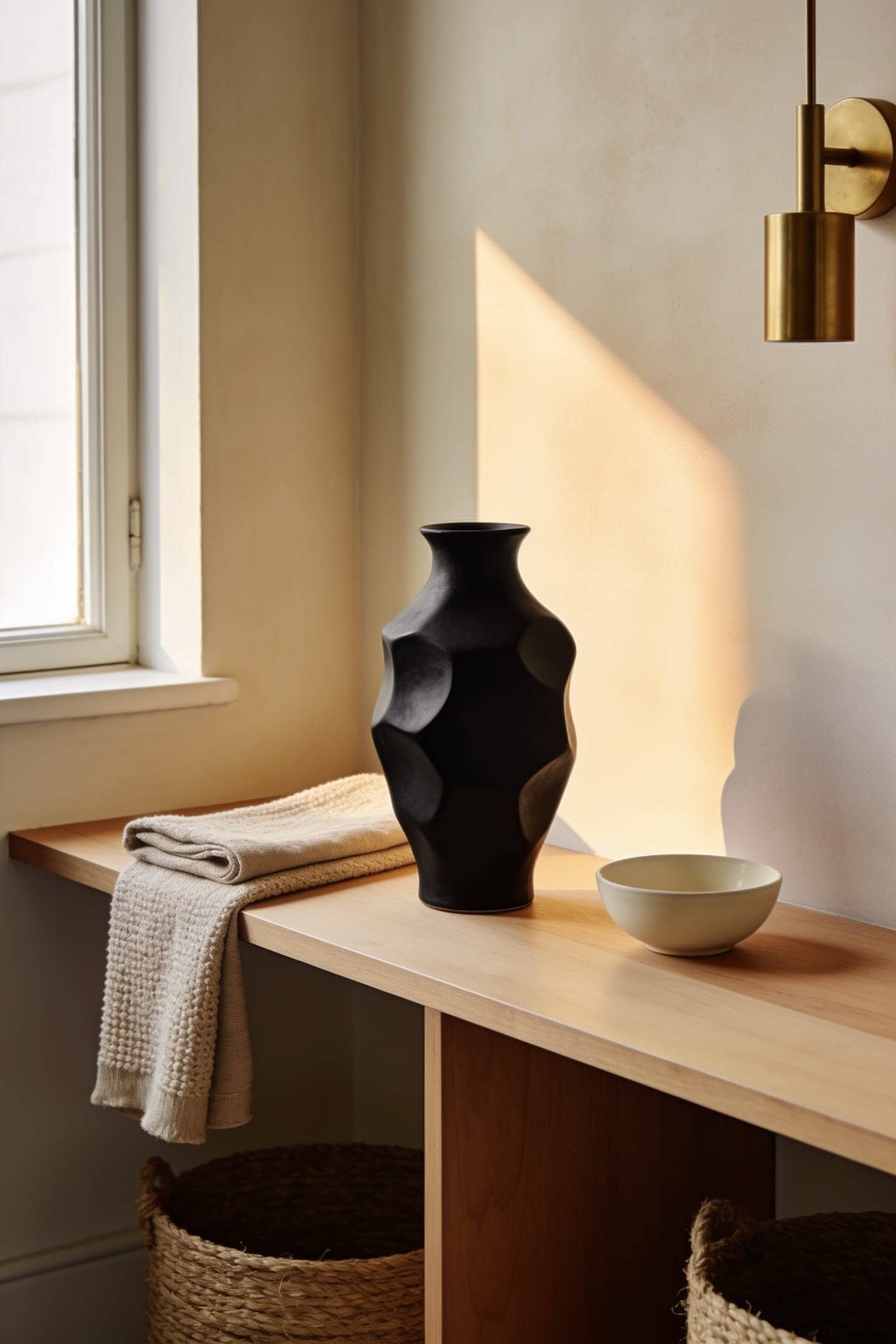
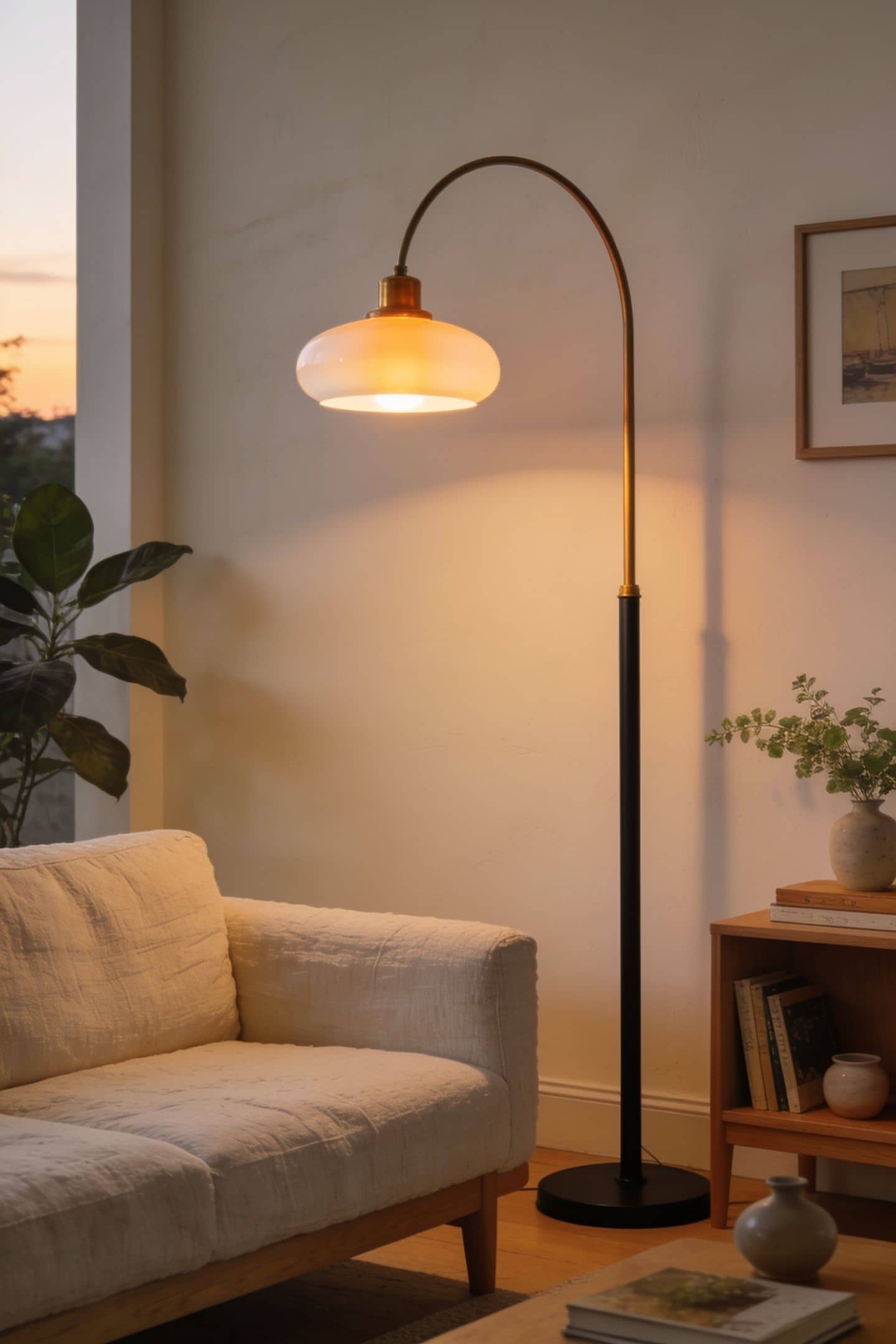
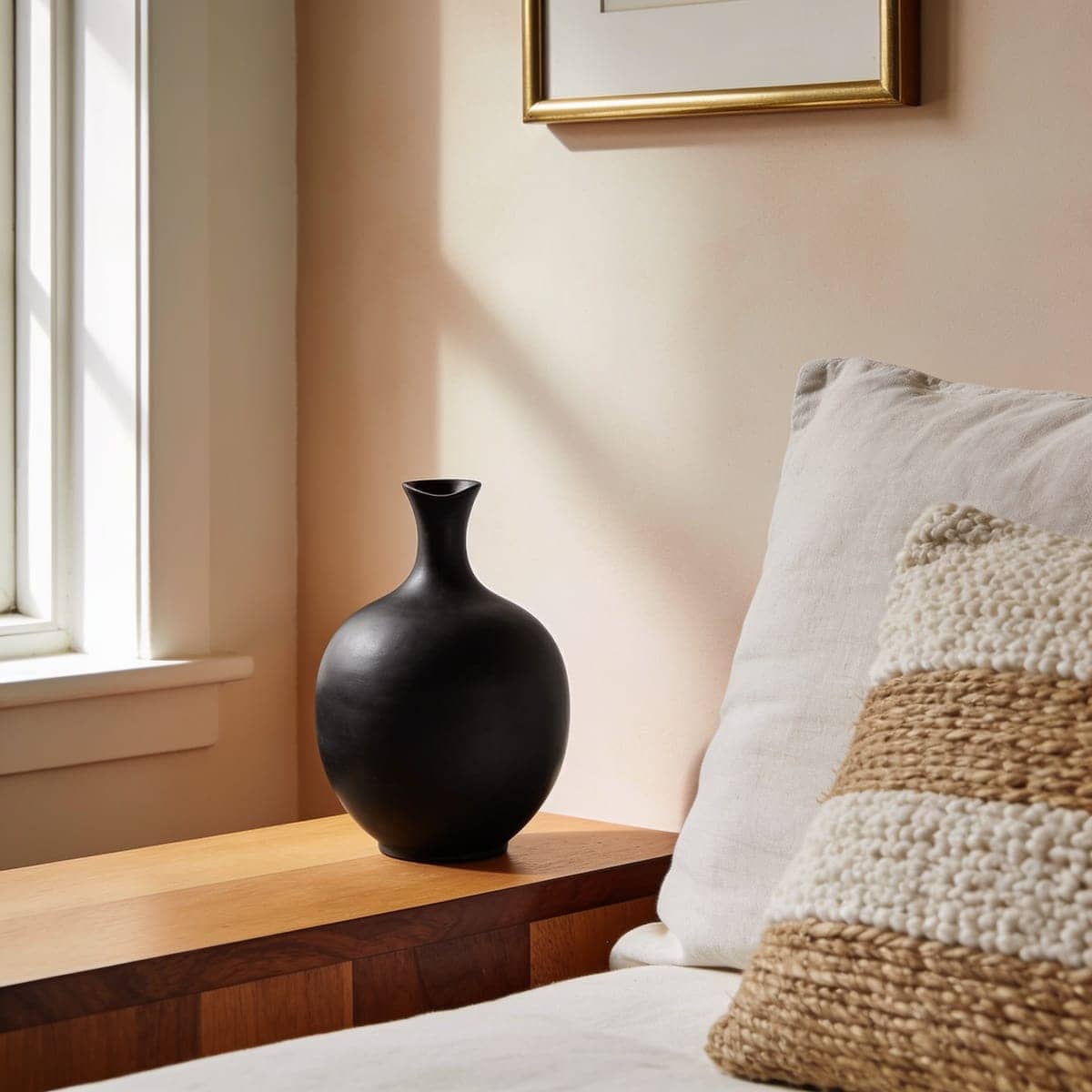
Here's the move that separates warm and layered from flat and beige: something in the room has to be near-black. Not charcoal, not taupe pretending to be dark. A matte black vase, a dark wood frame, an espresso side table, an iron lamp base. And it should be small. One deep object gives your eye somewhere to land and makes every cream in the room look intentional by comparison. I'd start with a $25 vase before I'd repaint anything.
Treat the curtains as the biggest soft thing you own
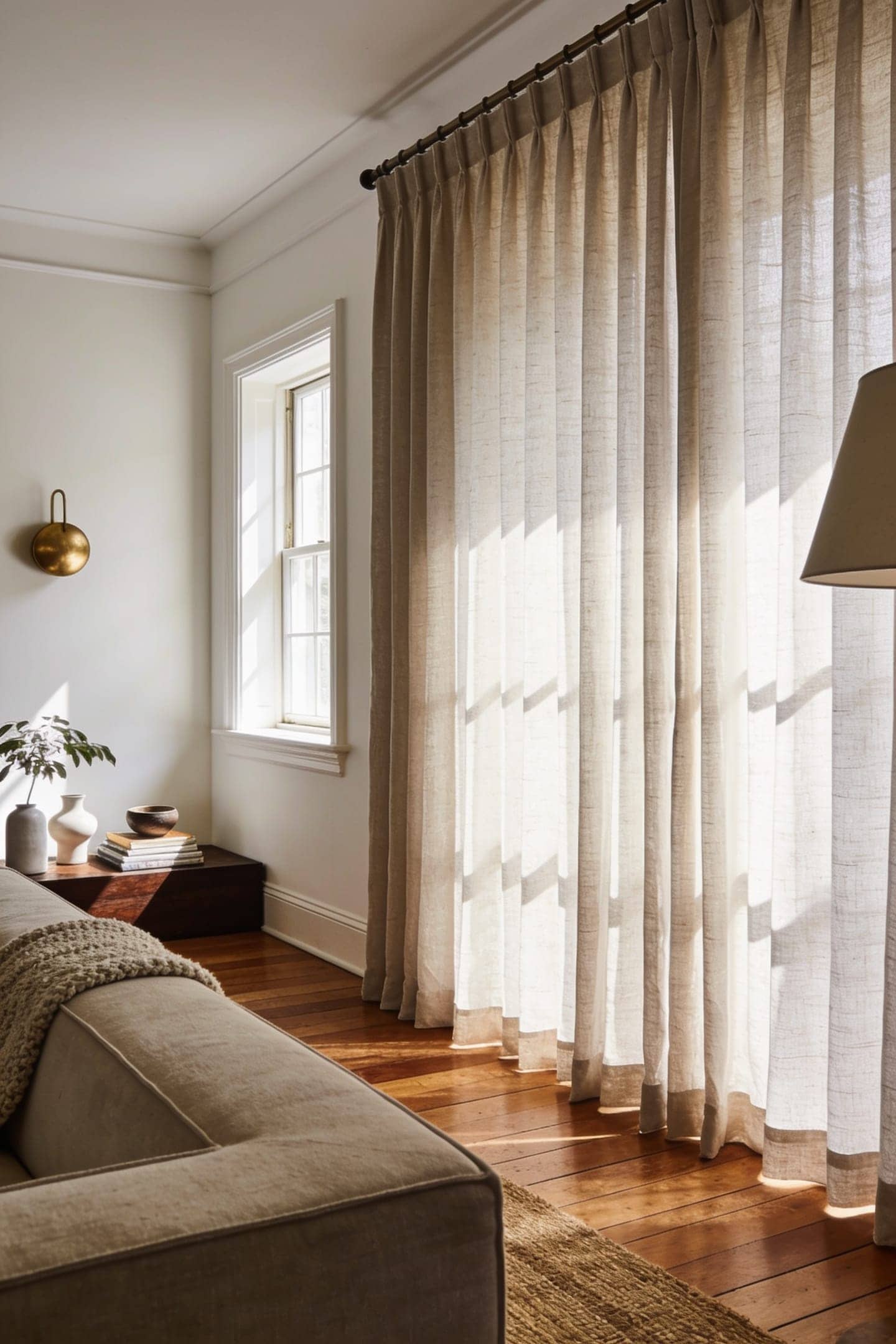
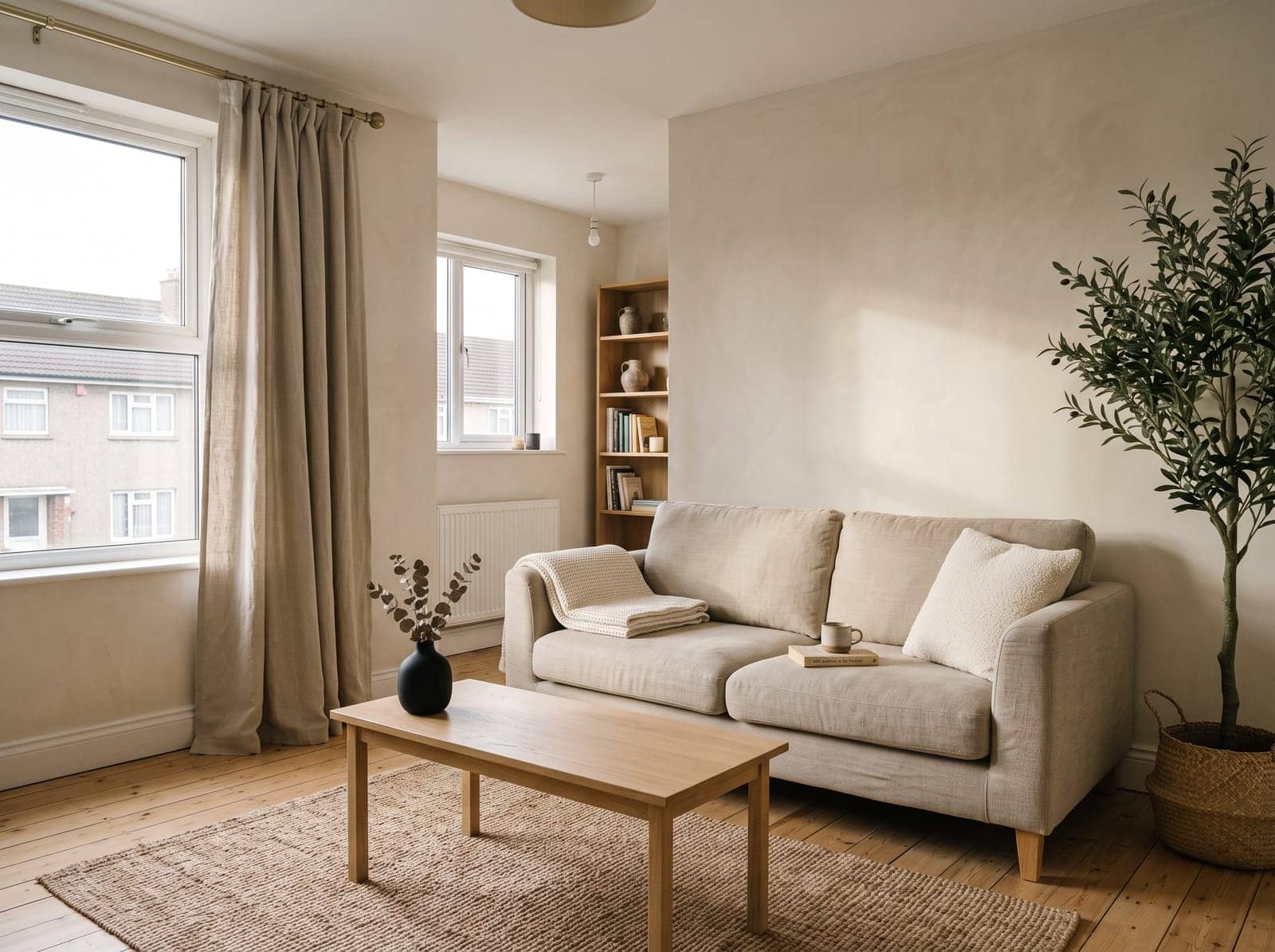
In a neutral room, curtains take up more square footage than your art, your pillows, and your throws combined, so they set the tone more than anything else you'll buy. Two rules do most of the work: hang the rod near the ceiling, not at the window frame, and buy them long enough to actually reach the floor. A warm oat or greige panel in a linen-look weave costs less than most people assume, and it's the single change that makes a beige living room read as designed instead of unfinished. This is the exact thing my curtain roundup covers, so here's the shortlist rather than a cold search.
The ranked roundupI compared the budget living room curtains that hang like real fabric instead of plastic, and ranked the ten I'd buy.
See the roundup: 10 Best Budget Living Room CurtainsWhen the color goes quiet, texture does the contrast
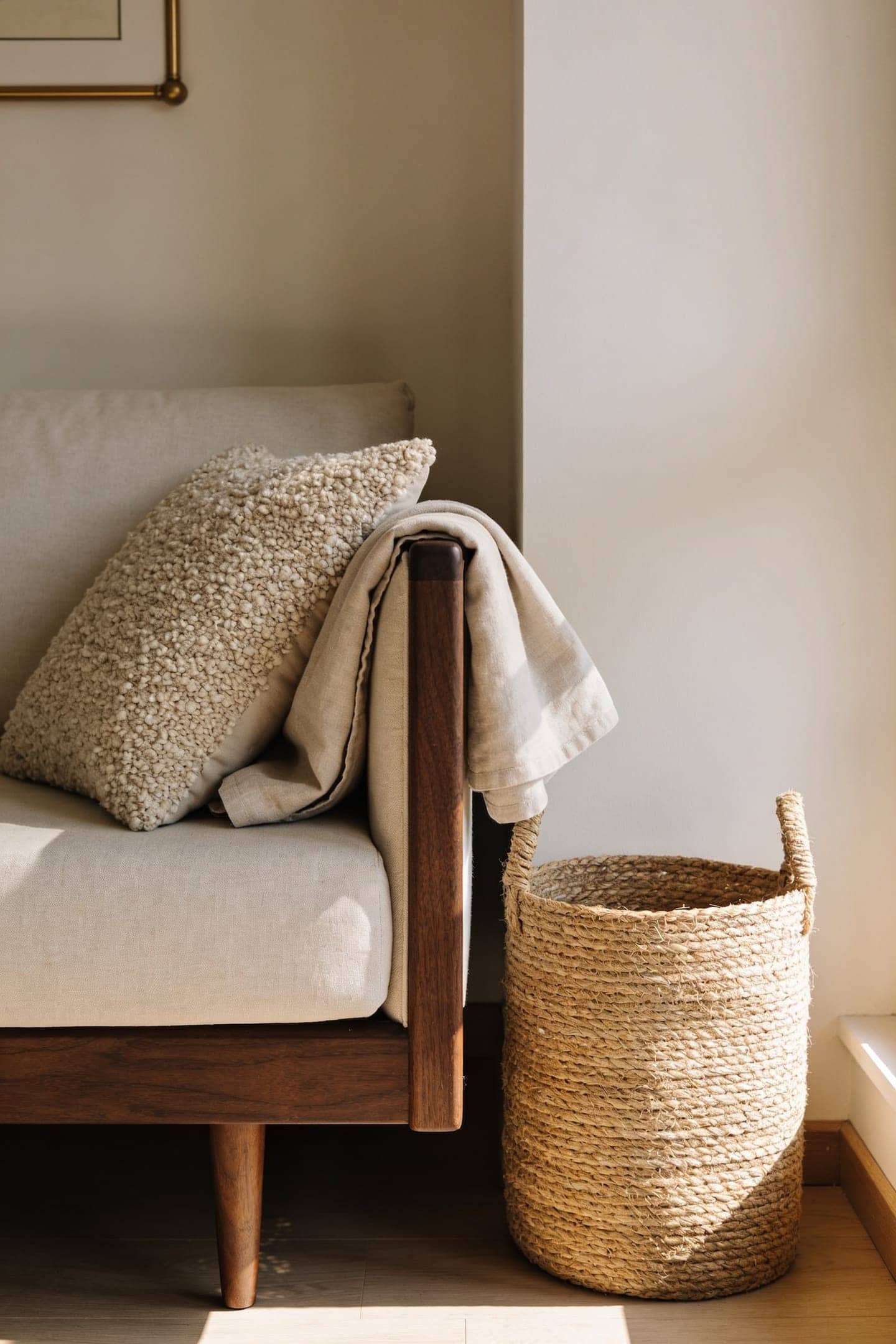
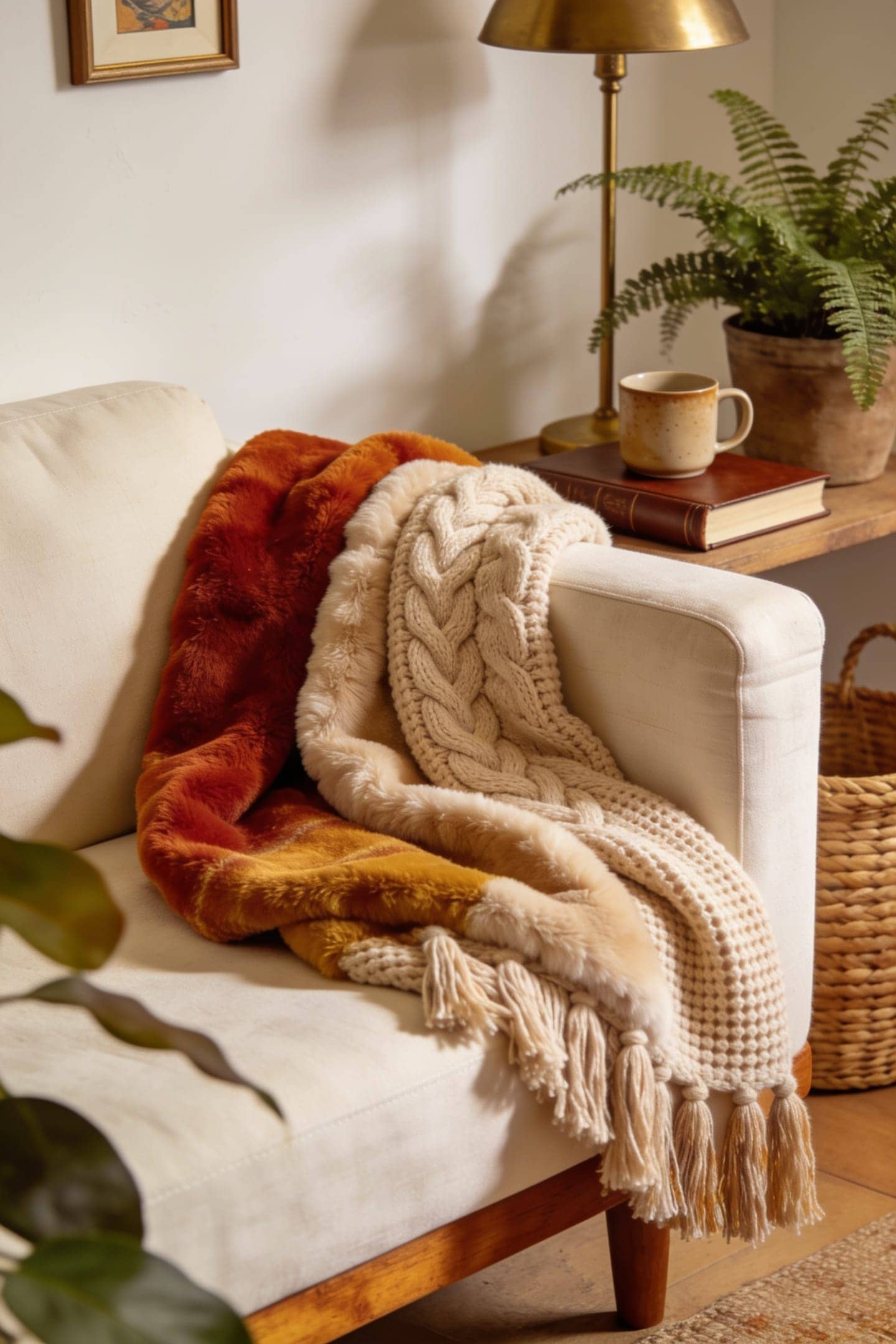
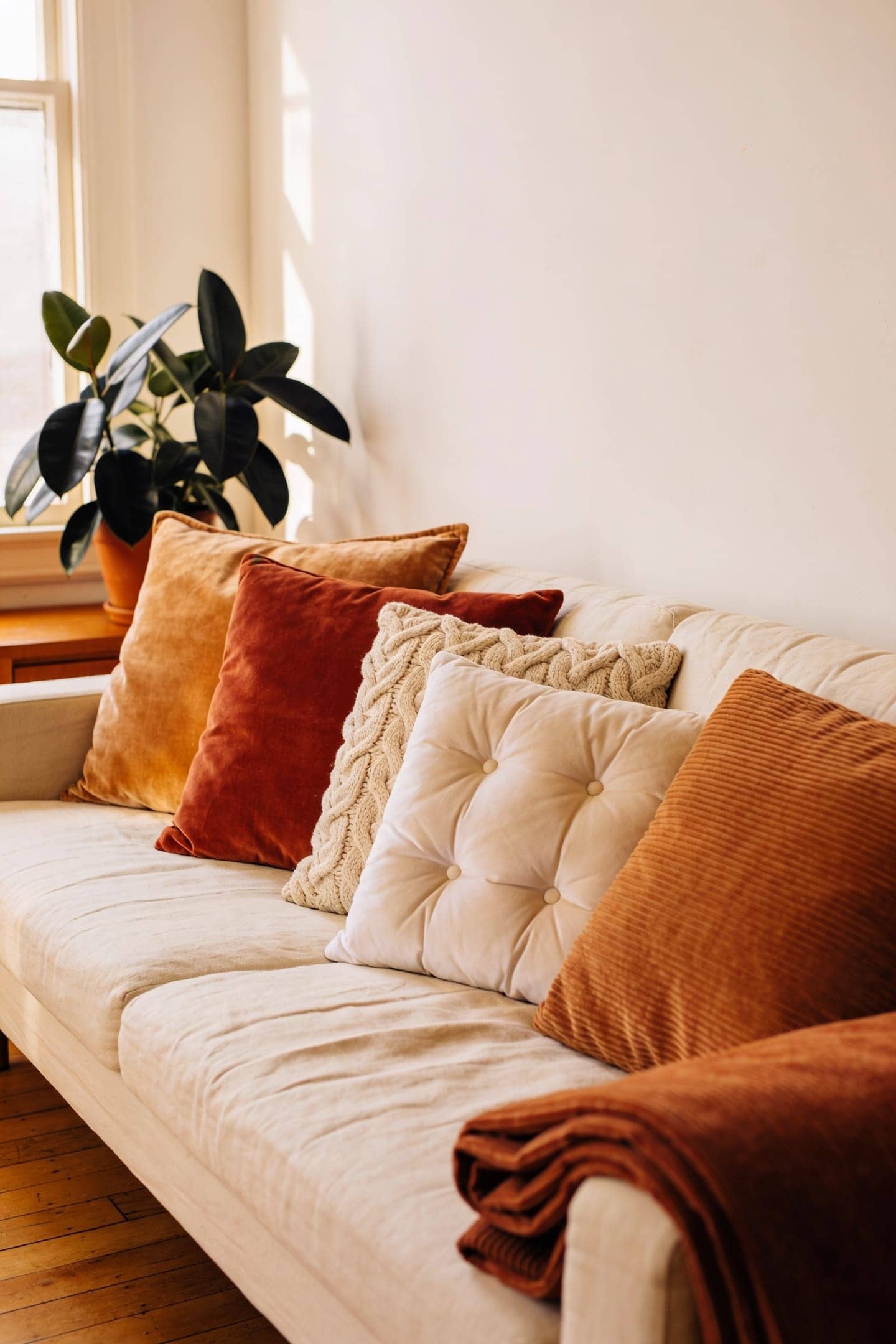
This is the trade a neutral room makes. You give up color as your contrast, so texture has to pick up the job. Put a nubby bouclé next to a smooth linen next to a rough jute, all in roughly the same cream, and the corner suddenly has depth with zero new color in it. The fastest version is a knit cushion cover thrown onto a smooth sofa. Around $18, and you can feel the difference from the doorway.
Repeat every neutral at least three times
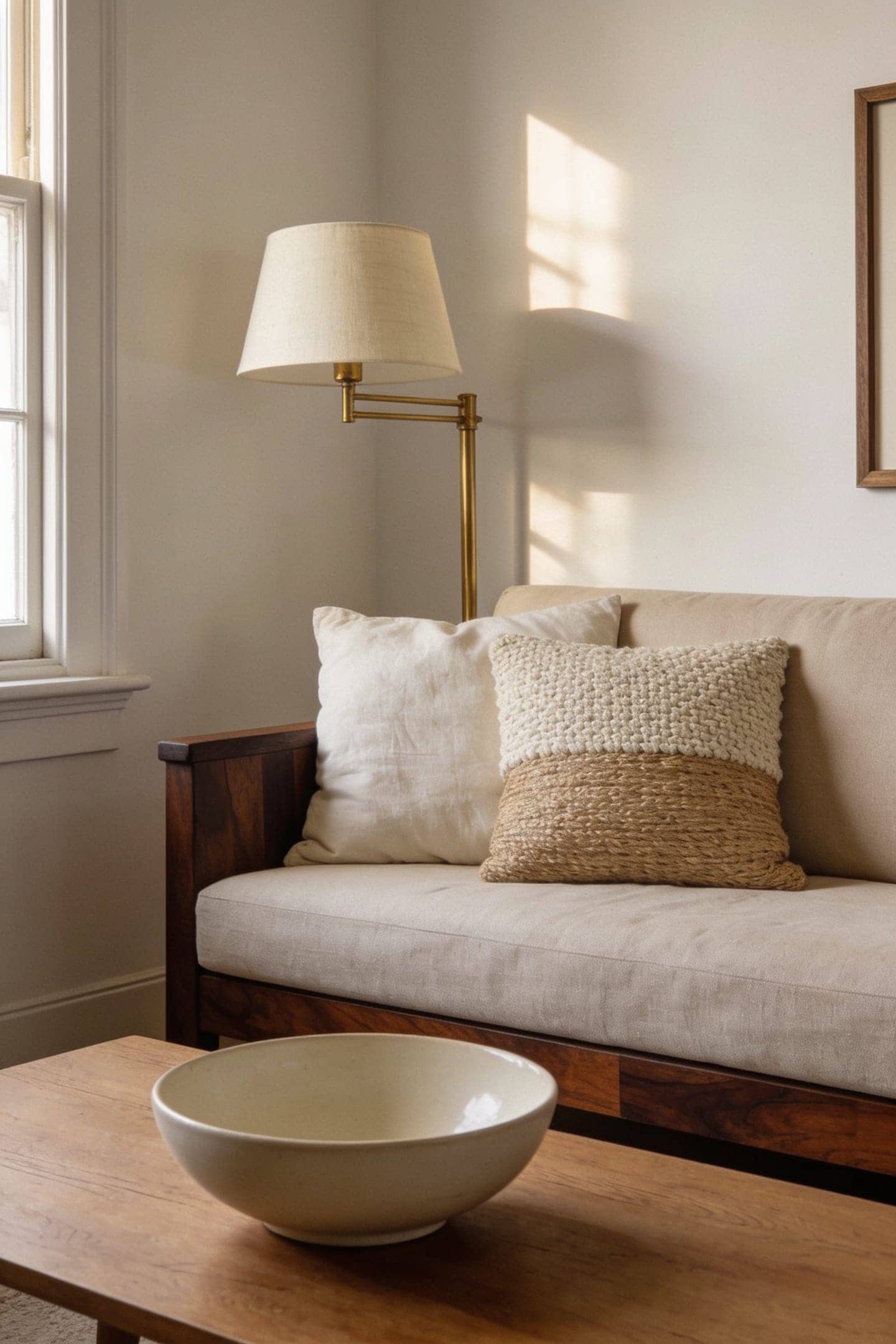
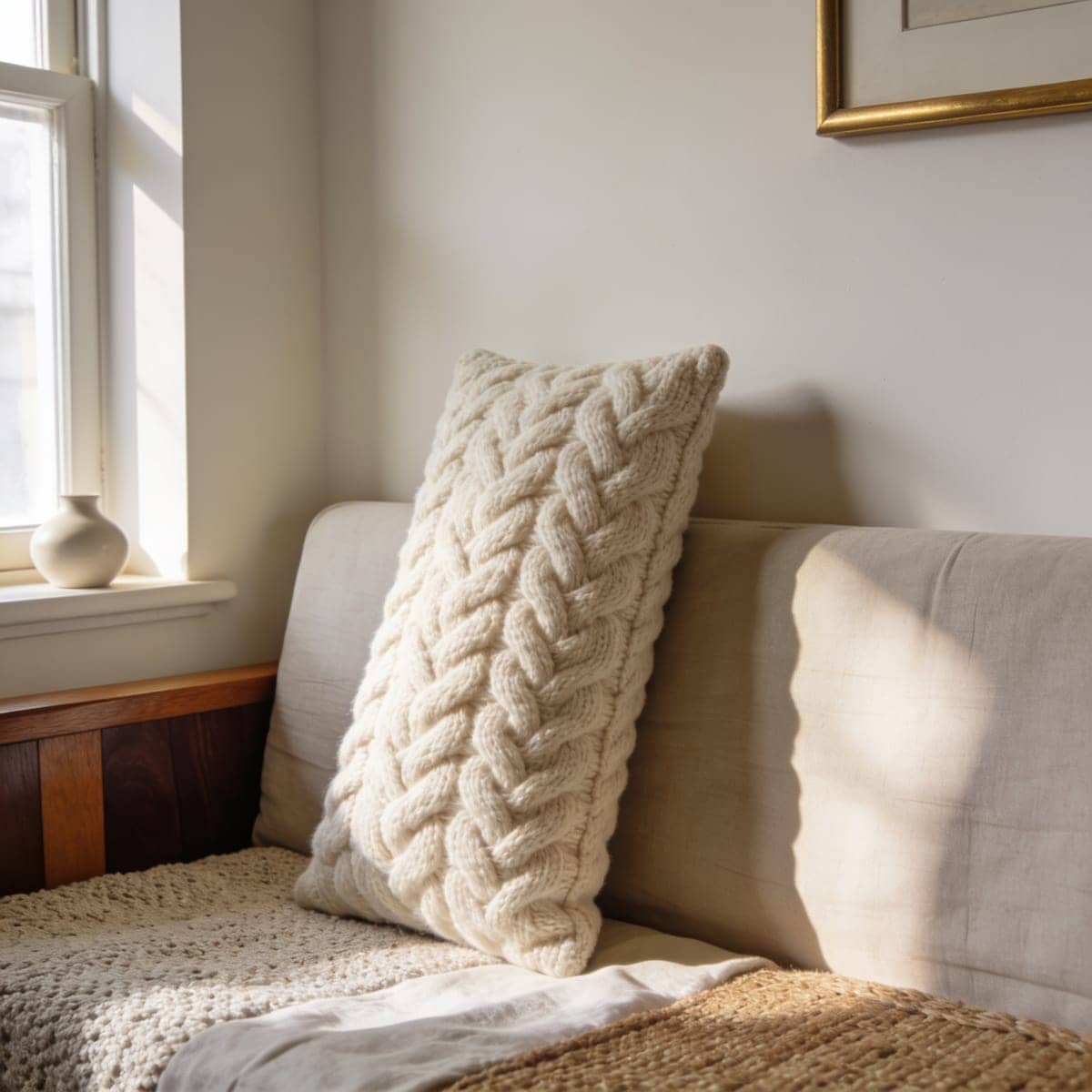
One cream cushion in a room of oat looks like a mistake. Three cream things, spread apart, look like a decision. It's a styling rule I use constantly and it costs nothing: whatever tone you bring in, find two more places to echo it, ideally at different heights. A shade, a bowl, a book spine. This is also why buying one of everything makes rooms look scattered, and buying in small repeats makes them look styled.
Hunt down the cool grays hiding in plain sight
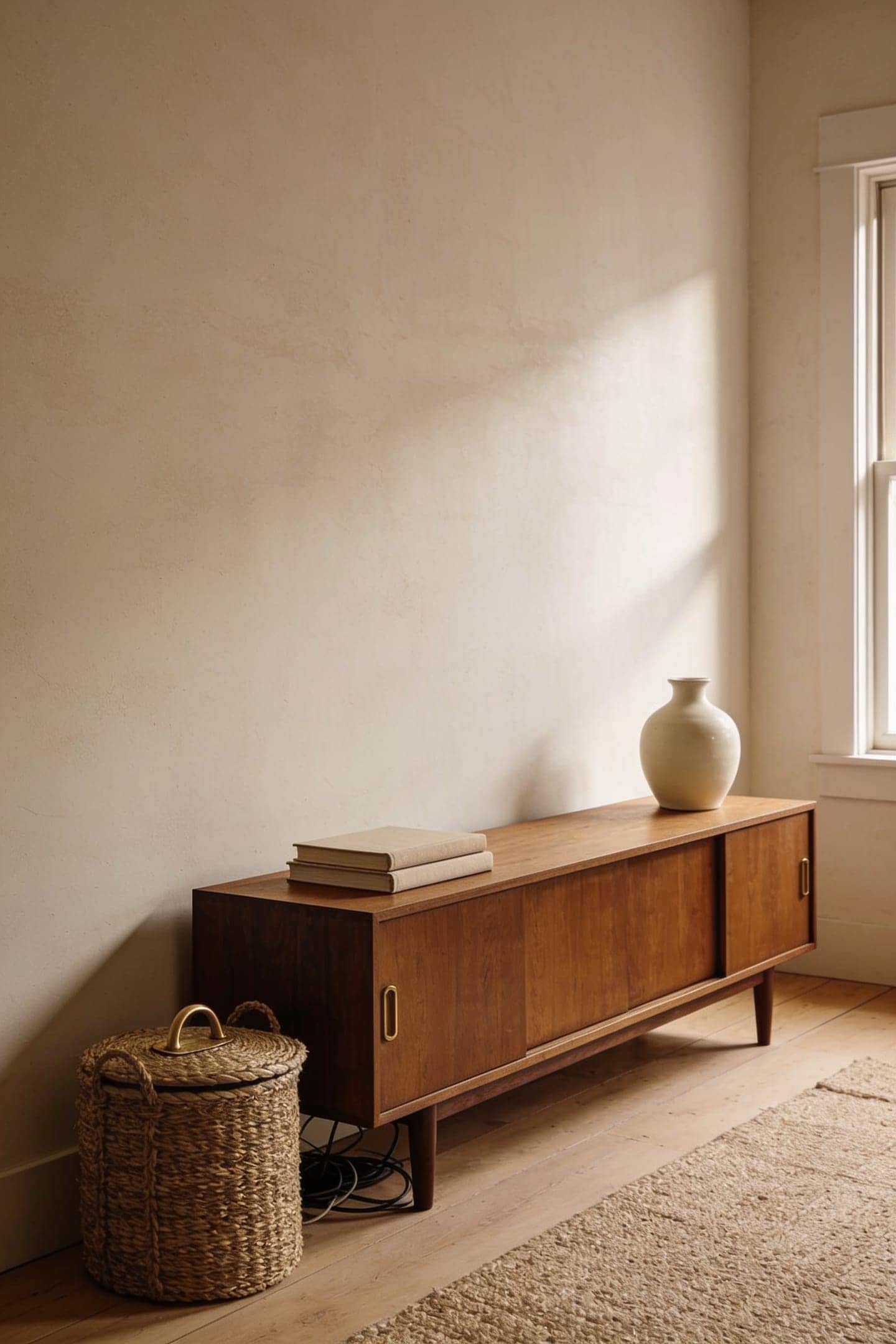
Warm palettes get sabotaged by the things nobody thinks of as decor. The gray TV console, the silver laptop parked on the coffee table, the cool-toned throw that came with the sofa, that one white plastic charger block. Every one of them pulls the room toward blue. Walk in and look for gray specifically, then move, cover, or replace what you find. A basket over the tech pile is a two minute fix and it warms the whole corner.
Warm the bulbs or the palette goes dishwater after dark
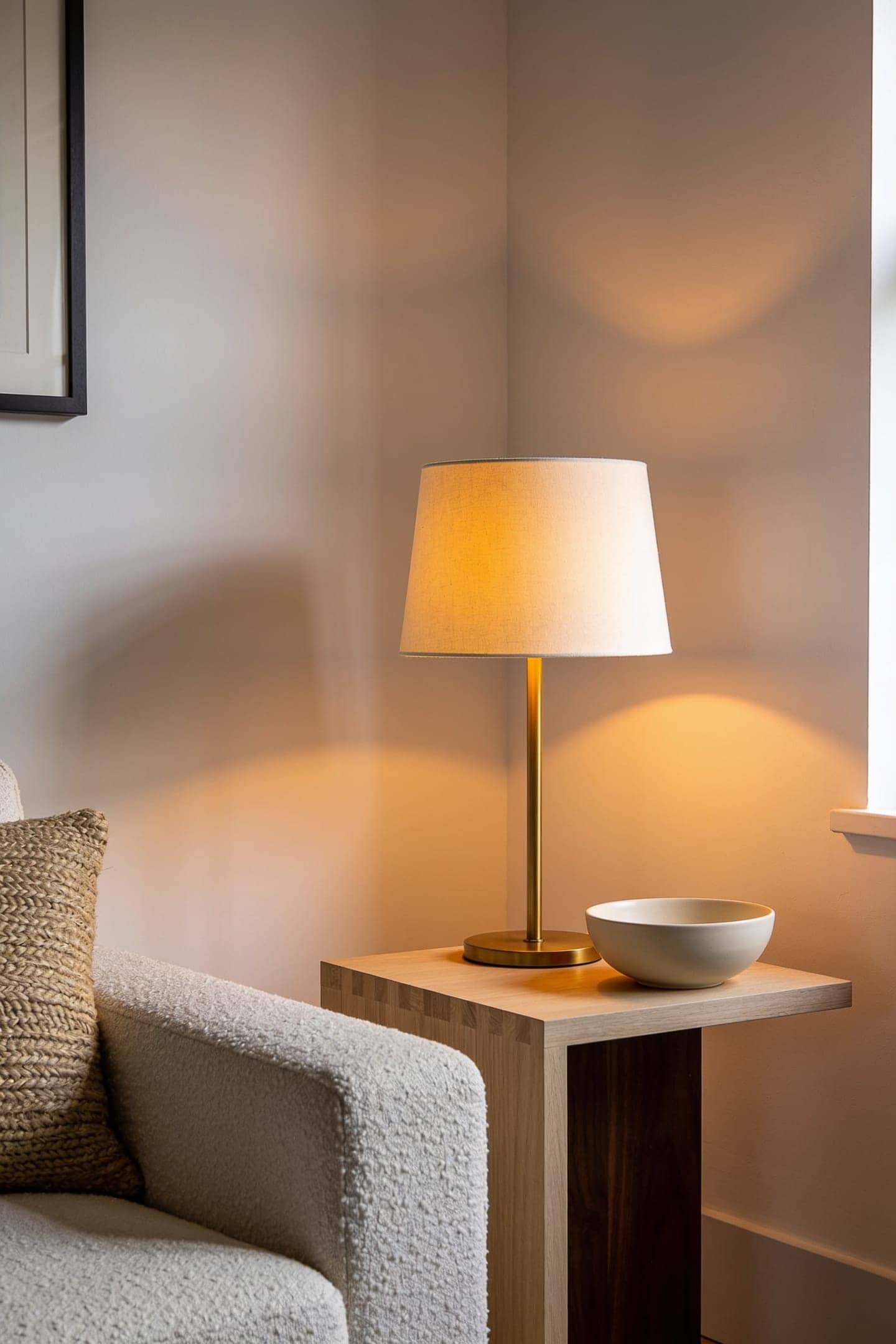
Daylight flatters warm neutrals. A cool white bulb does the opposite: it drains the yellow right out of the room and leaves everything looking slightly dirty. Check the box for 2700K, sometimes printed as soft white, and swap every bulb you can reach. It's a few dollars a bulb and it's the only reason my living room looks like the same room at nine at night as it does at noon.
Put something rough at floor level
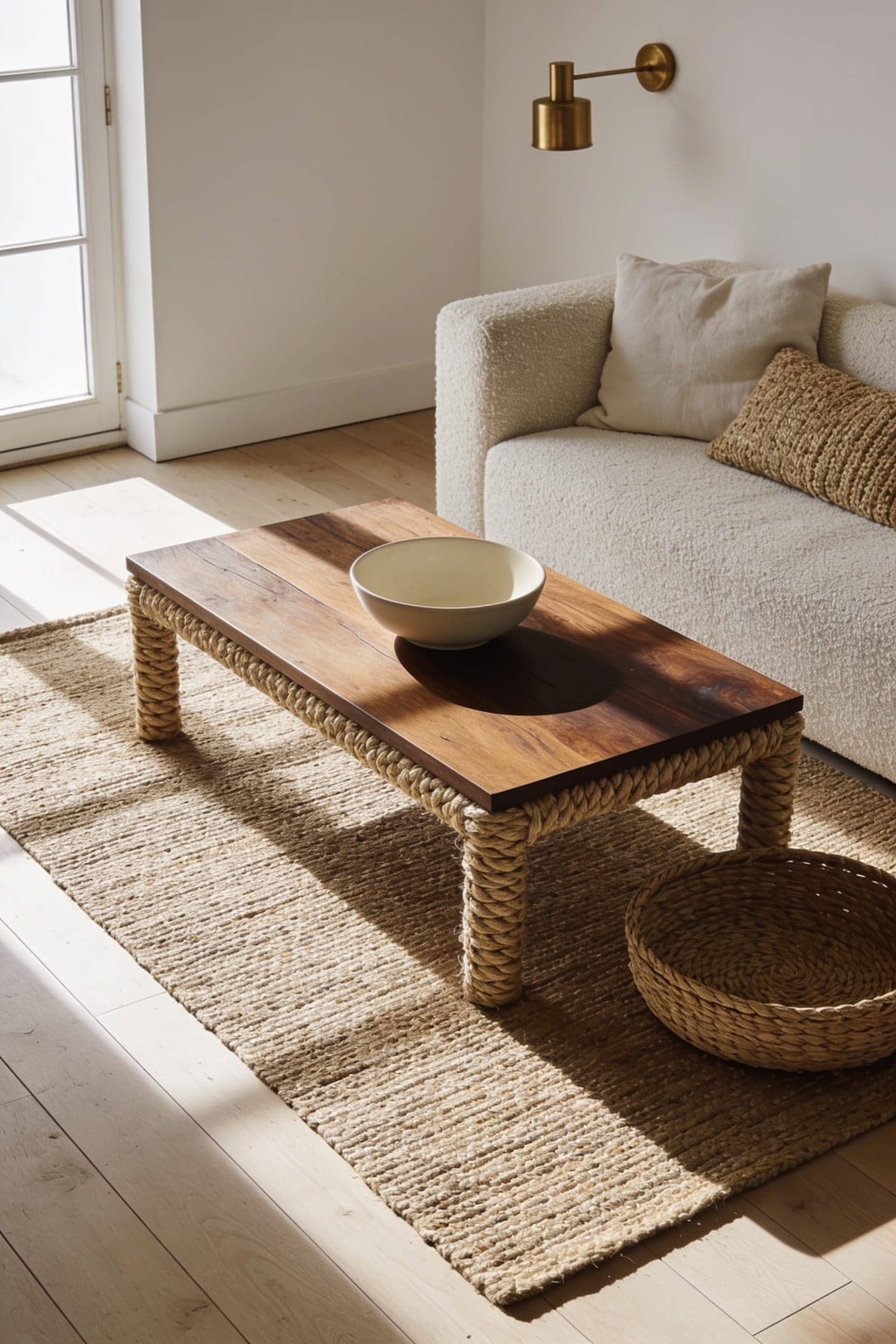
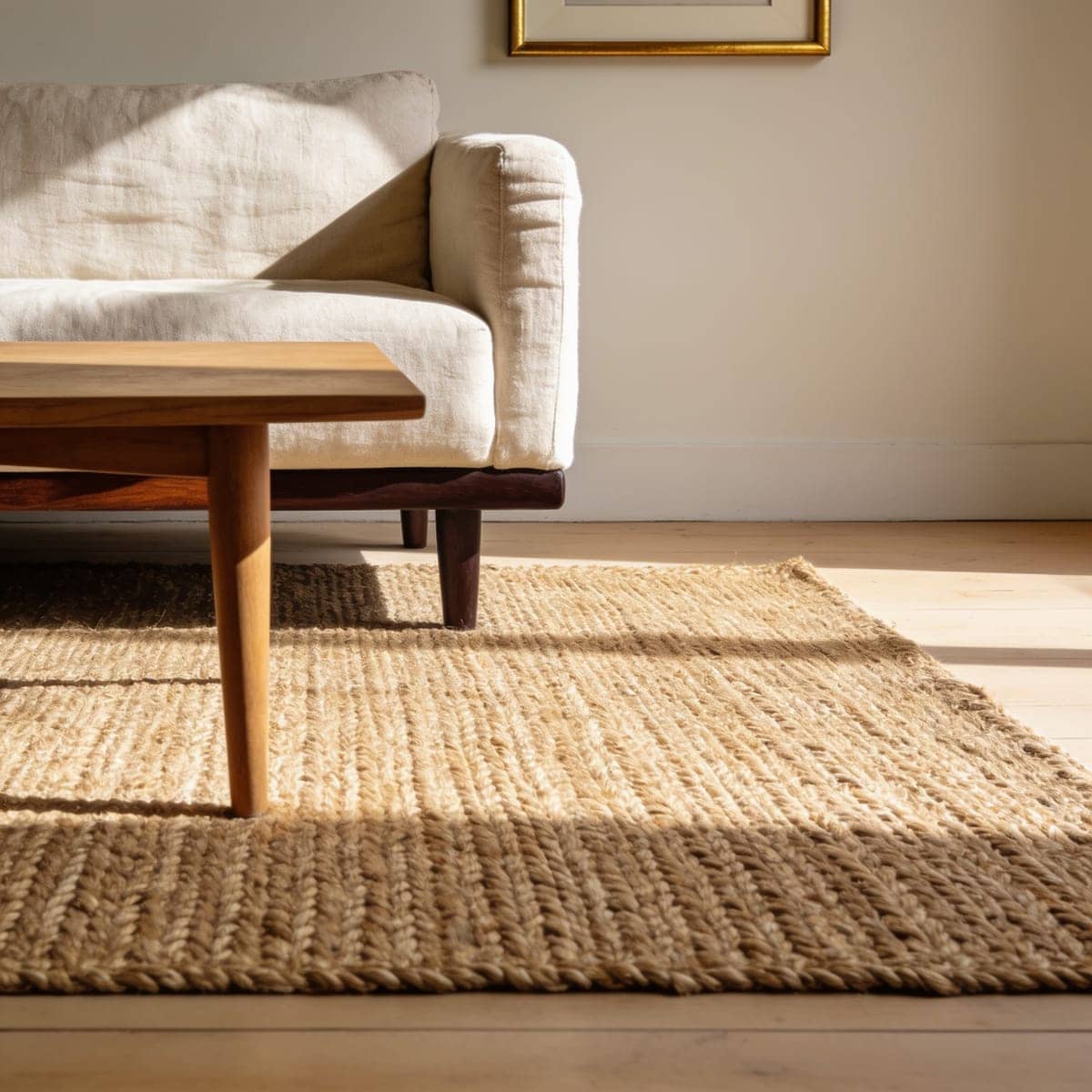
Neutral rooms drift soft. Everything is knit, brushed, upholstered, and the whole thing goes a bit marshmallow. One coarse natural fiber at the floor fixes it, usually a jute or a flatweave with visible grain, either as the main rug or layered under a smaller one. It's the same trick as the black vase, just at the bottom of the room instead of eye level: contrast where you didn't expect it.
Let one plant be the only color you allow
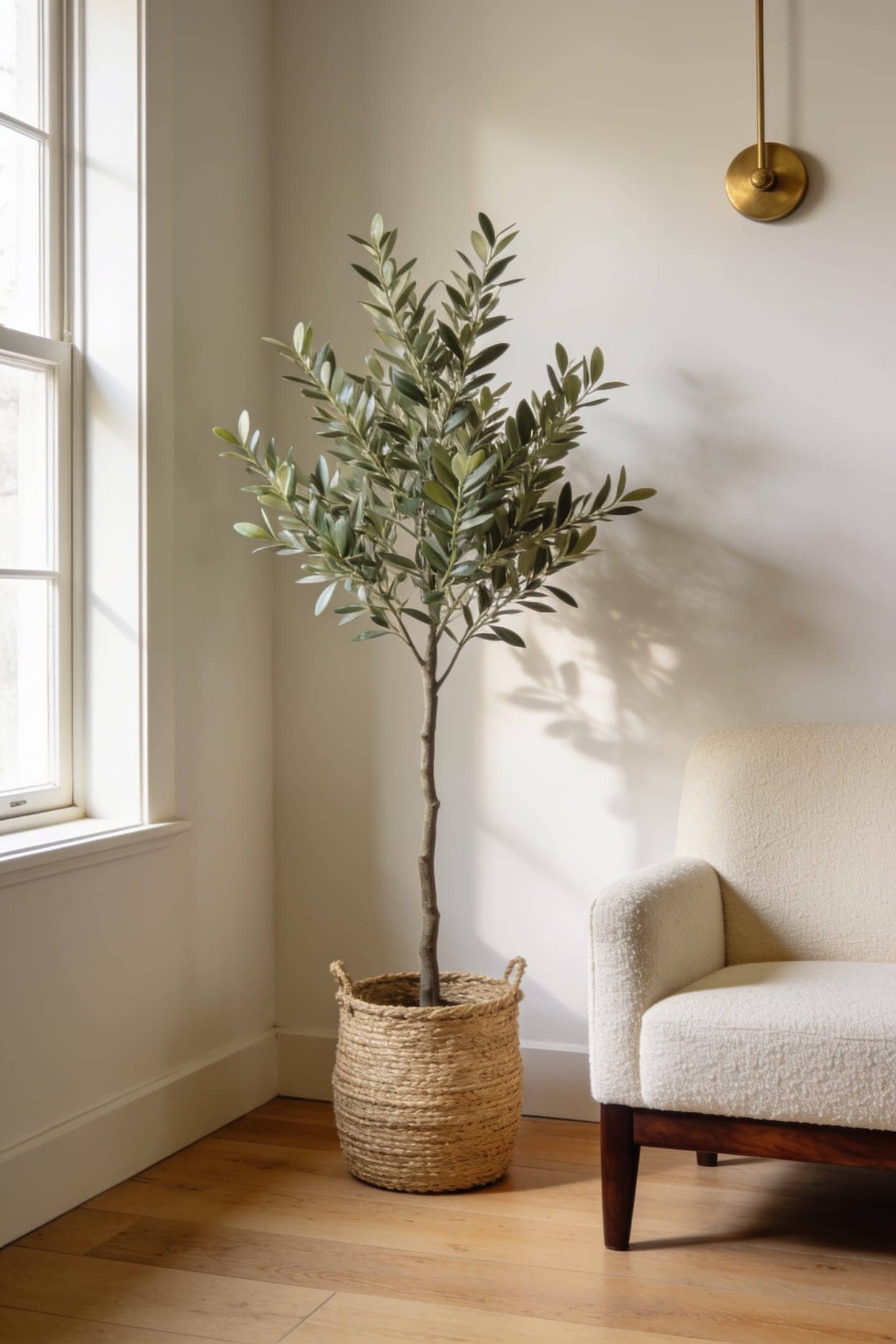
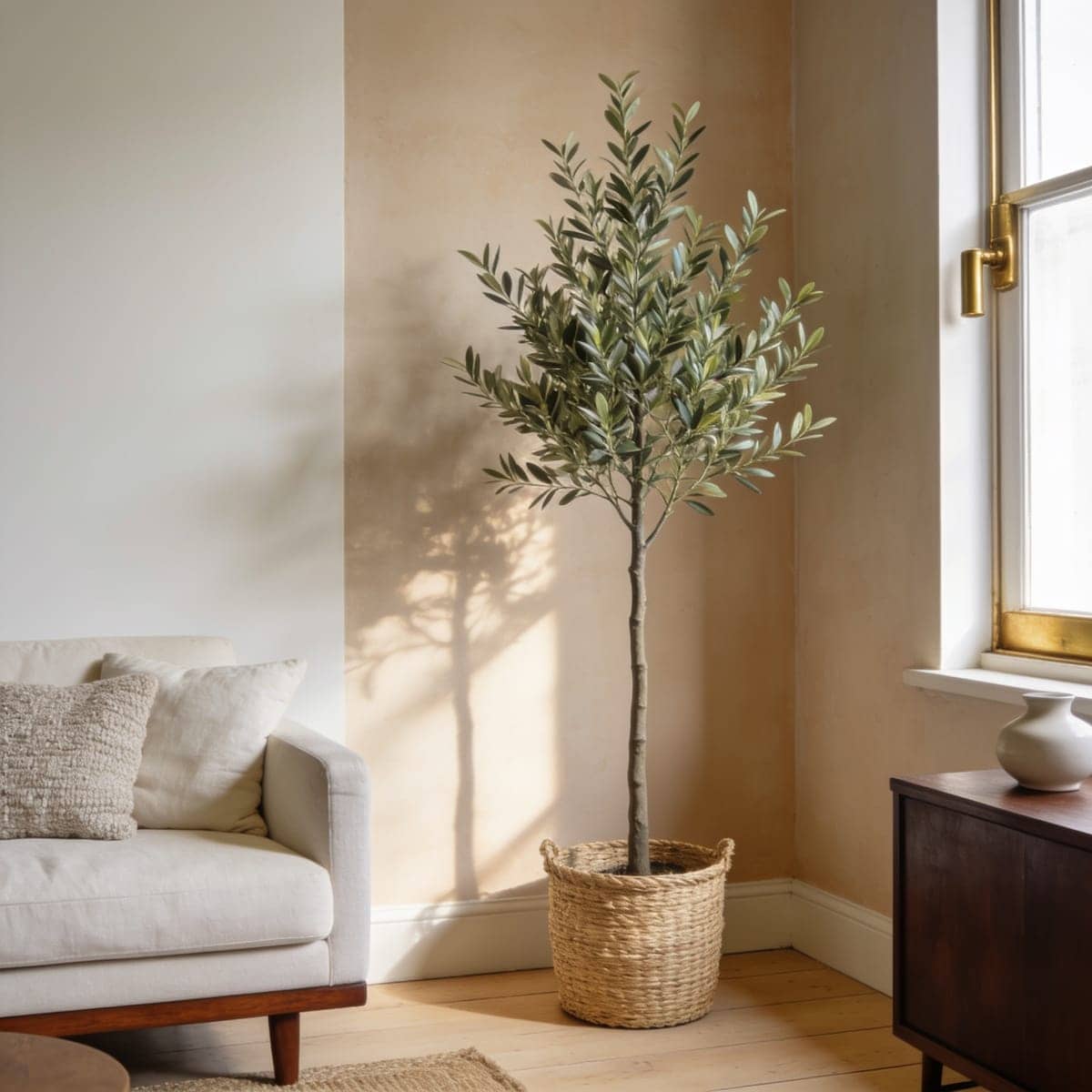
A warm neutral room needs one living green thing, and exactly one is usually right. It reads as color without breaking the palette, and it's the difference between calm and hotel lobby. If your light is bad, a decent faux olive or fiddle leaf in a real basket does the job, as long as you skip the ones with plastic-looking soil discs and swap in a handful of moss. Mine sits in the corner the sofa doesn't reach.
Mismatch your creams on purpose
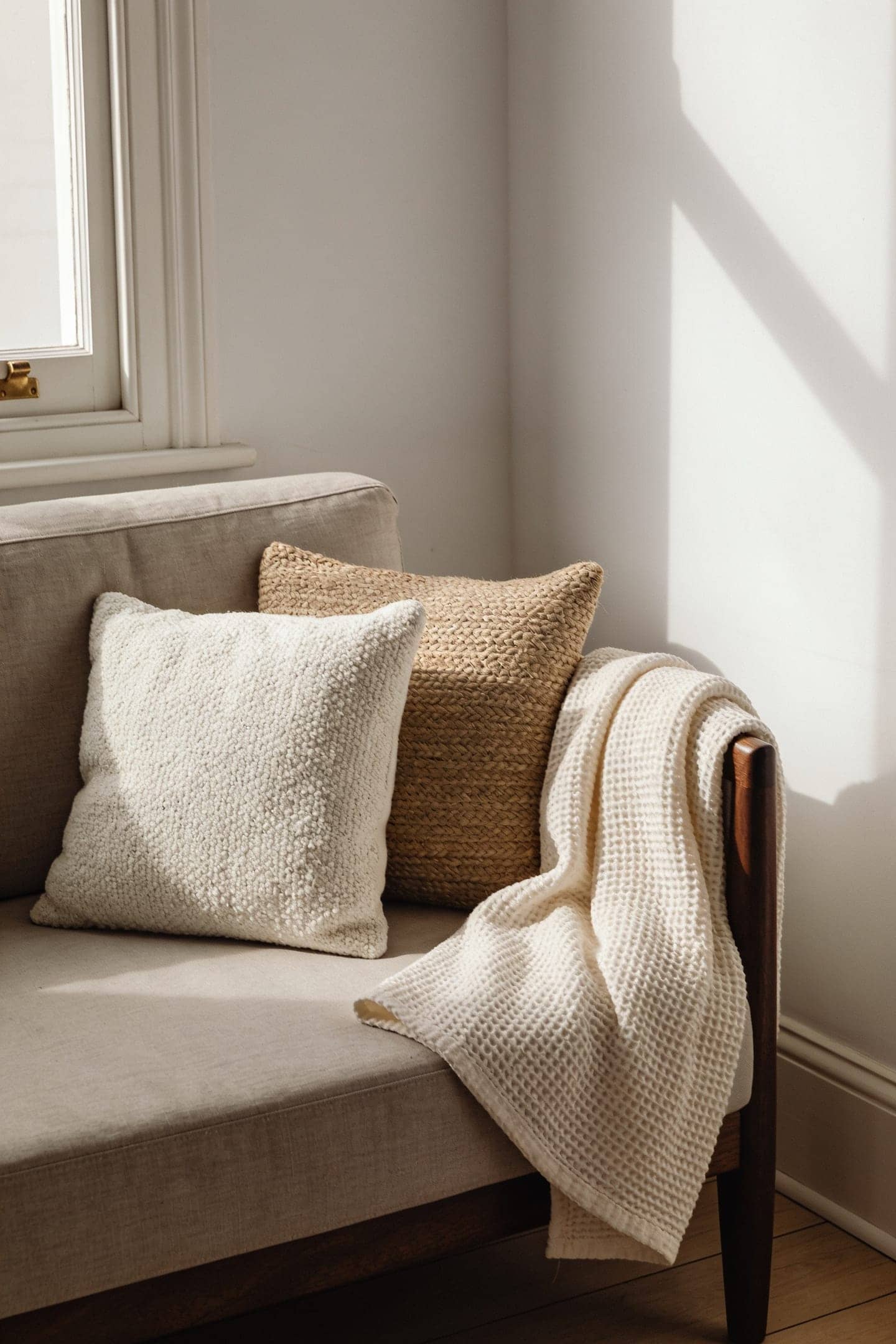
Trying to perfectly match every off-white is how people lose weekends. It also backfires: matched neutrals read as a set, and sets read as cheap, because that's what a boxed collection looks like. Let the ivory throw sit against the oat cushion against the greige sofa. Slightly off is what a collected room looks like, and it means you can buy pieces one at a time, months apart, without a swatch in your pocket.
Fewer things, bigger things
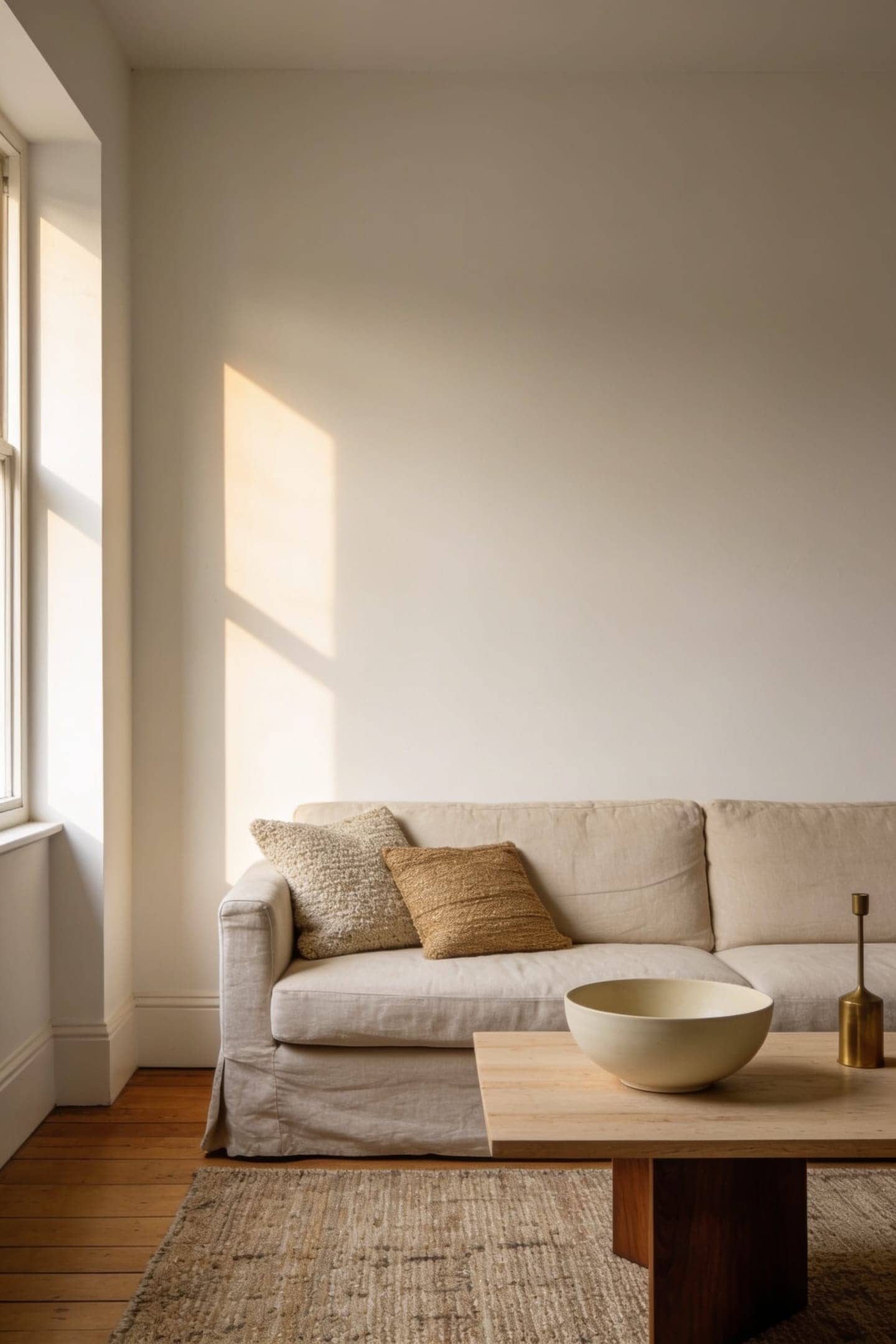
The failure mode for warm neutral rooms is clutter, not color. When nothing pops, the eye starts counting objects, and eleven small beige things on a coffee table read as mess rather than calm. So the edit is the last idea and it's the one I skip the most: take the surfaces down to two or three pieces with some size to them. One big bowl beats four small ones. Empty space is not a gap you failed to fill, it's what makes the rest of the room look expensive.
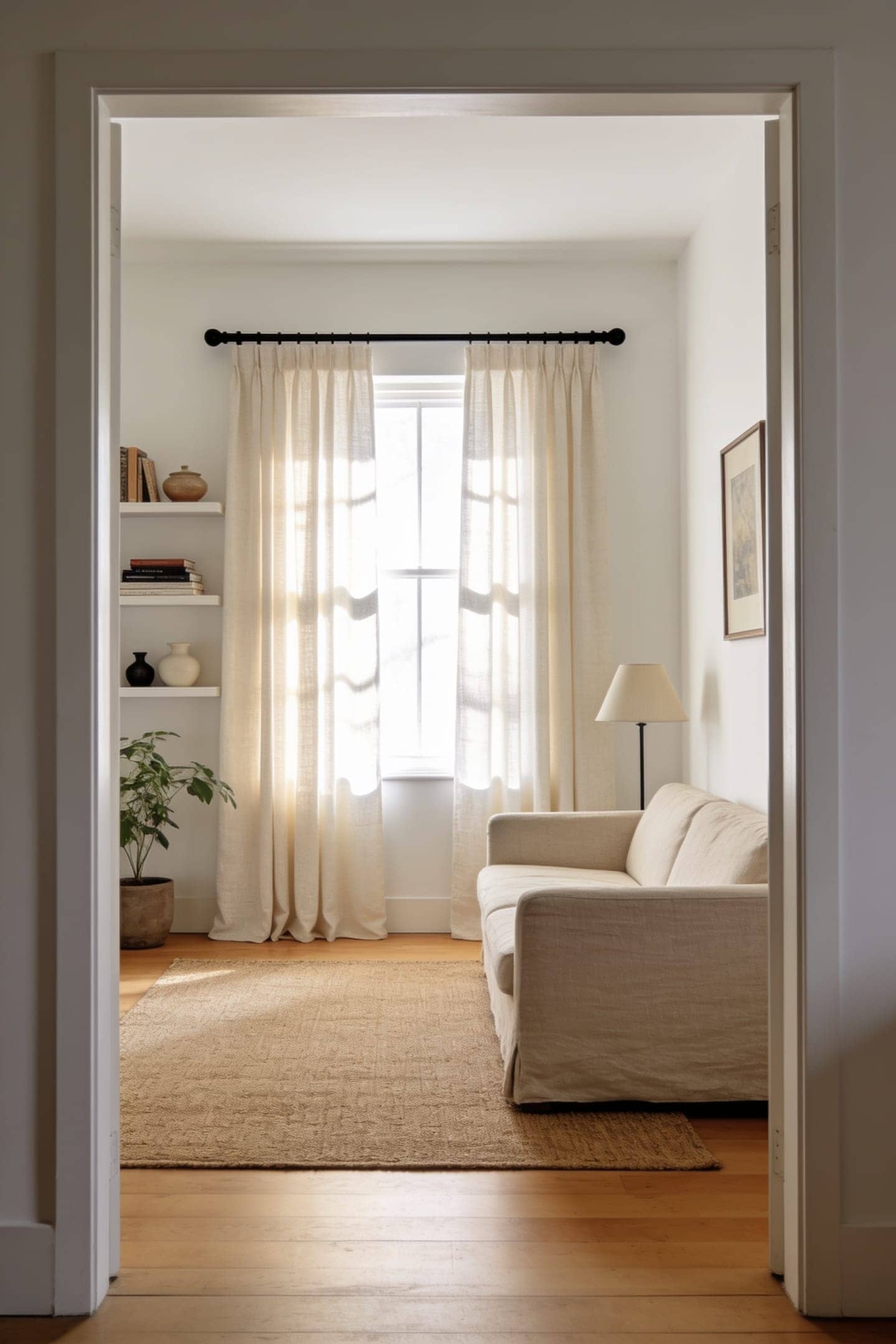
Curtains decide how warm the whole room reads.
They're the biggest piece of fabric in a neutral living room, and the cheap ones give themselves away in the drape. I compared them and kept ten.
See my full list: 10 Best Budget Living Room Curtains